CSotD: Of Arms and the Man I Sing
Skip to comments
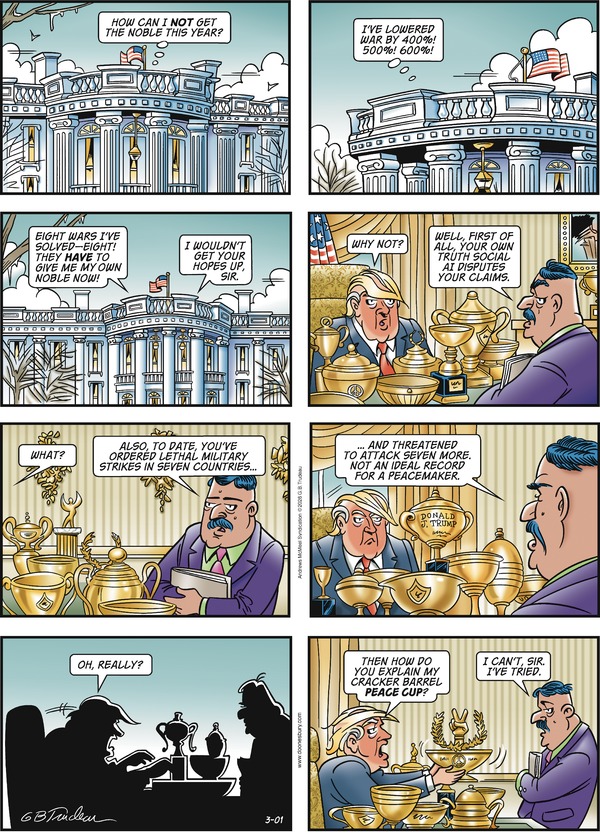
Nice timing on today’s Doonesbury, which was done some time ago but appears just as Dear Leader demonstrates his peacekeeping skills as well as his need for praise.
Among editorial cartoonists, it was interesting to see who leapt into the fray and who did not. I recognize that some cartoonists may not be allowed to break with their established schedule, and I don’t think many, if any, papers ran an Extra as they did on 9/11 when morning papers put an edition out on the street in the afternoon.
Maybe it’s not a big enough war, or maybe it’s not a big enough surprise, to warrant an Extra.
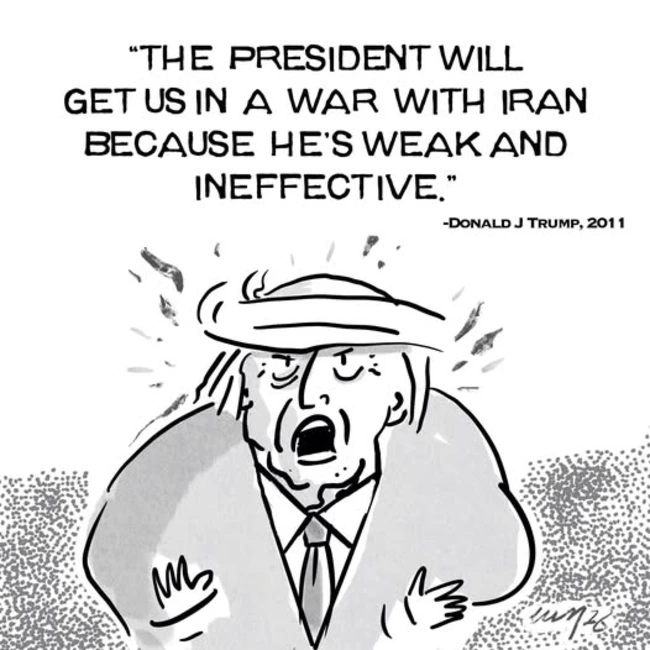
Cousineau creates a cartoon to remind us, as many did on line, that Dear Leader saw attacking Iran as a sign of an incompetent president before he took office himself.
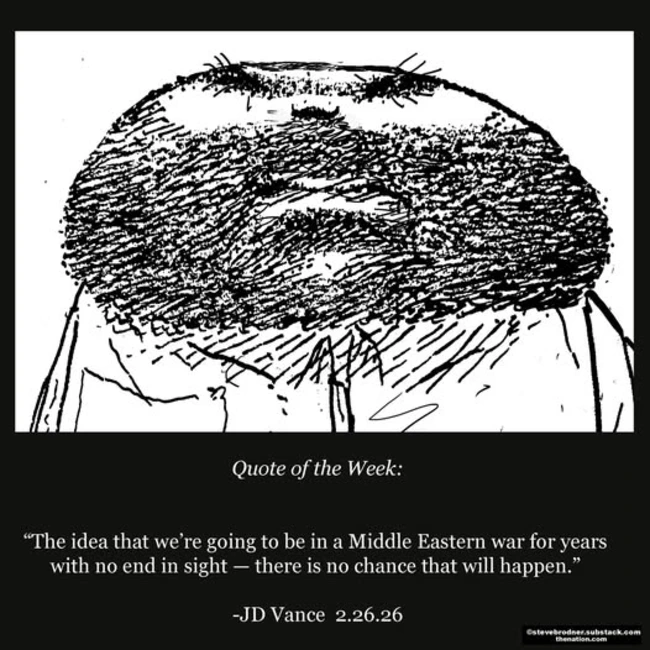
While Brodner reminds us that our vice-president promised there would be no such war just two days before the first bombs dropped. Do these people talk to each other?
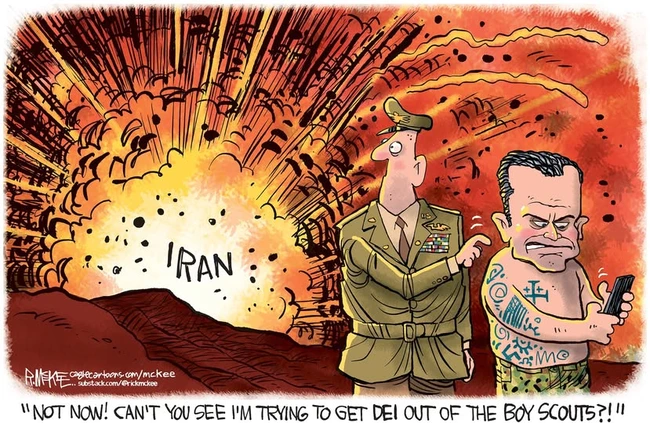
Perhaps not. The head of the War/Defense Department and the He-Man Woman Haters Club was, as McKee notes, busy telling the Scouts to stop letting girls into the group and go back to the name “Boy Scouts.”
This, BTW, matches up with his attempts to eliminate or at least degrade the roles of women in the military. No word on whether he wants to bring back the pederasty that was an ongoing scandal within the classic manly Boy Scouts organization.
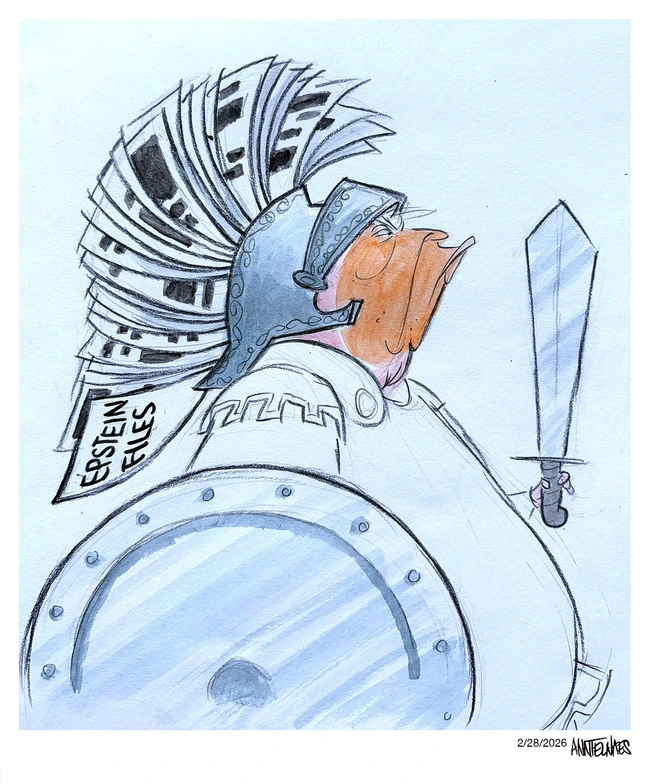
Telnaes also celebrates the manly man: Proud Donald is heading off to war with the Epstein Files as his motivation, and as the crest on his helmet. However, her heroic portrait carries a strong scent of sarcasm, and the term in Greek for the arrogant pride she depicts is “Hubris.” It never turns out well.
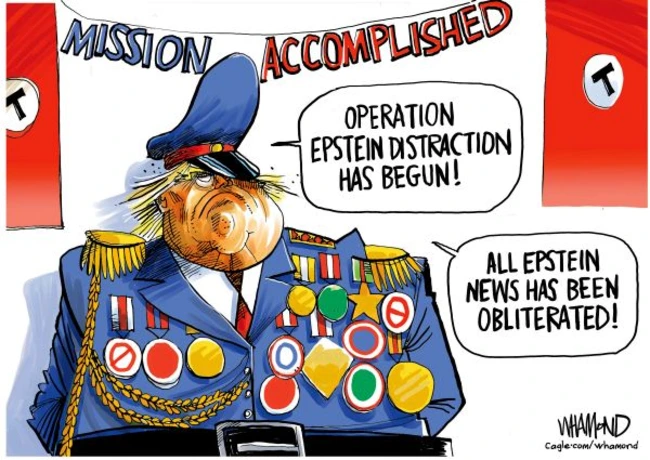
Whamond is, like Telnaes, among several cartoonists, and even more on-line social observers, who suggest that the war is an attempt to distract Americans from the gathering storm over the Epstein Files.
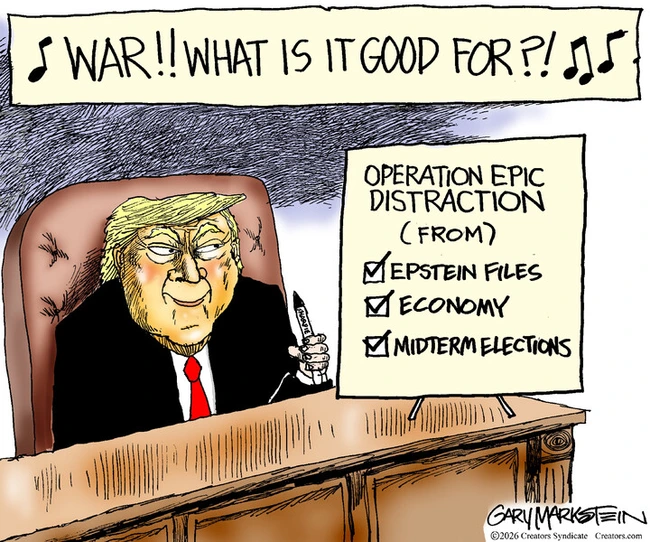
Markstein provides a longer list of necessary distractions, the Epstein Files being only one reason that Dear Leader’s approval numbers are a concern.
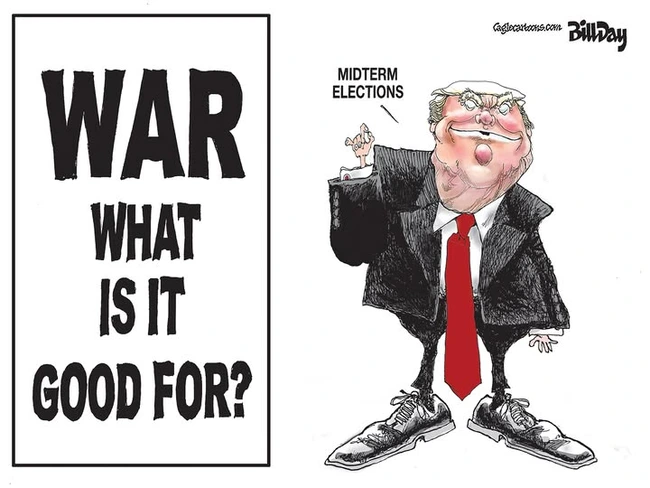
Day picks up on the same lyric line, but then has Dear Leader answer the question, and it’s important to note that the original answer was “Absolutely nothing!” but Trump has a specific goal, and it’s not the liberation of Iran.
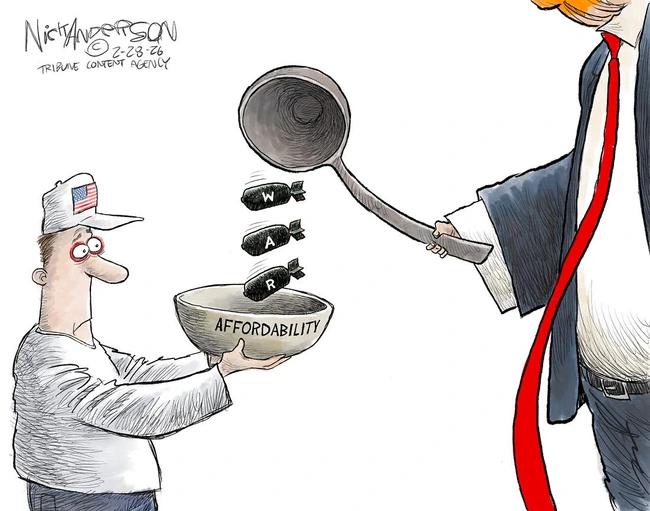
Anderson suggests that, while Americans generally support the president in times of war, this one may not be an adequate distraction from rising food prices and other rough spots in people’s household economies.
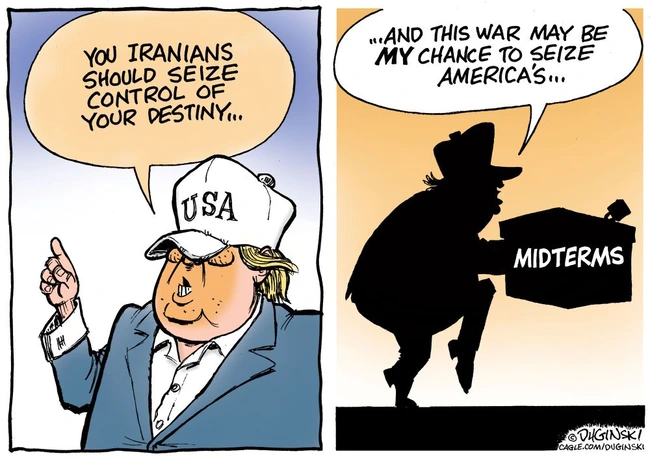
But Duginski links Trump’s call for Iranians to overthrow the tyrants and seize control of their nation’s leadership with his hope that Americans won’t do the same in the mid-term elections, if he can just rally them around the flag with a gallant war against bad guys.
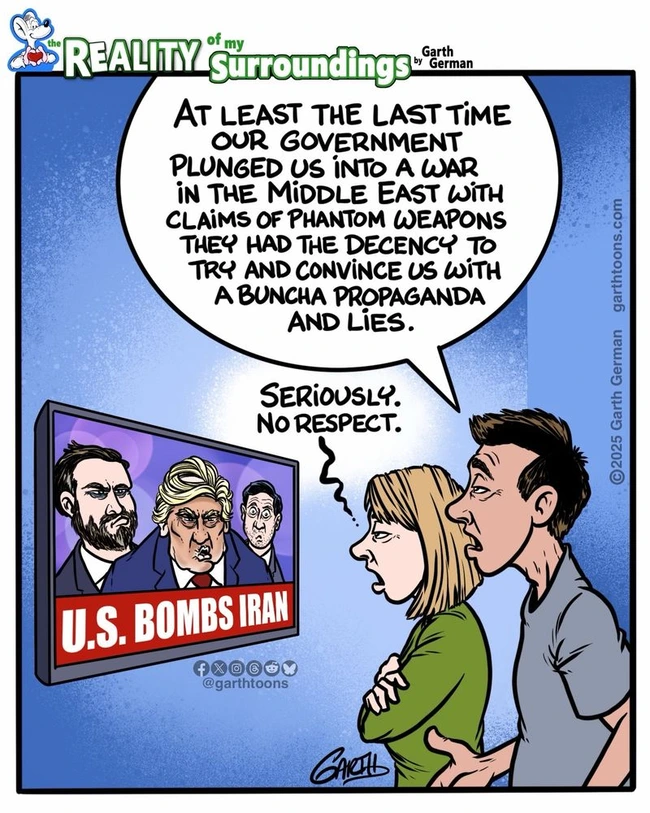
German remembers the talk of mythical WMDs and aluminum tubes with which George W. Bush justified his catastrophic invasion of Iraq, lies that resulted in the destruction of the reputation and legacy of Colin Powell as well as in massive deaths and the long term upending of peace in the Middle East.
Not to mention the filling of graves in Arlington with people, including Gen. John Kelly’s son, of whom Dear Leader asked the bereaved father, “I don’t get it. What was in it for them?”
And this note: W’s invasion of Iraq was 23 years ago, which suggests that voters in their mid-30s should remember it. By contrast, as someone pointed out on MSNOW yesterday, the Iran hostage crisis was 45 years ago, and the median age in America is 39. Most Americans weren’t born yet.
Iran has a younger median age of 34.5, but you can bet the events of the Islamic Revolution are taught in their schools. The question is how many people there look on those events as glorious and how many regret the changes they brought.
It is likely that you’d get different answers in cosmopolitan Tehran than you would out in the countryside.
Juxtaposition of the Day
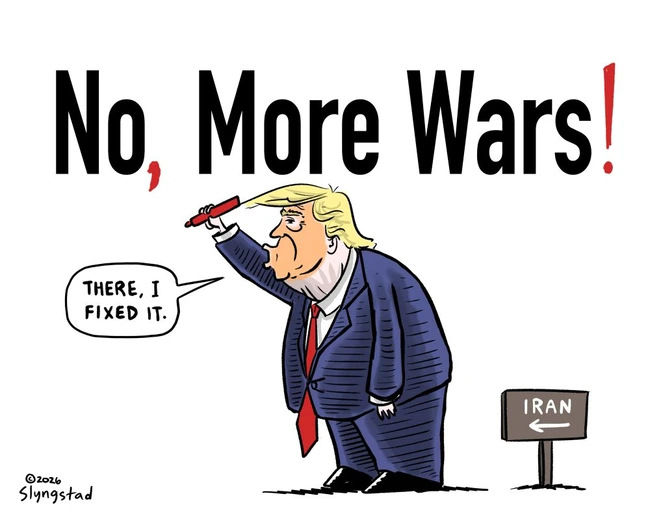
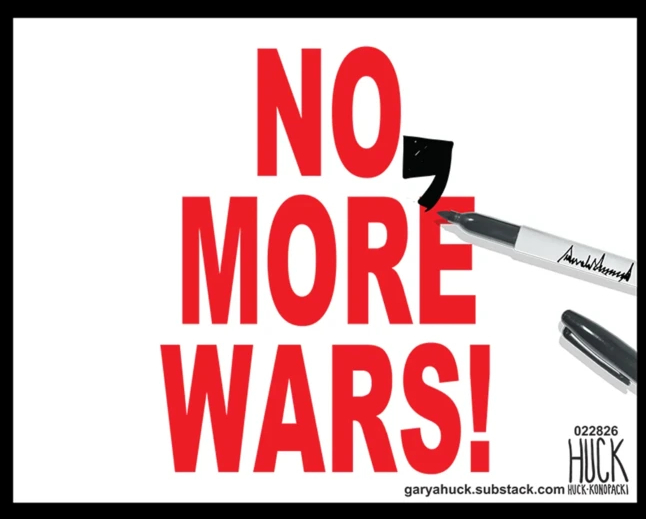
Two cartoonists pick up on the same idea, but the differences in their approaches are interesting. Slyngstad makes it immediately more personal by depicting the president making that necessary change in his promise, while Huck also condemns him, but more subtlely, by depicting a Magic Marker with the president’s familiar signature on the barrel.
And, of course, both make the point that Dear Leader has spoken of his peace-making prowess and his ability to make deals, but suddenly abandoned those efforts while negotiations were in progress.
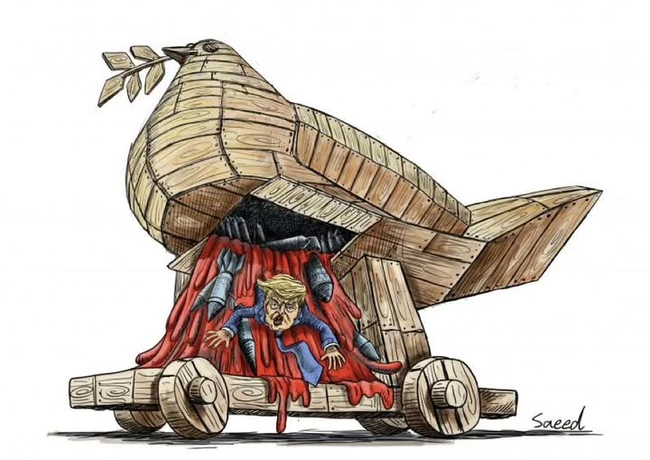
The villainy of attacking during negotiations is expressed in more graphic terms by Iranian cartoonist Saeed Sadeghi, who substitutes a wooden dove for the wooden horse he accuses Trump of using in order to launch a surprise attack.
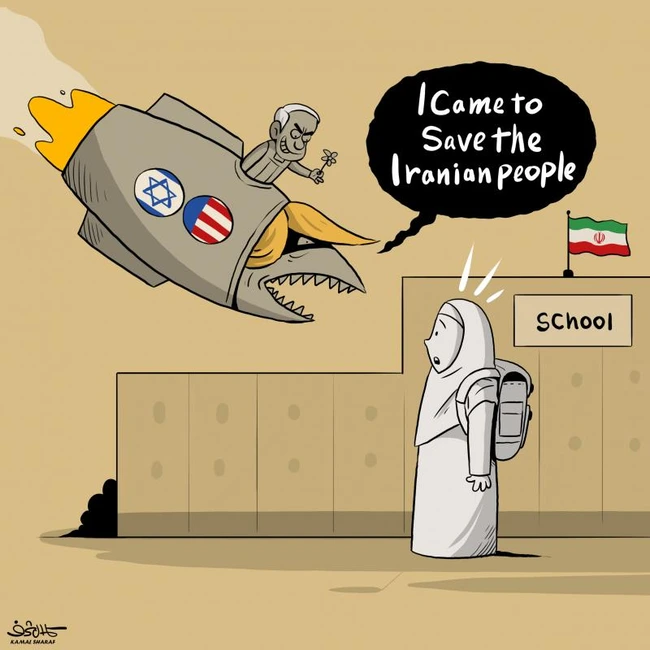
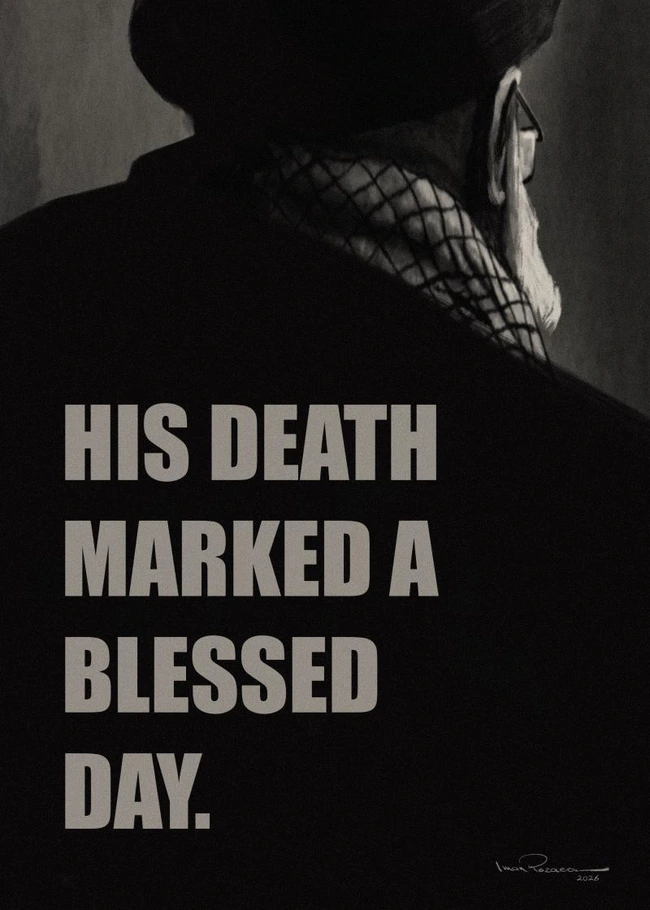
We can, of course, expect different responses from different cartoonists, depending on their point of view. Sharaf is Yemeni, and focuses on the bombing of the elementary school that has resulted in nearly 100 deaths of young girls.
Rezaee, by contrast, is an Iranian ex-pat living in the Netherlands and takes a much much more celebratory view of the military action.
Much of what follows will depend on these variations in response to the attacks, but it’s unlikely that those who prove to be in the minority will quietly accept the outcome.
When will they ever learn?
Mike Peterson has posted his "Comic Strip of the Day" column every day since 2010. His opinions are his own, but we welcome comments either agreeing or in opposition.

Comments 14
Comments are closed.