The Saturday Report
Skip to comments
Jason Chatfield tours The New Yorker exhibit and we tag along; The Funday Times returns to The Sunday Times; Bob Eckstein on Books and Bookstores; Old Animated Cartoons were Better than their Modern Counterparts (opinion); Healthy Graphics with Gillian Levine; and William Henry Jackson by William Henry Jackson (Bill) Griffith.
A Tour of The New York Public Library’s A Century of The New Yorker Exhibit
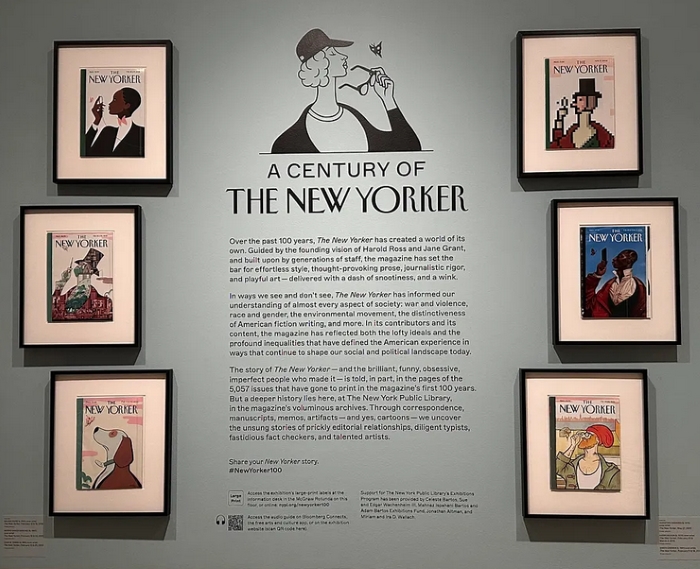
Jason Chatfield presents a tour of the NYPL New Yorker exhibit with “The Cathedral of Eustace Tilley.”
The New York Public Library is, without hyperbole, one of my favourite buildings in the entire city. A cathedral of curiosity. Also, tote bags. For years, I used to make a weekly pilgrimage to the Rose Main Reading Room, sitting under those soaring, cloud-painted ceilings to write my comic strip. There is a specific type of hushed silence in that room- a heavy, studious quiet that smells of old books and intense concentration. But walking into the Gottesman Hall for this exhibition, the soundscape was different. It wasn’t silent.
It was giggling.
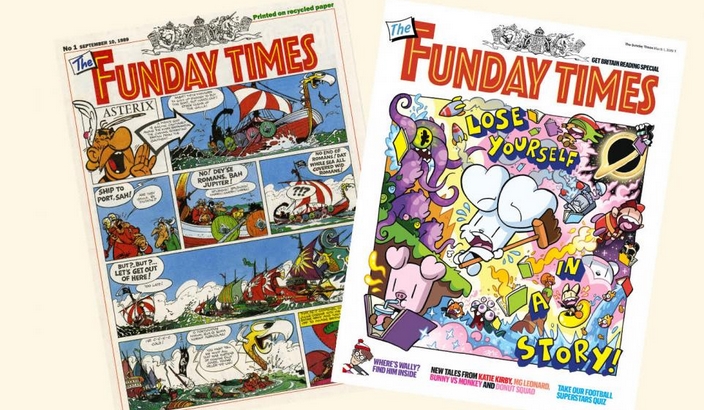
The Return of The Funday Times
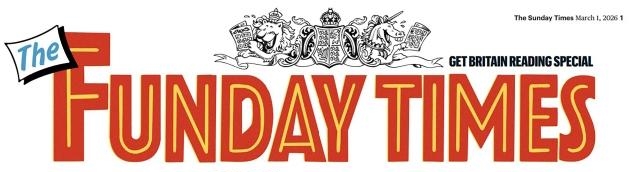
John Freeman informs us of the past issues and a new one-off issue of The Funday Times.
Launched in 1989, ending in print in March 2006, The Funday Times was intended mainly for children, and included several comic strips alongside puzzles and features. When it first launched, it included strips for older readers such as “Time and Ms. Jones“, written by Marise Morland, drawn by Sydney Jordan (best known as the creator of “Jeff Hawke), and Adolfo Buyalla, and humour strips such as “b.C.” and “Doonesbury”, but these were dropped in 1990 in favour of strips aimed directly at younger readers, including strips featuring BEANO characters and reprints of the Asterix books.
This Sunday, The Sunday Times has brought back The Funday Times, its popular comics supplement, as part of their reading campaign.
On Books with Cartoonist Bob Eckstein
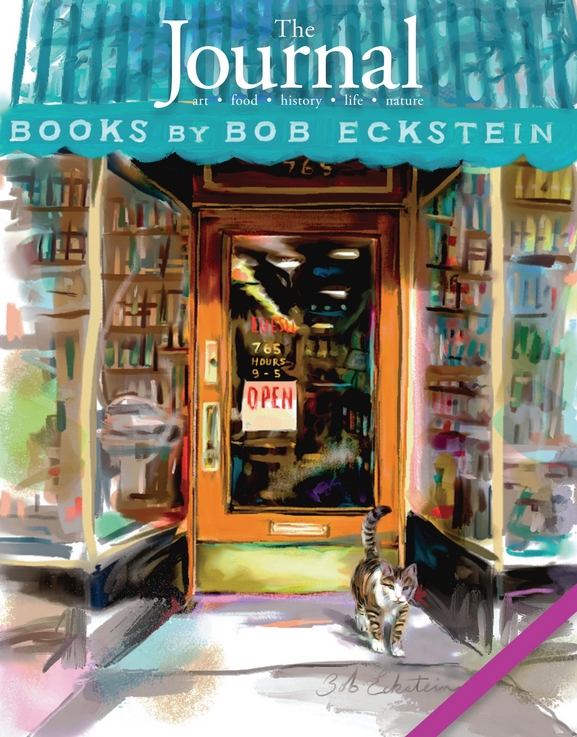
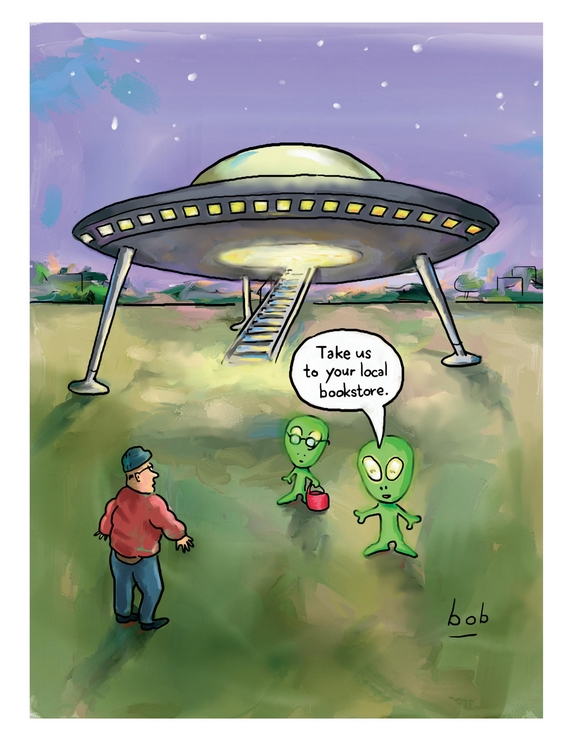
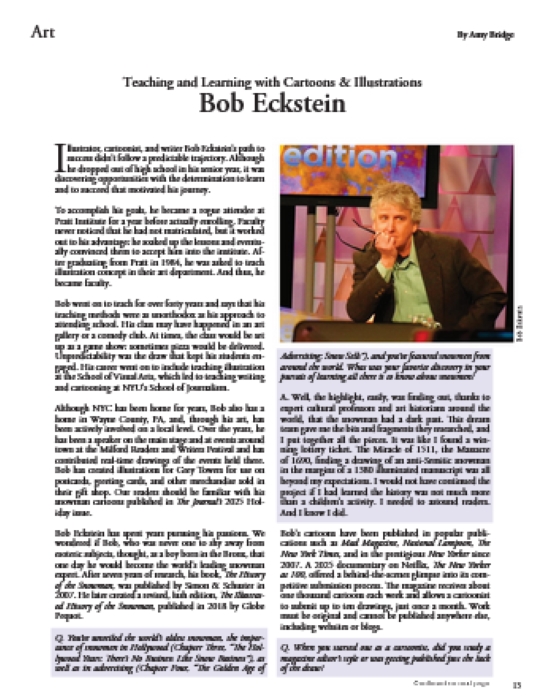
The Late Winter 2026 issue of The Journal contains a feature interview with cartoonist Bob Eckstein. The interview particularly focuses on Bob’s teaching career and his The Ultimate Cartoon Book of Book Cartoons by The World’s Greatest Cartoonists and Footnotes from the World’s Greatest Bookstores: True Tales and Lost Moments from Book Buyers, Booksellers, and Book Lovers books.
Te Ultimate Cartoon Book of Book Cartoons by the World’s Greatest Cartoonists was published in 2019. As editor of the project, Bob worked with thirty-two of his favorite cartoonists, including Sam Gross, who has created over thirty thousand cartoons, and bestselling author and cartoonist, Roz Chast. Of course, Bob’s own work is included. As mentioned in the book’s Introduction (after the part about nobody reads book introductions), Bob’s goal was to honor his profession and the format of the printed book. Some of his peers’ cartoons had never been published, and others were published with permission of various publications including Barron’s , Te New Yorker , and Te Harvard Business Review.
An Old Man’s Disgust with Modern Animated Cartoons
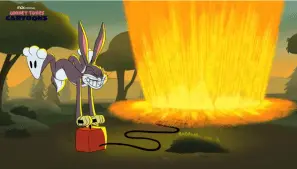

Santa Clarita Valley’s The Signal columnist John Boston is “In Lament of the Missing Cartoon Hero.”
Where’s Bugs and Bullwinkle? The ducks, Daffy and Donald? Professor Peabody (the world’s smartest talking dog) and those affable mice — Jerry, Mighty and Mickey?
The modern animated hero, the one some of us leave our children alone with, is an X-rated lout and pervert, represented by Butthead, Stan Marsh and friends from “South Park,” “SpongeBob SquarePants,” and lately, a long woke list from Walt Disney.
Many of the old cartoons, dating as far back as a century, had their themes of absurdist violence. Is the difference today, with what we mentally feed the next generation, the fact that the modern cartoon relishes darkness in the heart and soul? Wickedness for the sake of it?
Graphic Health
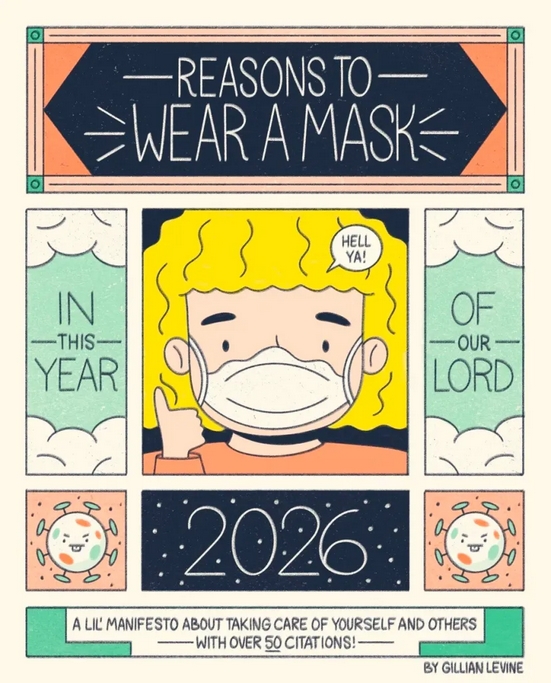
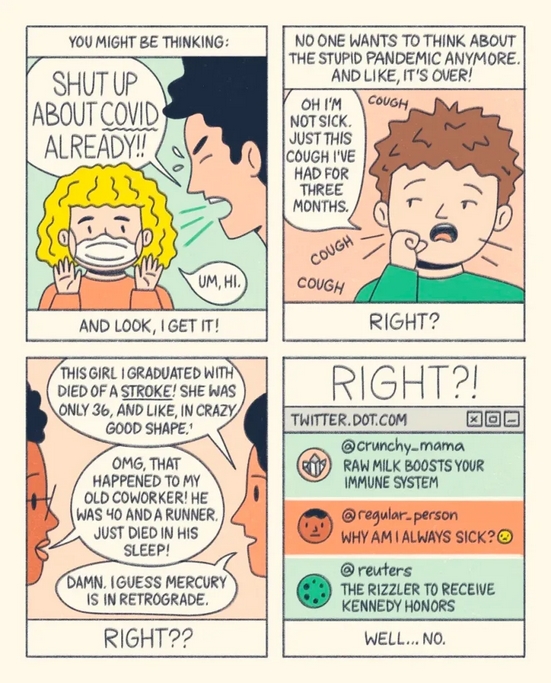
In what I’m sure John Boston would not approve Gillian Levine presents “Reasons to Wear a Mask – 2026.”
Artist Gillian Levine recently wrote and illustrated a comic sharing reasons to continue masking in 2026. It highlights reducing the risk of Long COVID and protecting your community as key motivations for preventing infections as the virus SARS-CoV-2 continues to spread. The comic includes extensive citations to scientific papers and other resources about COVID-19 and Long COVID.
Levine kindly gave The Sick Times permission to republish the comic. Check it out below or at her website, and find Levine on Instagram at @professional.baby.
Photographic Memory: William Henry Jackson and The American West
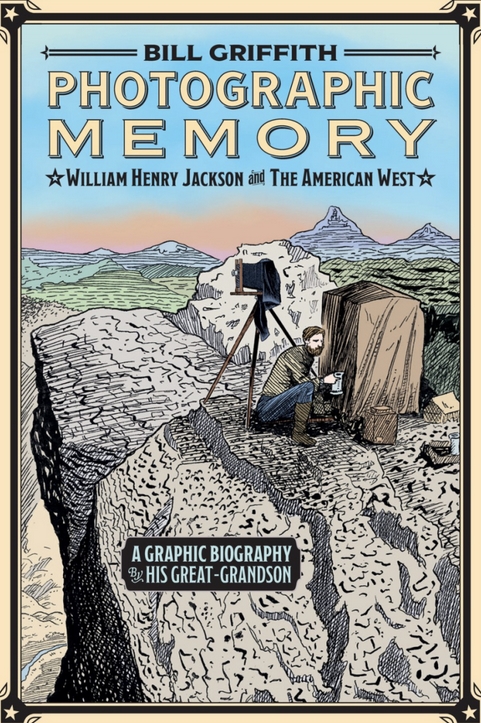
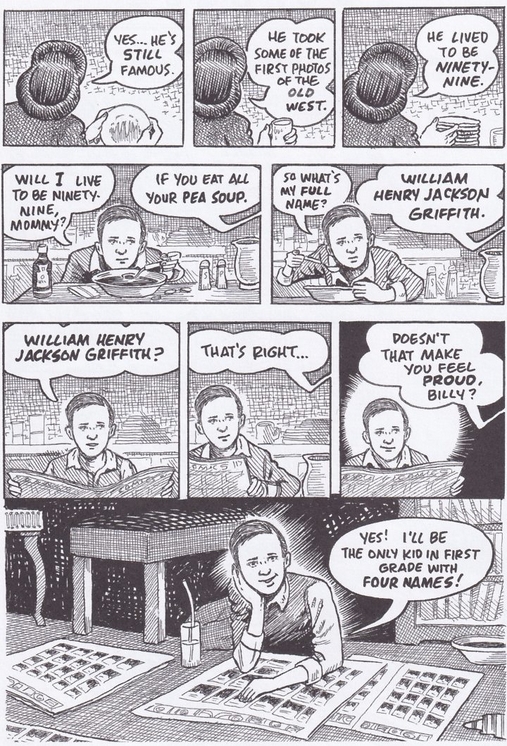
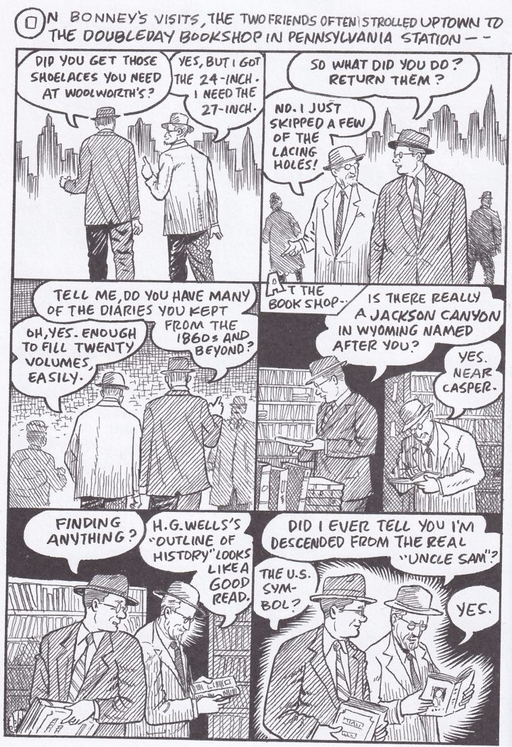
Richard Pound for The Comics Journal reviews Bill Griffith‘s biography of his great-grandfather.
Jackson’s life story would be a gift for any biographer. Apart from his career as a photographer, he was also a painter, writer, illustrator, and explorer, and the father of the American picture postcard. He witnessed the Battle of Gettysburg as a 19-year-old Union soldier, rode the Oregon Trail as a bullwhacker when he was 23, and had traveled much of the world by the time he turned 50. A major influence on Ansel Adams, his work has featured in a dozen exhibitions at New York City’s Museum of Modern Art, and more than 50,000 of his glass plate negatives are now preserved in the Library of Congress. And yet, while postcards of his work sold in the millions, he reaped few of the rewards, and by the time he reached his 90s was living in a hotel, surviving on a Civil War pension, and still taking illustration commissions to make ends meet. Oh, and as if all that wasn’t enough, he was also the great-great nephew of Samuel Wilson, the original Uncle Sam.
As his three previous books have made clear, biography for Griffith isn’t simply a way of examining a specific subject in objectively historical terms, but also a means of delving into his own past and exploring the things that have obsessed or influenced him over the years… So, while Photographic Memory has everything you could want from a straightforward biography – an engrossing narrative backed up by solid research and a compelling evocation of time and place – it’s also punctuated with idiosyncratic touches that make it something else entirely. As in his earlier books (and, of course, the Zippy strip itself), Griffith pops up intermittently as both narrator and character, an active participant in the story he’s telling…
Photographic Memory: William Henry Jackson and The American West by Bill Griffith is available from Abrams.

Comments 3
Comments are closed.