Appreciating Cartoonists
Skip to comments
featuring Sir Quentin Blake, Gluyas Williams, Doug Marlette, Dirk West, Helen Hokinson, and William Hogarth.
Quentin Blake
Ask ChatGPT to create a portrait of Quentin Blake in the style of Quentin Blake and the results are so preposterously bad, it’s tempting to think that artificial intelligence might not be the death of everything that is pure and good after all. Not yet, anyway.
No software, nor for that matter any other artist can draw a line quite like Blake. As Chris Riddell, his fellow illustrator and former children’s laureate, puts it: “There are lots of people trying to draw like Quentin Blake. And there’s Quentin Blake. It’s very easy to tell the difference.”
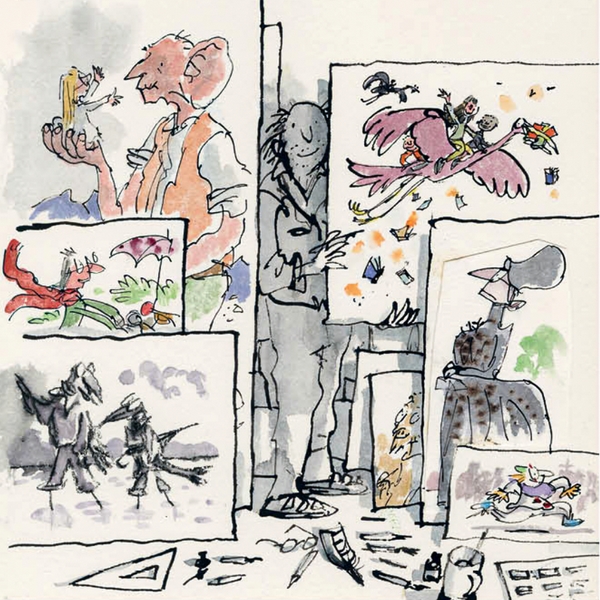
Lucy Bannerman for Air Mail interviews 92-year-old, and still drawing, illustrator Sir Quentin Blake. (Or here.)
Next spring the Quentin Blake Centre for Illustration will open in London. It’s a project close to his heart. It will eventually house his archive, but he hopes it will also celebrate English illustration more broadly. He laments that his hero George Cruikshank, the caricaturist who illustrated the early works of Charles Dickens, is not better known, pointing to his engraving of Fagin in the Condemned Cell: “There isn’t anything in Oliver Twist as good as that picture. It’s extraordinary.”

to Jason Chatfield for the notice.
Gluyas Williams
An unending fount of brilliant humor, flawlessly executed, and (as the owner of many Gluyas Williams originals, I can attest) drawn almost always perfectly — that is, almost never a correction or cross-out. Amazing.
There was joy in his work — or at least satisfaction. He never showed malice, though he focused (and titled) his series “life’s little foibles.” His was a happy world, inhabited by petite bourgeoise folks, going about everyday tasks with which his comfy middle-class readers identified. He never aimed for slapstick nor guffaws; rather comic irony and chuckles.

Rick Marshall at Yesterday’s Papers appreciates cartoonist Gluyas Williams.
…Mr Williams at the time was a nationally admired cartoonist who recently had switched his prodigious work from Life magazine to The New Yorker; also drew for other publications; produced a daily newspaper panel for John Wheeler’s Bell Syndicate (many featuring the urbane character Fred Perley); was illustrating many books, most notably the collections of Harvard classmate Robert Benchley; drew advertising art… and much more.
Doug Marlette
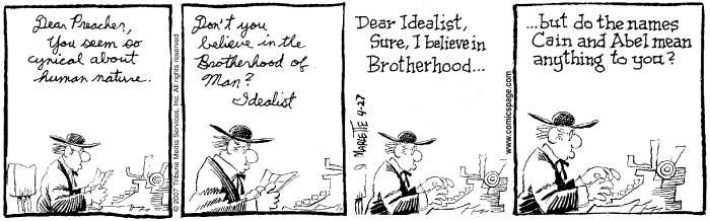
For 17 months, Tulsa World readers had the chance to see the opinions of editorial cartoonist Doug Marlette.
The Pulitzer-Prize winner started at the paper in 2006 and quickly got everyone’s attention as his editorial cartoons hit the pages regularly. He also attracted attention from audiences growing online.
Sadly, 18 years ago this month, he died in a car accident in Mississippi…
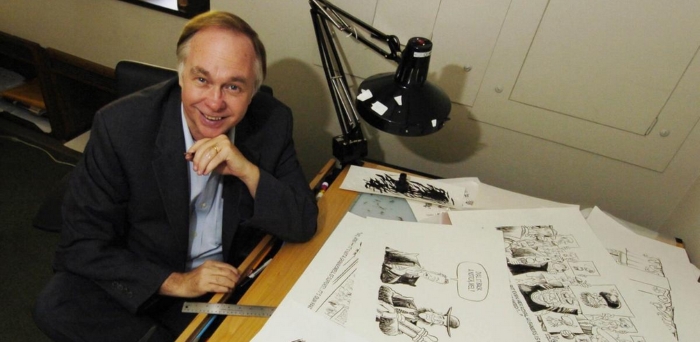
Tulsa World Executive Editor Jason Collington remembers Doug Marlette.
At the time, his cartoons and comic strip ‘’Kudzu’’ were syndicated in hundreds of newspapers worldwide. Marlette was visiting Mississippi because a high school there was preparing to stage the musical based on the strip.
A major studio had just optioned his novel ‘’The Bridge’’ to be made into a movie.
Dirk West
One of sports cartoonist Dirk West’s favorite themes was the condition of Raider Red’s hat. When the Texas Tech mascot’s huge white hat was depicted unblemished, fans knew the Texas Tech football team had not suffered a loss that season.
But Raider Red sometimes appeared with a hat shot full of bullet holes, symbolic of the team’s many gridiron defeats. With the start of each new season, Raider Red needed a new hat.
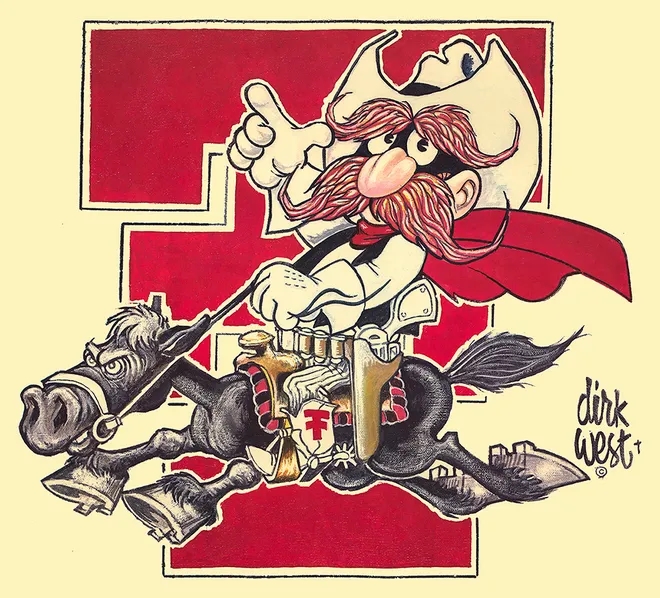
Chuck Lanehart for the Lubbock Avalanche-Journal profiles sports cartoonist Dirk West.
Most remember the creator of the Tech mascot character as a cartoonist, but—like Raider Red—Lubbock’s Dirk West was a man who wore many hats: college instructor, standup comedian, television personality, advertising executive, chili chef, author, family man and Mayor of the City of Lubbock.
Helen Hokinson
Helen Hokinson’s first drawing, of a woman waving goodbye to loved ones on an ocean liner, speaks volumes in just her line. It tells a story without words.
Another like the one above is below. I almost feel it could be autobiographical because Hokinson was classically trained as an artist. She chose to become a cartoonist and I am so glad she did. Her line instinctively has humor in it.
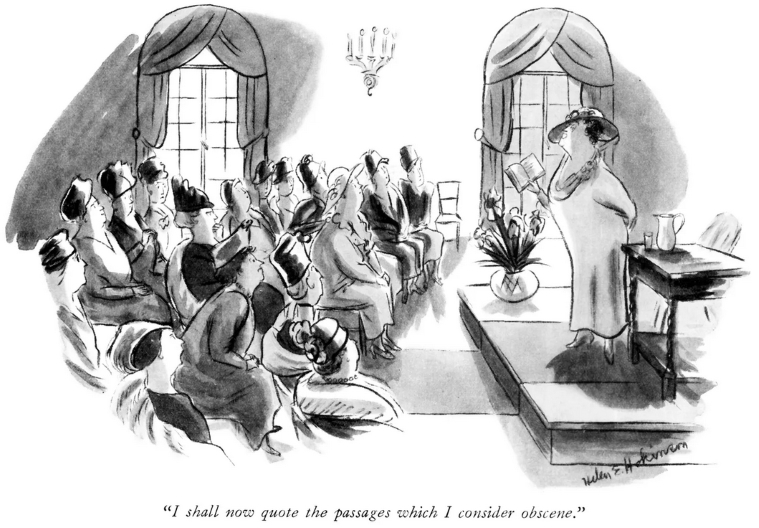
Cartoonist/cartoon historian Liza Donnelly annotates a gallery of New Yorker cartoons by Helen Hokinson.
Hokinson started at The New Yorker in 1925, her early drawings were about young women in the city. But as the years went on, she began drawing cartoons whose protagonists were matronly, heavy-set women. The public adored these characters; they became her signature.
William Hogarth
Probably, a contemporary consumer of comics would be disappointed if we proposed to him the reading of what was the seed of comics in the 18th century.
For comics to come to look as they do today, they had a long evolution of continuous mutations, the result of the historical context, of new artistic codes, and technical achievements; an evolution marked, from time to time, by great artists.
One of the early pillars in the gestation of what we call “comic” today is William Hogarth, born in 1697 in Bartholomew Close, London.
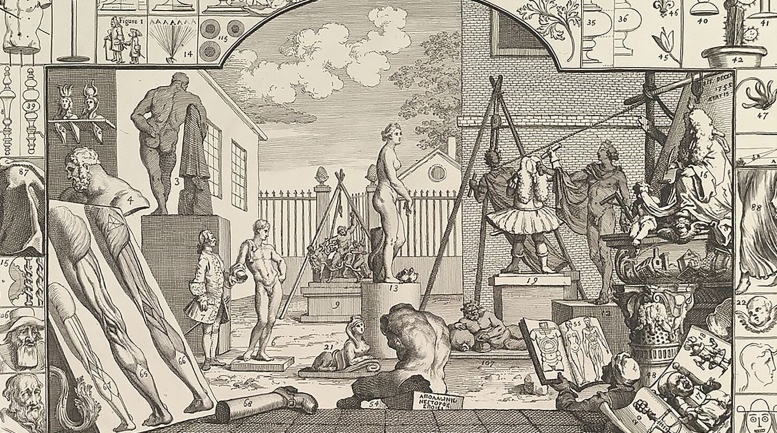
Back to where it started is Humberto Aguirre for Meer Culture telling of cartoonist pioneer William Hogarth.
The artist’s importance is manifested in his fame of being recognized as one of the fathers of the comic strip and practically the grandfather of the political cartoon; he moved chameleonically from satire to academicism, from painting to engraving, from sequentialized narration to printmaking. He was a painter, engraver, caricaturist, illustrator, and art critic.
Hogarth not only drew from the influence of his predecessors such as Albrecht Dürer, Pieter Bruegel the Elder, Da Vinci, and Michelangelo, but also from the traumatic experiences of his personal life, such as living with his family in a debtors’ prison when he was a child.
Therefore, it is not surprising that his work is populated by gamblers, bad boys, thieves, addicts, and fauna of the London underworld; also, his narrative cycles often end in jail, in the madhouse, or the grave.


Comments 6
Comments are closed.