New and Old Cartooning Issues
Skip to comments
The Black drought in mainstream awards, ten years of the Comics Studies Society, cartoonists critiquing cartoonists – good or bad, mastercraft workshop NY cartoonist – that’s good, 30 years as a cartoonist in a specialize area, and more with the new cartoonist and the old(er) cartoonist.
Stephanie Williams Breaks Through the Black Barrier
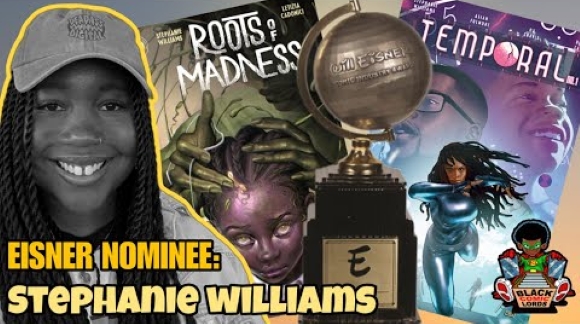
In 1995 Dwayne McDuffie became the first and only Black comic book writer to be nominated for a Best Writer Eisner Award. At a time when the judges were infatuated with writers from Great Britain he didn’t win. Now 31 years later Stephanie Williams, another Black person, this time a woman, has been nominated. Liam McGuire at Comic Frontier interviews Stephanie.
When the Eisner Awards — the comic book world’s equivalent to the Oscars — revealed their nominees, history was made. Stephanie Williams, author of Street Sharks (IDW); Roots of Madness (Ignition Press); Temporal (Mad Cave), was nominated for Best Writer. In the process, she became the first Black woman ever, and the second Black writer since 1995 – when Dwayne McDuffie was nominated for Icon — to score a coveted Best Writer nomination (she was also nominated for Best New Series for Temporal).
Yes, that’s more than 30 years between nominations. Yes, that’s a big deal. Yet, comic book sites (outside Black-led sites and podcasts) were largely quiet. In a media landscape where comic book sites often care more about clicks, Williams’ historic achievement was mostly ignored by mainstream comic sites. The talented writer said on Threads that the lack of coverage around her historic nominations (and other diverse creators getting nominated) was “pretty [f*cking] ridiculous.” And she’s 100% correct.
The Comics Studies Society at 10
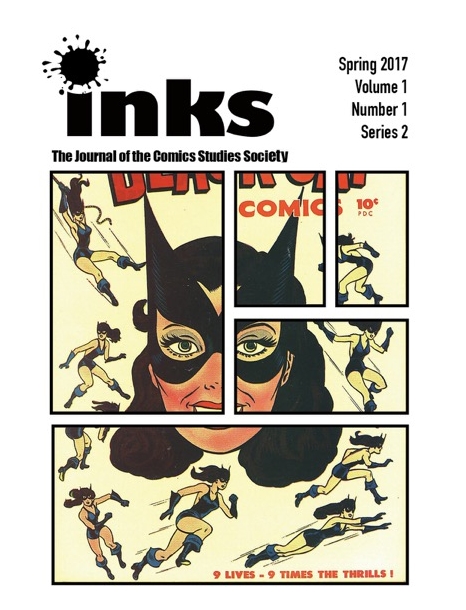

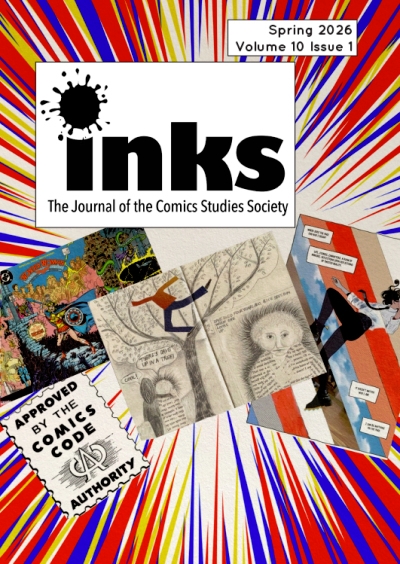
From the Spring 2026 (Volume 10 Number 1) issue of Inks: The Journal of the Comics Studies Society comes a roundtable discussion of “Looking Back, Looking Forward: A Decade of the Comics Studies Society.”
Hamilton College notes:
Written with leading scholars in the field, the roundtable essay reflects on the founding, growth, and future of the Comics Studies Society over its first decade.
The essay highlights how the Comics Studies Society evolved from an ambitious idea into a leading scholarly organization that today sponsors a major annual conference and publishes the peer-reviewed journal Inks. The piece reflects on the collective efforts that helped shape comics studies as a vibrant and growing academic field while considering future opportunities and challenges for scholars and practitioners.
The scholars include Hamilton favorite daughter Nhora Lucía Serrano, PhD (she/ella), Director of Academic Technology, Teaching & Research Services at Hamilton College; Jared Gardner is Joseph V. Denney Professor of English at the Ohio State University, he has authored or edited several comics related books; Charles Hatfield, PhD (he/him), Professor of English at California State University, Northridge, has taught comics for more than thirty years; A. David Lewis is an Eisner Award nominee (2015) and judge (2023), as well as co-editor of books about religion and comics; Matthew J. Smith is the Dean and Director of The Ohio State University at Newark. A past president of the Comics Studies Society, he has published twelve books; Qiana Whitted is Professor of English and African American Studies at the University of South Carolina. She is the author of books about race and comics.
This roundtable reflects on the first decade of the Comics Studies Society by examining how the organization took shape and matured. Contributors discuss its intellectual beginnings, practical foundations, communication strategies, and publishing work, considering how these efforts supported comics scholarship and what challenges and possibilities lie ahead for the field.
When Cartoonists Critique Cartoonists
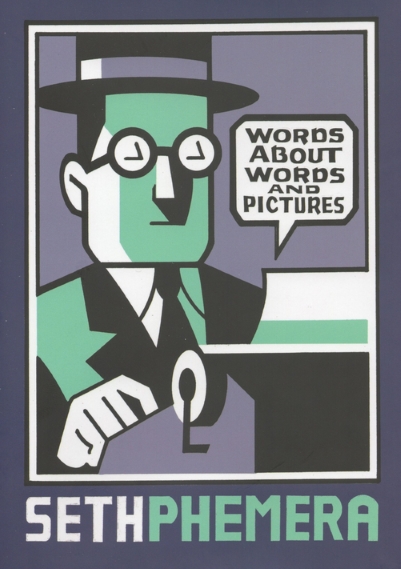
Sethphemera is a small collection of critiques by cartoonist Seth. In reviewing Sethphemera for The Comics Journal Hagai Palevsky delves into the question “Can the cartoonist be a critic?” Palevsky notes Chris Ware’s various “appreciations” before getting into the collection of Seth reviews. I guess in my case it would relate to the Ruben Bolling studies of various comics for Boing Boing which I read religiously.
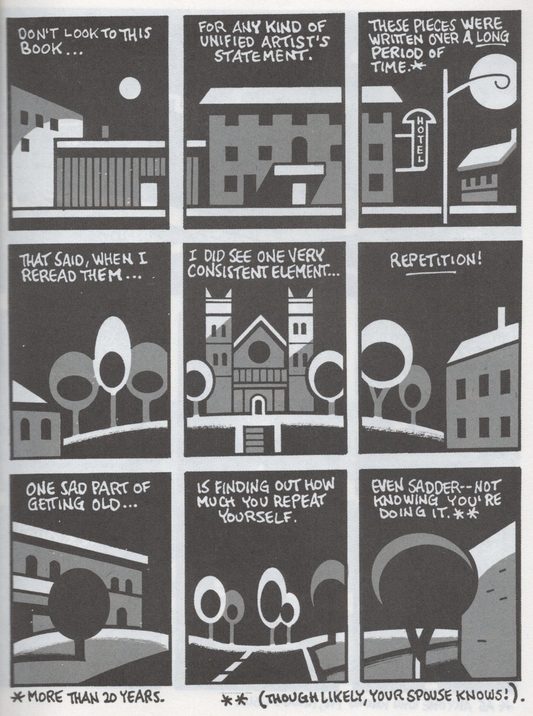
From Hagai Palevsky at The Comics Journal:
I don’t adhere to the idea that a critic must create in order to attain credence or validity, but more and more I find myself wanting to see cartoonists engaging with the works of their peers in a critical fashion, in earnest and on record.
Speaking of Chris Ware:
When he writes about the comics of others, he feels compelled to take on the role of “ambassador” or “advocate,” projecting the same insecurities outwards onto “comics” as a whole, to prove to his assumed audience of skeptics that, yes, comics can be art, comics can be serious. I need to be loved and respected is, regardless of time, a compelling sentiment; comics, as an art form, need to be loved and respected, twenty-something into the 21st century, is a tedious insistence that betrays its own insecurity.
That sentiment is reassigned to Seth and other cartoonist critics.
The Craft of New Yorker Cartoons – A Tom Toro Workshop
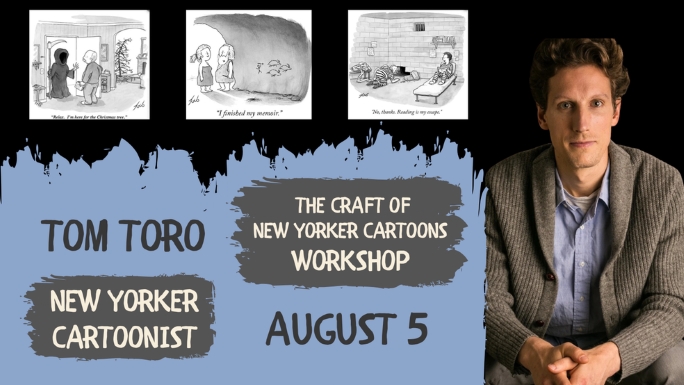
On the other hand it can be a good thing when cartoonists impart their years of knowledge and wisdom.
Tom Toro does that on August 5 at The Thurber House.
The Craft of New Yorker Cartoons
Wednesday, August 5 from 6:30-8:30 pm
Tuition: $15
Dive into the craft of cartooning with Tom Toro, one of The New Yorker’s contemporary stars. Participants will generate ideas from scratch, explore the art of composition and caption writing, and come away with a batch of their very own cartoons. For beginners and buffs alike. No prior drawing or writing experience is required.
This workshop is open to adults and teens ages 15+.
Greg Fox Goes His Own Way
Twenty-eight years ago cartoonist Greg Fox created a comic strip about a gay inn, Kyle’s Bed & Breakfast continues as a bi-weekly. One of his showcases is Out in Jersey magazine:
Artist Greg Fox is a creative staple in Out In Jersey magazine, and has been for years. His story-filled comic strip accompanies every issue we send to print. Kyle’s Bed and Breakfast is Fox’s super-queer saga of merging personalities and observations about the gay world.
This route was forged by Fox all on his own. While many colleagues battled between working with comic giants like DC and Marvel, Fox decided to make material he wasn’t already seeing.
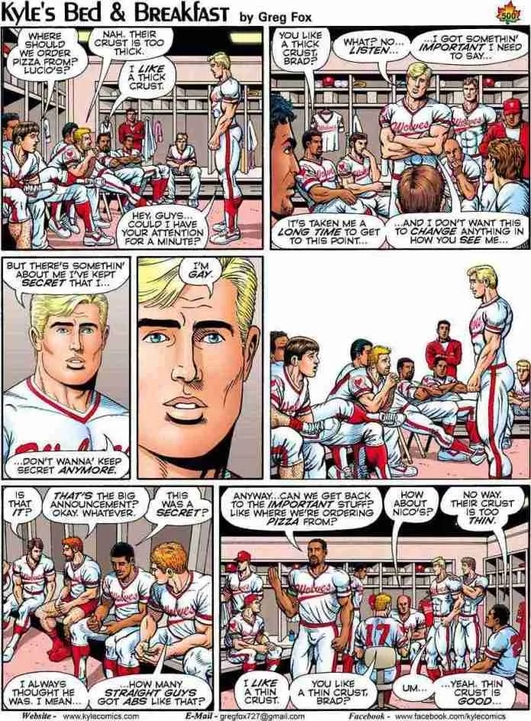
Jonny Kandell for the magazine recently interviewed cartoonist Greg Fox.
After I graduated college, I took a little detour and did a rock band thing for a couple of years, because I was also playing music. I figured if I didn’t do it then, I’d never do it. I was working in a music store at the time, and the comic stuff kind of crept back in. I started drawing cartoons and making signs for the store, and that led to someone asking me if I wanted to do a comic strip for a music magazine. I ended up doing a rock-and-roll comic strip for a couple of years, and that eventually led into doing comic books.
I was doing comic books professionally for about five years, mostly with indie companies. But I started getting frustrated because I wasn’t seeing any LGBTQ+ content in comics at the time. This was the ’90s, and the big companies like DC and Marvel just didn’t want to touch that. I wasn’t seeing myself reflected. So I started writing my own comic strip on the side about a gay baseball player, what his life would be like. It started small, but I kept building it out, adding characters, turning it into a bed and breakfast setting.
More About Cartooning with The New Cartoonist
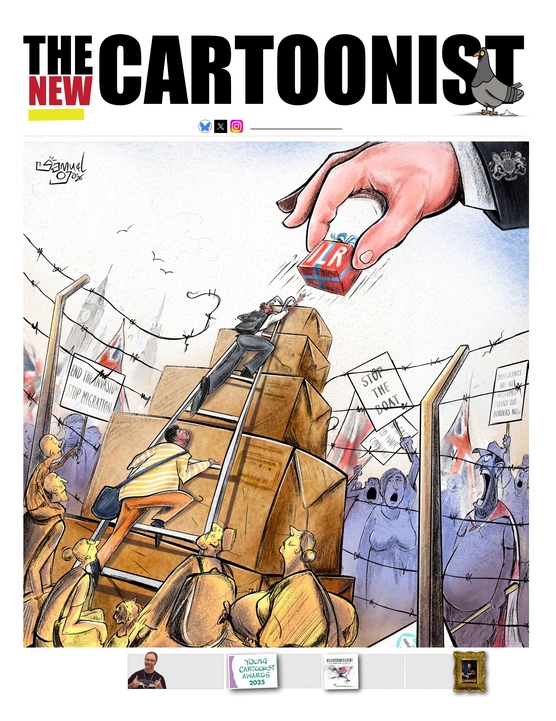
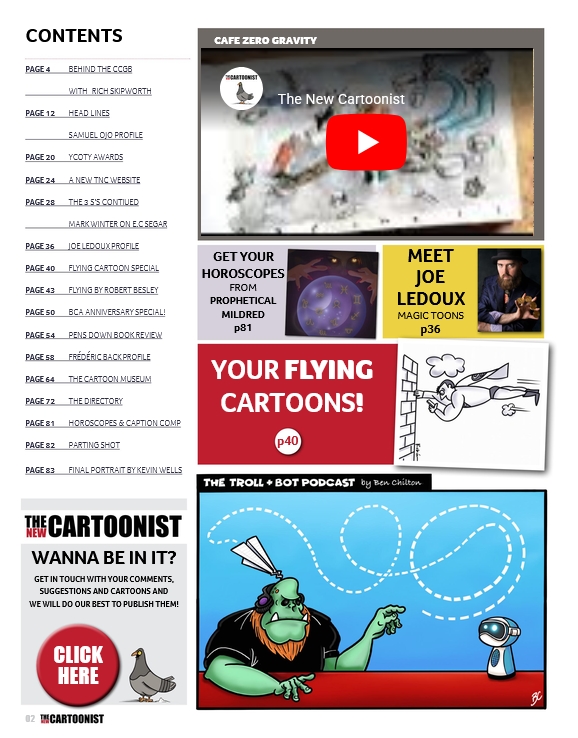
The New Cartoonist is a bi-monthly digital magazine dedicated to cartoonists, comic creators, illustrators, animators and fans of cartoon art. Inside each issue you’ll find exclusive interviews with professional cartoonists, information on upcoming events, exhibitions and festivals, and features exploring the history of cartoons, comics, and animation. We also explore the technology behind modern cartooning, including digital drawing tools, software, and innovations that are shaping the future of comics and animation.
We showcase emerging and upcoming cartoonists, giving new talent a platform alongside established creators. Whether you’re a professional cartoonist, an aspiring illustrator, or simply a fan of cartoons, The New Cartoonist brings together the people, stories, and artwork that define the world of cartooning.
The new digital issue of The New Cartoonist is out and now available.

Comments 1
Comments are closed.