Three Things I Learn This Week: Squeejiks, Swimsuits, and Shnobble
Skip to comments
I’m known to go down a rabbit hole from time to time and many of those threads come from something I saw on social media. Here’s three things I learned this week about Popeye (and billionaires), Marvel Comics Swim Suit Edition, and Will Eisner Mural in Copenhagen.
Be a Non-AI Generated Popeye
Tom Hientjes‘ reposted a Popeye comic panel on Bluesky that instantly threw red flags in my mind. In a world of easily faked imagery what are the chances that billionaires were a problem in E. C. Segar‘s day? Wouldn’t millionaires be a more appropriate for a villain in the 1940s? Or was this panel AI generated and projecting our contempt for today’s billionaire class?
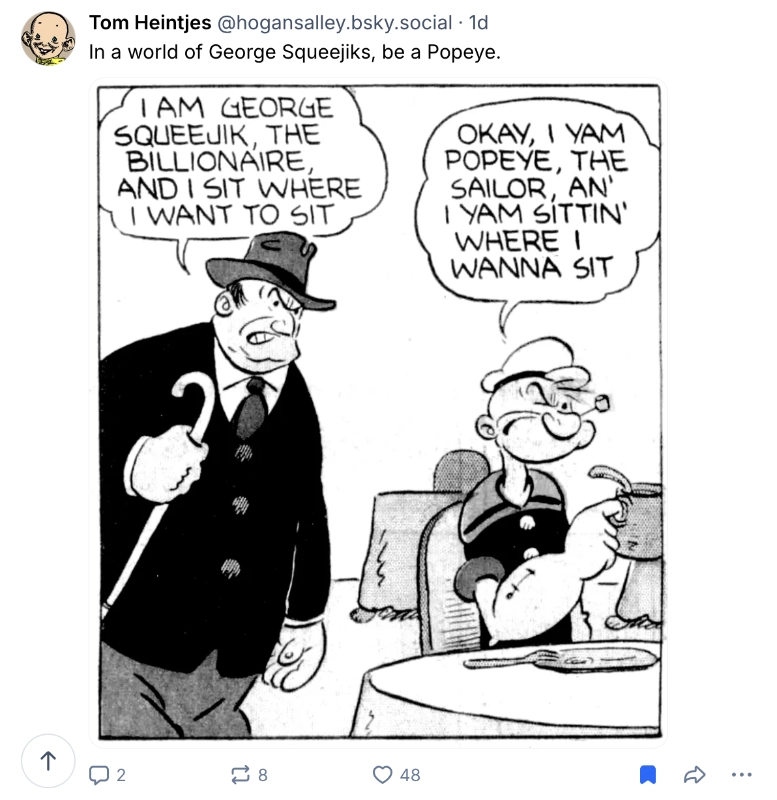
As it turns out, always trust Hientjes. This panel comes from a six-page Thimble Theatre story by writer and artist Bill Zaboly from 1940. According to Comics.org, the synopsis of the story is “when Popeye refuses to let billionaire George Squeejik have his table at a restaurant, Squeejik offers $1,000,000 to any fighter who can whip Popeye. He fights several brutes, including one who trains on carrots.”
That answers that question, but I still wondered if billionaires were a thing in the 1940s and were they societal tapeworms as they are today? Yes, billionaires existed, but their numbers were outnumbered by their comic page counterparts. In comics we had Daddy Warbucks (debut 1924), Bruce Wayne/Batman (1939), Lex Luther (1940), and Oliver Jonas Queen/Green Arrow (1941). In real life there were Henry Ford (~$1.2 billion) and John D. Rockefeller (~$1.4 billion).
But were they “good” billionaires? That’s a personal judgment call. Rockefeller donated over $540 million to education, public health, and scientific research. Ford took over financing of a defaulted construction of a Detroit hospital in 1914 and built the hospital with his own money, served as its first president, and over his lifetime gave the hospital $14 million.
Today, according to Forbes, the U.S. has 902 billionaires holding $6.75 trillion. I’ll second what Tom said, “In a world of George Squeejiks, be a Popeye.”
Marvel Swimsuit Issue
I was today’s years old when I learned Marvel Comics has a swim suit edition. I don’t know how long these special editions have been around (answer: six editions total starting in the early 1990s), but I am aware of criticism that superheroes body proportions are only possible with steroids and/or plastic surgery—or possibly a mutation. When I saw the Marvel’s announcement I instantly thought of the Reddit community /r/mendrawingwomen (aka “When Anatomy Attacks”) where folks share examples of “people improperly drawing women.” I’m guessing there will be ample fodder in this special edition for the reddit folks.
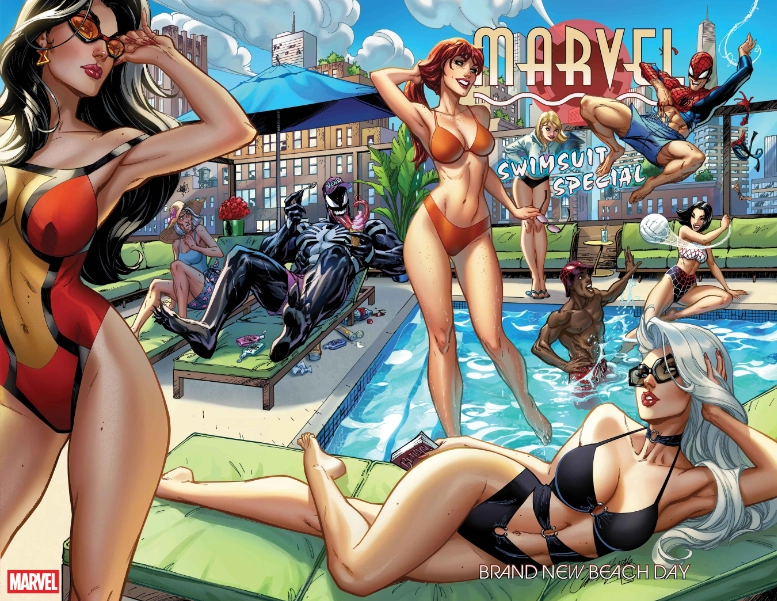
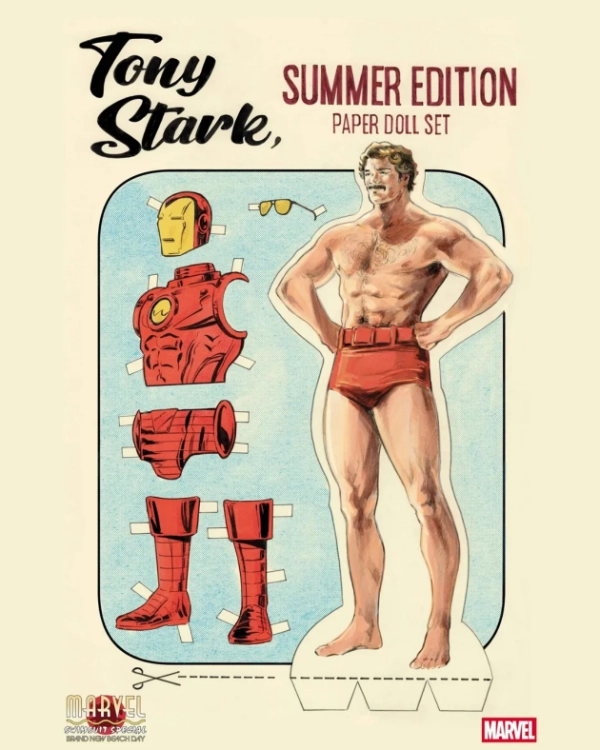
The second thought I thought was if there were any female artists working on this edition. Marvel only mentions five artists by name. Carmen Carnero is the only female artist listed. Looking through her IG account, I found her contribution—a 1970’s vibe Tony Stark. Maybe she couldn’t be trusted to draw inflatable pool sized boobs?
The Brand New Beach Day edition comes out on July 1 for those who want to read it for the articles.
Will Eisner Mural in Copenhagen
Comic book writer and inker Jimmy Palmiotti posted photos of the murals he’s encountered while in Copenhagen. One of them is a Will Eisner mural. Naturally, I needed to know more.
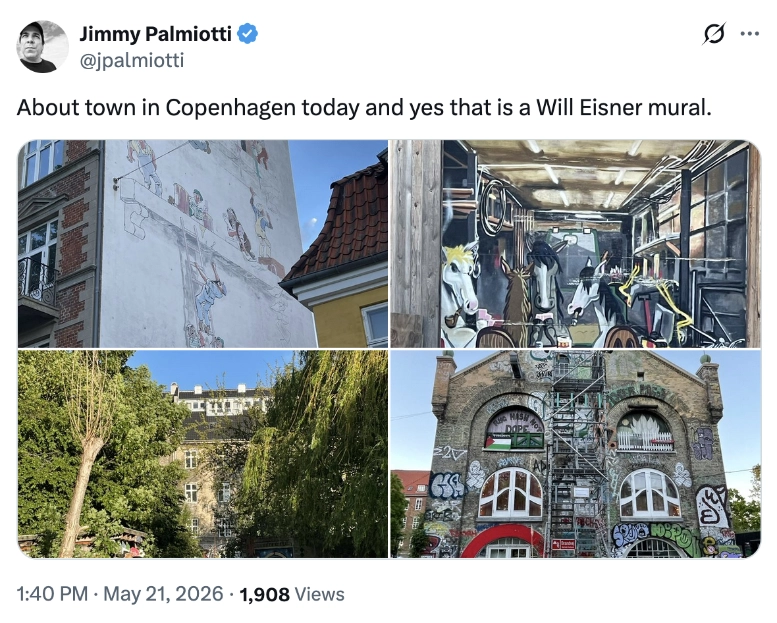
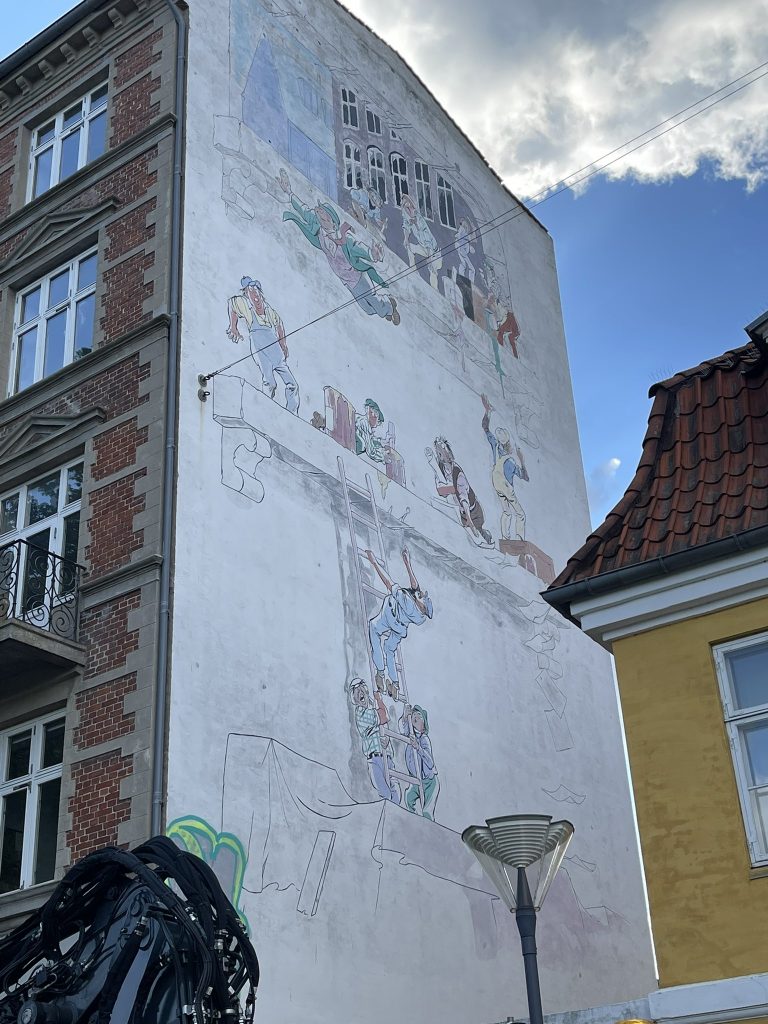
The mural is a reproduction of a 1995 signed limited edition print based on a 1948 Eisner newspaper comic called The Story of Gerhard Shnobble about a boy who discovers he can fly, but at the insistence of his parents, he hides his ability until he’s an adult.
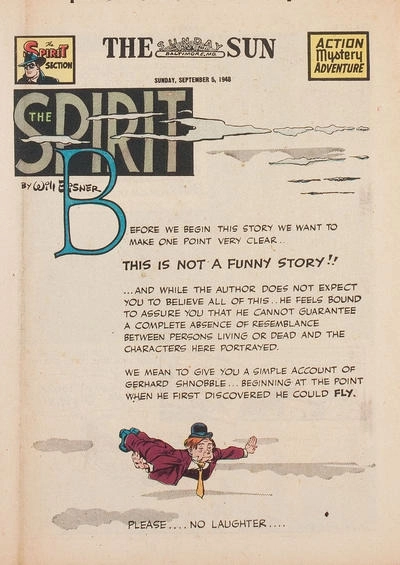
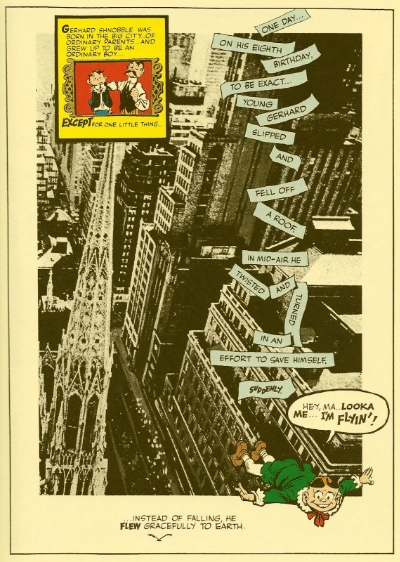
From Verden ifølge Seriemagasinet (The World According to Seriemagazine) the story begins…
He lives an ordinary life, is employed at the same bank for 35 years and is also promoted to chief night watch. On the same day as the promotion, however, there is a robbery in the bank at night. Gerhard is overpowered and locked in the box room.
The next day, he’s fired. As Gerhard walks home through the city, he comes to mind his special talent and decides to fly to honor and fame.
Gotta love a “follow your passion” story. But why the “this is not a funny story” warning on the front page? Whelp, according to the account ending summarized by Christianshavns Local History Association and Archive…
So he takes the elevator up a skyscraper to the roof, where a robbery is taking place involving a helicopter. One of Will Eisner’s comic book heroes – Spirit – is fighting the gangsters, but Gerhard Schnobbel ignores them and is only interested in jumping off the roof to fly, which he does, cheered on by all the people on the street who want to see him fly. In the heat of the battle, one of the gangsters shoots at Spirit but misses and instead hits Gerhard Schnobbel in the air, and he falls to the ground like a stone.
Since no one has noticed his flight, the newspapers describe him as a random passerby. But Gerhard Schnobbel’s fate is not quite so sad – HE DIED HAPPILY
In mural was created in 1995, 10 years before Will passed away.
Below is a page-by-page look at The Story of Gerhard Shnobble in handy-dandy video format.
Correction: D.D. Degg tells me that the mural is a reproduction of an Eisner limited signed print based on The Story of Gerhard Shnobble. Article has been updated.

Comments 12
Comments are closed.