India Publisher Demands Changes in New Joe Sacco Book
Skip to comments
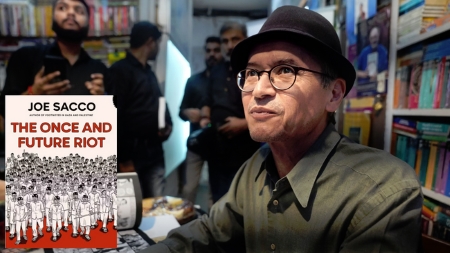
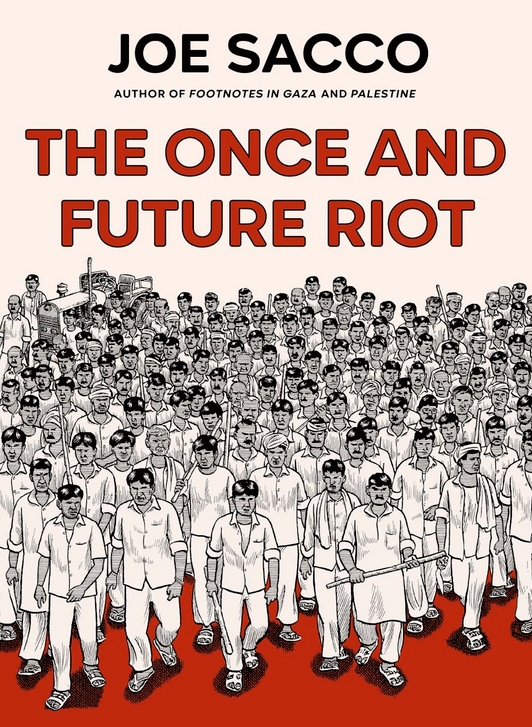
Penguin Random House India is demanding changes to renowned graphic journalist Joe Sacco‘s latest book before it is willing to publish the graphic non-fiction The Once and Future Riot for its Indian audience.
Shahana Yasmin for The Independent reports:
Penguin Random House India has withdrawn Joe Sacco’s latest book on a 2013 episode of sectarian violence after demanding editorial changes the author claimed amounted to “finding excuses” not to distribute it.
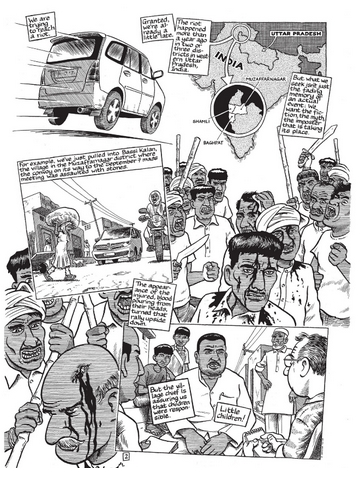
The Once and Future Riot is Sacco’s graphic reconstruction of the 2013 Muzaffarnagar riots in the northern state of Uttar Pradesh, where over 60 people were killed and about 40,000 displaced, the majority of them Muslims, in the run-up to the election that brought Narendra Modi and his Hindu nationalist BJP party to power.
“I was issued a five-page list of changes, corrections, and some requirements. I looked it over, and some of what they were asking seemed quite onerous to me,” Sacco told The Wire.
“Verifications of consent from people I’d spoken to, verifications of likenesses, my drawings I guess.”
“The main thing for me was changes that seemed like editorial changes they were asking for,” the writer added, “removing quotes about public figures, removing quotes from a public figure I talked to, even to the extent of ‘move this caption down the page.’”

Penguin Random House India chief executive Gaurav Shrinagesh told the Indian Express this week that the book had been flagged during a “pre-check and legal scrutiny process”.
“We had highlighted certain things on the Joe Sacco title but [Penguin UK] did not get back to us,” he told the newspaper.
“One problem was a map in the book showing inaccurate boundaries of India. Besides that, we had raised some content questions and asked for citations which never came.”
Joe Sacco maintains that the requests were made to avoid publishing a politically embarrassing news story.
Ita Mehrotra writing for The Indian Express covers the publisher’s refusal to publish in an opinion piece titled – “The Joe Sacco book that India won’t read.”
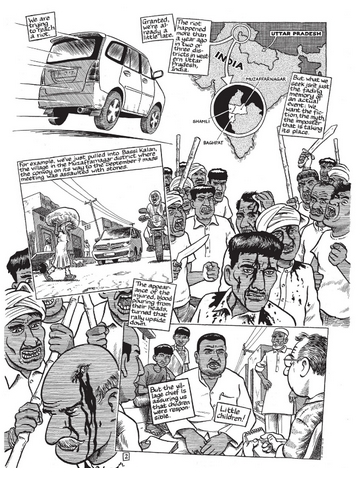
Across various panels in the book we can see a skeptical Sacco leaving conversations he is having, only to question the truth of what he’s being told, such as by upper-caste leaders in a particular village. For Sacco, part of keeping at writing and drawing this book over many years was also because he felt he had “troubled people for their stories” and had to honour that somehow.
It is precisely this play between personal and political, objective and affective, that makes comics journalism so appealing.
It also inserts the researcher as a human being sitting within conversations and untangling messy webs of stories instead of being an all knowing and all powerful entity.
Mehrotra concludes that the book is important to teach Indian cartoonists the power of graphic journalism:
Without works like this around, what is the kind of visual storytelling, illustrations and comics that are going to surround us — do we really need yet another sci-fi mythological reinterpretation cramming up bookstore shelves?
Comments 2
Comments are closed.