CSotD: Humorous Takes for a Dull Day
Skip to comments
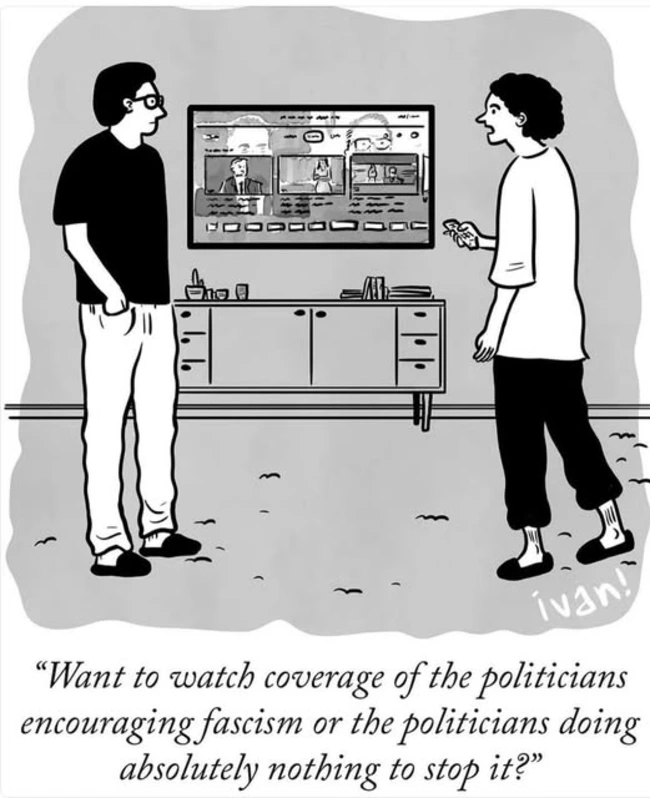
I choose “Neither.” There’s a lot of news today, but it’s extensions of yesterday’s news and I had enough of that yesterday.
Though, to contradict this cartoon, there are politicians trying to do something to stop it, but their legal cases are all pending at the moment, and it’s not clear that Dear Leader has any interest in obeying what the courts say anyway.
Tragedy tomorrow; Comedy tonight.
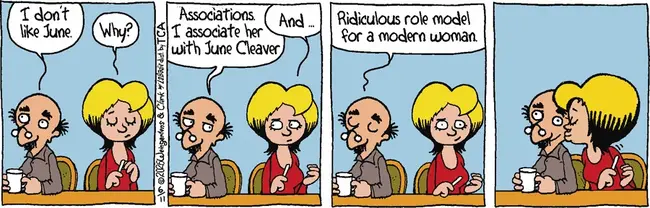
Doesn’t mean I’m turning off my critical faculties for the day. Lucretia is Barney’s trophy wife and, as far as I can tell, stays home all day being pampered. And June Cleaver came from a somewhat wealthy family but did all her own housework, while Lucretia has Consuela to handle that.
Gag would have worked with Ms. Foxx, but it doesn’t with Lucretia.
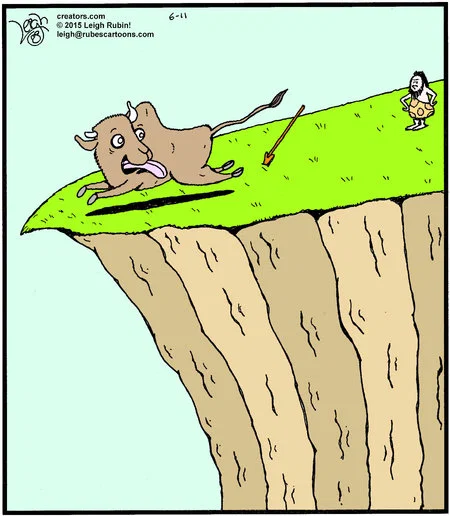
No joke here. Rubes immediately brought to mind one of the ways Plains people hunted buffalo, presumably developed before they had horses, but used later as well. They’d get everybody out to half-surround a herd, then wave blankets and raise hell until the buffalo panicked and ran themselves off a cliff.
June being National Indigenous History Month in Canada, there are special programs going on at Head-Smashed-in-Buffalo-Jump, a World Heritage Site on Blackfoot territory in Alberta.
There’s a similar place in Wyoming, where a substantial variety of Plains people ran buffalo off cliffs.
There’s a popular saying that the Indians used every part of the buffalo, which is true in that they had uses for every part of the buffalo. But it doesn’t mean they used every part of every buffalo they successfully hunted, and the buffalo jump sites are full of what you might call “spare parts.”
Though to soften that a bit, it should be noted that when someone made a new tepee cover — which called for several well-prepared buffalo hides and was a major task for the woman as well as requiring major hunting skills from the man — the family would donate their old cover to one of the poor families in the band.
Pete Seeger was fond of pointing out to his McCarthy-era critics that the Native Americans were socialists, and it was considered shameful not to share the proceeds of a successful hunt or horse raid with less fortunate members of the group.
This generosity was how leaders like Crazy Horse and They Fear Even His Horses gained political power.
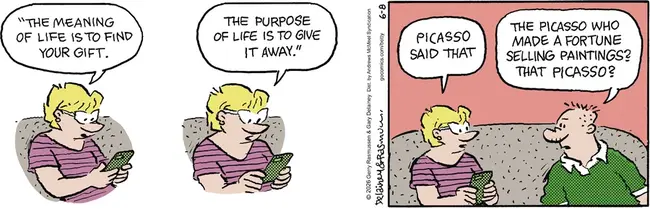
Bub brings generosity down to earth, though I’m not sure how much Picasso profited from the vast sums his paintings have been sold for, since the value of such things invariably rises with the death of the creator. But unlike Van Gogh and many others, he and Dali managed to live long enough to enjoy fame and didn’t exactly shrink from the public eye.

Both these strips are part of story arc this week about Bub trying to find his gift, which made me laugh because, as I’ve noted before, I planned out 15 years to become a novelist, by the end of which I realized (A) I wasn’t gonna be a novelist and (B) fortunately, there were others kinds of writing I was good at and really enjoyed and that paid a pittance but enough to live on.
There are people who sneer at the saying “Find something you love and you’ll never work a day in your life.” We ought to pity the fact that they apparently never found that something.
Rather than dwell on such downers, check out the brilliant commencement speech Bill Watterson gave to the Class of ’90 at Kenyon.
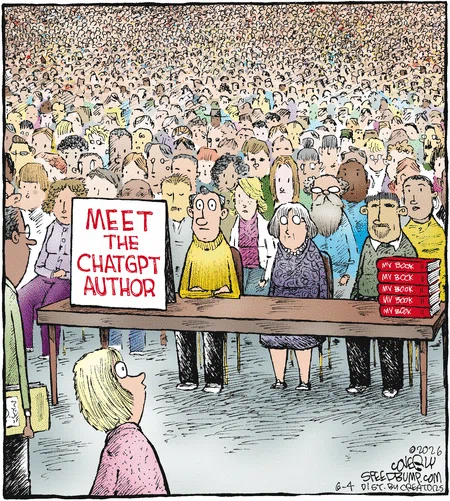
Still on the topic of creative writing, it ain’t creative if it involves using AI, and this Speed Bump reminds me of that warning about casual sex and STDs, which says you’re not only making love to a particular person but to everyone they’ve ever made love to. Think of AI as artistic clap.
Publishing houses are now being inundated with computer-generated manuscripts, and while most are easy to spot, Hachette withdrew a novel after publishing because of an AI infection.
It also reminds me of sitting in a bar with a musician where the entertainment was a guy on a synthesizer that replicated a mediocre cover band. When he launched into A Horse With No Name, my companion observed that it only has two chords, which the fellow ought to have been able to handle himself.
Anyway, for both authors and geeks, here’s a fascinating account of lighthouse keeper Elias Thorne, one of the most prolific imaginary authors of the modern era.
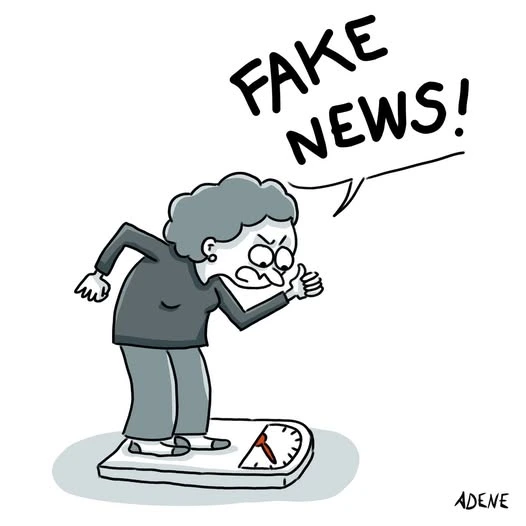
Derenne points out the conceptual link between those who refuse to believe news that doesn’t meet their expectations and those who refuse to believe similarly disloyal bathroom scales.
And I’d point out that she drew this before Kristen Welker discovered what happens when you keep asking a toddler to provide evidence for his claims. The relationship between media and science is that we’re regressing to the medieval approach that science should prove what you already believe and that reporting should do likewise.
Both beliefs are apt to produce fatal outcomes.
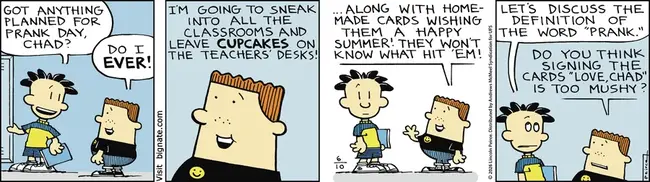
Big Nate has featured a story arc about year-end pranks this week, which is something I never experienced, because we played pranks in school any time we thought of them, my little brother gaining fame as part of a group that went up on the roof of the single-story elementary wing one winter night and erected a huge hand made of ice-covered snow, one finger lifted in the direction of the two-story high school wing.
The head custodian just went up and knocked it down, while, as an indicator of how times change, some years later somebody set a rooster loose in the school at night and they called in the State Police to investigate the crime.
I wish I were making that up.
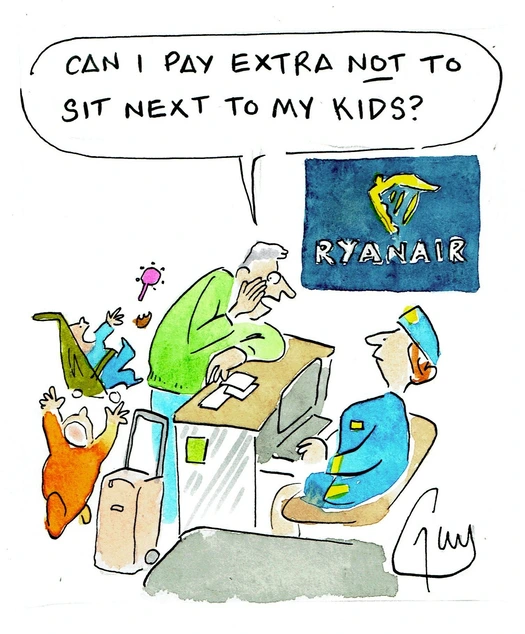
Venables reminds me of a time I was flying with then-wife and our boys, who were three and six. The airline messed up our seat assignments and wanted us to break three-and-one, expecting one of us to take both kids.
When we announced that the three-year-old would sit alone, they somehow managed to find two pairs of two seats after all.
Mike Peterson has posted his "Comic Strip of the Day" column every day since 2010. His opinions are his own, but we welcome comments either agreeing or in opposition.

Comments 14
Comments are closed.