Gerald Scarfe – Senior Stripper
Skip to comments
The Daily Cartoonist wishes the wonderful cartoonist and caricaturist Gerald Scarfe a happy 90th birthday!
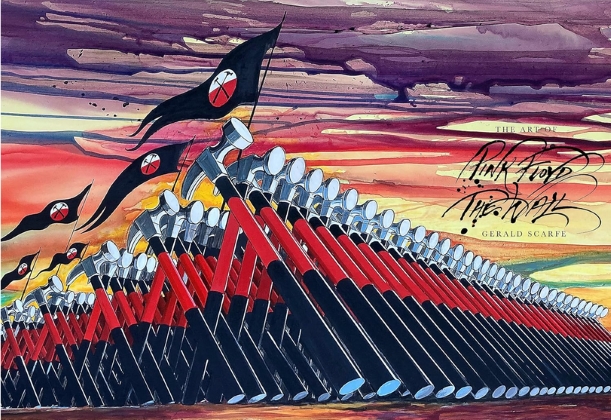
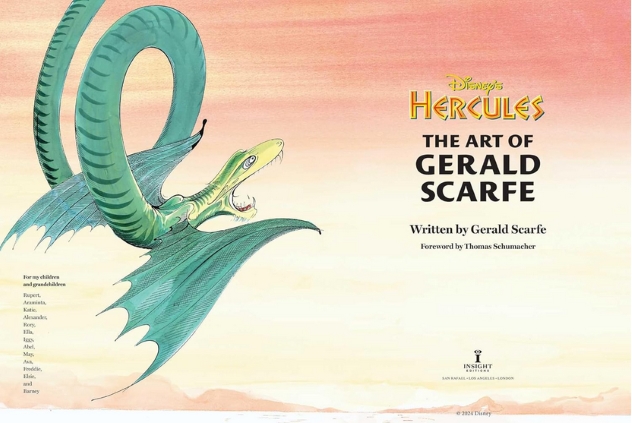
Artist Gerald Scarfe, born on June 1, 1936, joins our Senior Strippers Club.
From the Gerald Scarfe homepage:
Born in London in 1936, Gerald’s career has spanned more than 60 years.
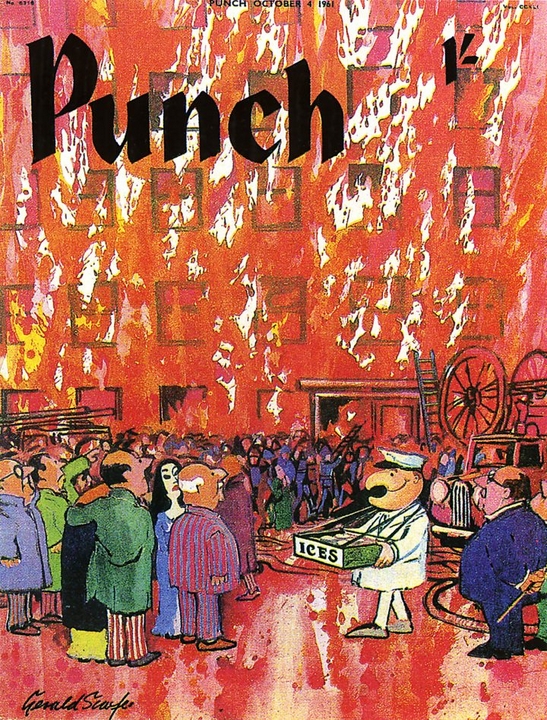
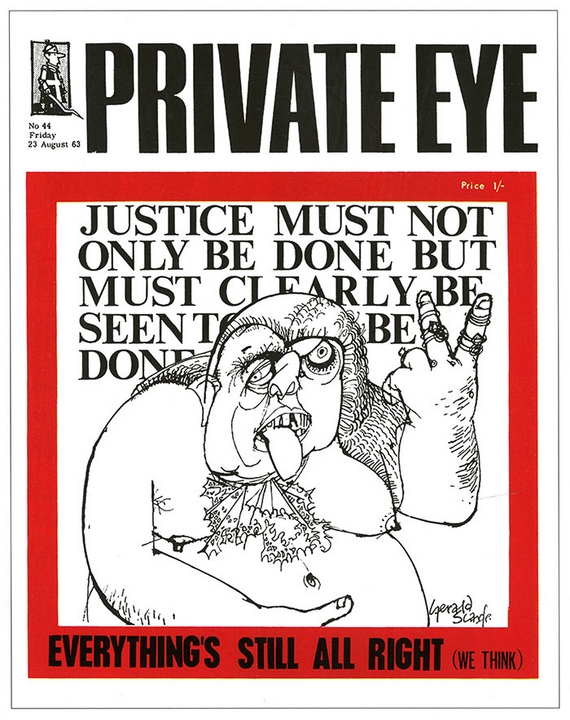
He established himself as a satirical cartoonist working for Punch magazine and Private Eye during the early sixties. He was political cartoonist for the Sunday Times for 50 years, and for The New Yorker magazine for 15 years.
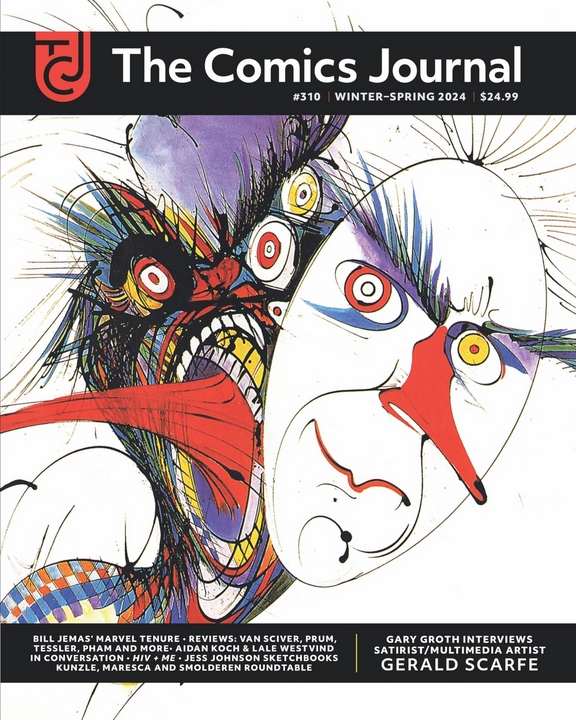
In 2024 The Comics Journal #310 cover featured a Gerald Scarfe profile and interview.
In 1960, Scarfe finally had a cartoon accepted by Punch. To a cartoonist breaking into the magazine market, Punch was the UK equivalent of the New Yorker or Playboy in the U.S. — the gold standard of mass market cartoon publishing. Among the educated classes, reading Punch became sine qua non. Its humor and satire was sophisticated without being offensive or threatening. It published a long list of distinguished cartoonists throughout its years, including Quentin Blake, H.M. Bateman, Michael ffolkes, Leslie Illingworth and many, many more. It was even the first to coin the term “cartoon” (in 1843). But by the time Scarfe was accepted into the ranks of Punch, and had become a regular contributor, the magazine was already on its way to becoming editorially sclerotic.
Too radical for Punch, as it turns out; but, fortuitously enough, along came Private Eye, which Scarfe says changed his life.
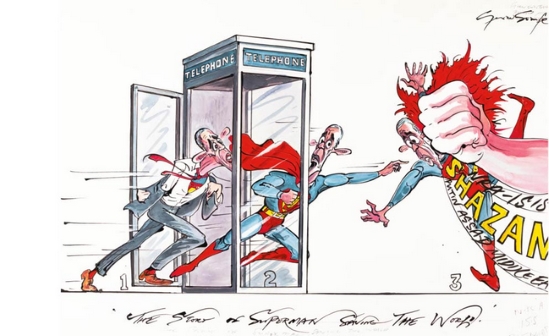
From the Gerald Scarfe entry at Lambiek’s Comiclopedia:
Gerald Scarfe is a world renowned British political cartoonist and caricaturist. He’s instantly recognizable for his swift, pointy linework and often monstrous-looking caricatures of politicians. In 1966, he was the first cartoonist since the Victorian era to openly portray and ridicule the British monarch. His notability among the general public rose thanks to his work for Pink Floyd, particularly their cult movie ‘Pink Floyd: The Wall’ (1982), which featured his animated sequences. Fans of British comedy might recognize his style from the opening credits of the sitcom ‘Yes Minister’ (1980-1984) and its follow-up ‘Yes, Prime Minister’ (1986-1988). Last but not least, he designed the graphic look of the Walt Disney film ‘Hercules’ (1997).
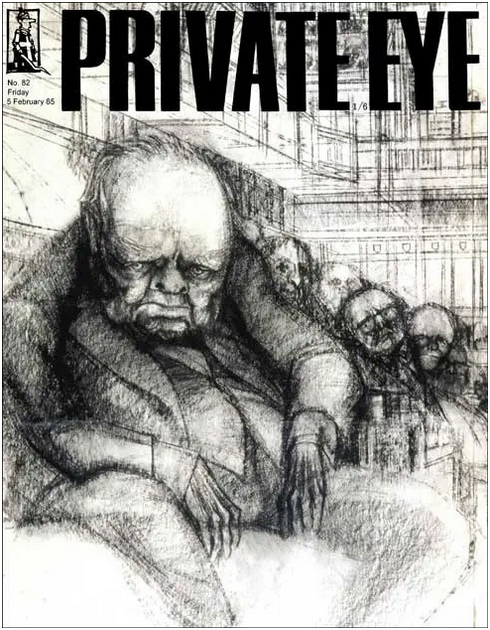
Apart from nudity, Scarfe broke even more taboos in the British press. On 28 July 1964, he was commissioned by the Sunday Times to draw a portrait of former Prime Minister Winston Churchill, who would give his final address to the House of Commons before leaving politics due to his advanced age. Scarfe was shocked to see “a shambling senile wreck of a man”, which the media had carefully hidden from the public. He nevertheless drew what he saw, convinced that the paper would never publish it. They indeed didn’t, but when Churchill passed away on 24 January 1965, Private Eye’s editor Peter Cook asked Scarfe whether he had any drawings depicting the late Prime Minister. Once he saw the rejected sketch, he put it on the front page of the next issue (5 February 1965). As expected, it caused instant scandal, not just because the war hero was so beloved and respected, but also since many felt it was “too soon”. As always, it also made Scarfe’s reputation grow, increasing the demand for his work.
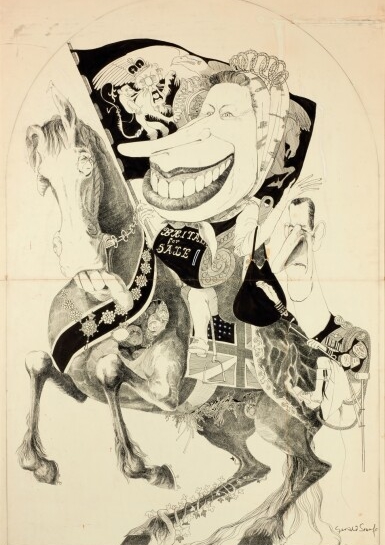
In 2017 Southby’s auctioned some Gerald Scarfe original art. The 134 drawings are still available for viewing.
A critical assessment of Gerald Scarfe’s career from the British Cartoon Archive.
Comments
Comments are closed.