Wayback Weekend Wonderment
Skip to comments
The Invention of the Mass Media, a Printing Revolution; Resizing Newspaper Comic Strips; The Tradition of Comic Art Satire; and Leo Baxendale.
The Invention of Mass Media
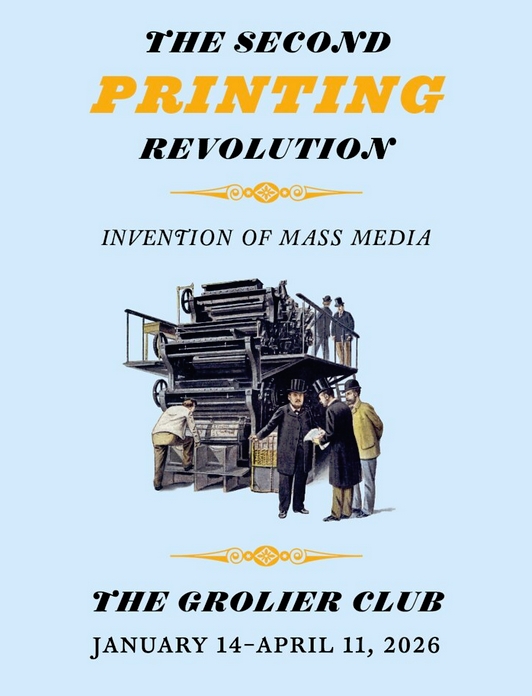
The Grolier Club’s The Second Printing Revolution: Invention of Mass Media exhibit ends in a week:
This exhibition tells the story of the second printing revolution that took place during the 19th century: the transition from book production as exclusively handcraft to the mechanized production of papermaking, printing, illustration, typesetting, and bookbinding. Curated by Jeremy Norman from his collection, the exhibition features 150 books, prints, and artifacts from 1800-1904, including the first book entirely printed by machinery rather than a hand press, the first illustrated book printed on a printing machine, the first book with gold stamping directly into cloth, and many other rarities from England, France, Germany, and the United States.
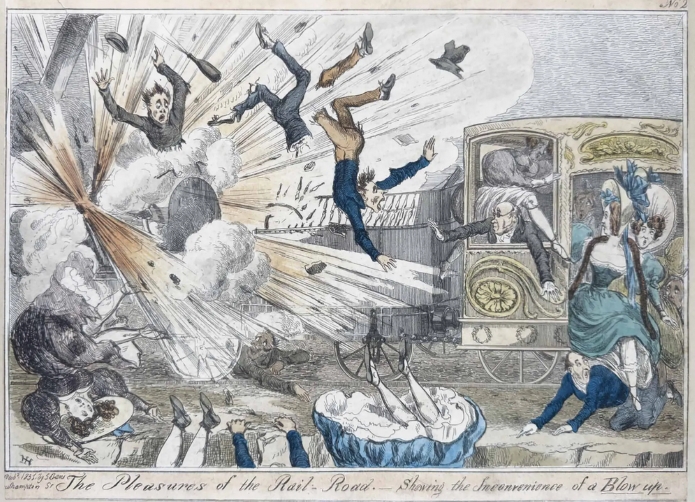
…Indeed, the ways in which the “printed” word is delivered to your eyes and brain have been wrung through several revolutions over the past few centuries, culminating — until some tech behemoth begins beaming it directly into your cerebellum — in the digital text you’re reading right now.
The Grolier Club’s current exhibition, The Second Printing Revolution: The Invention of Mass Media, slides down some fascinating meta-chutes to illustrate — literally — how the invention of steam-powered rotary presses, mechanized bindery machines, and other Industrial Revolution innovations outstripped verbal pronouncements from the pulpits and podiums of the elites by delivering daily broadsheets of news, opinion, debate, gossip, and scandal directly into the roughened hands of newly mass-literate workers in Europe and America.
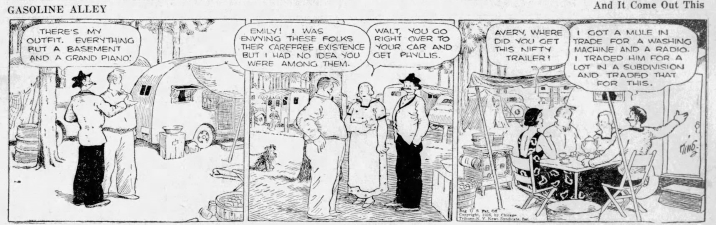
Resizing Newspaper Comic Strips in 1936
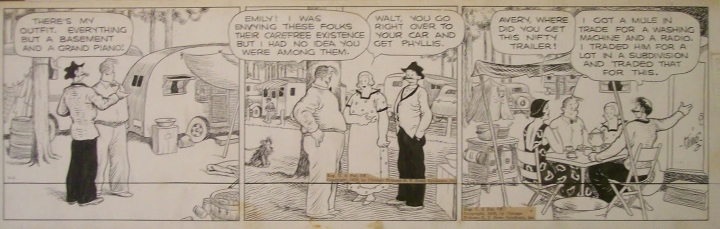
Sean Kleefeld at Kleefeld on Comics brings to mind another bit of comics printing technology:
You might notice a black line running through the whole strip about 3/4 of the way down. That’s actually not uncommon to find syndicated comic strip art from that era defaced in such a way. Why? Well, here’s what the ebay seller who I originally saw selling this years ago said to explain it…
The black line through the lower section of the art is typical for daily comic strips from the 1930s-1940s. During this period, strips were run in two different sizes (full and reduced)…
My surprise came with the date, I remember the innovation as being a WWII occurrence to save paper.
A Golden Age of British Satire
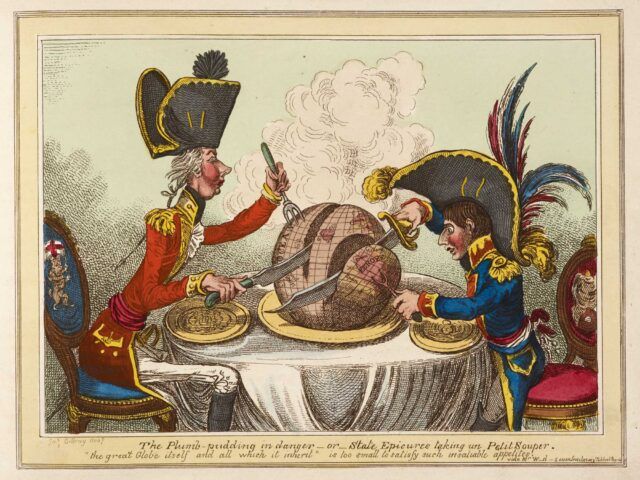
From The Irish Times is Felix Larkin on how cartoonists have skewered politicians for centuries.
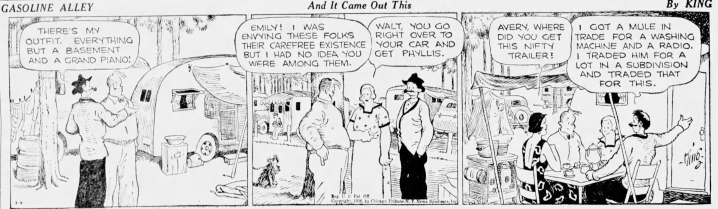
When Martyn Turner skewers today’s politicians in his cartoons for this newspaper, he is following in a rich tradition of visual satire that stretches back to the late 18th century.
The early years of such satire in Britain – the period from the 1780s to about 1820 – is recognised as a golden age of British satire. The leading practitioners of the art of visual satire in that period were James Gillray (1756-1815), Thomas Rowlandson (1757-1827) and Isaac Cruikshank (1764-1811).
Unlike today’s cartoons, their work was published and sold as prints on single sheets of about A3 size [11.7 x 16.5 inches/297 x 420 mm]– artefacts in their own right, as distinct from featuring in a newspaper or magazine. They were sold through specialist print shops and displayed prominently in the windows of the shops…
Leo Baxendale, The Bash Street Kids, and Minnie the Minx
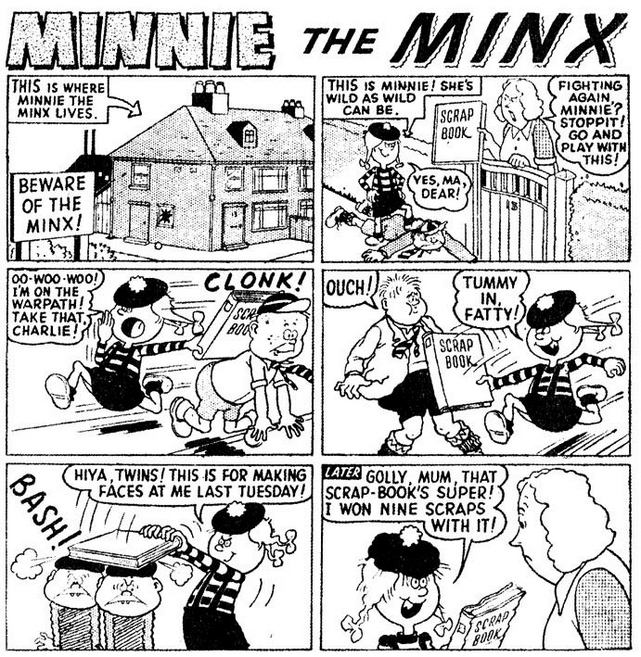
Caroline Musgrove for Lancashire Post profiles local cartoonist with a Dennis the Menace connection (or here):
[Last month], Dennis The Menace turned 75. But did you know that his ‘cousin’ – and a whole host of other Beano favourites, were created by a Preston man?
Cartoonist Leo Baxendale, who honed his skills at the Lancashire Post, created Minnie the Minx and the Bash Street Kids, who have delighted youngsters for generations and feature in a special anniversary edition of The Beano to mark Dennis’ birthday.
Yeah, it’s the UK Dennis the Menace. More about Leo Baxendale at Lambiek’s Comiclopedia.


Comments
Comments are closed.