RIP – The Mass Market Paperback
Skip to comments
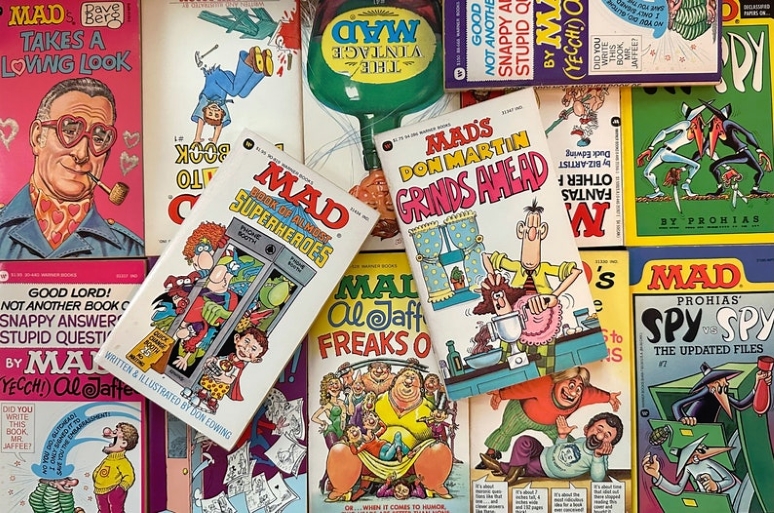
I bought my fair share of mass market paperbacks (mmpb) in my youth: classics, science fiction, detective, World War Two, and, of course, comicbacks. These books have declined in sales and will be much harder to find as Readerlink, the largest distributor in North America, is reportedly stopping distribution of them at the end of the year.
Jim Milliot over at Publisher’s weekly reports about the height and decline of the format:
The decision made this winter by ReaderLink to stop distributing mass market paperback books at the end of 2025 was the latest blow to a format that has seen its popularity decline for years. According to Circana BookScan, mass market unit sales plunged from 131 million in 2004 to 21 million in 2024, a drop of about 84%, and sales this year through October were about 15 million units. But for many years, the mass market paperback was “the most popular reading format,” notes Stuart Applebaum, former Penguin Random House EVP of corporate communications. Applebaum was also once a publicist at Bantam Books, one of the publishers credited with turning mass market paperbacks into what he calls “a well-respected format.”
When the heyday of mass market paperbacks was has been debated by industry veterans, but it is generally acknowledged to have run from the late 1960s into the mid-’90s. According to Book Industry Study Group’s Book Industry Trends 1980, mass market paperback sales jumped from $656.5 million in 1975 to nearly $811 million in 1979, easily outselling hardcovers, which had sales of $676.5 million, and the new, upcoming format, trade paperback, which had sales of about $227 million.
Richard Curtis, a New York literary agent, outlines the reasons for the decline:
The reasons for the collapse of mass market paperbacks are complex but can be traced to several fundamental shifts in publishing culture.
· Tissue-thin profit margins. Publication and distribution had become exceedingly cost-ineffective compared to other (and higher priced) print formats like hardcover and trade paperback.
· The gradual disappearance of paperback racks and other displays in drugstores and supermarkets, and the explosive growth of chain bookstores whose bookshelves do not display MMPBs as effectively as trade paperbacks.
· The decline of book departments at big-box stores like Walmart, where paperbacks failed to meet the test of profitability per square foot of display space compared to other consumer goods like deodorant and panty hose.
· The rise of e-books as a preferred reprint format. Because e-books are released simultaneously with hardcover editions, as opposed to mass market paperbacks which are traditionally issued a year or longer after a book’s first edition, e-books have a huge advantage over MMPBs. Plus e-books are cheaper.
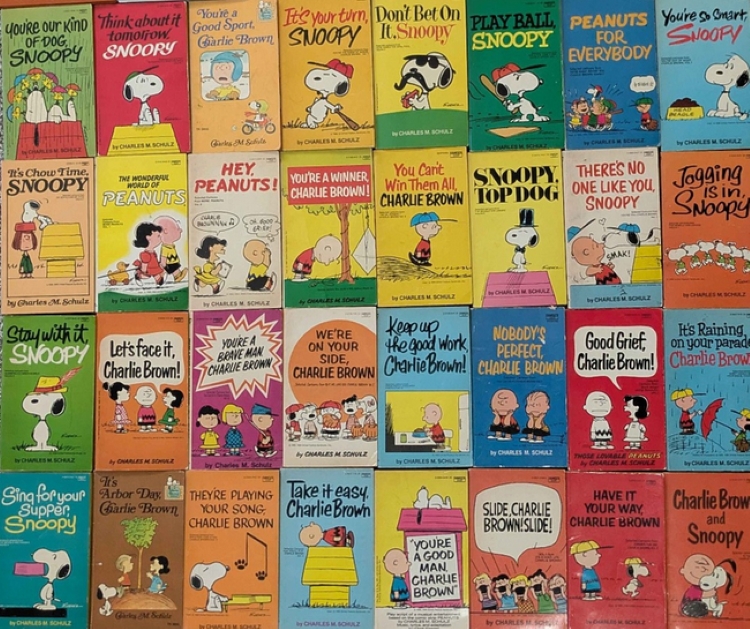
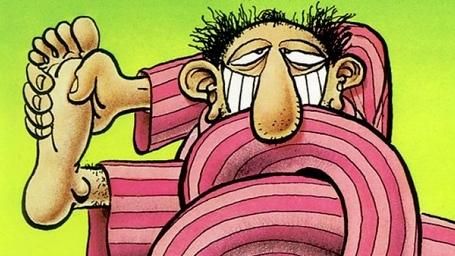
For a time I made weekly trips to the not-quite-local newsstands for the Sunday newspapers and the mass market paperback comic books where they had their own rack section. Admittedly not as expansive as the other genres but there would be new ones weekly – Tumbleweeds, B.C., Broom-Hilda, Wizard of Id, Beetle Bailey, Hagar the Horrible! And the occasional Dick Tracy, Flash Gordon, the Marvel and DC comic book and comic strip mmpb, and the collections of magazine cartoons from the likes of Playboy!
Those were the days my friend.
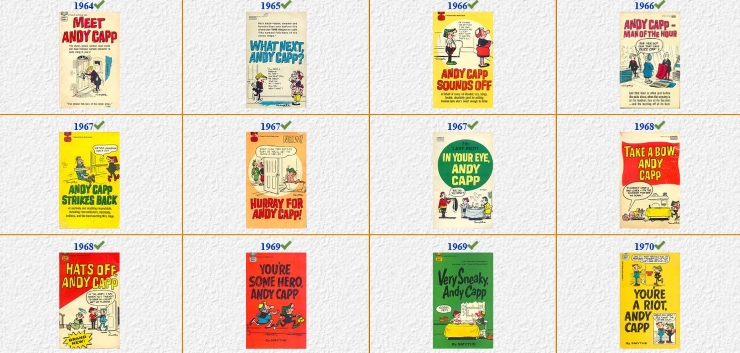
feature image cribbed from Mark Evanier
Comments 13
Comments are closed.