CSotD: Now We Know
Skip to comments
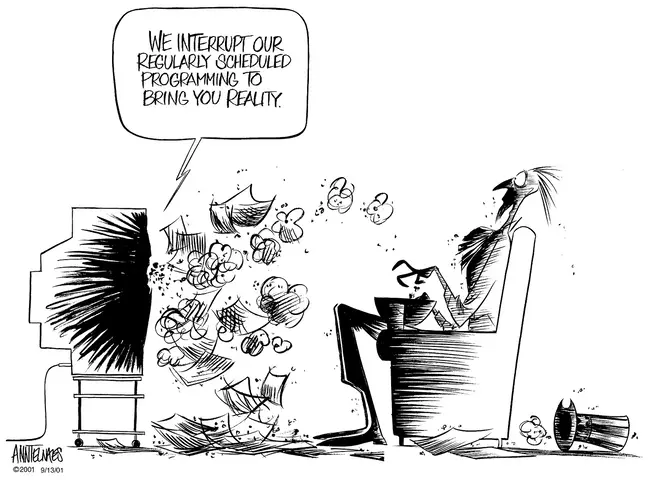
While other cartoonists reflected the mood 25 years later, or encapsulated how we’ve changed and what we’re learned since, Ann Telnaes instead posted a collection of her 9/11-related cartoons from that moment, including this first impression, which is dated 9/13/01.
It’s a better cartoon than much of what ran in the days following the attack. I honestly lost count of the number of weeping Statues of Liberty that were cranked out, but they made up a considerable percentage of responses, and there were also a significant number of angry eagles and Uncle Sams vowing vengeance.
I didn’t want vengeance. I wanted it to not have happened.
But it had happened, and it felt as if it had never happened before. I’m not sure why. We’d had years of terrorist bombings and attacks in Ulster, as well as in the Basque Country and in Germany, plus we’d seen terrorist attacks in Quebec and we’d even had the Oklahoma City bombing here six years earlier.
This felt different, perhaps because it happened on television and somewhat in slow motion.
In 1968, a few months before the Democratic Convention, there was an anti-war march in Chicago that, though peaceful, became a police riot, with smashed faces and broken bones.
As we were walking away, a carload of young Black men drove past, with several of the occupants leaning out the windows shouting “Now you know! Now you know!”
Indeed we did. Daley’s cops had a reputation for brutality in the ghettos, but this time, it happened to “us.” I felt that way again in 2001: I was shocked less by what had happened than I was by the fact that, this time, it wasn’t happening to somebody else.
Now we knew.
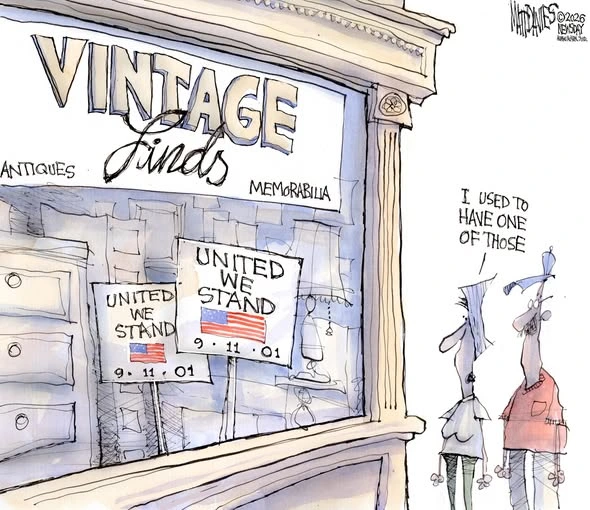
And for a moment, as we recoiled in shock, we recoiled together.
We didn’t know what to do. The NFL discussed whether to cancel the games in the coming weekend, whether we ought to pause in honor of the dead or break the grip of horror and let the games be a distraction.
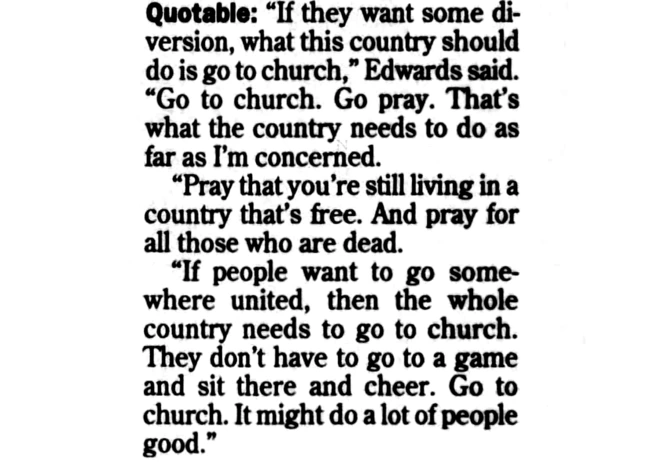
The NY Jets, who played in view of where the towers had been, did not want to play, and their coach, Herm Edwards, sealed the decision with a furious, pointed summary of his feelings, and that of his players:
As Davies says, however, that mood, that movement of pulling together, passed into history.
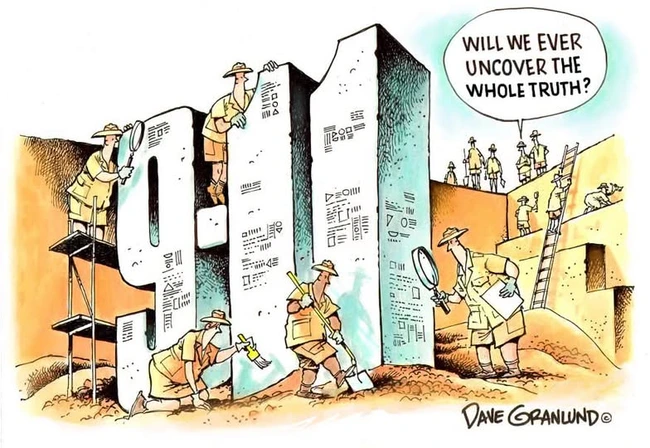
We’ve still got people puzzling over the event, as Granlund says, and we likely always will. The paranoid, lunatic theories appeared quickly, with people claiming it was an inside job and explaining in confident, ignorant terms how jet fuel burns through steel and advancing other delusional proof of their theories.
Why should 9/11 be any different than JFK’s assassination or the attack on Pearl Harbor, both of which were also inside jobs, if you ask the right people?
But even rational people have explanations, and the CIA’s unsealing of Osama bin Laden’s papers adds additional fuel to the speculation that has always surrounded the fact that Clinton and Bush had both been warned of a potential plot.
I have not yet seen an analysis that explains whether those warnings came alone or were buried deep in a sheaf of other briefings. Nor has anyone said how many other possible threats they were warned about, and how many of those ever came to pass.
Juxtaposition of the Day
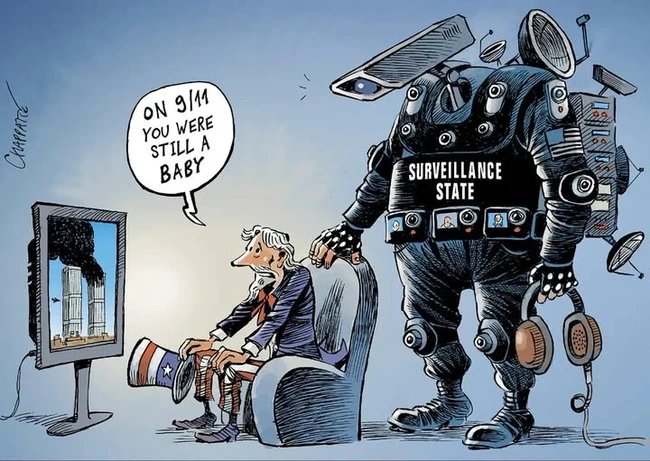
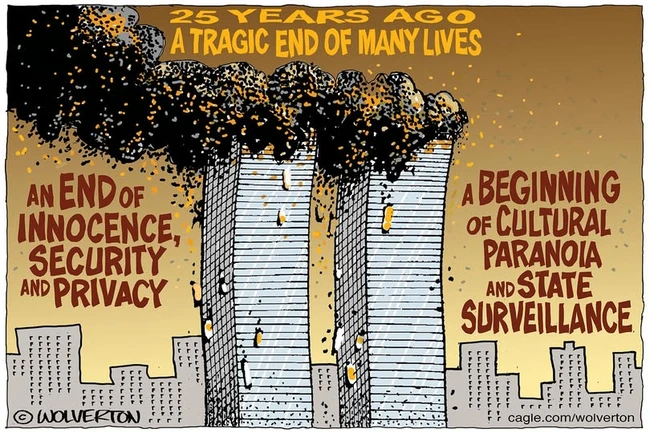
We responded to this apparent lack of preparedness by increasing our surveillance of possible threats, but both Chappatte and Wolverton suggest we went too far.
That feeling is echoed by Miles Taylor, who wrote a well-documented piece headlined “We built a machine to protect Americans after 9/11. The president has turned it against us.”
Taylor focuses on the current administration, and how they have ramped up surveillance of our own people, but it was a more gradual progression that took place over the intervening decades.
The revelations of excess in the wake of Watergate caused Congress to pass the Foreign Intelligence Surveillance Act to control how the intelligence agencies collected data, but that eventually grew into a monster, and while Taylor is not wrong about current misuse, it had been a slippery slope and not a sudden shift.
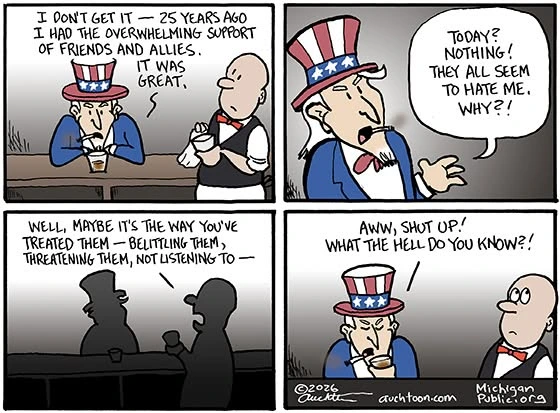
As Auchter points out, we haven’t been the best of allies in the years since. When GHWB rallied the Western world to thwart Saddam Hussein’s invasion of Kuwait, he readily assembled a large group of nations, then halted the process once Iraq had withdrawn into its own borders.
After 9/11, our leadership and our motivations changed, and GWB could only gather a small collection of allies to invade Iraq, a nation with no connection to 9/11, as well as Afghanistan, which did but was a well-known quagmire for invading armies.
However the deaths of Saddam Hussein and Osama bin Laden avenged the attacks, nobody can say the world is more peaceful and stable for our actions.
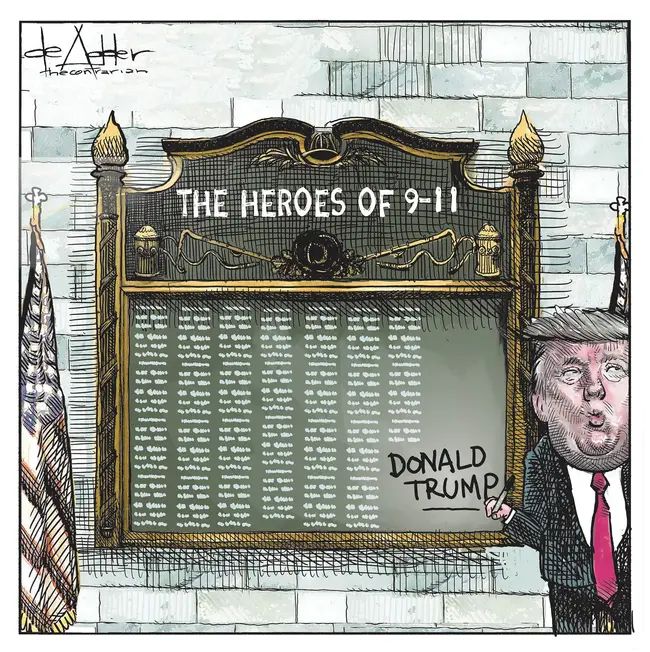
We’ve somehow reached a point where our president is inventing stories that make him one of the heroes of 9/11 despite clear, obvious evidence that he was nowhere near the Trade Center then, that he did not visit it until days later and that he neither worked to clean up debris nor sent an army of employees to aid in the process.
Juxtaposition of the Day #2
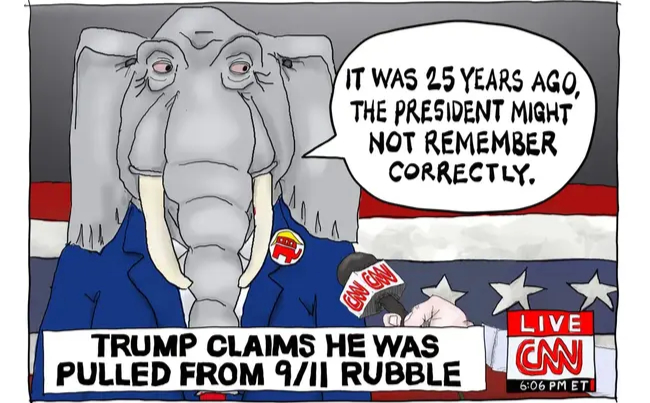
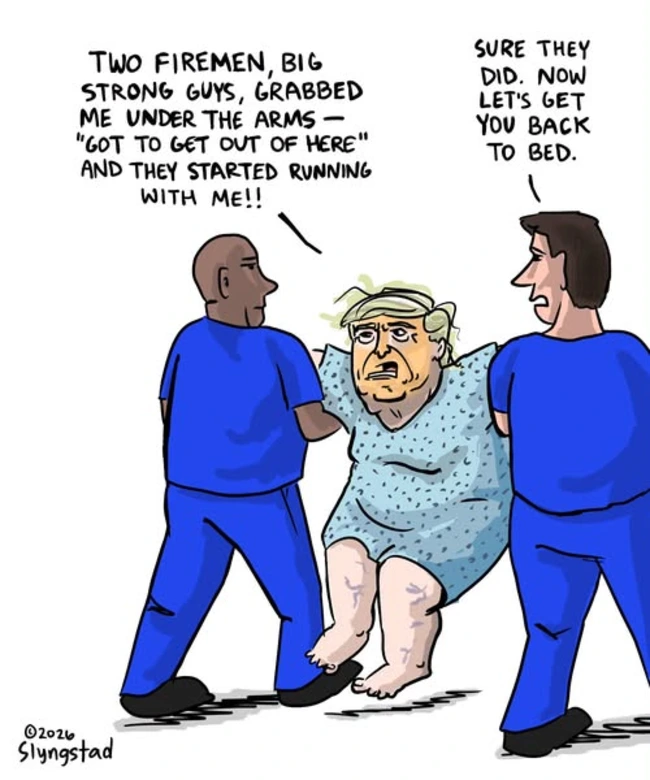
As for his absurd claim about firefighters rescuing him from a collapsing building that didn’t collapse, Buss mocks the loyalists who try to explain away the delusional fantasy, while Slyngstad echoes other observations that the tale is so clearly and obviously fictional that it is evidence of a sunsetting intellect that raises serious questions about the president’s competency.
Donald Trump has always been a narcissist and an inventor of self-serving fiction, but he has, in this second administration, surrounded himself with lackeys who apparently have no ability or intention of reining in his tall tales, even when they set policy agendas for the real world based on one that doesn’t exist.
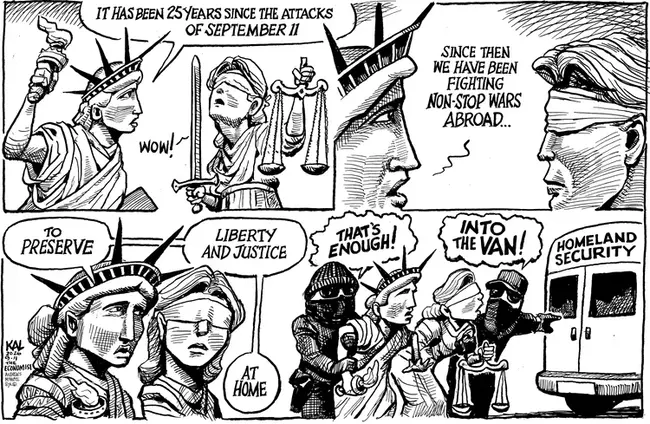
The result, KAL says, is that the falling of the twin towers didn’t turn out to be the most chilling destruction that resulted from the 9/11 attacks.
Now we know.
Keep the faith.
Mike Peterson has posted his "Comic Strip of the Day" column every day since 2010. His opinions are his own, but we welcome comments either agreeing or in opposition.

Comments