Cartoonist Watch: John Kovaleski, Joe Gill, Ralph Steadman
Skip to comments
Dominique Musorrafiti for RetroFuturista interviews Ralph Steadman in “Beautiful Splatter.”
From the introduction:
…later attending the London College of Printing during the 1960s. This period proved highly productive, as he established himself by contributing to major publications including Punch, Private Eye, The Daily Telegraph, The New York Times, and Rolling Stone. He permanently altered the landscape of modern journalism and visual art through his legendary partnership with Hunter S. Thompson. Together, they birthed the “Gonzo” ethos, where the creator is a manic participant in the story rather than a passive observer. Steadman’s frantic, visceral illustrations for Fear and Loathing in Las Vegas became the definitive counter-culture aesthetic of the 1970s, perfectly capturing the paranoia, disillusionment, and wild energy of the era. Yet, to limit his legacy to Gonzo is to miss the staggering depth of a lifetime spent questioning authority and exploring the human condition.
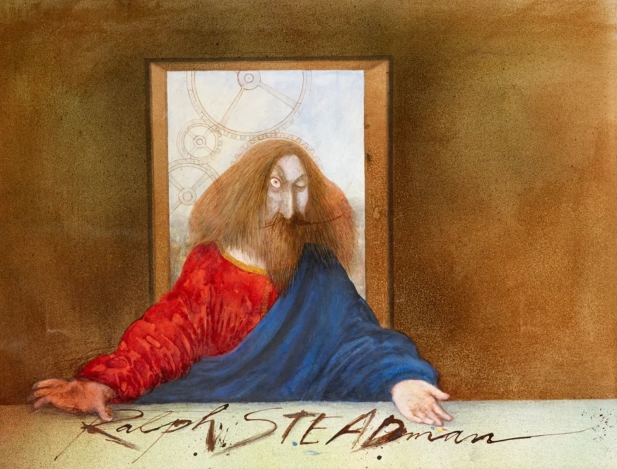
You are famous for turning accidental ink splatters into intricate, dynamic essential parts of your drawings. As you look back over decades of work, do you feel like you have tamed the ink, or is the ink still the one dictating the direction of the piece?
I think things have changed over the years. I was very detailed and specific in projects like I Leonardo and The Big I Am, or illustrated works for Animal Farm and Alice in Wonderland. But I was much loser when working on Extinct Boids and in particular Critical Critters which all started with a splat of dirty water or ink, which I left to dry and then the image was revealed through the mess. There is far less line work in those pieces.
Charlton Comics Writer Joe Gill Profiled

Alex Jay for Stripper’s Guide provides a profile for longtime and prolific Charlton Comics writer Joe Gill.
“Mickey [Spillane] and my brother [Ray Gill] got together and opened a studio. It had to be painted and cleaned, so I helped them. I was going to go back to the Navy as a chief radio operator, but they said ‘Don’t do that; you’re going to be a writer.’ I said ‘No!’ Anyway, when they got through putting the place together, there was a position for me—a table, a chair, and a typewriter—so that’s how I got started.”
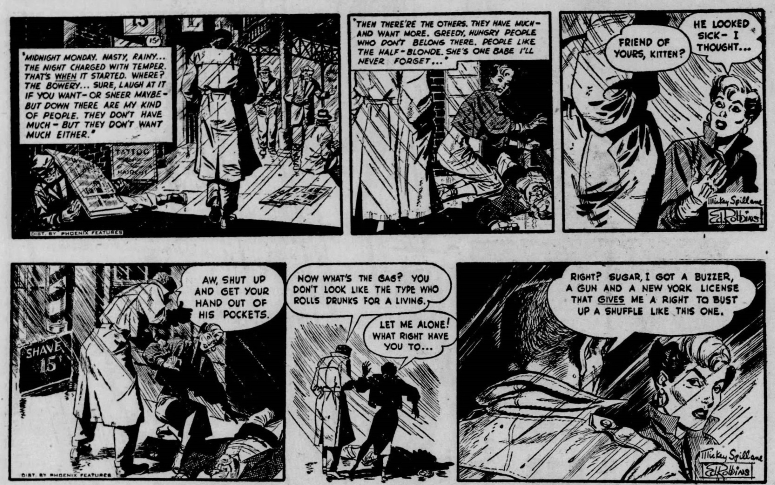
Additional details about the strip were revealed in One Lonely Knight: Mickey Spillane’s Mike Hammer (1984):
… What exactly was Spillane’s participation in the strip? Initially, the plan was that he would write the Sunday page (a self-contained continuity); his friend, comic book writer Joe Gill, would write the dailies; and Ed Robbins would handle the art chores…
Daddy Daze Cartoonist John Kovaleski Interviewed
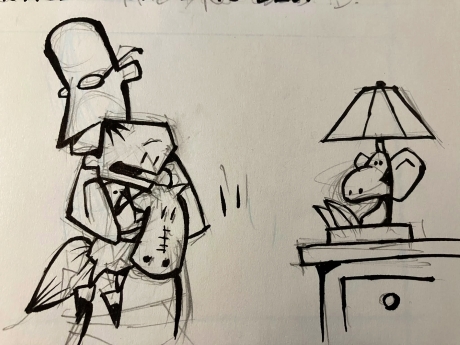
Alex Garcia and Comics Kingdom interviews Daddy Daze cartoonist John Kovaleski.
This week on Inside the Kingdom, we’re joined by cartoonist John Kovaleski, creator of Daddy Daze, the relatable and heartfelt comic strip about single dad Paul and his son Angus.
In this episode, we discuss: • How Daddy Daze was created • The inspiration behind Paul and Angus • Writing honest, funny parenting moments • Why “Ba” became such a memorable part of the strip • Co-parenting, family, and modern dad humor • John’s cartooning process • What makes comic strips such a lasting part of American culture
Comments
Comments are closed.