Free-For-All Friday
Skip to comments
“Let facts be submitted to a candid world.” Your brain prefers print over pixels. How to sell cartoons to The New Yorker. Unauthorized paintings created on boulders along a beach create controversy. Get rich with comics royalties.
Your Brain Prefers to Read on Paper Rather Than on Screens
Jessica Stillman writes for Inc.:
E-books have been great to me. I can take a dozen choices on vacation without throwing out my back, instantly access obscure titles not available in my local bookstore, and have a few less fights with my husband about who needs to part with some books. But as much as I appreciate the convenience of screens, I always miss the feel of a book in my hand.
Am I just an overly romantic book nerd? Well, yes. But according to a new study I am also not entirely crazy. Japanese researchers put readers into an fMRI machine and discovered that our brains really do process paper books differently than books on screens.
How To Write and Sell A Cartoon to The New Yorker
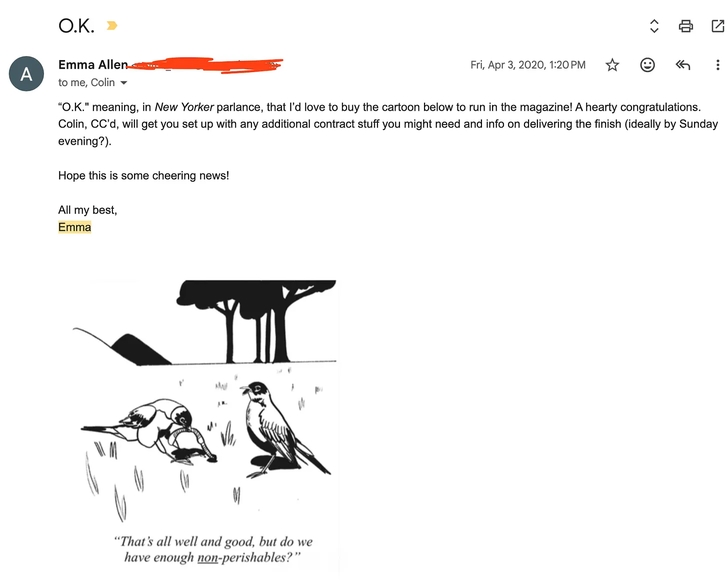
Sophie Lucido Johnson has been selling cartoons to The New Yorker for 6 years. Here she tells how it goes.
Sammi and I recently sold our fiftieth New Yorker cartoon. I typed that sentence and then went back to make sure it could be true, because it feels like it has to not be true. But in fact, the number is somehow closer to 60, which I am telling you, I guess, just to brag about it.
I’ve had a hard time writing this post. First, because (as mentioned already) it feels braggy. Second, because I usually write the cartoons in partnership with my dear friend Sammi, and I would never force her to co-write a piece about co-writing cartoons. (Though, I did just text her to ask her if she wanted to add anything, so we’ll see if she texts back.) (Note: she texted back something too falsely flattering for me to repeat here in good conscience.) Third, I have the type of imposter syndrome (SORRY) where it’s like, “If I write about this, someone is going to pop out of the woodwork and tell me that I actually don’t know what the hell I’m doing.” But it’s been six years (and eight since we started submitting), and while I might not know everything about how to do this, I know exactly how I do it. And every time an artist writes something like this, I want to read it. It’s good to see people’s paths.
Art? Grafitti?
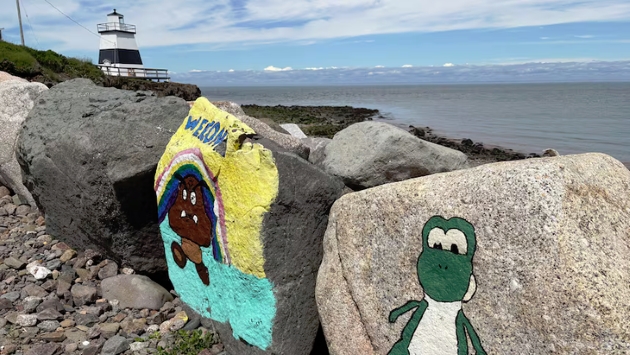
Frances Willick for CBC News investigates a case of art? grafitti? vandalism?
Unauthorized paintings created on boulders along a beach in Nova Scotia’s Annapolis Valley have sparked a conversation about where to draw the line between art and graffiti — and whether a natural environment is an appropriate place for such creations.
Over the past three years, cartoon characters have been painted on large boulders that line the road to the beach in Margaretsville, N.S.
The characters include Goomba, Toad and Yoshi from Super Mario and Mrs. Puff, Gary the Snail and Eugene H. Krabs from SpongeBob SquarePants, among others.
Adam Lemieux is the president of the Margaretsville Shore Society, which is dedicated to preserving and enhancing the community’s waterfront.
He says the cartoon paintings are not the first impression the community wants to offer — or the experience visitors are looking for.
After spending too much time with power washers the Society will be trying sandblasters.
Lemieux said at least some of the paintings were made by an adult, and the Shore Society has spoken with the creator.
“It didn’t take a lot of sleuthing to find out who had done the work,” he said. “We did reach out to them and they weren’t particularly interested in helping to get rid of it.”
Royalties. More Royalties. Big Book Royalties.
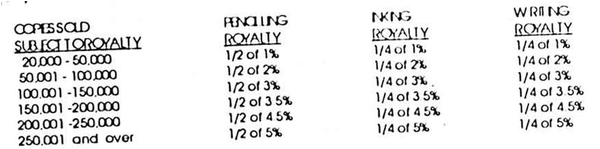
Comic book creator Colleen Doran spent a few installments of her Funny Business Substack on the misconceptions laymen have of the money pouring in to artists’ coffers.
From Royalties Roll in the Dough:
A lot of people thought creators were getting rich back in the day with these indies, what with “creator rights” and “royalties”. Wow!
Creators didn’t get royalties before, and you got to keep your rights now!
How revolutionary.
But have a look at those numbers. First off, royalties didn’t even kick in unless your book sold over 20,000 copies. More than most comics sell today. And if your comic sold for $1.25, then as the penciler you got a whopping 1/2 of 1% of cover. That’s .00625. If you sold 50,000 copies, that’s all of $325.
From More Royalties The Digital Edition:
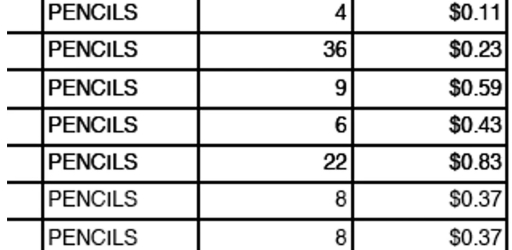
You’re looking at a royalty statement. This is a few years old, and I will not reveal the client. As you can see, the income on a lot of this stuff is pretty meager, less than $1 per book.
On the plus side, these are 30+ year old comics, in some cases. In almost every case, none of these comics produced a royalty payment when first published. I never thought I’d see anything on them, ever. The internet didn’t exist, and digital comics weren’t even on the radar.
So, even these tiny payments, which I never expected in the first place, are welcome. The middle number is the number of sales per book.
These are digital sales, of course. And every quarter, I get a statement like this one. There are other sales, most of them GN’s, producing more income than this.
I won’t say no one is getting rich on this stuff. I mean, I’m not getting rich BUT…
From Graphic Novel Royalties. Ageless and Evergreen
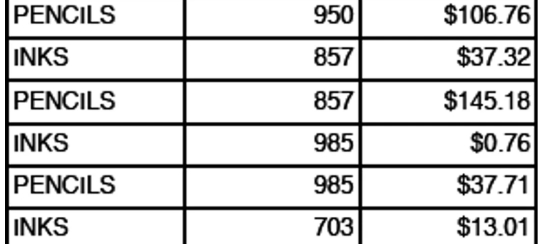
The royalty period is sales over 3 months during a summer quarter. Sales over the Christmas holiday would be considerably more than this.
Also, none of these books have had new editions in some time. Sales slowly drop over the years and smooth out, settling into a steady drip. With new projects or tie-ins, you’ll get a blip in sales for awhile. Sometimes a big blip. I got a $7500 check once when one of my ancient backlist projects had a huge publicity boost. Prior to the blip, it had been pulling in about $1000 per quarter.
Heck, I even got royalty checks on things like Eclipso because I did one issue thirty years ago and then it ended up in a book collection.
There has been a constant, and to be frank, completely deluded drum beat coming from a certain segment on the edge of the comics industry that comics is dying because front list monthlies don’t sell what they did in 1984.
But this is backlist. And backlist is where the money is.
Comments 2
Comments are closed.