CSotD: Serious Takes
Skip to comments
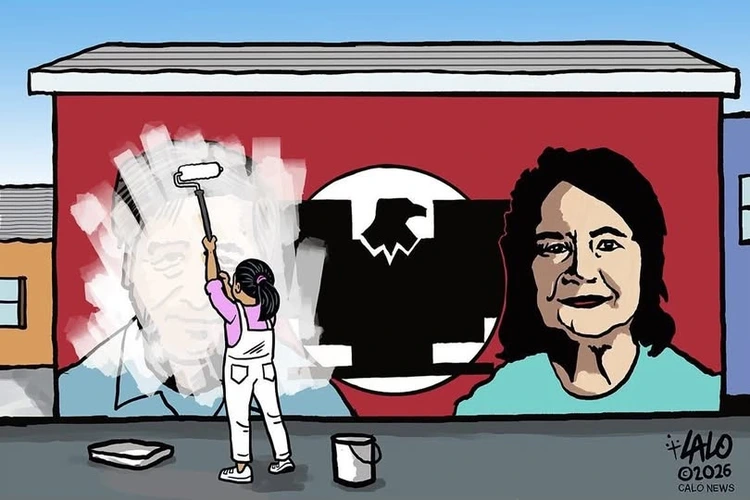
As near as I can tell, Alcaraz is the first cartoonist to address the sad, disillusioning facts about Cesar Chavez that came out in the New York Times yesterday (gift link). I would hope more would follow, because this is not a Latino story, but I’m not surprised that Lalo leapt upon it first, because it is also and substantially a Latino story, given his stature in that community.
The starting point is this: Accusations of sexual assault and forcible rape against him are well-documented, unambiguous and indefensible. As with Bill Cosby, this is not a question of anybody misunderstanding what was going on. The Sixties and early Seventies were a time when women were starting to speak up and men were learning to listen, but even then, “no” meant “no.”
And aside from adult consent, whatever messages were in whatever songs — looking at you, Rolling Stones, and you, Donovan — under-age meant under-age. If you were 20, you couldn’t have sex with someone three years younger, and Chavez was well over 20.
What’s particularly striking is that there isn’t a great deal of uncertainty, except in the sense of what to do about it, not whether to do something. In part, that’s because times have changed and we don’t wink at such things, and in part because the evidence is so undeniable anyway.
Alcaraz does well to show Chavez being painted out of the mural while Dolores Huerta, who was both his chief deputy and one of his victims, remains. I hope the little girl doesn’t paint over the Farmworkers’ logo, because that should remain.
I was supportive of the Farmworkers in those days, although being in Colorado rather than California, Chavez was something of a distant figure.
I helped raise funds for strikers in the San Luis Valley and I never shopped at Safeway because they bought non-union lettuce and grapes, but I was much more aware of Corky Gonzales, because he was local, and, while Corky was involved in the Farmworkers’ struggle, he was somewhat distinct because he worked for Chicano rights across the board.
In that Wikipedia article, it is noted that, in Gonzales’s famous poem, Yo Soy Joaquin, “women are submissive, and extensions of the men to which they are related in communal and familial ways. Chicanas are depicted as faithful, long-suffering religious figures or family matriarchs who exist to support Chicano males.”
That’s little different than the place of women of all colors and ethnicities in the ’60s, though not only did feminists like Betty Freidan, Germaine Greer and Gloria Steinem step up to address it directly, but politicians like Shirley Chisolm, Bella Abzug and Pat Schroeder rose to refute it, and pop culture figures like Yoko Ono simply proclaimed equality in their actions.
But again, even before any of those changes, even when women were “submissive, and extensions of the men,” rape was rape and “no” meant “no.” People didn’t always ask and people didn’t always object, but if the topic came up, the answers were absolute and definite.
The challenge now is how to take Chavez off his pedestal without taking the Farmworkers’ movement, the Chicano movement, or the rise of feminism — out of our history.
It’s not easy: Comments on postings about this story show deep divisions, not only between those unwilling to sully Chavez’s memory and those ready to give him up entirely, but between the age-old divisions of those who disbelieve rape victims and those who listen.
Dolores Huerta has given a full interview to Latino USA, who will be featuring it as a podcast.
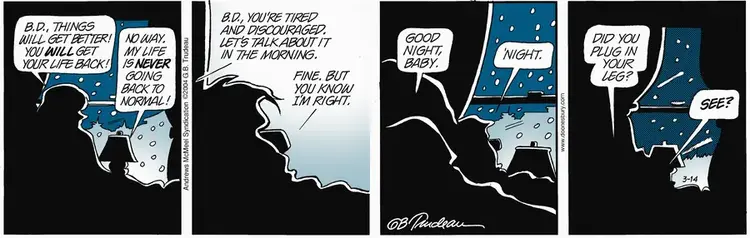
Doonesbury dailies have been replaying BD’s return from the war lately, and this one popped up this week and gave me a jolt, not of the original strip but of a bit of wisdom my father used to offer.
A few years after my little brother was killed in an automobile accident in 1970, my folks became national speakers for Compassionate Friends, a self-help group for bereaved parents. It was somewhat on that principle about how “every patient becomes a doctor.”
My father contended that you aren’t supposed to “get over it” in the sense of forgetting, but, rather, over time you would let it become your new normal. The example he used was losing a leg. You wouldn’t wake up one morning having forgotten that you’d once had two legs but now only had one, but it would mostly heal and would become normal, without you ever forgetting.
I wish he were still around, because he’d like this strip that so eloquently illustrates BD’s struggle to adapt to his new normalcy.
I say that as someone who lost a brother more than 50 years ago and who has been peeing in a bag for nearly 10.
Adjusting to a new normal can be hard, but failing to adjust is even harder.
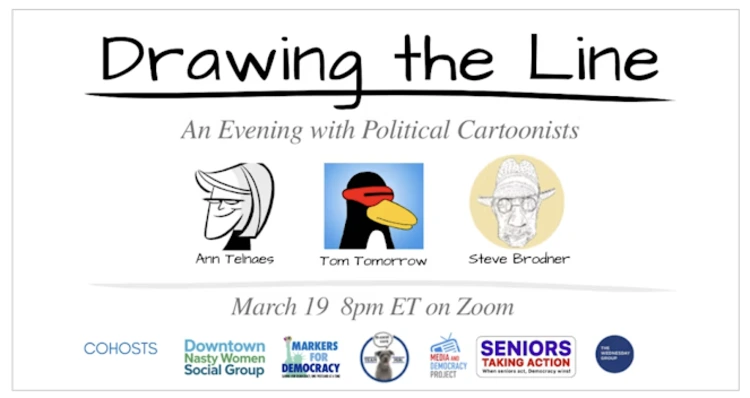
Three pretty fair cartoonists will have a free Zoom chat this evening, and you can still sign up to sit in the virtual audience. Guy Badeaux has the details on his blog.
I’ll be back tomorrow and I will try to be more frivolous, if the Americans and the Israelis and the Iranians will all behave themselves, dammit.
By which time I hope we’re all feeling better.
Mike Peterson has posted his "Comic Strip of the Day" column every day since 2010. His opinions are his own, but we welcome comments either agreeing or in opposition.


Comments 9
Comments are closed.