CSotD: Holiday Humpday
Skip to comments
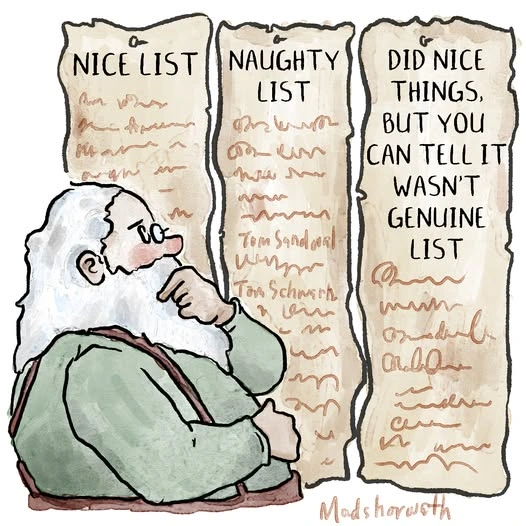
We’ll let Mads Horwath reply to all the strips in which kids try to be good in the week before Christmas, hoping to make up for 51 weeks of normal behavior.
The idea of Santa Claus rewarding good children and punishing bad children goes back a long way, and I have to hope that not many kids really got coal or switches in their stockings. But when you see some of the harsh, punitive warnings children were raised with, I suppose there were parents who followed through.
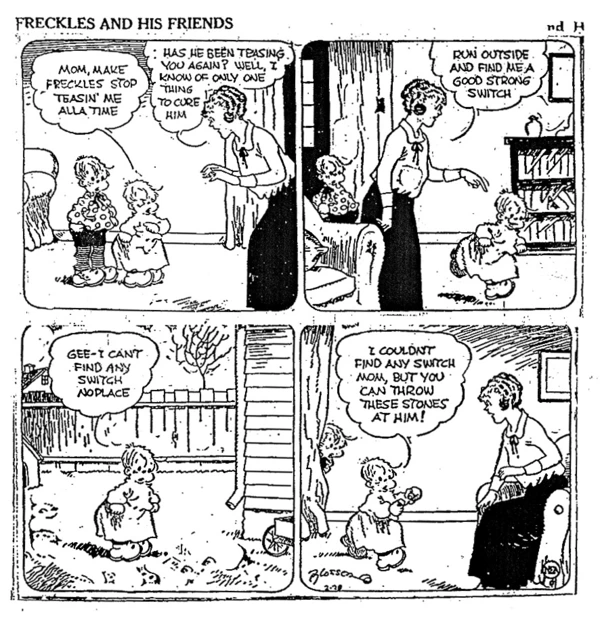
I don’t know the date of this Freckles strip, but I’d guess in the ’20s, since Freckles was a teenager by the ’40s. But even in the ’60s, I had friends for whom “Cut a switch” was part of how they grew up, and I like the fact that Merrill Blosser offered this negative view of that sort of thing.
You can go to jail for hitting kids these days, but first you’ve got to get caught, and that doesn’t always happen.
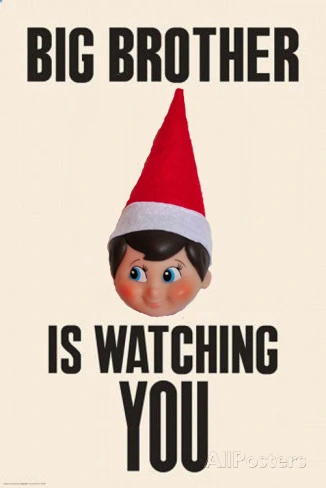
Besides, there’s a lot of harm you can do to kids just in the form of psychological warfare, and I’m looking at you, Elf on the Shelf.
Not that kids today have any reason to doubt that they’re under constant surveillance.
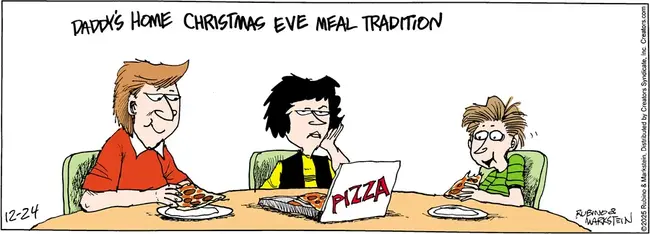
But I prefer to think of Santa as the sort of person who thinks all kids are special and while the Daddy’s Home crew eats pizza on Christmas Eve, we had oyster stew when the boys were little, which went along with a reading of the Little House story in which Mr. Edwards ran into Santa Claus, who gave him presents to bring to the little Ingalls girls.
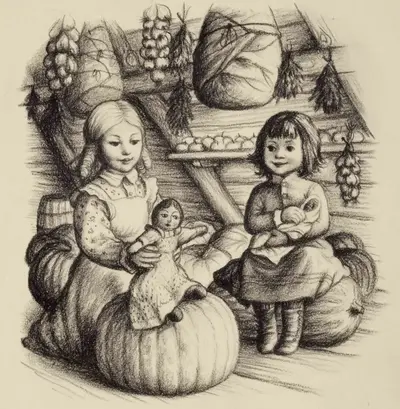
I don’t know that my boys liked oyster stew as much as they liked the story, but in the days before refrigeration, canned oysters were a treat, and if you read the Virginian, you’ll find that cowboys carried canned tomatoes and canned peaches, either of which made a quick meal and a refreshing drink in the saddle.
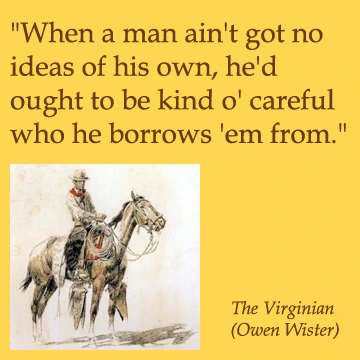
The Virginian is worth reading for more than cooking tips.
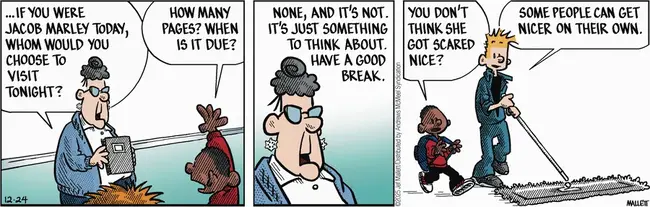
Mrs. Olsen offers an interesting challenge, and Mrs. Olsen is an interesting character, because she goes back and forth between being unimaginative and hidebound, and then suddenly being human and warm. And her suggestion is particularly interesting because, while at first it might suggest haunting someone you dislike, Marley was warning Scrooge out of concern for him, which puts a whole other spin on it.
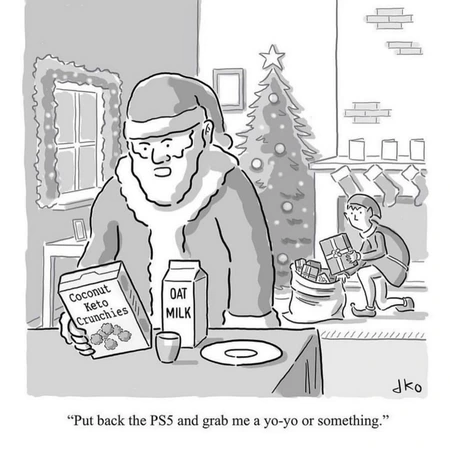
I’m not all warm and fuzzy, though, and I got a laugh out of Ostow’s cartoon. But maybe it’s because I am warm and fuzzy, because I like traditions and I’m pretty sure your body will recover from the joyous excesses of the season.
And one of the safeguards is that most of that stuff isn’t around the rest of the year, including not just eggnog and fruit cake, but ribbon candy, which is wretched stuff even when it’s in season.
The classic example of tradition is green bean casserole, which can’t be made with fresh or frozen beans but requires canned beans, cream of mushroom soup and those fried onions that only exist for making that dish and only appear on the shelves at this time of year.
Which is fine, because nobody would eat green bean casserole except at Christmas and Thanksgiving. In fact, it’s touted as a Thanksgiving staple at Campbell’s, where it was invented in 1955, but their recipe allows for fresh beans, so I’d question whether their take is canon.
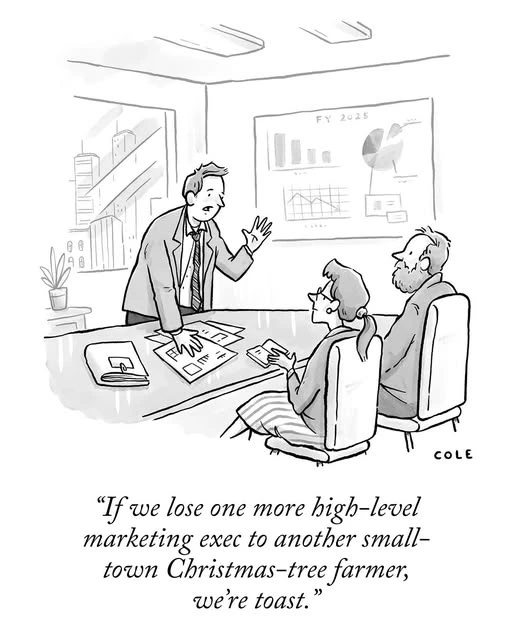
And speaking of holiday traditions, Cole riffs on Hallmark movies in which men in flannel shirts deprogram city girls with growing careers and empty souls or some such thing.
I got a particular kick out of it because I had Thanksgiving dinner with my son, who lives on a farm that sells Christmas trees and I’m going back again for Christmas dinner.
It won’t make me ditch my career down here in the big city, but perhaps that transition requires living in a bigger city than 14,300 people, and a more pressure-filled career than “retired writer in the sun,” which is pretty mellow to begin with.
Are You Still Shopping?
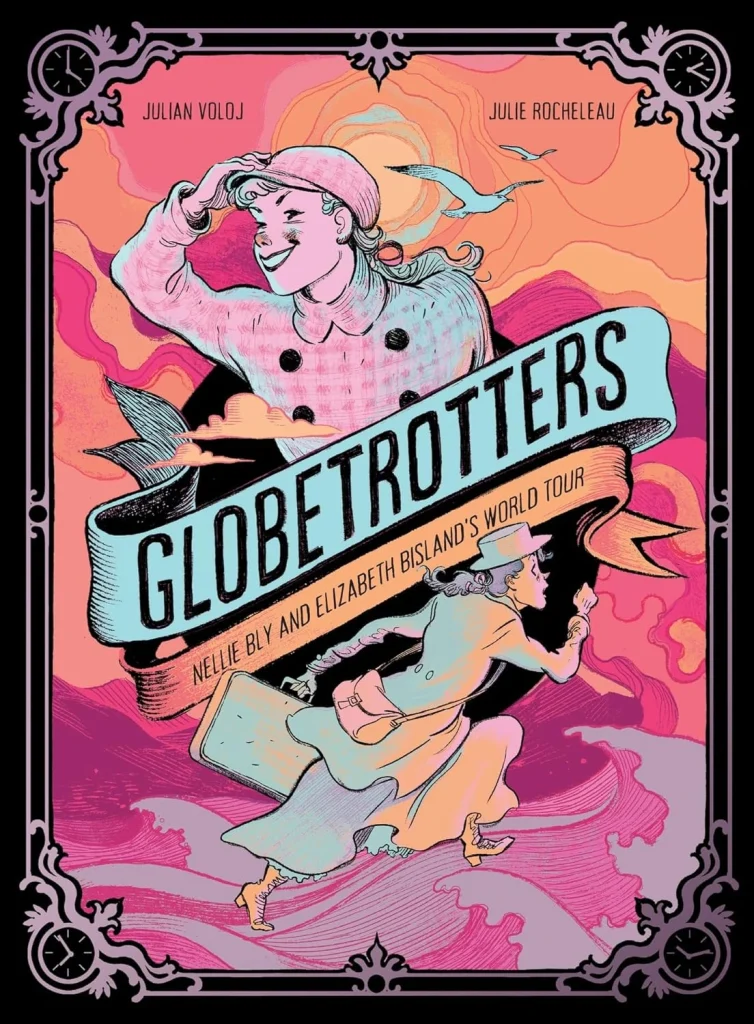
If you’re near a good bookstore and have a young curious future writer on your list, you’d find a fun gift in “Globetrotters: Nellie Bly and Elizabeth Bisland’s World Tour,” a new Abrams title by Julian Voloj and Julie Rocheleau.
It’s not history, but it’s not fiction, either. I should offer the disclaimer that I wrote a children’s biography of Nellie Bly with the aid of her for-real biographer, Brooke Kroeger, so I’m very aware of her life both on the famous Around the World trip and elsewhere.
This is more of a “based on” story than an actual history, and Voloj and Rocheleau have added imagined dialogue that is a great deal more modern than anything Bly wrote or anything I’ve heard of Bisland’s work.
But their race was a real thing: When Bly set out on behalf of the New York World, Cosmopolitan magazine sent Bisland off to try to beat her time, and media did track them both, though Bly had the advantage of working for a daily paper while Cosmopolitan was a weekly.
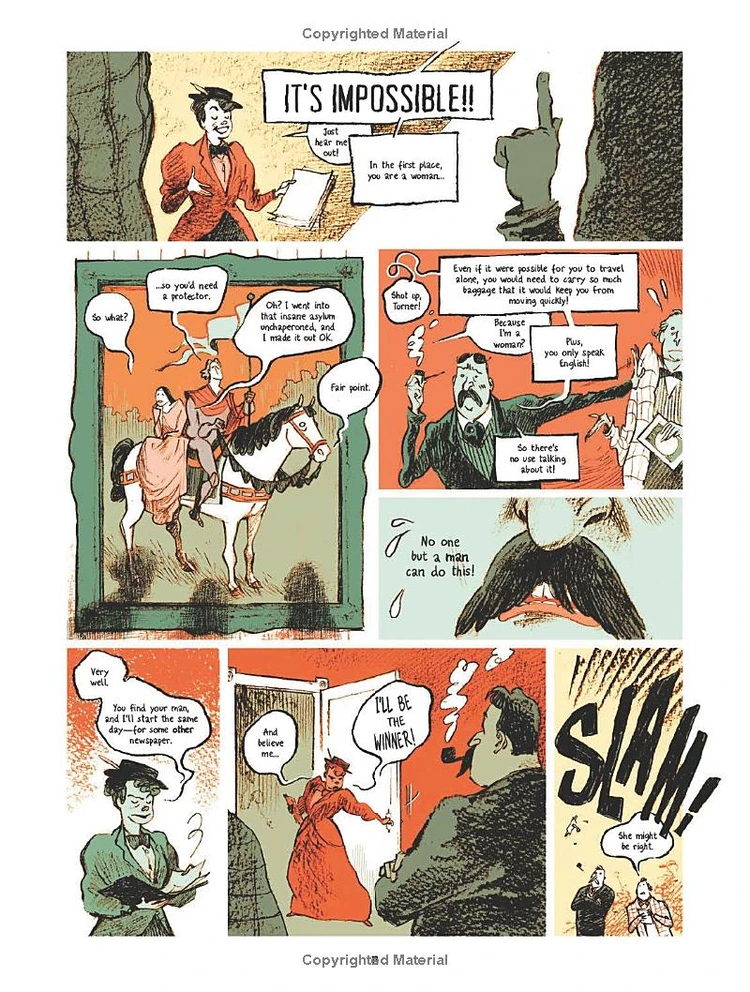
There are things I wish they’d done differently, the main issue being that they switch back and forth between the two women in a way that requires you to stop and figure out which one we’re currently following: The artistic style doesn’t greatly differentiate them and there are few titles indicating when we’re racing east with Bly and when we’re headed west with Bisland.
But as a “based on” story, it’s a quick read and a good starting point, particularly for young people who have an interest in storytelling and a sense of curiosity and adventure: While Bly was more of an active feminist and tough cookie, both women ventured out alone to race around a world in which women weren’t expected to do such things.
And if the graphic novel inspires the reader, both Bly’s account and Bisland’s are available to let you know how they described their adventures.
Comments 4