RIP – The Mass Market Paperback
Skip to comments
The format credited with making books more accessible via low prices and widespread availability will all but vanish from the publishing scene in a few weeks.
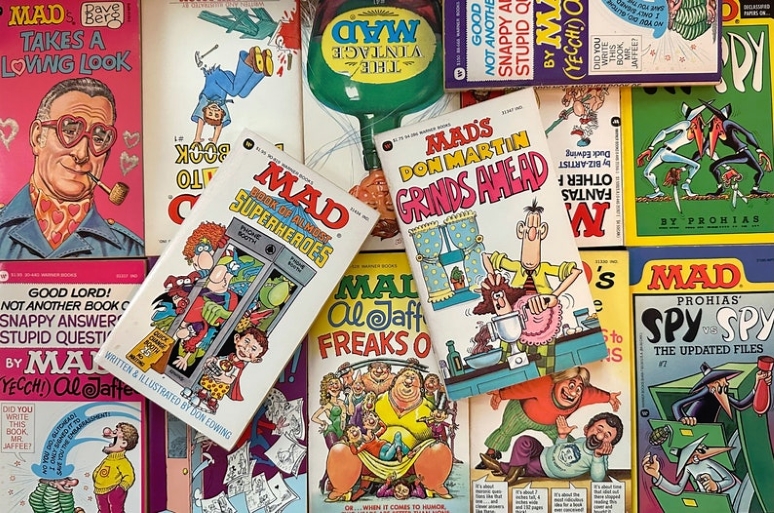
At its zenith in the second half of the twentieth century the market for original westerns, mysteries and thrillers, romance, action-adventure, horror, fantasy and science fiction was insatiable … Paperback publishers issued hundreds of titles every month, flooding the racks and shelves of train and plane stations, drugstores, candy stores and supermarkets.
Spring 2025 – The Richard Curtis Substack Inside Agenting:
Modern mass market paperbacks, originally called “pocket books” after the Simon & Schuster imprint, were born in 1939. They sold for twenty-five cents but were scarcely dreadful: The first list boasted The Way of All Flesh by Samuel Butler, The Murder of Roger Ackroyd by Agatha Christie, Lost Horizon by James Hilton and Wuthering Heights by Emily Brontë. Since then mass market paperbacks have dominated the publishing landscape with sales in the incalculable billions.
They are scheduled to die at the end of this year.
Their death notice was recently announced in Publishers Weekly: “Sales of mass market paperbacks have steadily declined in recent years, to the point where they accounted for only about 3% of units sold at retailers that report to Circana BookScan in 2024. The format will take another big blow at the end of 2025, when Readerlink will stop distributing mass market paperbacks to its accounts.” ReaderLink describes itself as “the largest full-service distributor in North America” with six U.S. distribution centers supplying over 100,000 stores. All major publishers are shifting their focus to trade paperback as the format of choice both for originals and reprints. Even paperback publishers that prospered with genre literature like romance and science fiction are pushing their chips onto the larger trim size.
Jump to December 2025 – Jim Milliot for Pubilishers Weekly says the nails are going in the coffin:
The decision made this winter by ReaderLink to stop distributing mass market paperback books at the end of 2025 was the latest blow to a format that has seen its popularity decline for years. According to Circana BookScan, mass market unit sales plunged from 131 million in 2004 to 21 million in 2024, a drop of about 84%, and sales this year through October were about 15 million units. But for many years, the mass market paperback was “the most popular reading format,” notes Stuart Applebaum, former Penguin Random House EVP of corporate communications. Applebaum was also once a publicist at Bantam Books, one of the publishers credited with turning mass market paperbacks into what he calls “a well-respected format.”
When the heyday of mass market paperbacks was has been debated by industry veterans, but it is generally acknowledged to have run from the late 1960s into the mid-’90s. According to Book Industry Study Group’s Book Industry Trends 1980, mass market paperback sales jumped from $656.5 million in 1975 to nearly $811 million in 1979, easily outselling hardcovers, which had sales of $676.5 million, and the new, upcoming format, trade paperback, which had sales of about $227 million.
Jacqueline Susann’s megahit Valley of the Dolls sold 300,000 hardcovers in 1966, while the Bantam paperback sold four million in its first week on sale in 1967, and more than eight million in its first year, Margolis notes. One of the biggest mass market bestsellers of all time was the 1975 tie-in edition to the movie Jaws. According to Applebaum, the edition, whose cover art closely resembled the movie poster, sold 11 million copies in its first six months.
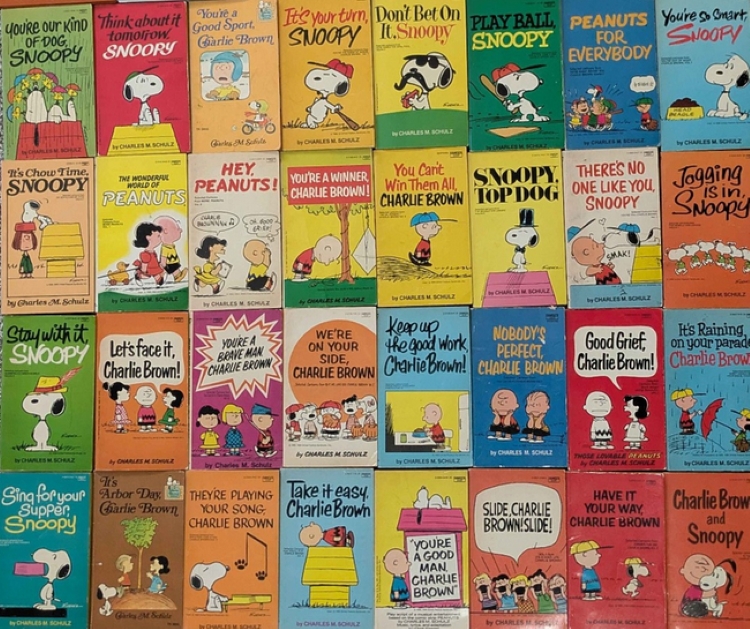
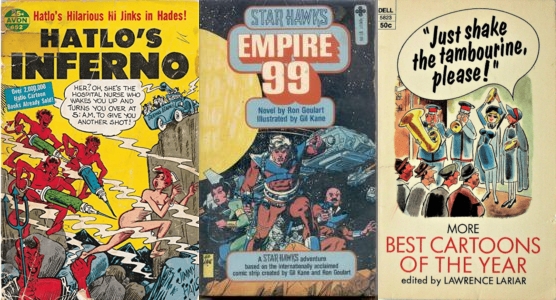
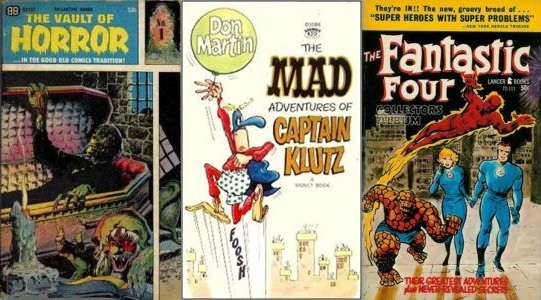
I bought my fair share of mass market paperbacks (mmpb) in my youth: classics, science fiction, detective, World War Two, and, of course, comicbacks. For a time I made weekly trips to the not-quite-local newsstands for the Sunday newspapers and the mass market paperback comic books where they had their own rack section. Admittedly not as expansive as the other genres but there would be new ones weekly – Tumbleweeds, B.C., Broom-Hilda, Wizard of Id, Beetle Bailey, Hagar the Horrible! And the occasional Dick Tracy, Flash Gordon, the Marvel and DC comic book and comic strip mmpb, and the collections of magazine cartoons from the likes of Playboy!
Those were the days my friend.
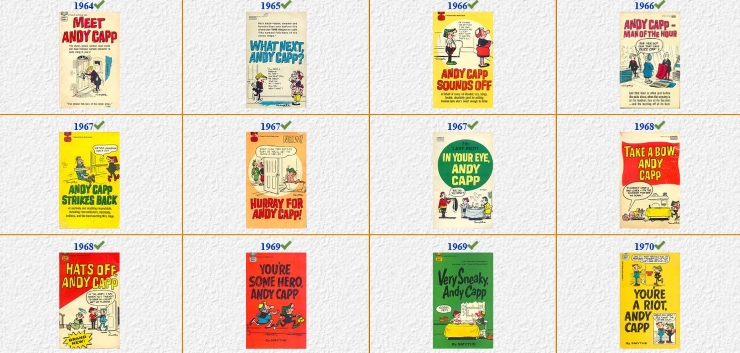
Back to Richard Curtis who explains that mmpb are passe:
The reasons for the collapse of mass market paperbacks are complex but can be traced to several fundamental shifts in publishing culture.
· Tissue-thin profit margins. Publication and distribution had become exceedingly cost-ineffective compared to other (and higher priced) print formats like hardcover and trade paperback.
· The gradual disappearance of paperback racks and other displays in drugstores and supermarkets, and the explosive growth of chain bookstores whose bookshelves do not display MMPBs as effectively as trade paperbacks.
· The decline of book departments at big-box stores like Walmart, where paperbacks failed to meet the test of profitability per square foot of display space compared to other consumer goods like deodorant and panty hose.
· The rise of e-books as a preferred reprint format. Because e-books are released simultaneously with hardcover editions, as opposed to mass market paperbacks which are traditionally issued a year or longer after a book’s first edition, e-books have a huge advantage over MMPBs. Plus e-books are cheaper.
feature image cribbed from Mark Evanier
Comments 3