The Furshlugginer Friday Files
Skip to comments
Yeah, your potrzebian correspondent is most of the way through “The MAD Files”, a book collecting essays from various sources about the famed satirical magazine. Which is how this post will be – collecting news items related to cartoonists and cartooning from veeblefetzers near and far. HooHah!
How Tom Richmond joined The Usual Gang of Idiots
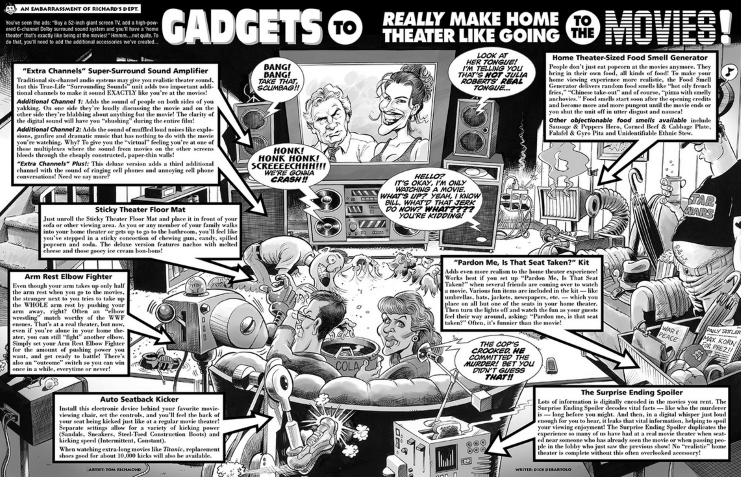
While Tom Richmond is not mentioned in The MAD Files book (so far) he has been a contributor for 25 years now. The above Gadget two-page spread was Tom’s first published work for MAD magazine, though not his first assignment.
In his latest Substack entry, The Ink Stained Wretch #186, Richmond tells of his eight year attempt to break into MAD, a trail that goes through Now Comics and Cracked Mazagine.
The ankle monitor was inspired by a Spiderman comic strip
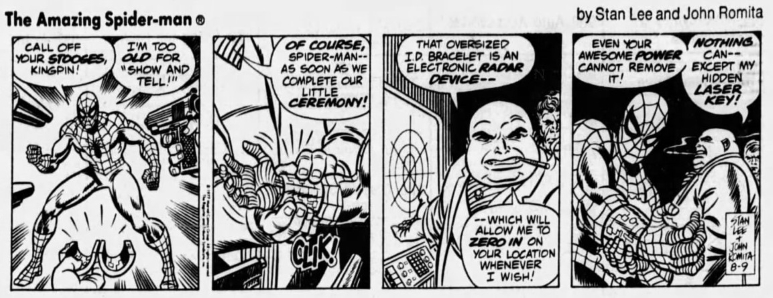
Matthew Ingram digs up an old Public Seminar article from 2016 about electronic monitoring:
From Public Seminar: “Electronic monitoring came into the criminal justice system not as a result of extensive research, but in part because a district judge in Albuquerque avidly pursued the idea in the 1970s. Judge Jack Love had read about the use of location tracking for livestock, and was further inspired by a Spiderman comic strip in which Kingpin forcibly slaps an “electronic radar device” onto Spiderman’s wrist so he can keep an eye on him. Motivated by a desire to keep people out of the brutal New Mexico prisons, Love convinced a computer salesman to design a similar device, and in 1983, a probation violator was the first to be fitted with one.
Don’t blame me – the misspelled “Spiderman” is in both the original article and Ingram’s post.
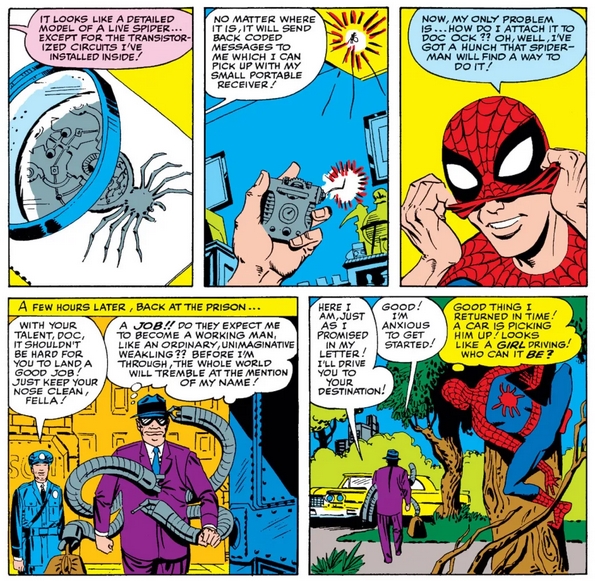
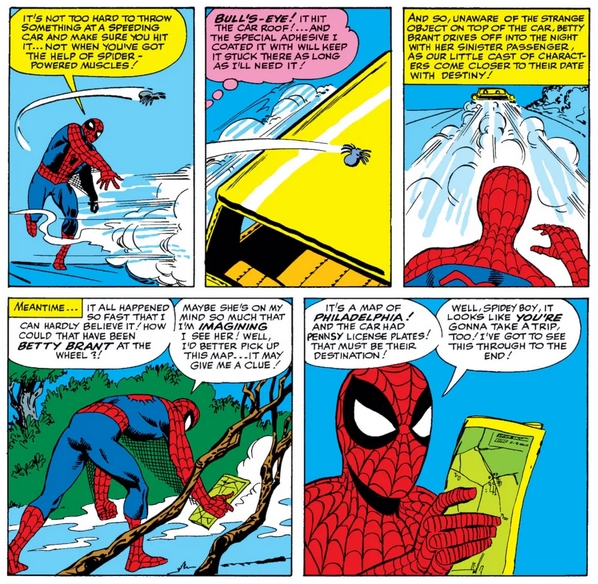
While that 1977 Spider-Man comic strip may have been the judge’s inspiration Spidey fans know that Spider-Man himself created a much less obtrusive “Spider-Tracker” years before Kingpin used his “bracelet” as seen in The Amazing Spider-Man #11 by Stan Lee and Steve Ditko (April, 1964).
Two Cartoonists of Britannia
Westmorland Gazette cartoonist Colin Shelbourn retires.
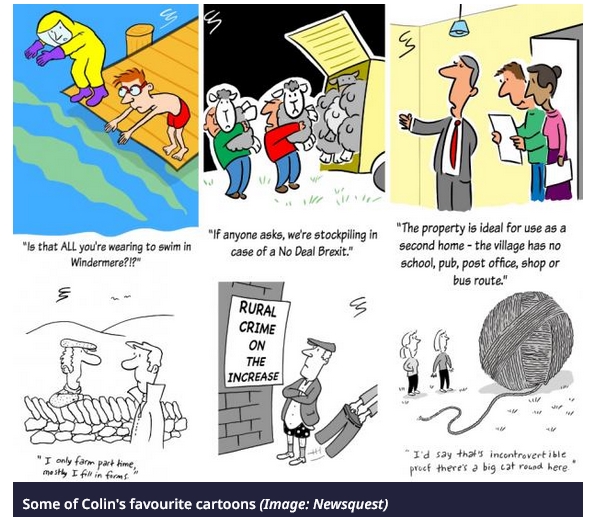
Colin Shelbourn has decided that the time is right for him to step away from the limelight of Cumbrian news after covering all manner of stories at the very heart of our community for over four decades.
The Westmorland Gazette was first published in 1818 meaning Colin has been a prominent feature for an incredible 20 per cent of its long history.
His swansong came on April 24 2025, bringing to an end an epoch that began with a conversation in the editor’s office which culminated in Colin’s first cartoon in the Gazette of April 6, 1984.
Darrin Shield at the Westmoreland Gazette writes about Colin Shelbourn retiring.
On why he has chosen now to step away from his weekly role, Colin said: “I was thinking of stepping down when it got to the 40th anniversary but interesting things kept happening so I kept on going.
“The last cartoon was about the death of the Pope so I figured that’s a very good way to end.”
Private Eye cartoonist Barry Fantoni dies aged 85
He had been a long-term stalwart of the Private Eye editorial team from 1963 until his retirement in 2010.
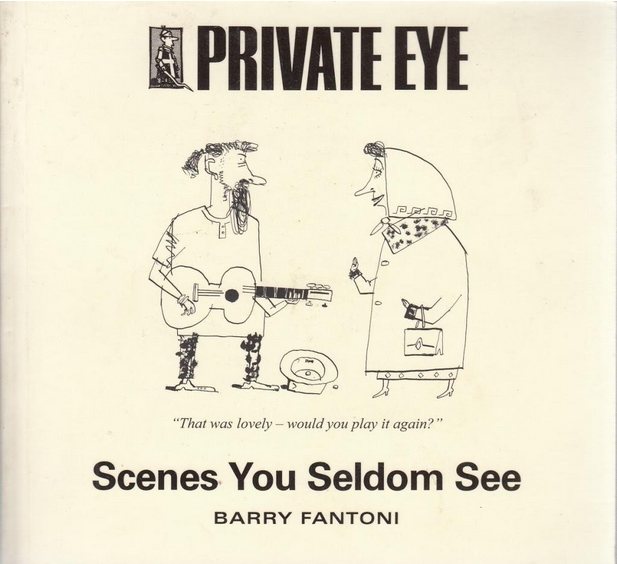
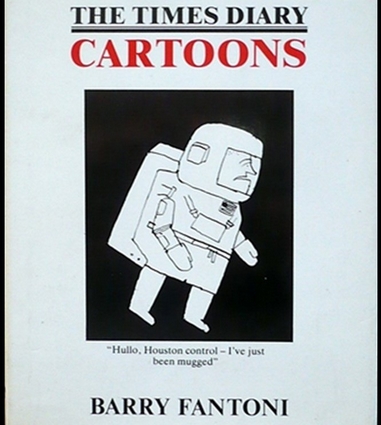
Fantoni was a long-term stalwart of the Private Eye editorial team from 1963 and created some of its most famous characters, most notably fictitious obituary poet-in-residence, E J Thribb.
Best known for his work with the satirical magazine, Fantoni was also a diary cartoonist for news publication the Times and produced caricatures for listings magazine Radio Times from the mid 1960s.
Hannah Roberts at The Standard writes the Barry Fantoni obit there. Fantoni at The Political Cartoon Gallery.
In the early half of the [1960s] he wrote scripts for the BBC’s satirical show, That Was the Week That Was, before presenting the corporation’s fashion and music programme, A Whole Scene Going, which reflected on the tastes and times of Britain’s under 21s and included big names like The Who, Sandie Shaw and Twiggy.
In 2010 he announced his retirement from Private Eye after 47 years.
Speaking to the Independent about his departure, he said: “It was just time to leave. I’d done it. The establishment isn’t even worth puncturing any more.”
Leaving your mark on the world with James “Jay” DeMarco
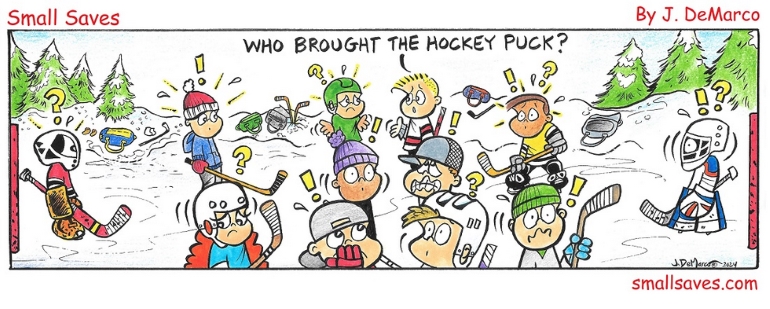
MONTAQUE: How do you describe Small Saves?
DEMARCO: I think he’s just a combination of every goalie who loves to stop pucks. Some people ask, ‘Is he you?’ And I say, ‘No, he’s his own little identity. But we seem to do a lot of the same things. So, there’s probably a little bit of me in there too, especially when I was younger.’
Raegan Montaque for Pro Hockey News interviews Small Saves cartoonist Jay DeMarco.
DEMARCO: I have a sister comic strip that I’ve been working off and on for years. And I actually got a written response from a huge syndicate. And the woman wrote, ‘I read your comic strip on a Friday, I’ve been thinking about it all weekend. I just love it.’ It was called Mixed Crayons and dealt with my days working at the community centers, where we have children from all nationalities, religions and races. They all bring their lifestyles with them, and they’d play and get into all sorts of adventures and everything that children do. But she was saying, ‘We can’t sell it, because it’s too wholesome.’
In today’s market, the cartoons are very cutting edge and kind of crass. The humour is over the children’s head, and that’s not my style. I was maybe 20 years too late.
Even without comics, we need the news
You know what was fun about being a newspaper editor? Well, from my 30 years leading newsrooms, I might say a lot of things, but today I’m thinking in particular of this: picking the comics.
I bring this up today in the context of a new study that assesses what people consider to be news, and how that has changed over recent years. And while the comics certainly aren’t news, they’re part of the package that used to be delivered daily to virtually everybody, and that now touches far fewer people. The digital revolution has obliterated the shared experience of content that we all consumed – for better and for worse – and it has changed America.
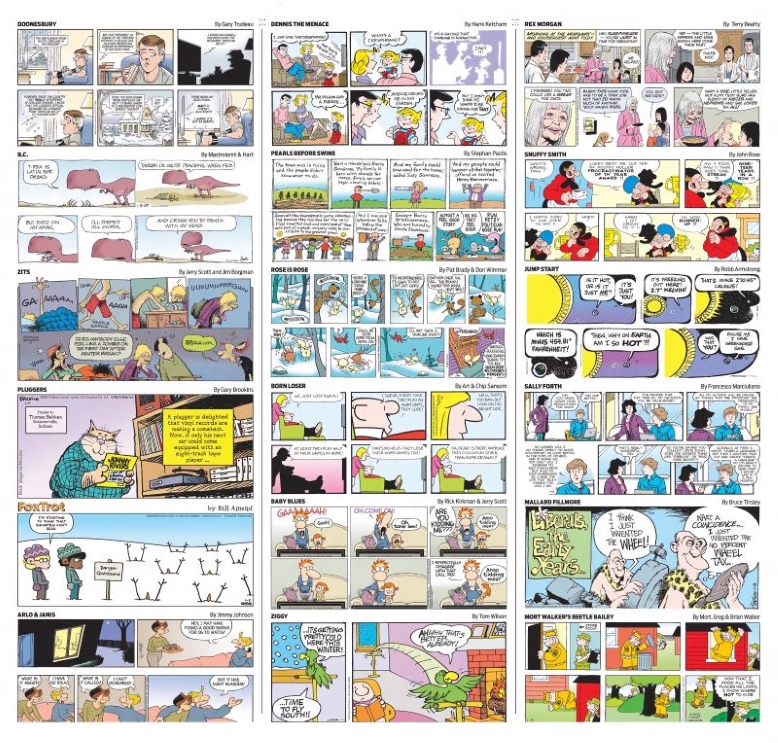
Rex Smith at WAMC Northeast Public Radio bemoans the changing landscape of receiving the news.
The comic pages in our newspapers reflected our way of life, and a thoughtful editor would try to pick an array of comic strips and panels that would speak to the diversity of the newspaper audience – varied race and gender and economic capacity – along with some stuff that might just elicit a chuckle. Even if readers didn’t like what they read in the news columns, you’d figure they might feel better if they turned away from news of warfare and political strife to the next page, where they might find a familiar face from the world of Peanuts or Doonesbury.
feature image from MAD #1 (1952) by Ben Oda and Jack Davis


Comments
Comments are closed.