Another Newspaper Fears Making Readers Think
Skip to comments
Another newspaper, this time The Caledonian Record (a family newspaper in Vermont), has decided that political cartoons will no longer be a part of their reimagined opinion page.

From Todd Smith Publisher of The Caledonian Record on August 21, 2025:
Beginning today, The Caledonian-Record will no longer publish a traditional opinion page or syndicated editorial cartoons.
This change comes after careful consideration of our mission and role in the community. In recent years, public life has grown more polarized, and we believe our true value lies in delivering accurate, timely, and independent local news. Anything that risks undermining that credibility — including editorial commentary or syndicated cartoons that can be perceived as partisan — is a distraction from our core mission.
The publisher continued:
It’s worth noting that syndicated cartoons account for less than one-thousandth of our total published inches. Yet despite their tiny footprint, they have been enough to generate accusations of partisanship and, in some cases, to dismiss 190 uninterrrupted years of dedicated, local news reporting on those grounds.
Ending with:
That is why we are eliminating the opinion page and focusing exclusively on local news, in keeping with our tradition.
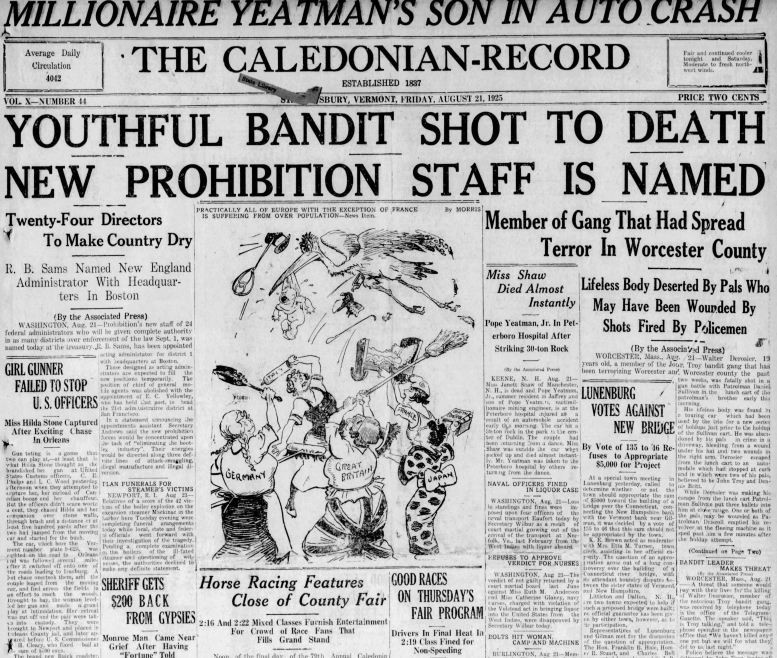
If they wanted to embrace their tradition they would return to printing editorial cartoons front and center on page one of their newspaper above the fold.
To their credit the newspaper published an impassioned opposing view from David Roth:
The Caledonian-Record’s decision to stop publishing political cartoons is a loss for readers and a troubling manifestation of the disintegration of our civic conversation. The irony is sharp: those who have complained of being offended by cartoons have, in effect, silenced a form of expression that was never intended to be gentle in the first place. Political cartoons exist to provoke, to exaggerate, and to question. They are not soft commentary; they are pointed caricatures. To be offended by them is to misunderstand their very purpose.
Mr Roth even took readers on a short history lesson of political cartooning.
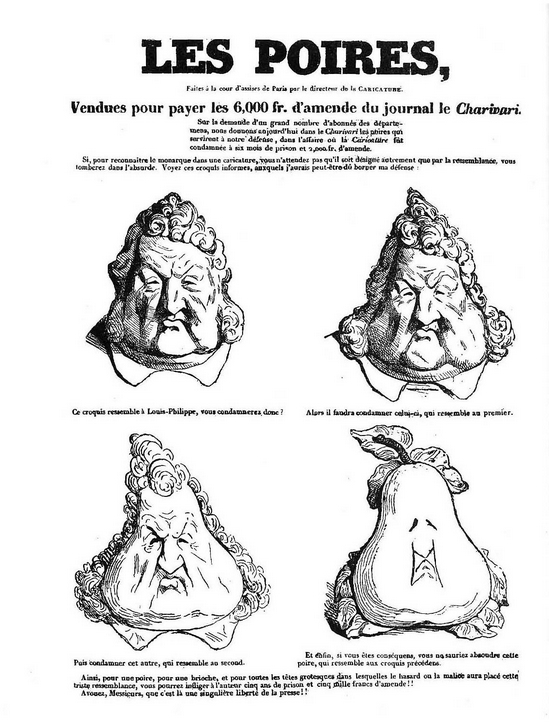
In closing Mr. Roth wrote:
The greater tragedy is not that a newspaper might choose caution, but that readers demand protection from offense in the first place. To insist that one’s own sensitivities should silence satire is, in a way, to insist that one’s worldview should be spared challenge. That instinct does not strengthen democracy; it weakens it. A citizenry that cannot bear exaggeration in ink is not prepared to bear differences in opinion in politics or even at the supermarket.


Comments 5
Comments are closed.