CSotD: The Golden Spider’s Touch
Skip to comments
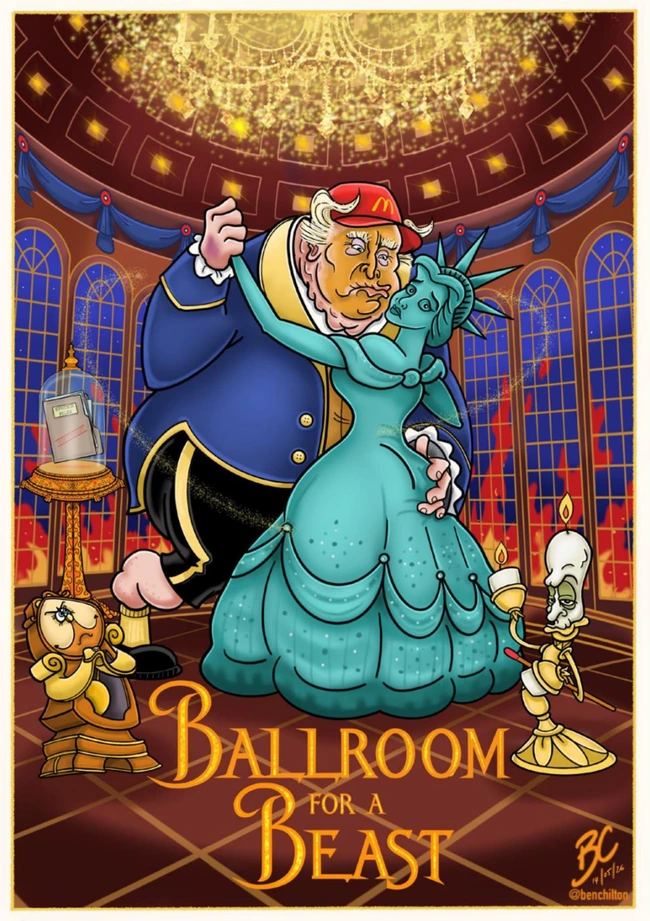
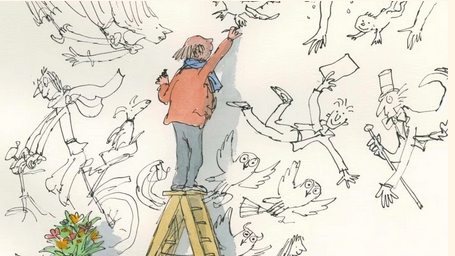
I like Chilton’s art (which comes from the New Cartoonist), but both the subject matter and the setting are a reminder that the Whole World Is Watching, and it isn’t cheering us on.
There are worse things to export than Disney films, but this is still an indication of how much our culture, such as it is, is not confined to our own shores.
That’s nothing new: Back in the ’80s, Egypt was running Dallas on TV in rural community centers because they needed to get rural farmers to watch the less enthralling programs about growing tomatoes in the brackish water of the Nile, but the result was youngsters flocking to Cairo in search of fancy cars and good living, and winding up in corrugated tin sheds among the other poor.
It’s a two-way street: We adapted All in the Family, Sanford & Son and the Office from British sitcoms, toning them down (or screwing them up, depending on your POV) for American audiences.

Another British cartoonist bases a gag on a Russian classic, showing how it measures up against an American book that should be classified as fiction and which is embarrassing for anyone outside the NYC metro area to have even heard of.
Adams suggests it has more twists and turns and is harder to get through, which I would attribute to the fact that Tolstoy knew where he was headed while that other author is making it up as he goes along.
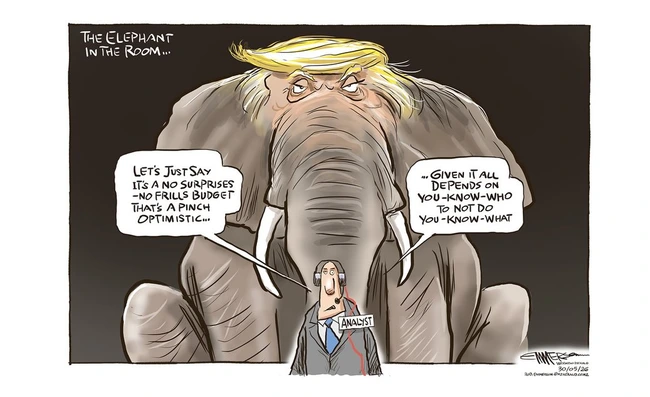
Like the UK and Australia, New Zealand is going through budget time, which has cut down my use of their cartoons, since they are, obviously, very local in content. But Emmerson reminds us of the éminence grise that lingers over global economy and politics. While perhaps we should be happy to not be the only ones that have to deal with it, it is, after all, our fault that anyone must.
Osa Johnson, world explorer and filmmaker, said elephant meat is hard to eat because it expands the more you chew it. I don’t know if that’s true of real elephants, but it seems true of this one, and by the time we figured it out, we could neither swallow it nor spit it out.
Juxtaposition of the Day

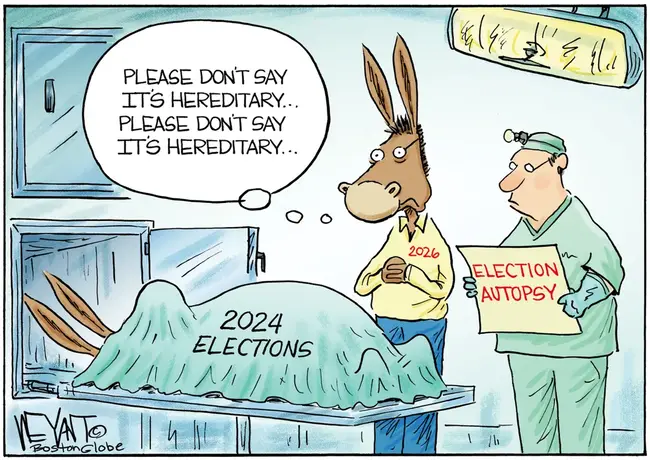
The Democratic National Committee released what was a rough draft of their post-2024 analysis, and they’ve gotten flak over its unfinished, inexact conclusions.
Lincoln warned against the risks of changing horses in mid-stream, but he was talking about between two elections, not smack in the middle of one, and Ramirez is correct that the explanation of what happened would fit on the head of a (campaign) pin.
Meanwhile, the donkey in Weyant’s cartoon hopes it isn’t hereditary, but it’s a little late for that, given that it appears to have started back when the party decided nobody should elbow Hilary Clinton out of the way, sparing itself the agony of a primary in which the party’s voters could choose their prefered candidate, then followed up with Biden, who should have been a one-and-done but declined to step aside until the last minute.
People complain that the DNC’s report is incomplete and doesn’t come to any actual conclusion but that seems to sum up the 2024 campaign perfectly.
I’d remind everyone that, back in 2012, Bobby Jindal summed up the GOP’s defeat to Obama by saying they need to “stop being the stupid party.”
We’ve got to make sure that we are not the party of big business, big banks, big Wall Street bailouts, big corporate loopholes, big anything. We cannot be, we must not be, the party that simply protects the rich so they get to keep their toys.
Near as I can tell, the only result of his analysis was that the party recommitted itself to doing precisely what he warned against and it appears to have worked out for them.
Nobody has seen Bobby Jindal since but I assume they left his report and kept the cannoli.
And that’s how we got to this
Juxtaposition of the Day #2
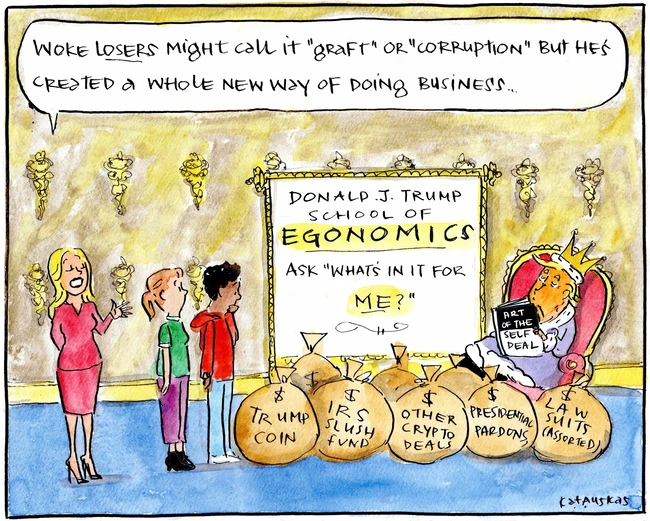
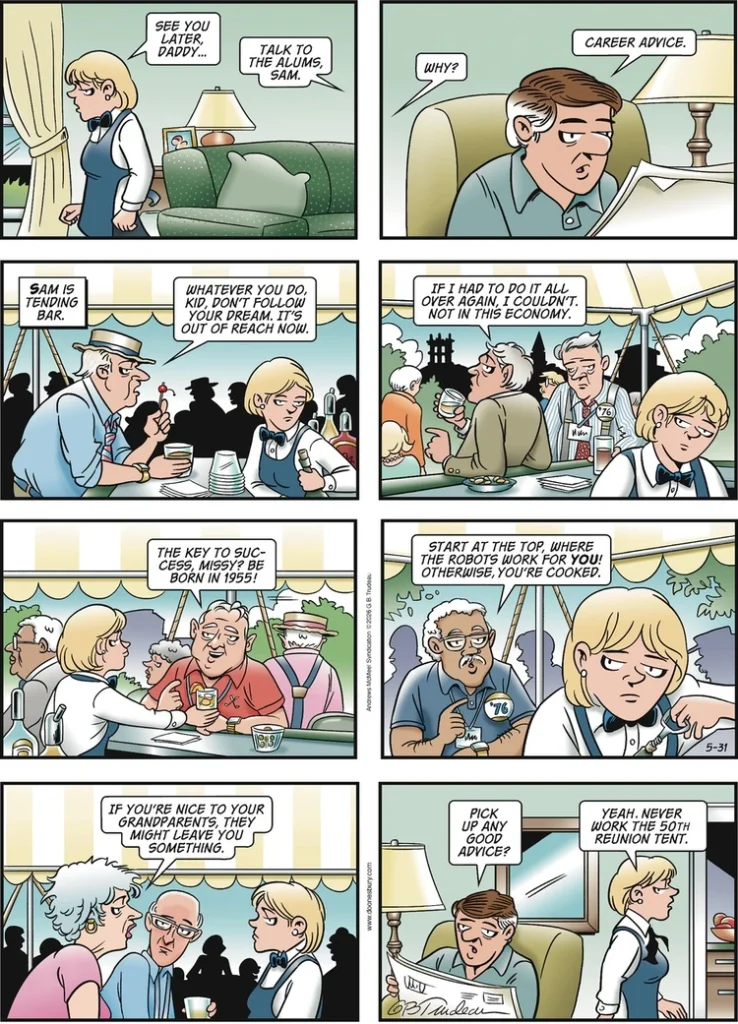
Both cartoonists present a world in which young people have nothing to look forward to. Katauskas notes the rotten example set by the president, while Trudeau mourns a world with no opportunities. I’m inclined to agree in general but to resist taking an apocalyptic view of things.
I often refer to my grandfather, who typified the American Dream, beginning by going down into the mine with a dinner pail and eventually going up to the executive suite with a briefcase. But he once observed that he did so at a time when the pie had not yet been cut up and it was still possible to get a slice for yourself.
King Vidor’s classic silent film, The Crowd, begins with the birth of John Sims, whose proud father declares that his boy will grow up to be president. There then follows one of the most famous scenes in movie history, showing how this idealistic, patriotic prophecy turns out:
It’s a brilliant movie, but it never gets any more encouraging than that.
In Doonesbury, Sam learns not to listen to the alums because it’s far too discouraging. But, then again, in the Graduate, Ben found the advice of his parents’ generation depressing, so what’s new?
I’ve got five granddaughters, one still in high school, one in college and three who decided college was too expensive and found jobs that didn’t require it.
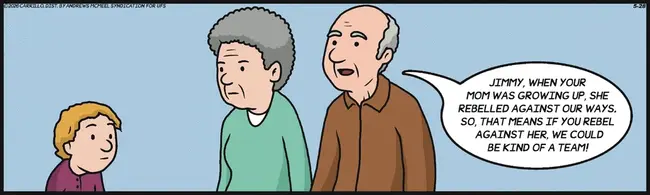
Their youth and energy make me nostalgic. They’re living normal, quiet lives, but they’re active and involved. Not everyone in Gen Z makes headlines, but they keep their ears to the ground.

For instance, young activists are camped outside Delaney Hall, like a combination of Freedom Summer and the Democratic Convention. But even average Gen Z Minnesotans turned out in the crisis there.
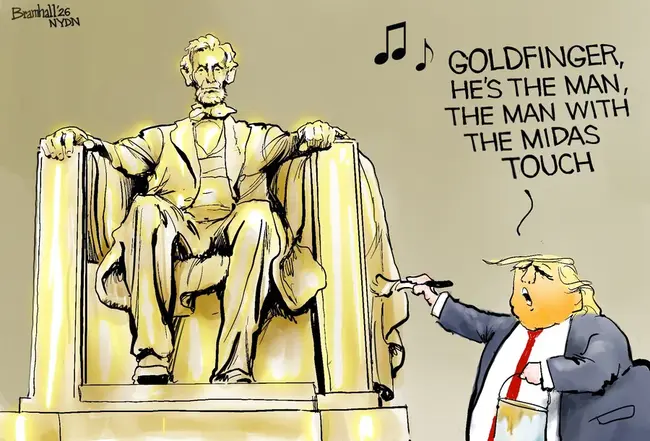
As for the chance to be president, I think they’d rather topple the golden statue than pose for one. And Bramhall isn’t kidding: Dear Leader is gilding statues in DC and wants to slap white paint on the granite face of the Executive Office Building.
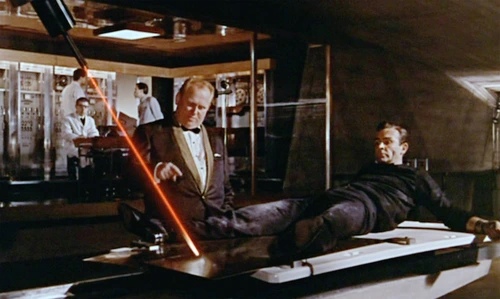
The President is a role model. Nobody said he has to be a positive one.
Mike Peterson has posted his "Comic Strip of the Day" column every day since 2010. His opinions are his own, but we welcome comments either agreeing or in opposition.
Comments 21
Comments are closed.