(Comic) History Gone Awry
Skip to comments
John Freeman at downthetubes reviews a new history book of British comics – it comes with a warning.
The rise of AI has led to some bilge-filled books in recent years times, and now it’s becoming the bane of British comic fans interested in exploring the history of our medium.
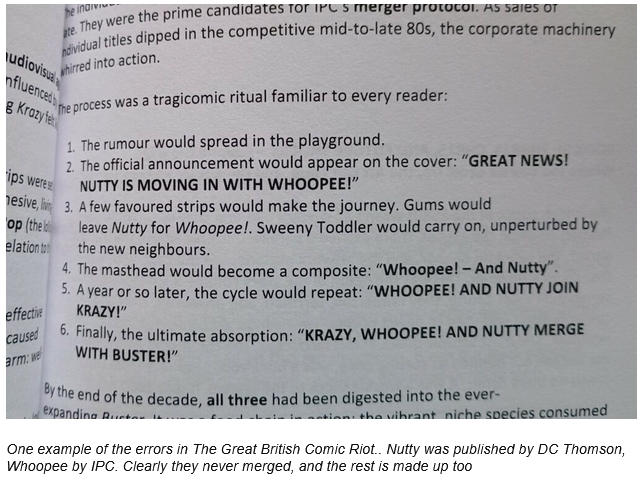
A case in point is the recently released, independently published The Great British Comic Riot from Axon Press, written by “Inky Fingers”, which has a factual error on almost every page, not only assigning comics of yesteryear to the wrong publisher, but making up the names of strips they featured, too.
Worse still, the “author” cites a mix of both fictitious and genuine sources, the latter including Pat Mills and downthetubes, in an attempt to bring some legitimacy to its inaccurate outpourings of bilious inanity.
Strangely the creator of the “independently published” book couldn’t be bothered to dig up a public domain comic image for the book’s cover and instead has a picture of a girl blowing bubbles.
John concludes his review with, “Caveat emptor, buyer beware! That is, don’t buy it!“
Elsewhere British cartoonist Lew Stringer bought the book:
As you know, I’ve been interested in the history of comics since I was a child, so whenever there’s a new book published on the subject I’ll grab it. Therefore I had no hesitation in buying The Great British Comic Riot, a softback allegedly full of info about UK comics of the 1980s. I knew it was Print On Demand, and only available through Amazon, so I wasn’t expecting a definitive work. Sadly, it even fell far short of that!
I won’t sugar coat this. It’s the most inaccurate book about comics I’ve ever read.
This reminds me of the controversy surrounding the publication of Maurice Horn’s The World Encyclopedia of Comics. The 1976 release of that book was both celebrated and castigated. The book brought world-wide attention to the comics media but comics scholars complained that there were a thousand errors in its 800 pages. The Comics Buyer’s Guide spent a couple issues reporting on hundreds of the mistakes.
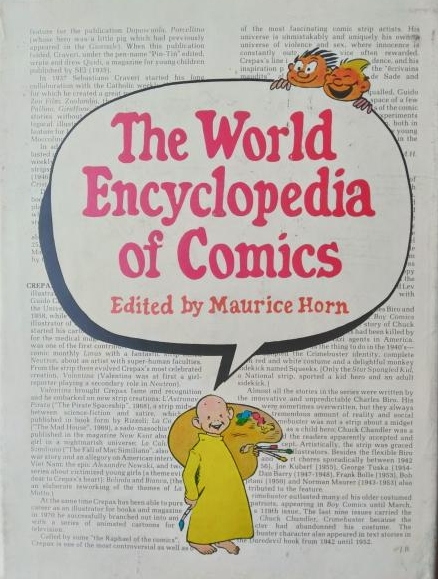
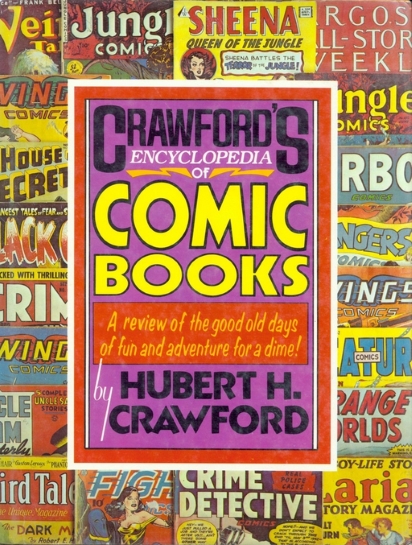
The flaws were brushed off by some because it was a first of its kind volume and could serve as a starting point for researchers. Two years later we got Crawford’s Encyclopedia of Comic Books (1978) which, again, was a comic history book filled with inaccuracies. Some easily checked as it was relatively recent history.
For example on page 343 Crawford tells this Marvelmaniac that:
[Captain America] was discontinued in 1950 as superhero fantasy gave way to Marvel’s new trend of love and romance titles. But April 1968 marked the dramatic comeback of Captain America by Stan Lee and Jack Kirby.
As we all know Cap was revived in 1953 for a short run and then again in 1964 in the early part of “The Marvel Age of Comics” (Avengers #4). Before that year was over the character had his own series running in Tales of Suspense. April 1968 was the cover date of when Captain America got his own self titled comic book (#100, continuing the Tales of Suspense numbering) in that time frame’s explosion of Marvel’s Silver Age titles.
Comments 7
Comments are closed.