Wayback Whensday with Notable Cartoonists
Skip to comments
Going back in time with comic strip and comic book artists Frank Robbins and Joe Maneely, children’s book writer-artist Judy Varga, a collection of Lynn Johnston interviews, some early Gahan Wilson cartoons, and a profile of William Heath Robinson the Rube Goldberg of England (or was Rube Goldberg the Heath Robinson of America?).
Comic Artist Frank Robbins
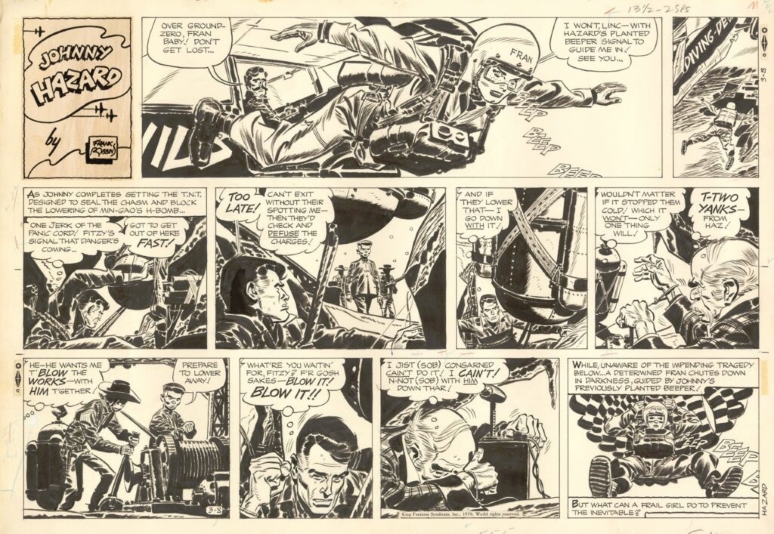
John Freeman writes an appreciation of comic strip and comic book cartoonist Frank Robbins.
If you really want to see Franklin “Frank” Robbins at his best, you should, for example, track down the Hermes Press collections of his newspaper strip, “Johnny Hazard” launched in 1947, although, be warned the physical editions can be quite expensive. (They’re available digitally through Amazon, too). Or his work on titles such as Weird War, House of Mystery, or House of Secrets.
I’m not alone in thinking Frank Robbins non superhero work deserves your attention, either.
“I never quite got Frank Robbins as a kid,” Syzygy Publishing co-founder and writer, editor, and publisher Chris Ryall said just this week. “But in fairness, my first exposure was also his work in the late ’70s rather than his heyday two decades earlier.
Robbins’ Johnny Hazard can be read at Comics Kingdom.
Like many comic book fans of the time I was unaware of Johnny Hazard, unlike many comic book fans of the time I liked Robbins art, especially on The Shadow which he seemed to really invest himself.
Judy Varga Remembered
I don’t know why this five year old post showed up in my feed now but it is interesting enough to pass on.
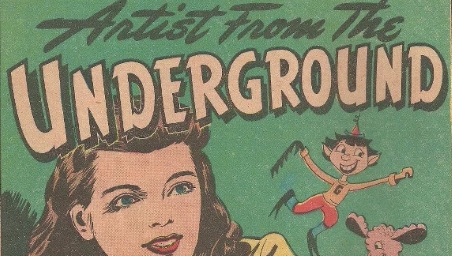
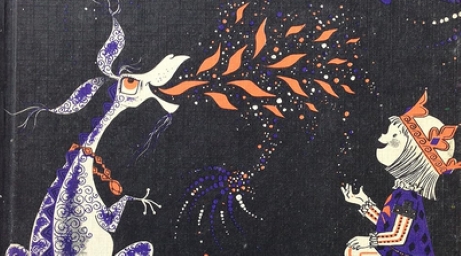
Edwin Letcher remembers his favorite childhood book “The Dragon Who Liked to Spit Fire” by Judy Varga.
As far as I know this is the only one of my childhood books that I still have. It’s been at the bottom of my sock drawer everywhere I’ve lived since I left home to go to college way back when. Everything about the story and the illustrations was special to me when I was a child and I still enjoy revisiting the book from time to time. Even though I cherished the book growing up, I haven’t given it the best of treatment through the years. The cover is dog eared. There are splatters of white paint on the back cover. There is crayon scribbling on some of the pages.
Judy Varga, it turns out, is a pen name for Judit Stang.
Lynn Johnson Talks

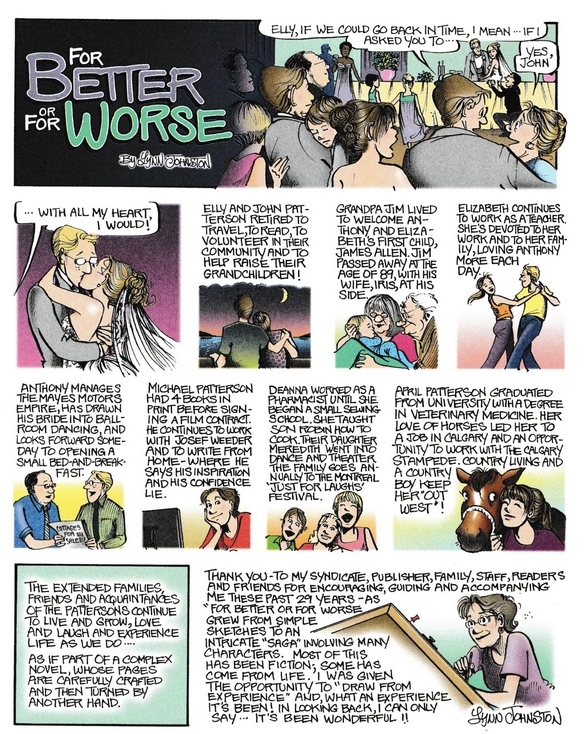
Shaenon Garrity for The Comics Journal reviews “Conversations with Lynn Johnston.”
In Conversations with Lynn Johnston, Jeff McLaughlin has added to the net good of human achievement by compiling as many interviews as he can find with the creator of For Better or For Worse, one of the great newspaper comic strips, at a time when newspapers are rapidly becoming antiquities of a better-informed past.
Because the strip deals with universal family themes and sitcom situations, it may be easy for readers in the U.S. to forget how Canadian it is. The earliest interviews in Conversations with Lynn Johnston hail from Canadian media and display obvious pride in a Canuck making good.
Very Early Joe Maneely
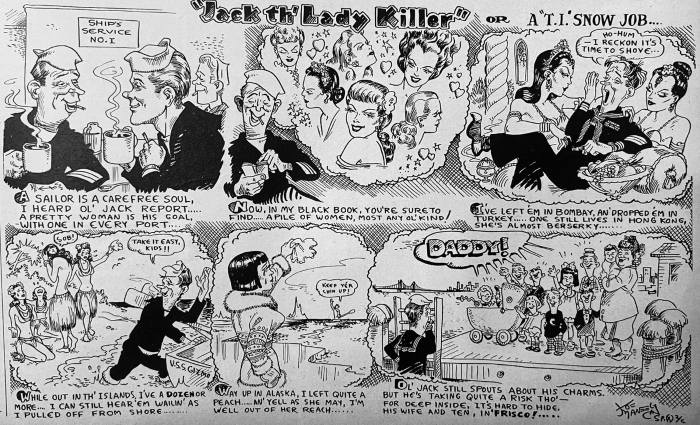
Michael J. Vassallo at his Timely-Atlas-Comics : The Facebook Group has shared some of the earliest cartoon work by comic book and comic strip artist Joe Maneely from his days in the U. S. Navy.
A while back I found a website that had a searchable database of scans and found a handful more. But that’s it … until now! Yesterday, the day before the 100th anniversary of his birth, I received in the mail a bound collection of “The Masthead” comprising all the weekly issues from January through July of 1946, nearly his entire tenure on staff. Since Joe was discharged on June 6, except for a handful of cartoons held in inventory, this is nearly all there is. The volume arrived during the day on the 17th but I didn’t open the package until 1:00 AM on the 18th, his 100th birthday.
So for Joe’s 100th birthday, I present a sample of “The Masthead!”
Early Gahan Wilson
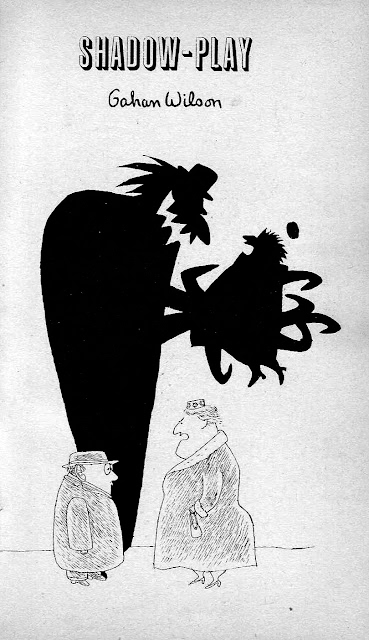
Not the earliest, but 1961 was still before his later fame, Gahan Wilson contributed to Harvey Kurtzman’s Help magazine. The World of Monsters presents Gahan Wilson‘s Shadow Play that first appeared in Help #7 (1961).
Heath Robinson Machines
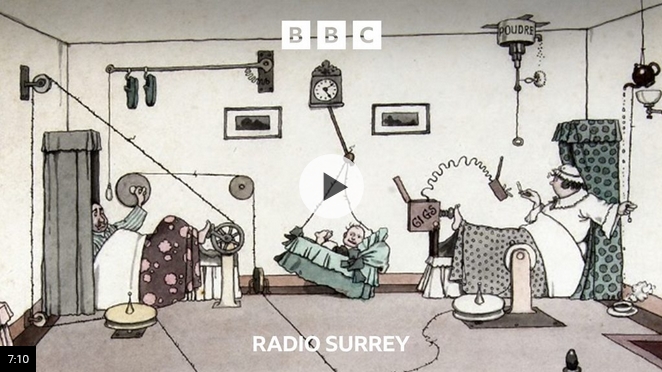
In the USA they are called Rube Goldberg Machines, in the UK weirdly elaborate machines and devices are named after William Heath Robinson.
For the BBC Simon Furber and Daniel Sexton profile “The illustrator who became a national catchphrase” (or here).
By the 1920s, the phrase “a bit Heath Robinson” had entered the national vocabulary, used to describe anything charmingly improvised or unnecessarily complicated.
His cartoons of improbable military machines – pulleys, pipes and teetering platforms – offered a gentle, satirical counterpoint to the grim realities of war and helped to make him a household name.
Comments 5
Comments are closed.