CSotD: Labored Commentary
Skip to comments
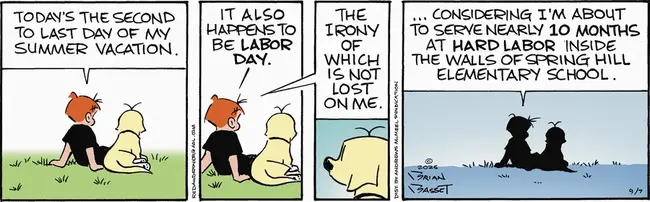
Red & Rover is set in an indefinite past that lines up fairly well with my own, and when I was a kid, Labor Day was indeed the end of summer vacation. It still is in some places, but other kids have long since been back in class now.
I remember a mini-rebellion when my boys were in school in Colorado, which set a school calendar that started just before Labor Day and ended just after Memorial Day. Parents objected, demanding one holiday or the other, and they got some backing from the tourism industry, but I see that while kids in their old district will get out just in time for Memorial Day next May, they’ve been back in the classroom since August 4, more than a month before Labor Day.
Labor Day is one of the few holidays that most Americans get off, though working at newspapers meant always having a skeleton staff on holidays to produce the next day’s paper. But before we were all sold off to vulture capitalists, we didn’t publish on major holidays, and I worked at one place where we had our annual “corporate prom” the night before Labor Day.
The first few years I was there, it was open bar and a good meal, but I think some attorneys whispered in somebody’s ear because they then switched to giving us two drink tickets. The meal was still pretty good, but there were fewer hangovers and apologies the next day.
At another paper, they had a Christmas party instead, and my assistant wasn’t going to go, but I told her she ought to, because that was how you found out who was sleeping with whom.
The next Monday, she said, “Boy, you weren’t kidding!” and, no, I wasn’t, and so the more I rose into middle management, the wiser it seemed to show up at the corporate prom early, be seen, and then disappear before things became interesting.
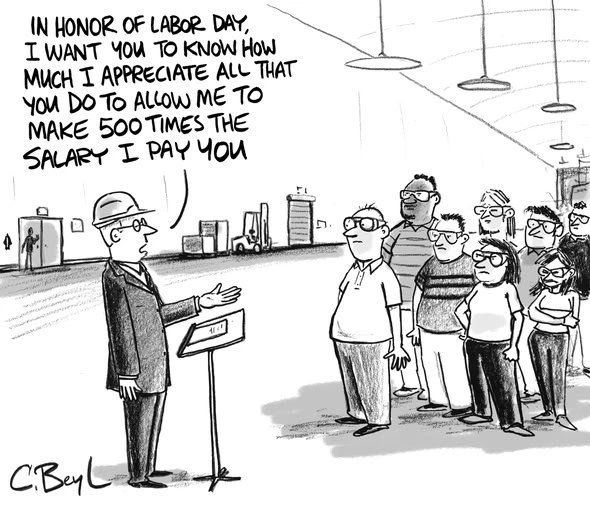
One of the advantages of being owned by distant Wall Street stock-swappers is that we didn’t have to see our rich masters very often. The Dickensian version is that Old Fezziwig threw a lovely holiday party for his workers but a generation later, Scrooge begrudged his clerk half a day off on Christmas.
You may place yourself on that continuum wherever you seem to fit, but I remember a corporate VP coming to visit and telling us that the nepobabies who had inherited our small string of papers were consulting Warren Buffet to see how the paper could do better. The foolish people thought that sounded wonderful and the rest of us began updating our resumes.
In the Q&A part of the cake-and-punch session, someone asked him when we were getting cost-of-living increases and he said we were already getting those. We hadn’t had a COLA in three years.
Things went downhill from there, and I went to another, much better paper, which promptly sold out to a different pack of vultures, so I went to another … well, you get it.
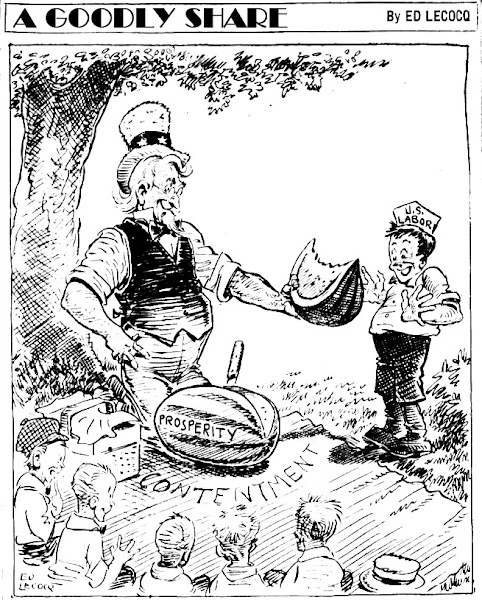
Labor Day was instituted by the unions, back in the days when one union would not cross the picket line of another striking union. I think you had to be there, but Paul Berge can show you a collection of Labor Day editorial cartoons from a century ago. You might have to look up strange terms like “prosperity” and “contentment.”
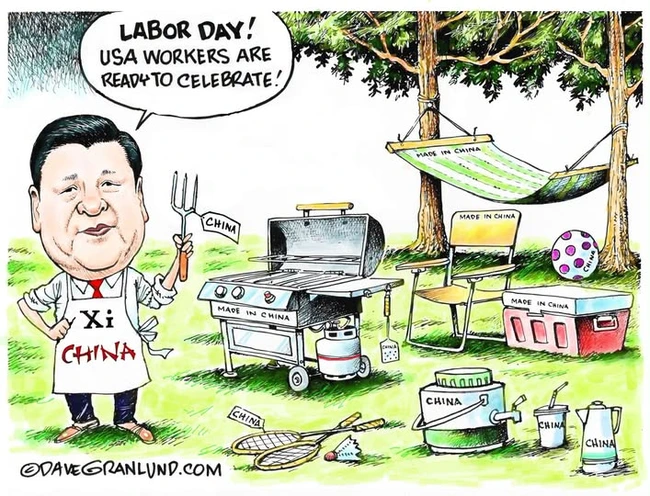
There are people, particularly union members, who make an effort to Buy American to support their fellow workers. I’m not sure whether Granlund is mourning the notion or attempting to promote it, but, either way, it’s getting hard to find example of American-made items, and nearly impossible to find any that are entirely made from American components.
Which is to say that, if the tariffs stick, there will be things like Canadian aluminum that will become more expensive. This will make a lot of metal objects made in this country more expensive, like the can of beer you are relaxing with on Labor Day, but also the car you’ll be assembling tomorrow, which not only has raw materials from other countries, but a substantial number of components and parts that didn’t originate here.
Labor Day began in the days when government was financed with tariffs, but only people who slept through their classes on economics believe in tariffs as a major economic driver today. The world economy is deeply interconnected.
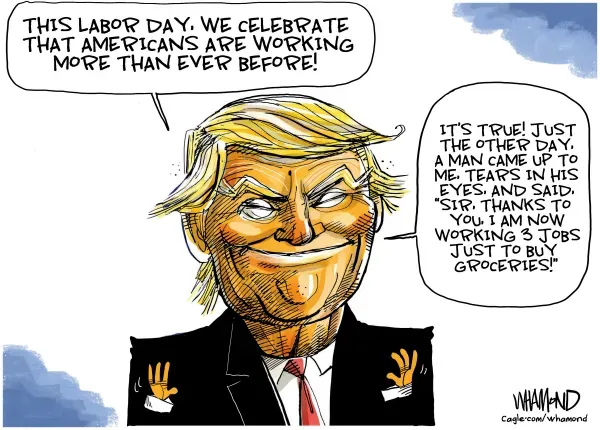
Whamond suggests a disconnect between Washington’s cheerful response to the latest jobs report and the way people live, because people are feeling stretched, and it doesn’t help that Dear Leader has no concept of how it feels to live paycheck to paycheck or to have to decide which bills you’ll pay this month and which you’ll have to put off.
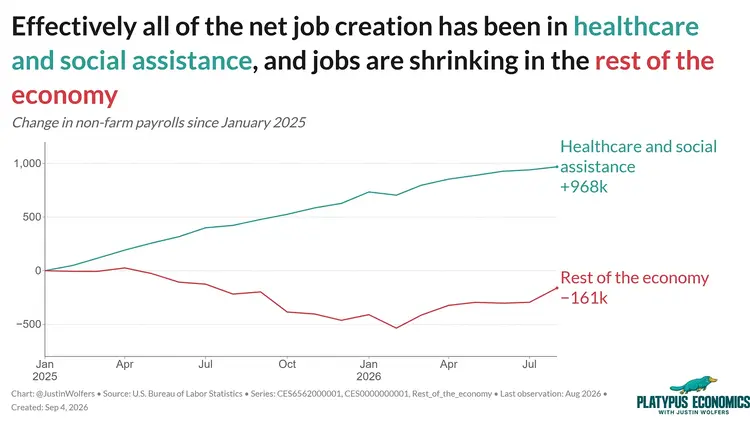
But Justin Wolfers explains that, while we added a lot of jobs in August, they were largely in the service sector, not the high-paying manufacturing area that could return our economy to the Good Old Days. In fact, Wolfers says, wages are not keeping up with inflation, and affordability is becoming even harder to achieve.
Not only is Whamond’s wisecrack well founded, but it reminds me of a woman I spoke to in Maine who was opening a wood pelletizing plant.
She said she was getting applications from an hour away, but not only was the anticipated payscale not worth that long a commute, but she knew the low-level workers applying didn’t likely have fuel-efficient cars and, with the price of gas, would barely break even on the drive alone, never mind food, rent and why they needed the job in the first place.
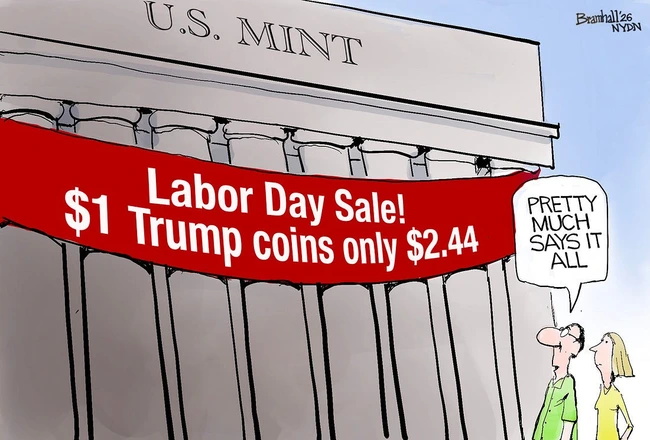
As Bramhall suggests, the timing of the release of the coin bearing a reproduction of Dear Leader’s mugshot from his racketeering indictment seems to sum things up. A coin that is worth a dollar as legal tender only costs you $2.44.

Stanfill takes perhaps a cynical view of the coin, which was punched out in apparent violation of a law against depicting living people on money.

But the truly cynical take comes from those who note that the coin celebrates Liberty, which began in 1776 and then lasted until 2026.
Happy Labor Day, to everyone who does.
Mike Peterson has posted his "Comic Strip of the Day" column every day since 2010. His opinions are his own, but we welcome comments either agreeing or in opposition.

Comments