The 10 Cartoonists Who Influenced Wiley Miller
Skip to comments
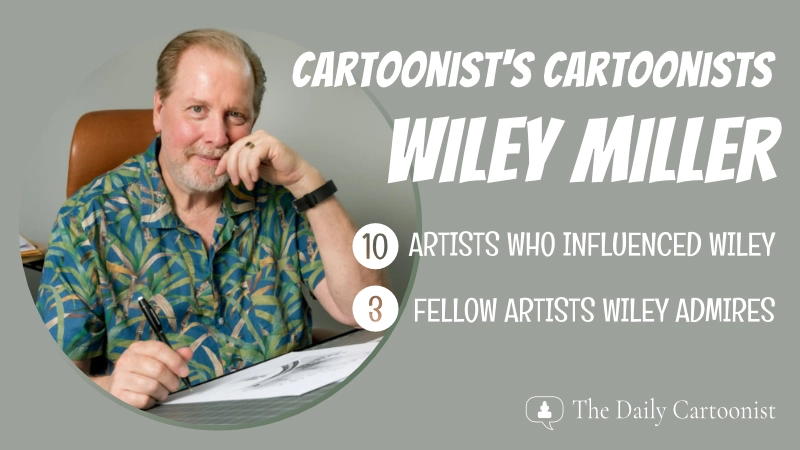
For a profile piece on influences, one cannot understate the influence Wiley Miller has had on newspaper comics and in ways far beyond artistic style. Allan Holtz calls him a “Thomas Edison of the comics page.” Before we get to the 10 cartoonists who have influenced him, let’s look at a few ways he has pushed the newspaper comics forward.
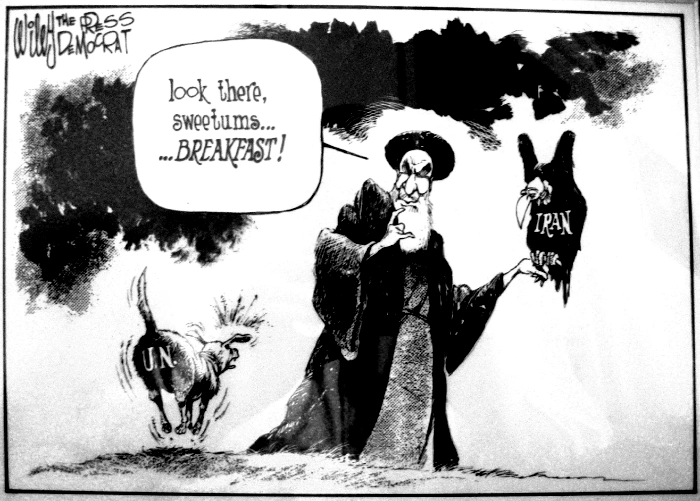
Before he launched his long-running popular comic Non Sequitur, he cut his teeth in cartooning as an editorial cartoonist. Over the course of his career he was a staff cartoonist for three different newspapers: The Greensboro News & Record, The Press Democrat, and the San Francisco Examiner.
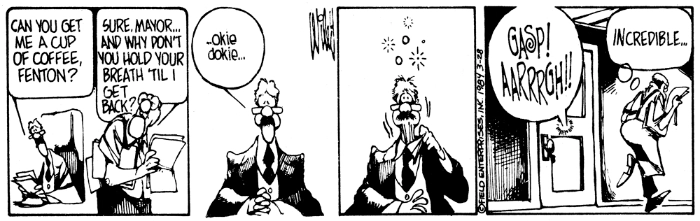
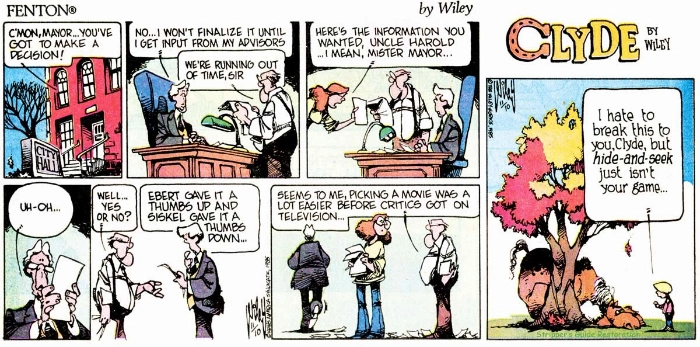
But it was in syndicated comic strips where Wiley made the greatest impact and success. His first comic strip, Fenton, had a three-year run and had moderate success. He introduced a single panel called Clyde that ran with Fenton. Running Clyde alongside Fenton might be Wiley’s first innovation.
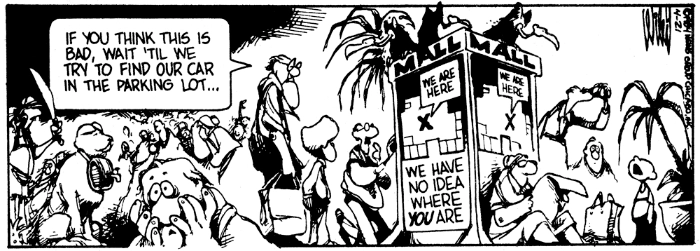
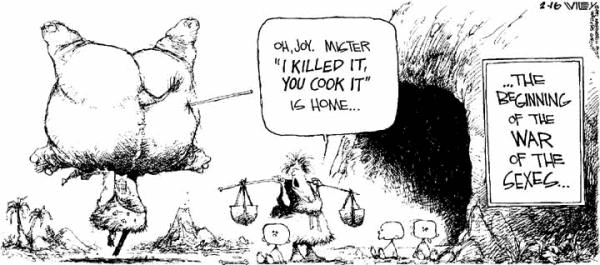
According to comic historian R.C. Harvey, while Wiley was at The San Francisco Examiner he was drawing cartoons at his favorite local bar that he dubbed Bartoons. He sold a few of the cartoons to Playboy. His wife liked the concept of Bartoons and urged him to develop it into something to pitch to the syndicates. There were no takers. Editors, syndicates claimed, only wanted comic strips with recurring characters characters about home, work or school. So Wiley gave up on a traditional single-panel and instead “modified [the cartoons] to fit standard comic strip dimensions.” The new strip Non Sequitur launched in 1992. Despite not having recurring characters it was easier for editors to slide in a new feature that looked like a comic strip than find space for a two-column wide comic.
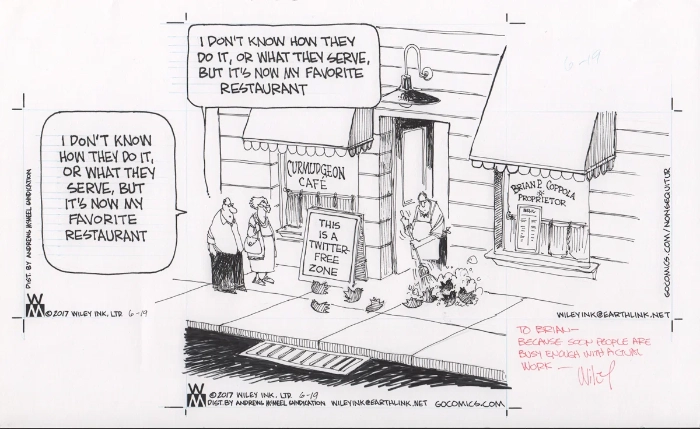
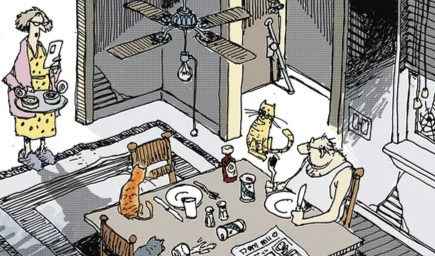
The next innovation came in 1995 when Gary Larson retired. Wiley’s syndicate told him that many papers wanted to know if he provide Non Sequitur as a traditional panel to replace The Far Side. Wiley’s initial reaction was no. “That would mean doubling my workload drawing the same cartoon twice!” he tells The Daily Cartoonist. But a month or so later as he was readying a batch of cartoons to send off to his syndicate. “I realized I could make it into a panel by (literally) cutting and pasting into a panel. Then I looked at the next one, and the next, and the next, and realized I could do it with all my dailies. Because I work in sort of 3-dimensional manner with different points of view rather than a flat eye-level, it allowed me to shift things around easily.” He quickly made some copies of his horizontal strips and made some samples to send to Alan Shearer, the head of the Washington Post Writers Group. They jumped on it. The first strip and panel format debuted on March 6.
He didn’t draw the same cartoon twice. “I realized I could do the cartoons as one piece of art, then separate them in Photoshop,” he says (see below).
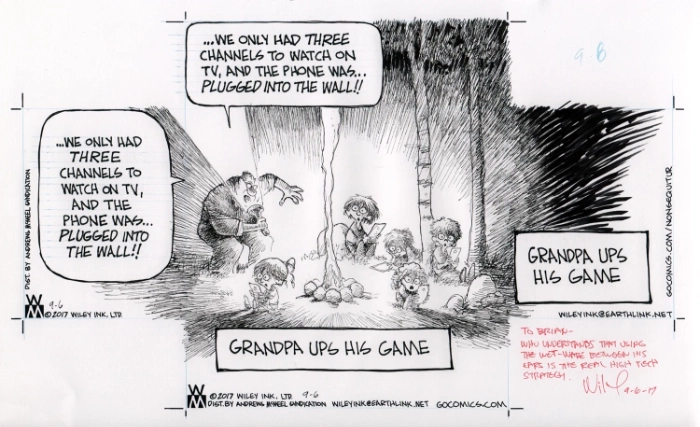
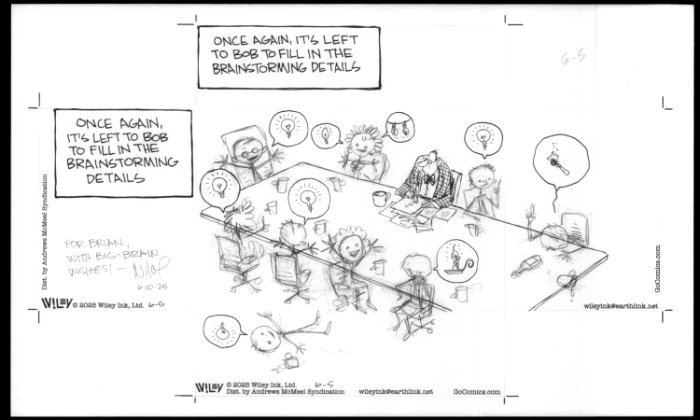
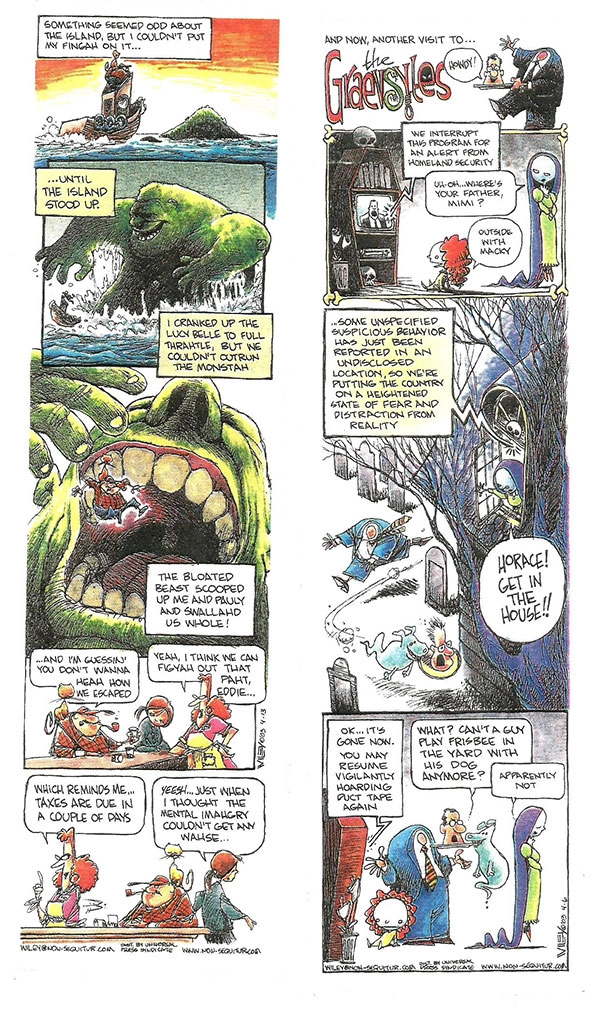
In 2000, he made another innovation. The Sunday Non Sequitur now came in a vertical format. No more boxes—and because papers were shrinking comics smaller so they could offer more to their readers, it naturally created a vertical space that needed filling. It also gave Wiley a canvas void of panels where he could let his artistic and story-telling skills go.
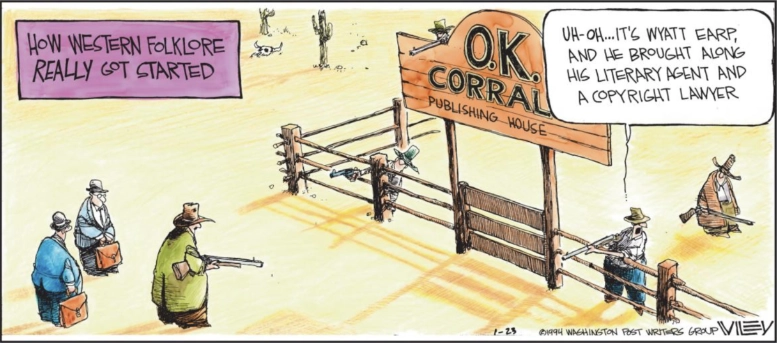
His other notable innovation—the one that likely impacted every cartoonist in print, was changing Sunday comic coloring from a flat color to process color. From his book “Non Sequitur’s Sunday Color Treasury” Wiley describes a 1993 phone call with Tim Rosenthal, the production manager at American Color. Wiley complained about the boring color options and wished he could color his comics using process color. The two changed comics forever.
Tim Rosenthal was just such a man. And then some. Tim was passionate about comics as an art form and wanted comics to be printed in the best possible manner. He was no clock puncher. Tim would consistently go above and beyond the requirements of his job to help cartoonists, often rattling the cage of complacent cartoonists to challenge him with more complicated coloring. In other words, he gave a damn.
We were predictably met with resistance at the outset. Tim’s bosses told us it couldn’t be done- that the color wouldn’t hold up in the poor reproduction quality of newsprint, etc.
But having worked with process color for so many years in newspapers, I knew it could be done, and with Tim’s pushing it through the system, we proved them wrong. Hand-colored Sunday cartoons using process color debuted in 1994.
Now that we know how Wiley has influenced comics today, let’s learn about…
The 10 Cartoonists Who Influenced Wiley Miller
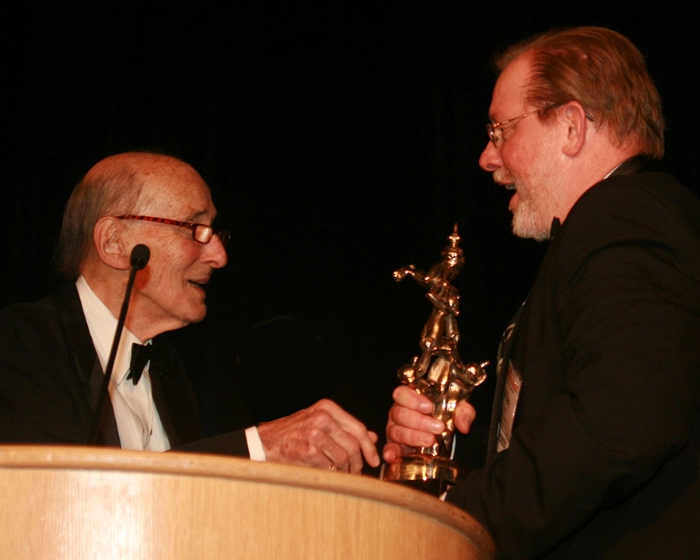
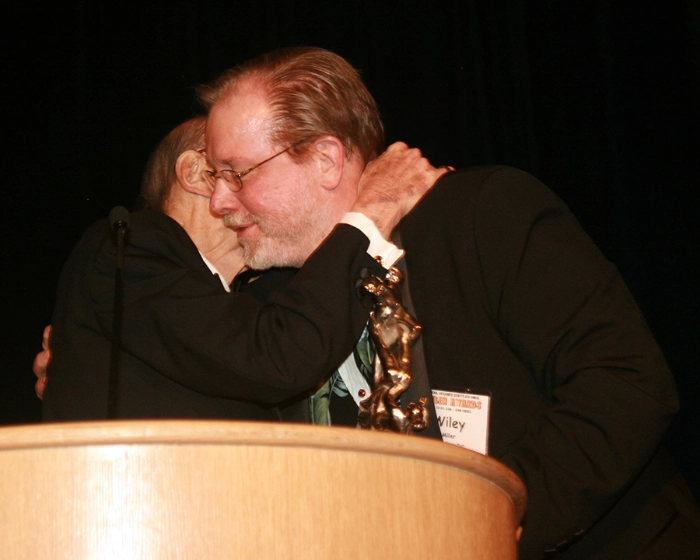
“Where to start? There were so many cartoonists who first influenced me who are all mashed up together when I was growing up in the 50s and early 60s reading newspaper comic strips. My parents banned me and brothers from reading comic books back in the McCarthy-era style scare on comic books, so they weren’t as much an influence until later in my teens with MAD magazine. I remember being attracted to works of Al Capp, Walt Kelly, Stan Lynde and Chester Gould mostly because of the art, but there was another new strip back then that I really liked, Miss Peach, by Mell Lazarus. Decades later, Mell and I became close friends, and when I won the Reuben Award, it was Mell who presented it to me. A cartoonist’s full circle of life that will live in my memory forever. Mell wasn’t just an influence on me professionally, but in life.”
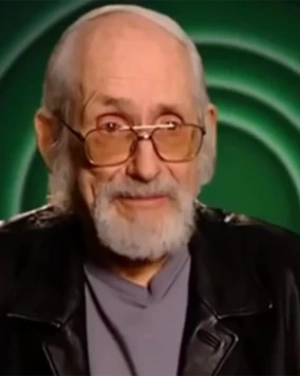
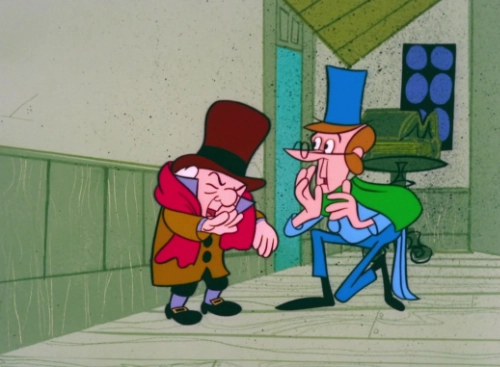
“My first real life influence was when I was about 10 years old in Pacific Palisades, CA. My mom signed me up for art classes in a little studio run by Tom McDonald, who was an animator on several Mr. Magoo productions, along with a fellow UPA animator, “Corny” Cole. He was absolutely wonderful and it implanted the notion in me that maybe I could be a professional cartoonist some day. I never considered anything since…which sometimes got me in trouble with teachers from grade school on through high school and college.”
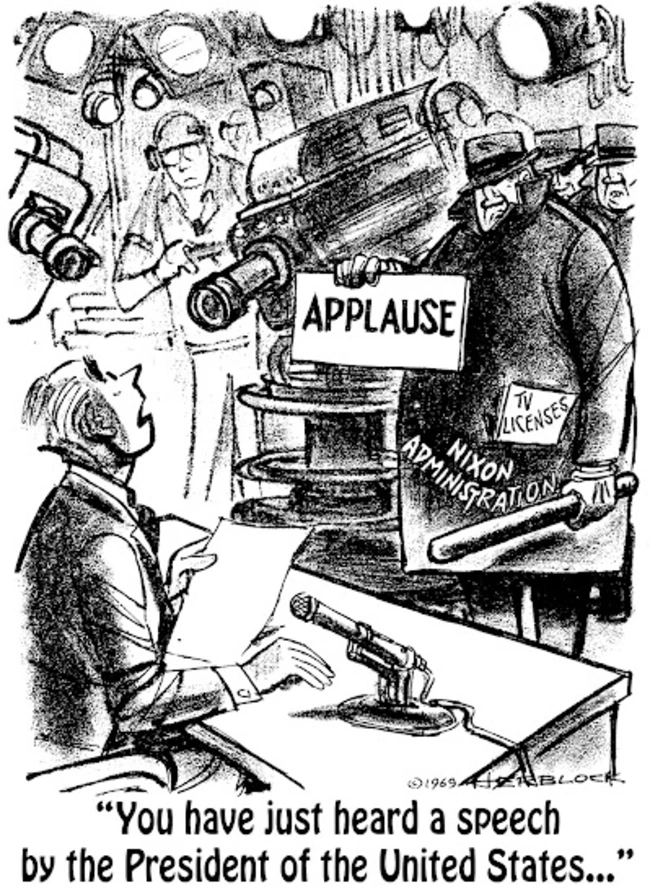
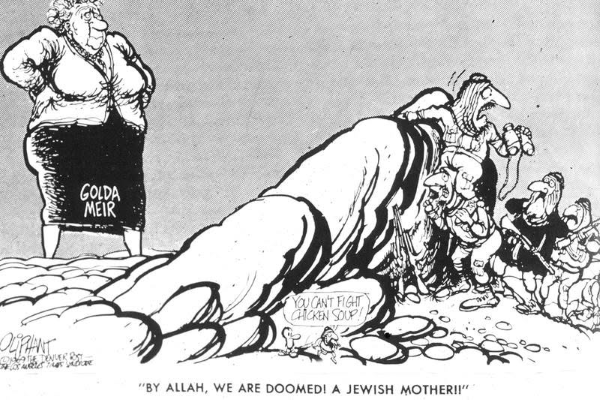
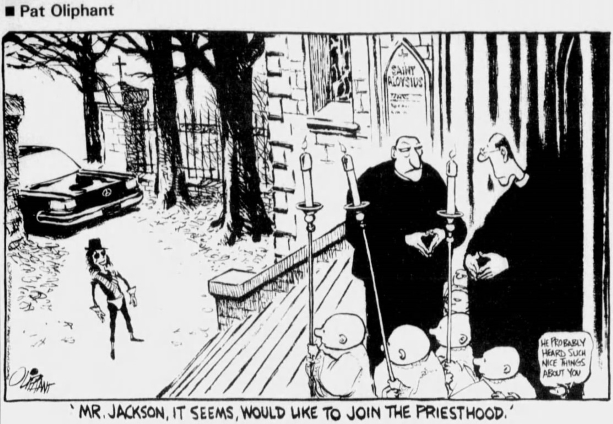
“The high school years is when my interests turned to editorial cartooning along with MAD magazine. I went to Langley High School in McLean, Va., which was a new school built practically in the backyard of the CIA headquarters. This was in the mid-to-late 1960’s at the height of the Vietnam War. My school bus went by Bobby Kennedy’s house every day, and I was weaned on The Washington Post, so I was steered toward editorial cartooning at an early age. Herblock and Pat Oliphant were the first big influences in editorial cartooning.”
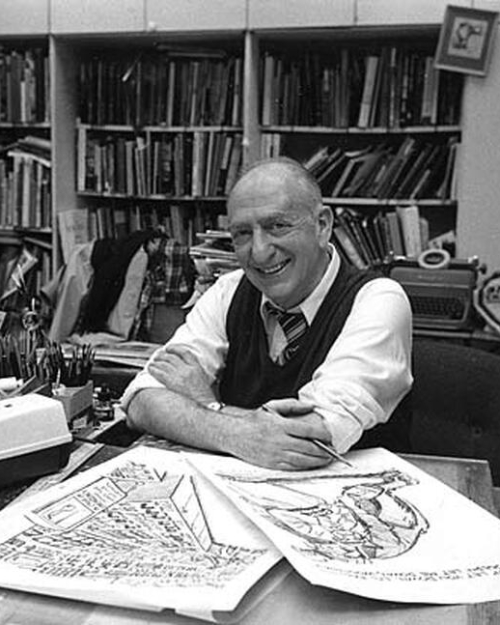
Herblock cartoons


Cartoons by Pat Oliphant


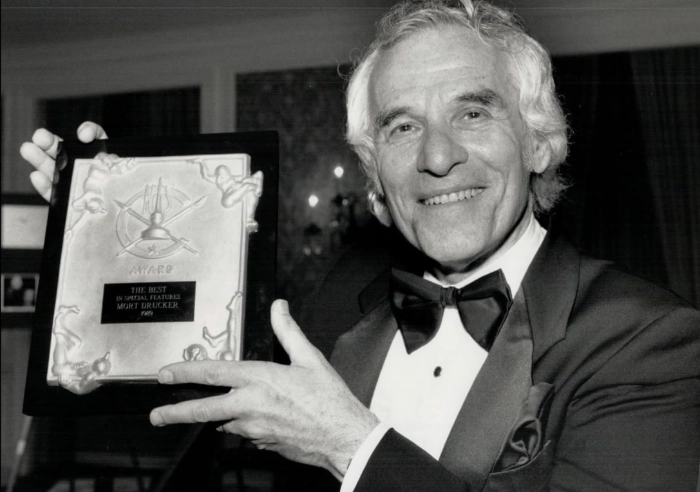
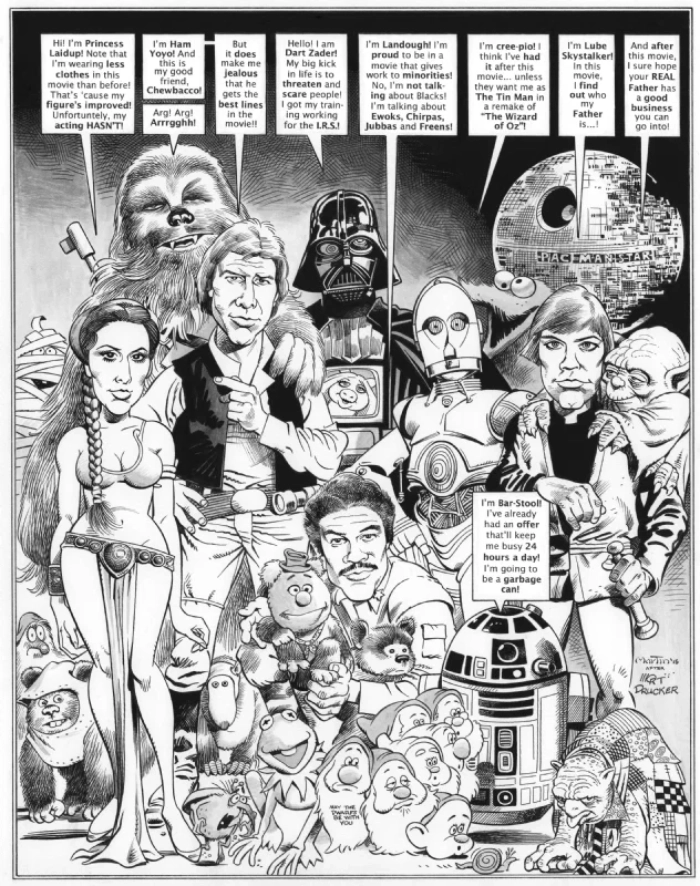
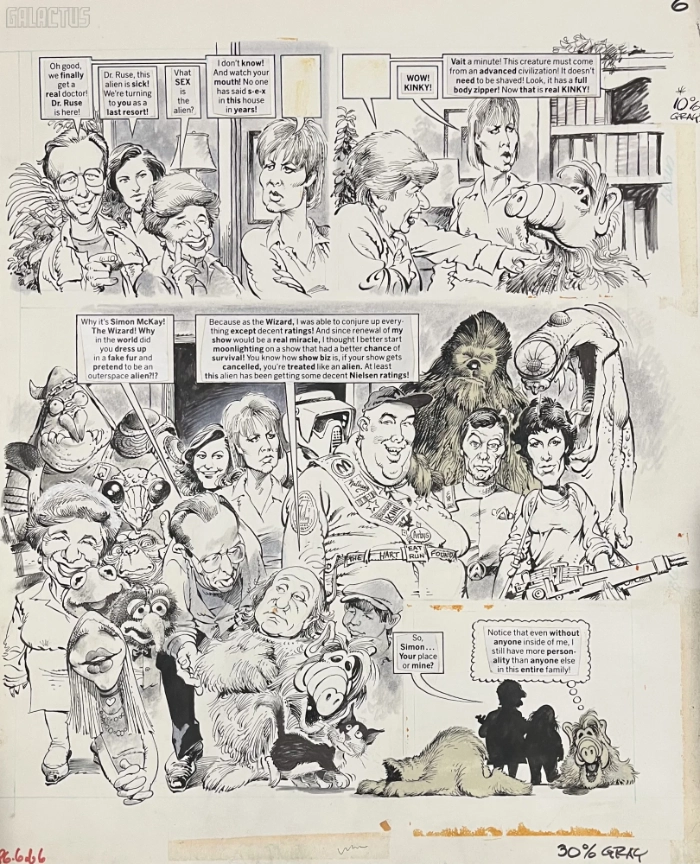
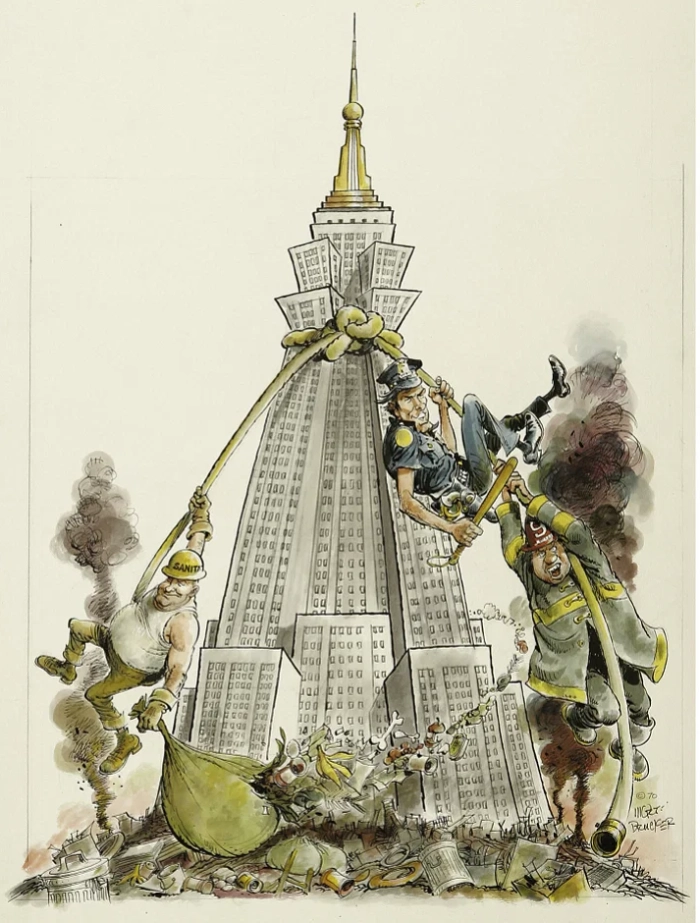
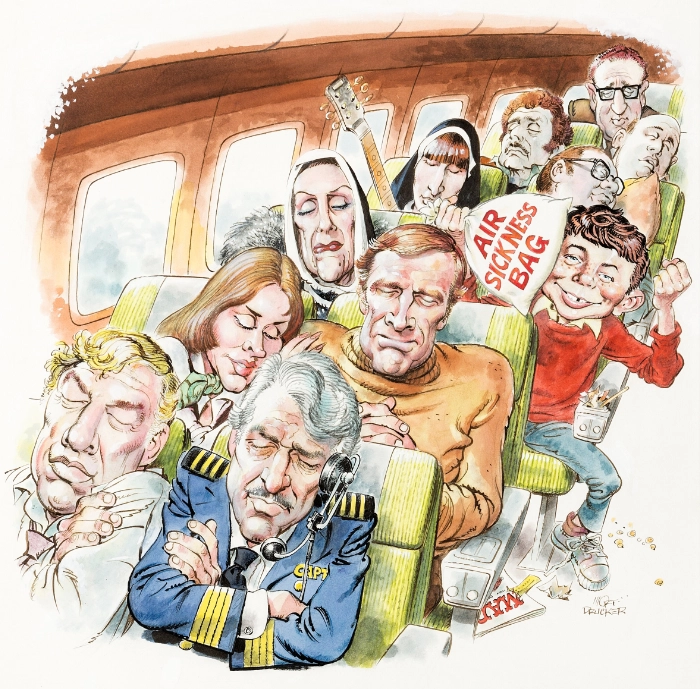
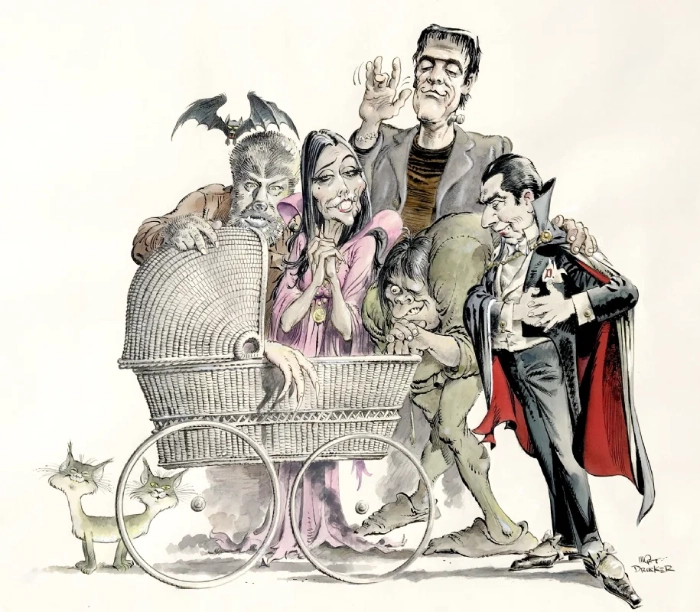
“Mort Drucker was a huge influence on me. Technically, he was an illustrator, not a cartoonist (which he pointed out many times over the years), but his influence on me as a cartoonist was immense. What a wonderful man he was. “
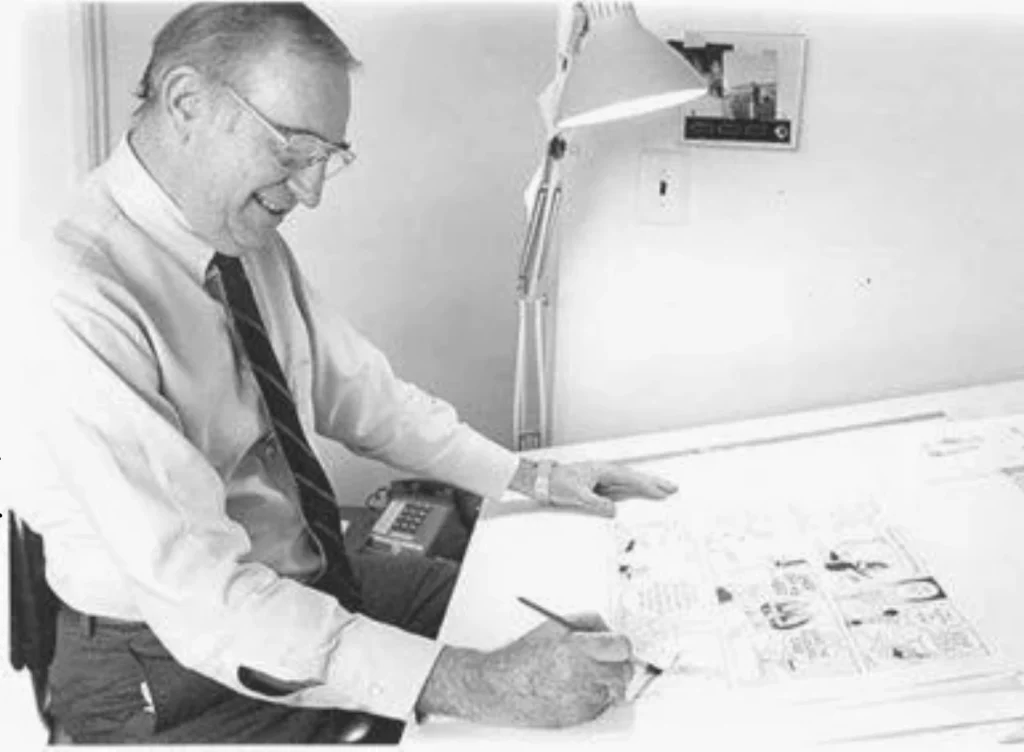
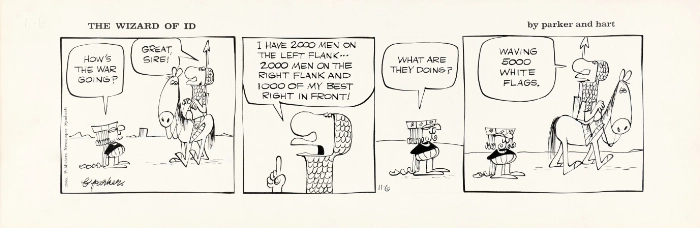
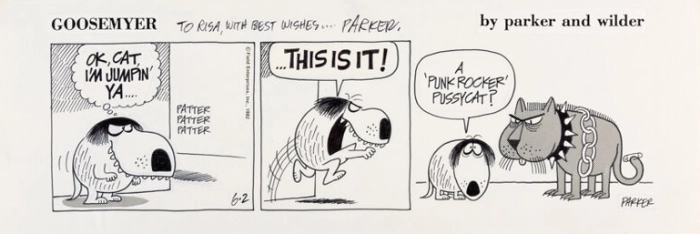
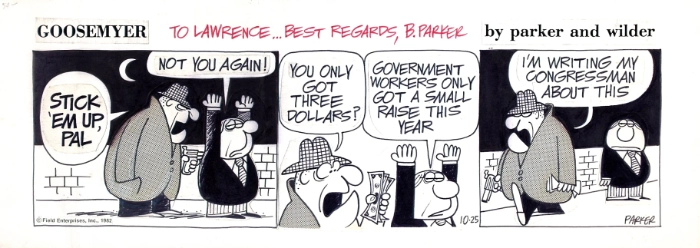
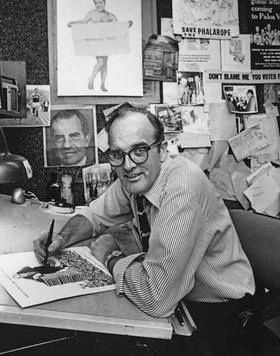
“The next huge influence was Brant Parker. I met him when he gave a talk at my school when I was a sophomore. I went up to him after his session and bent his ear for a long time. Nicest person you’d ever want to meet, always eager to help young cartoonists find their way into the profession. He gave me his card which I held on to for several years and got back in touch with him when I felt I was ready to try making it my profession. I could go on and on about Brant, but he helped me get started, winding up as the cartoonist/staff artist at the Greensboro Daily News and Record in North Carolina.”
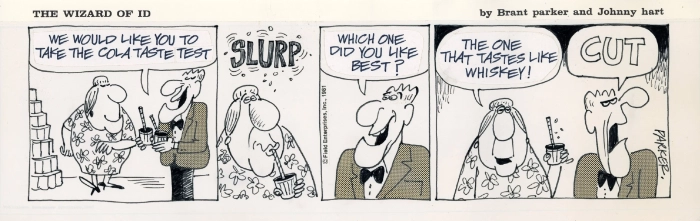
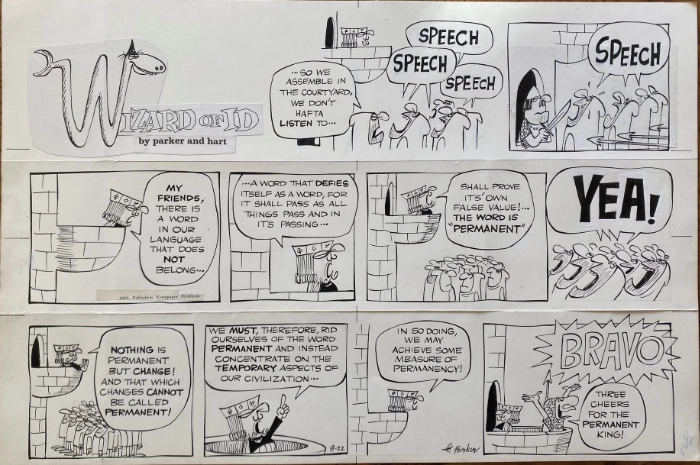
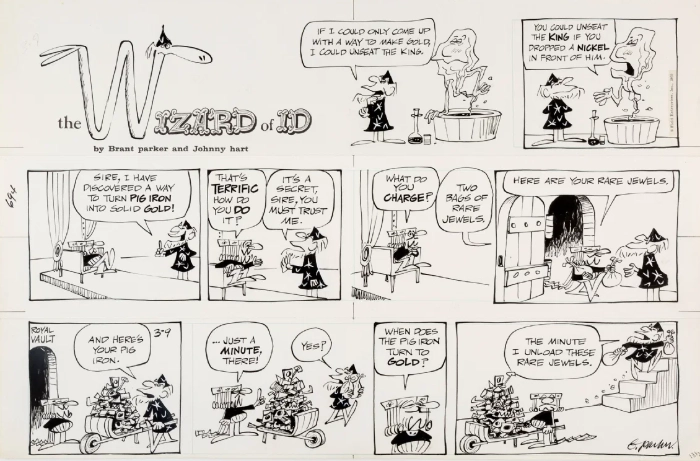
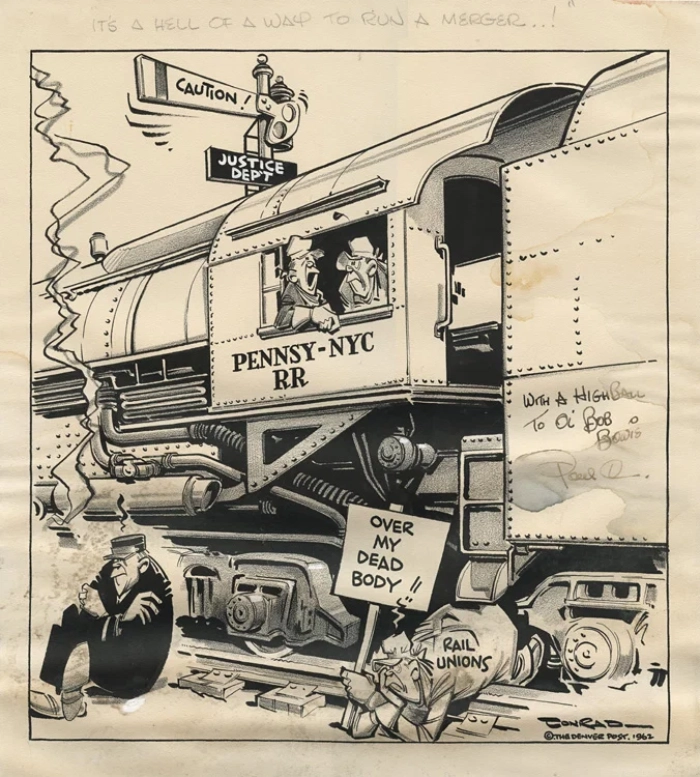
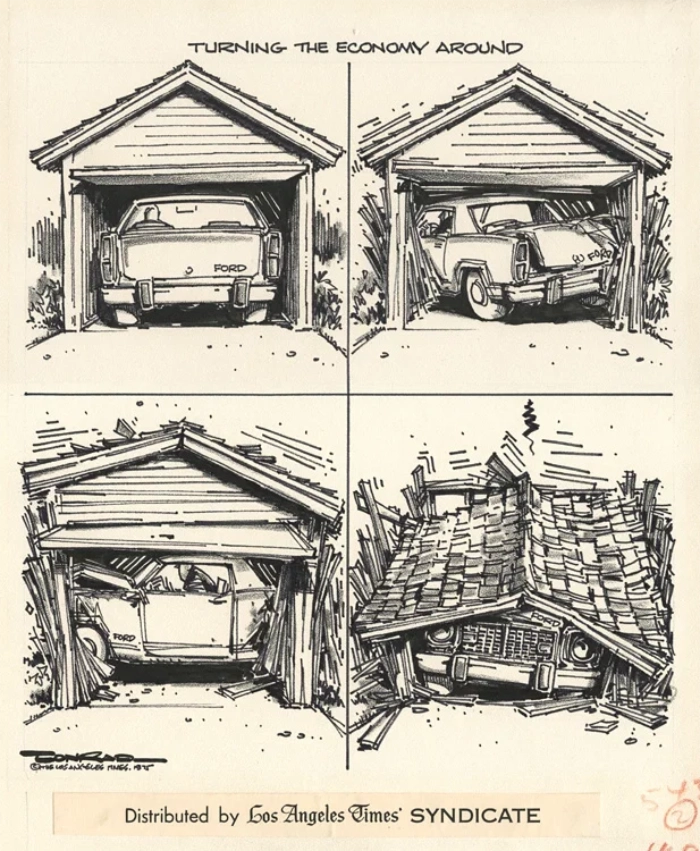
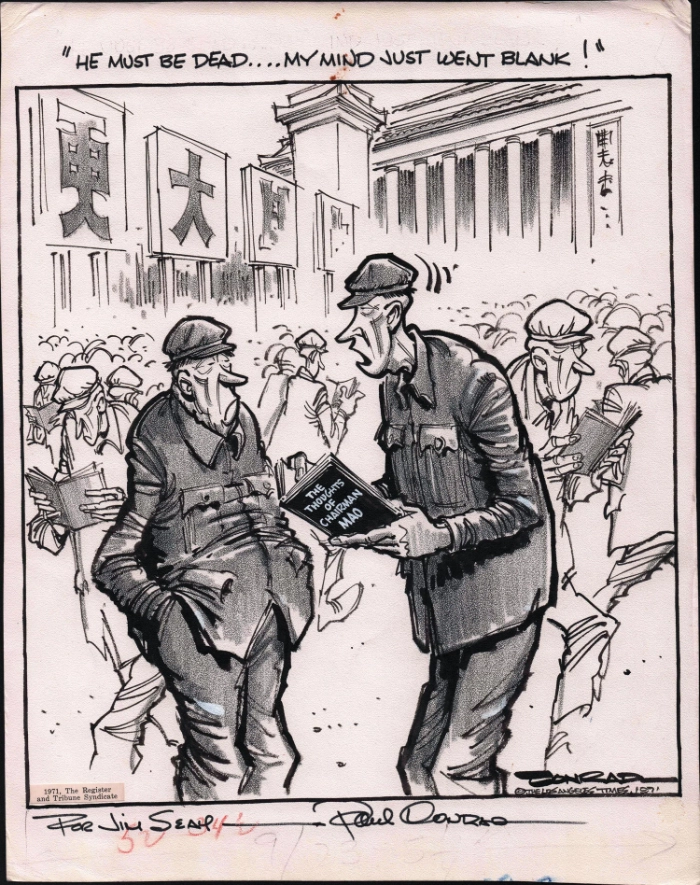
“Another big influence was Paul Conrad, when I was back living in SoCal in my early 20s. His cartoons taught me how to read a newspaper! The first thing I’d do every morning is open up the L.A. Times to the editorial page to read Conrad’s cartoon. When I didn’t understand what he was referring to in the cartoon, I would pour through the news section to find an article on it. That’s when I learned the serendipity of discovery in newspapers, as I’d find other articles of interest. This laid the groundwork for me as an editorialist. Many years later I finally got to meet him and thanked him for that.”

“What may seem conspicuous by his absence here is Peanuts. That does not mean Charles Schulz wasn’t an influence on me. We became friends when I was living in Santa Rosa, Calif., first working at the Press Democrat then the S.F. Examiner. Sparky’s influence on me was his work ethic towards producing a comic strip. He never had gag writers or bought gags, and never had any assistants helping with producing the art in any manner. Every inch of every strip was him and him alone, and I’ve emulated his cartooning ethic in Non Sequitur.”
The 3 Cartoonists Wiley Admires
“So now narrowing it down to just three current cartoonists whose work I admire is difficult, as there’s so many, so I’ll just go with the ones who immediately pop into my brain, whose work I look forward to seeing.
“In comic strips it’s now Will Henry. His work is brilliant in both art and writing. Truly original and unique.”
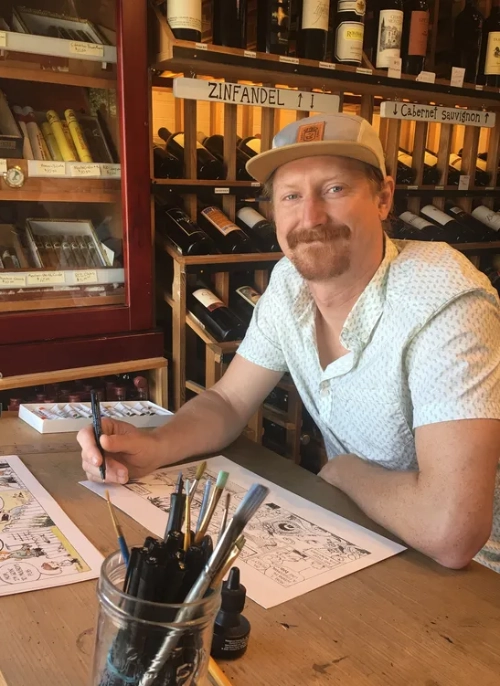
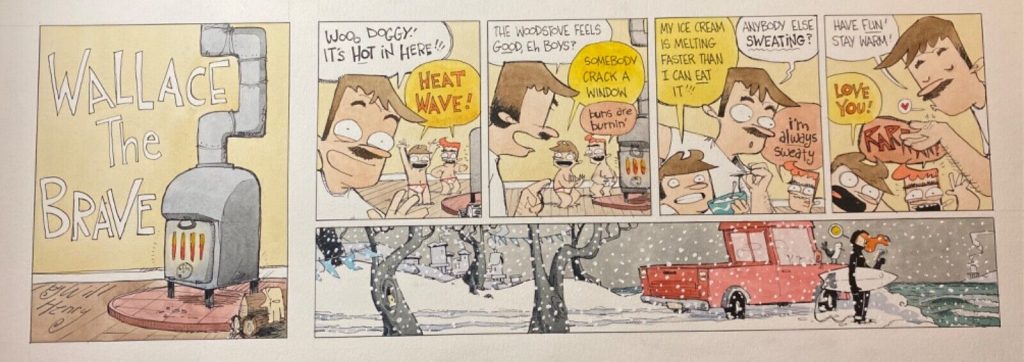
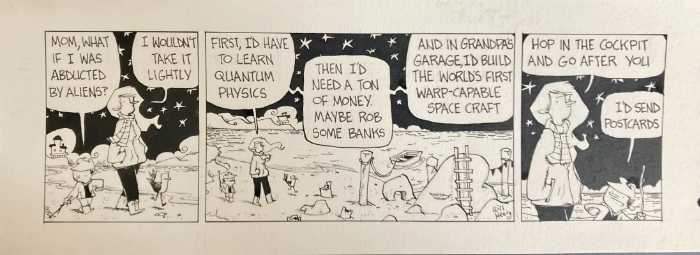
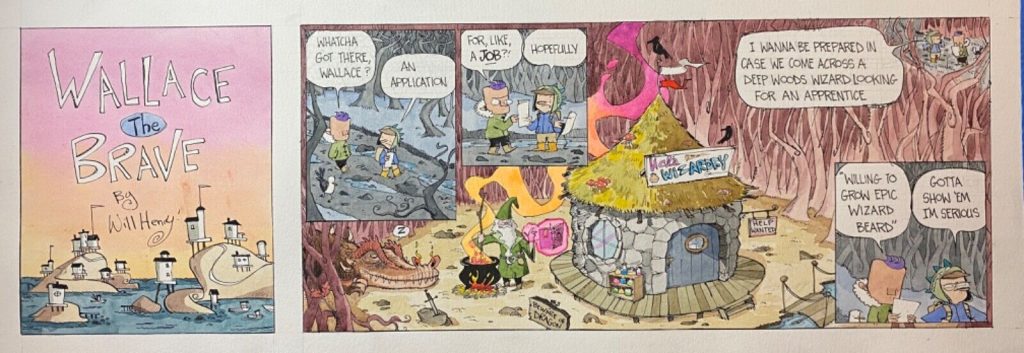
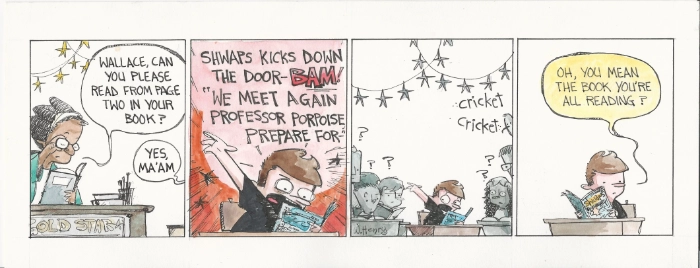
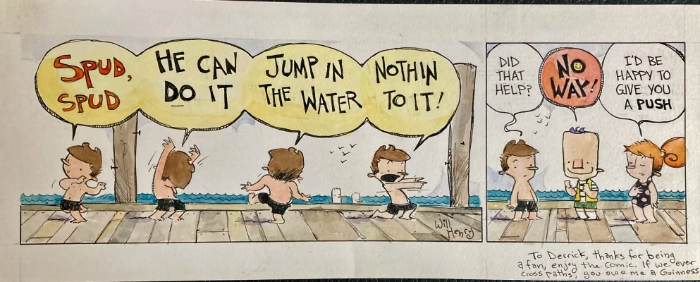
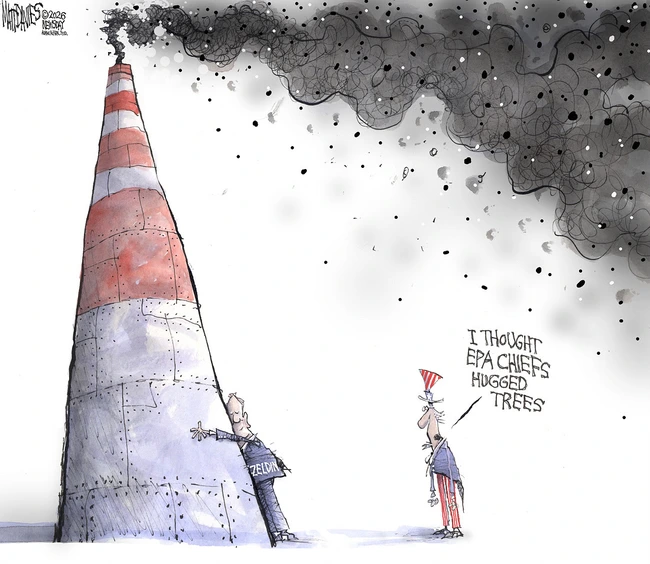
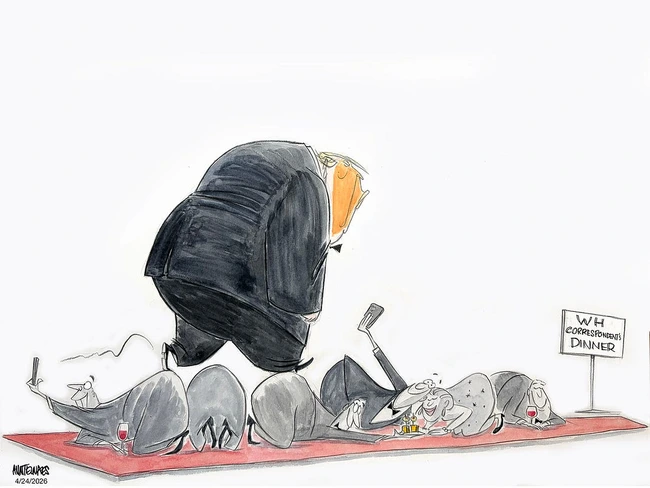
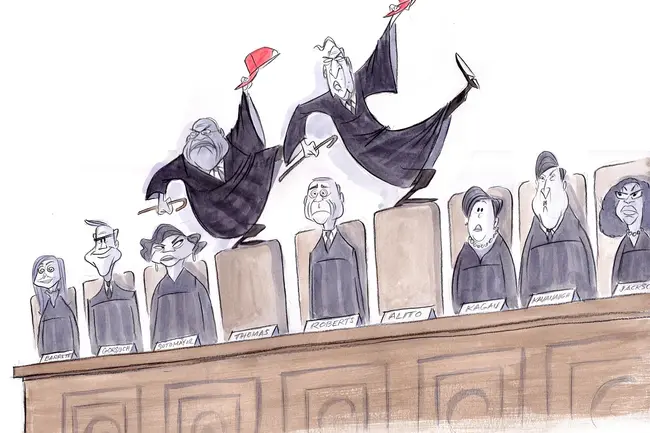
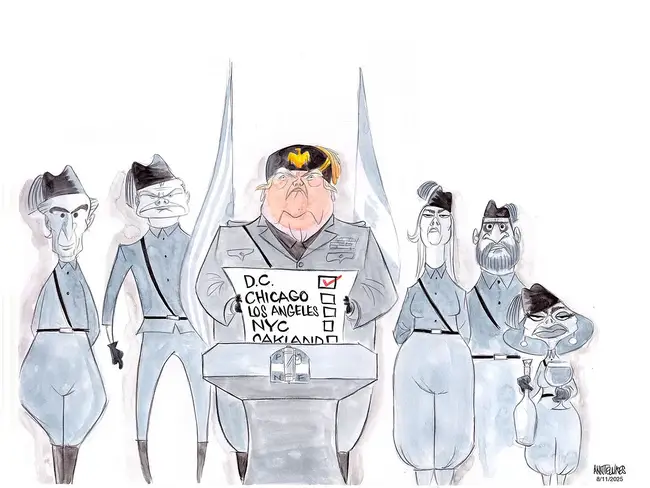
“In editorial cartooning it’s Ann Telnaes and Matt Davies. They each have a unique voice and artistic style, truly original, not derivative of anyone past or present. But most importantly, they both editorialize. The point comes first and devastatingly clear, with humor coming as a bonus.”


“Matt’s work is always on point with absolutely wonderful artwork.”
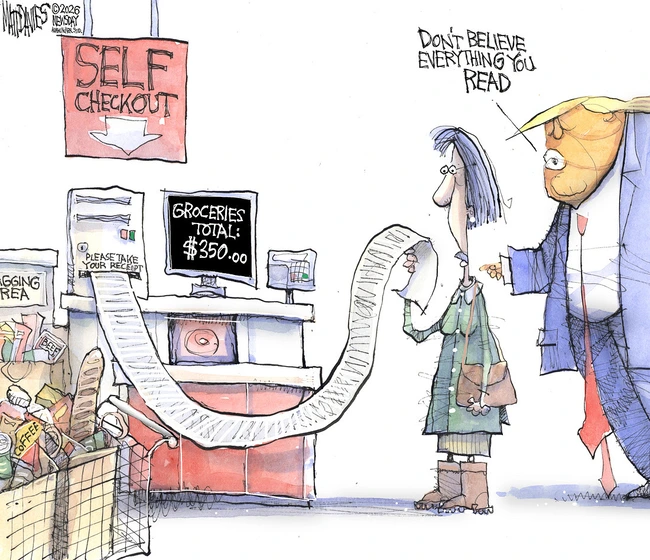

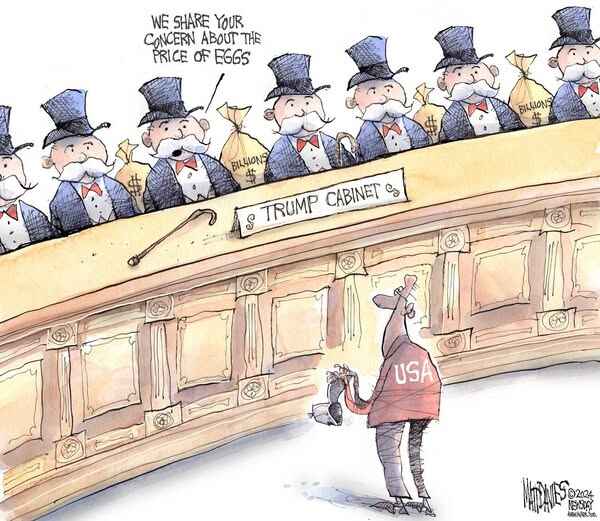
“Ann’s art simply a joy to look at and there’s never any question of what she’s saying about the target of the cartoon. What impresses me most about Ann Telnaes is her unwavering courage in speaking truth to power regardless of any personal price she may pay for it. Her moral compass always points true north and has endless compassion for those less fortunate around the world. I am privileged to be friends with Ann for a few decades, but I’m still trying to be objective here. I would feel the same if she was a complete stranger.”

Thank you, Wiley, for sharing with us your list of your influences and those you admire. You can follow Non Sequitur on GoComics and Wiley on Bluesky for his hot takes on politics and other topics.
Comments 8
Comments are closed.