Books and Periodicals

Your Comics Collection, A.D.

In this case “A.D.” stands for After Death.
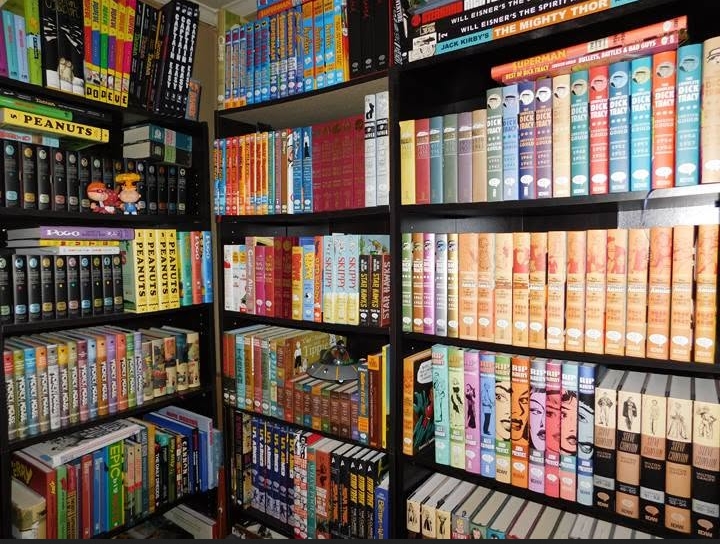
Part of Wallace Ryan’s comic strip collection (photo via LoAC Facebook)

So you have shelves full of hardcover and softcover collections of comic strips and comic books. For whoever is left to empty the house those will probably be donated to the local library for tax deductions or taken to the local used book store in trade for a pittance of what they are worth.

But what about those long boxes of “floppies” – those 36-page comic books that sold for 10¢, 12¢, 15¢, 20¢, 25¢ and so on? Are the inheritors really going to look into what each individual comic book is worth? Probably not. They’ll probably sell them en masse to a comic book dealer, trusting that they’ll get a reasonable wholesale price for them.
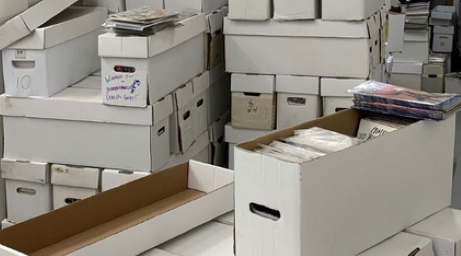
Long boxes of floppy comic books (photo via Big B Comics)

Abdullah Jamil at NerdBot explains why “Your Comic Longboxes Are an Estate Problem Waiting to Happen” and what you should do (ha, ha) to get the collection in order for the family A.D.

Your Silver Age keys, your graded slabs, your sealed Magic packs, your original animation cels, that shelf of first-print hardcovers. Those aren’t hobbies to the people who inherit them. They’re assets. And assets without a plan tend to become arguments.

Most collectors know the rough market value of their own stuff. Spouses and kids usually don’t. To an outside eye, a wall of longboxes looks like clutter. A run of graded books looks like plastic bricks. A binder of holographic cards looks like something a kid could have put together on a rainy afternoon.

That mismatch is where the trouble starts. A single high-grade key issue can be worth more than a used car. A well-curated Silver Age run can outpace a retirement account contribution.

My kids know that there are some valuable collectibles in my collection and one daughter-in-law will have fun researching and selling the floppies. The problem is there was no rhyme or reason when I was stuffing the comic books in long and short boxes. They’re going to need to clear a room to sort and alphabetize it all, a chore that will take weeks.

And what about all those Sunday color comic supplements? Donation to The Library of Congress?

On a somewhat related note…

Gerelyn Terzo at 24/7 Wall St. tells of a comic shop owner on social security.

“He Sold a 30-Year-Old Comic at Comic-Con for $50,000. Social Security Counted the Profit as Work.”

Quick Read

  • Comic shop inventory sold for profit counts as business income under Social Security’s earnings test, not a capital gain exempt from withholding.
  • In 2026, early [emphasis added] Social Security claimants lose $1 in benefits for every $2 earned above $24,480, potentially forfeiting thousands from one large sale.
  • Inventory gains must be reported in the year of sale and cannot be spread across multiple years using installment payments to soften the impact.

Feature image from Walter Durajlija.

Previous Post
CSotD: Humor, Now With Extra Kvetching
Next Post
Satire: More Than Humor

Comments 5

  1. I have never, in sixty years of comic collecting, ever heard any other collector call comic books “floppies.” The only people who use the term are “experts” who advise real collectors about what to do with their collections when they’re dead. Me, I don’t care what happens to my comics after I’m gone. Keep ’em, sell ’em, donate ’em. If you want to throw them away, then you’re being very stupid. But it’s not going to stop me from collecting till I die because that’s what makes me happy. I’m not changing how I live because I might die in X number of years. And it’s not like I’m collecting beer cans or Beanie Babies. I do have my collections (all of which are established “collectible” items, and would easily be turned into whatever amount of cash the new owners wanted to turn them into) annotated in my computer, so it isn’t like they’d need to start from scratch. I will try to will the stuff to relatives or friends who want them, but ideally, one of them will find a university who wants an instant “popular arts” special collection, one which is not in need of laborious collation or indexing.

  2. I have negotiuated to leave my newspaper comics collection to Ohio State University Billy Ireland Library. Because of the amount of effort they will have to expend in transporting, sorting, recording and housing with their existing collection, it has been agreed that they are also receiving a series of substantial cash donations. At their request I also made a statement in my will that they are empowered to sell off anything they already have in their existing collection.

    It is important for those of you who plan to leave a collection to an institution to keep in mind that taking your stuff represents a not inconsiderable expense to them. Give them a break and leave funds to cover that, and also let them sell off material they don’t need in their collection to help fund the institution.

  3. Lo mejor es venderlas en vida. Los hijos están ajenos y la familia también al coleccionismo de lo que implicó y el esfuerzo que hubo en ellos. Determinar una edad (digamos 60 ó 65 años) y comenzar a vender todo el asunto. Ya no estamos en la época de los faraones que los enterraban hasta con el gato. Hay que saber desprenderse a tiempo ⏱️

    Editor’s note – via Google Translate:
    “It is best to sell them while you are still alive. Children—and the rest of the family—are often detached from the collecting process and the effort that went into it. You should pick an age—say, 60 or 65—and start selling the whole lot. We aren’t living in the age of the pharaohs anymore, where they were buried with everything, right down to the cat. You have to know when to let go.”

  4. Before a fire destroyed all my comic books, I had several hundred–mostly a complete run of The Avengers starting with #1–and had started to think about what to do with them so my kids wouldn’t have to deal with them. I touched base with a reputable comic book broker who specialized in estates, who told me that I had maybe a dozen “key” books that were worth a lot and hundreds of books that weren’t. Of course, I now see even those unimportant comics retailing for many, many times what he said he’d be able to offer me, but middle men gotta make a living and I understand that.

    I think the best thing a collector can do is leave their heirs some idea of what they’ve got. My father-in-law collected coins and we begged him to compile an inventory, or even just show us what his ten best pieces were. He just laughed and said that would be our problem. Well, it was. And while I THINK we found an ethical coin shop that gave us a fair price for his collection, we’ll never really know. None of us were coin experts and we did the best we could. It was a pain he could have made much easier for us if he’d wanted to.

    I have accumulated a decent collection of original comic art, some from friends and others from important cartoonists. On the back of every piece I’ve left a note that says what I paid for it (if it wasn’t a gift or trade) and what I think it’s worth. I’ve also typed up a list of all my pieces with their approx. value and, for the few really good ones, suggestions for how my heirs could dispose of them (e.g., contact Heritage Auctions, donate to Billy Ireland, etc.).

    I think that’s the VERY least a collector owes those they leave behind. Tag the best stuff, tell them what it’s worth and what to do with it. Or dispose of it yourself and give them the money. That’s good, too.

  5. My stepson has recently begun selling a wide variety of things on eBay (clothes, action figures, cards, etc) and is learning the value of things. I’ve explained to my wife the value of my collections and she recently asked ChatGPT the value of a random ASM comic with a cover price less than 25 cents. It made an impression on her too. Between the two of them I think they’ll do alright with my collection. As huemulin states above, my plan is to begin selling things off slowly at age 65.

Comments are closed.

Search

Subscribe to our newsletter

Get a daily recap of the news posted each day.