Editorial Cartoonists and Taboo Topics
Skip to comments
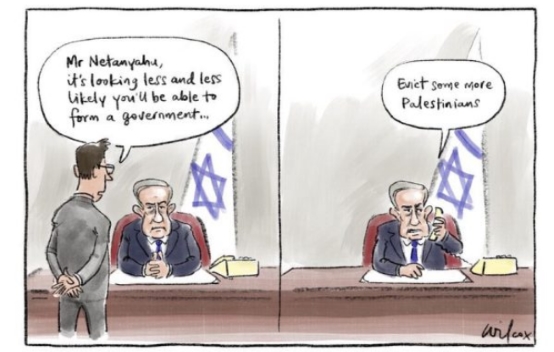
Earlier this month we reported on the Australian Press Council (APC)ruling that Cathy Wilcox “breached its Standards of Practice” when she published a cartoon in The Age and The Sydney Morning Herald.
Now University of Technology Sydney publishes Centre for Media Transition fellow Alena Radina’s “Too Hot to Handle,” a deeper dive into “the contemporary conditions of artistic autonomy” specifically as it relates to editorial cartoonists’ freedom to caricature people and situations.

When we met back in December 2025 to discuss the state of cartooning, Cathy Wilcox stressed that “The Israel-Gaza war has emerged as one of the most significant flashpoints since the Danish cartoons portraying the Prophet Mohammed and the Charlie Hebdo murders.” In describing her role as a cartoonist, she said “I’m not the gatekeeper. I’m a cartoonist here to talk about all sorts of things and not to have certain areas hived off. But cartoonists must use anger really carefully.”
About that breaching of APC standards and its implications:
This decision has produced polarised reactions. Defenders of the cartoon – and Wilcox’s integrity as a political cartoonist – argue that criticism of Netanyahu has been conflated with antisemitism. Critics of the cartoon have responded by denying the conflation of concerns about antisemitism with support for Netanyahu. Others have pointed to questions around the degree of lobbying and free expression, harmful meanings, and the inconsistency of APC rulings.
Alena Radina ponders:
So, has the balance in the reception of political cartoons shifted from intent of the cartoonist, their target, and wider latitude towards literal interpretation and the harm that might be caused?
It is no longer, ‘What was the cartoonist trying to argue? What issue was satirised and in what context? What is the tradition of cartooning and guiding principles?’
Instead, we are asking, ‘What potential harmful meanings might audiences extract from the cartoon and what would be the result?’


Comments 1
Comments are closed.