Wayback Whensday: Early Comic Strips and Consumer Culture
Skip to comments
Envisioning Consumer Culture: Comic Strips, Comic Books, and Advertising in America, 1890 – 1945 by Ian Gordon
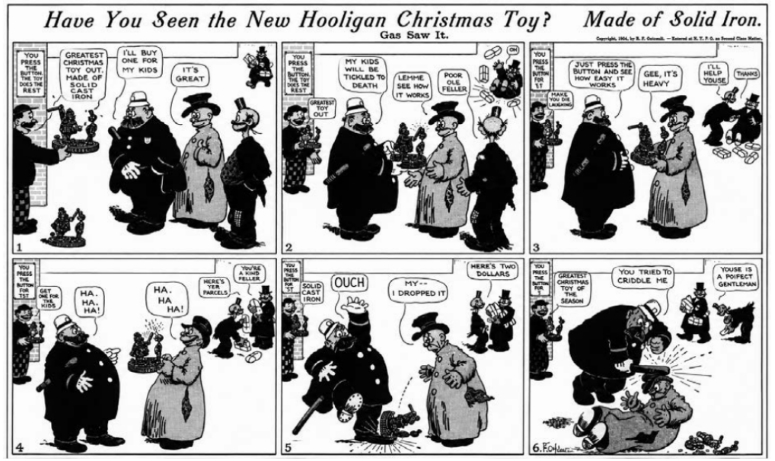
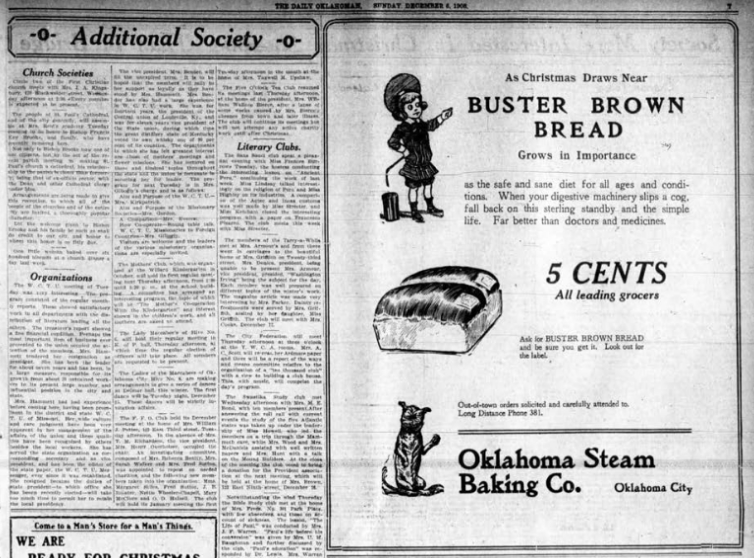
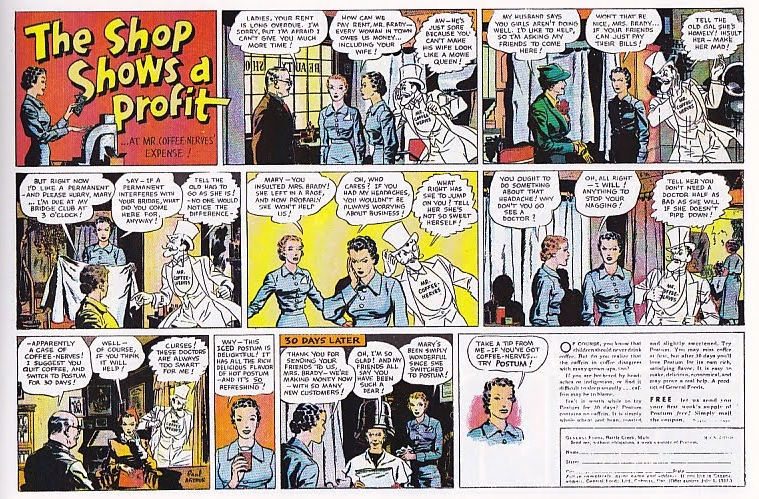
In the late nineteenth century American newspaper owners and comic strip artists transformed European traditions of visual humor and graphic narrative into a new commercial form of leisure, the Sunday color comic strip. These strips focused on continuing characters and narratives. In the early years of the twentieth century comic strips induced both urban and rural audiences to purchase a part of their leisure in the form of a newspaper. By 1903, both of these audiences received the same comic strips, and nationally recognized comic strip characters helped create a consumer culture. Richard Outcault successfully licensed his character, Buster Brown, to the manufacturers of a wide array of products, most notably shoes and textiles. Although some entrepreneurs followed Outcault’s example, advertisers in general did not realize comic art’s potential for advertising until George Gallup’s 1930 survey, which demonstrated the popularity of the strips. Advertisers then adopted the techniques of comic art to sell numerous products. These advertisers mostly eschewed the direct use of comic strip characters, but those characters indirectly fostered a consumerist way of life. The comic strips themselves were commodities sold by syndicates to newspapers across the country, and the content of the strips served as an advertisement for the values and practices of consumer culture. In the 1920s and 1930s comic strips, such as “Gasoline Alley” and “Winnie Winkle,” suggested the appropriate means of incorporating commodities into everyday life. In the 1940s a new form of comic art, comic books, promoted consumerism as a way of life both in stories and through extensive licensing of superhero characters such as Superman. In this manner comic art contributed significantly to the creation of a consumer culture.
Ian Gordon has revised his 1998 book that adapted his 1992 dissertation adding all the images the book couldn’t handle. The 500 pages is not as intimidating as it seems, over half the count are fascinating images from the last half of the 19th and first half of the 20th Centuries.
Mr Gordon has uploaded the dissertation and images for public perusal:
I have uploaded my 1992 PhD complete with 219 images here: https://doi.org/10.5281/zenodo.20521217 This is the first time it has been publicly available.
In the process of obtaining material I found I had a few incorrect dates. Those have been corrected in this version.
Mr. Gordon has also upload the 1998 book:
I have attached a list to the PDF copy of Comic Strips and Consumer Culture that is available online here (many of my articles are on zenodo): https://doi.org/10.5281/zenodo.18253782
From the widely successful marketing of Buster Brown in the early 1900s to the advertising comic strips that were omnipresent in the Sunday comic supplements of the 1930s and 1940s (and beyond) are covered in this detailed look at comics and advertising. The attached images alone are worth the price of admission.


Comments
Comments are closed.