CSotD: Director’s Notes
Skip to comments
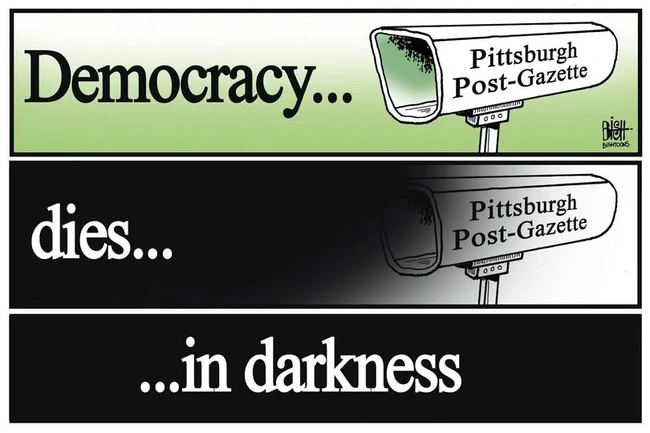
If you’ve ever been in a play, you know that after a rehearsal, the director gathers the cast and provides a list of notes on what went well and what could have gone better in hopes of improving the next run-through.
Given the death of the paper in a major city, Bish’s use of the quote Jeff Bezos applied to the paper he was messing up and the potential impact on comics, this looks like a good time for some notes.
But I’m certainly not the director, so take them for what they’re worth.
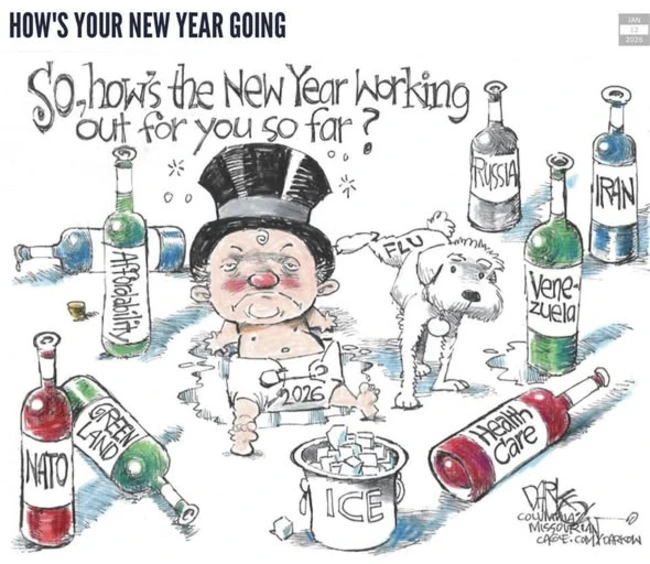
I like Darkow’s work, in general and this one specifically. But he’s not the only cartoonist whose editor believes an editorial cartoon requires an explanatory headline.
Editors are literalists, good at grammar and punctuation, deaf to nuance and symbolism. I’ve worked with very few who understood comics. The ones who put headlines over editorial cartoons remind me of people who say “Did you hear the one about …” and then reveal the punchline before they tell the joke.
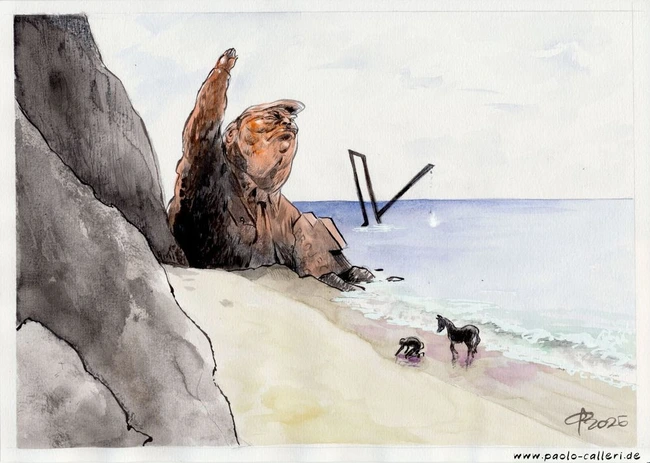
Not that cartoonists always hit the mark. I looked up Calleri’s other work at Cartoon Movement to see if he were a right-winger, and he’s not, which suggests that he badly missed the point with this one.
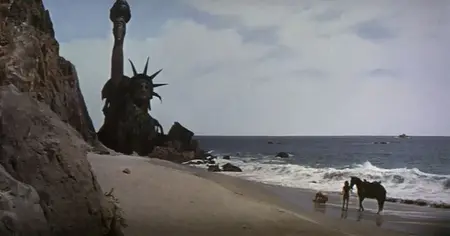
The climactic scene of Planet of the Apes is Charlton Heston’s discovery that he’s on Earth and that people destroyed democracy. “You Maniacs! You blew it up! Ah, damn you! God damn you all to hell!”
It made sense with the Statue of Liberty, but if the maniacs were to blow up Trump and X, it wouldn’t be a cause for cursing from anyone on the progressive side of things.
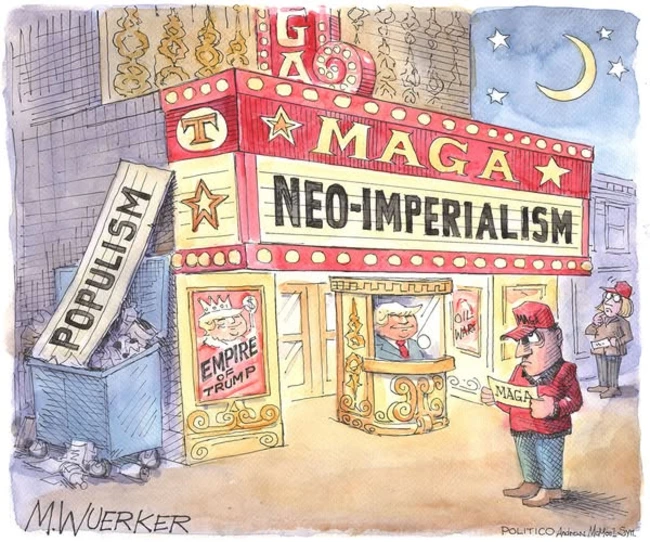
A more subtle issue here, and Wuerker illustrates a point but isn’t at fault, because drawing for Politico gives him the freedom to use terms like “neo-imperialism” and “populism,” just as someone writing for Sports Illustrated doesn’t have to explain the infield fly rule each time they refer to it.
But if you are trying to reach a wider audience, be wary of using specialized terminology. It’s not a matter of “dumbing it down,” but, rather, of communicating clearly.

For instance, you don’t need a degree in political science to get the point of Anderson’s piece: It’s so obvious that even an editor could understand it!
But it’s hardly namby-pamby. He might have labeled Renee Good, because that style of hair and the three kids is a somewhat subtle indicator, but her killing is so much on the minds of people that the average person will get it, while so many other civilians have been assaulted that it’s okay if they don’t recognize her.
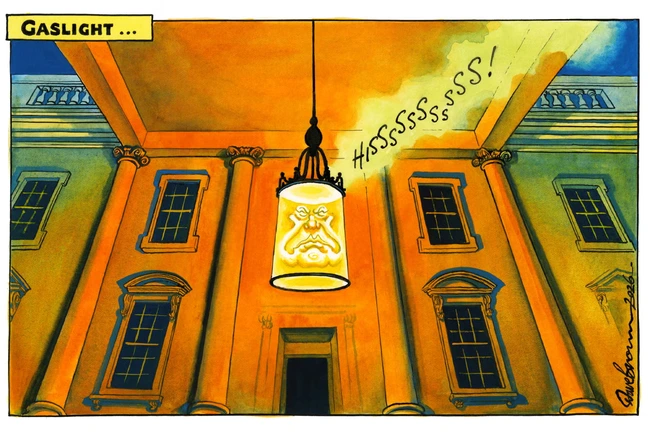
This one lands somewhat between the previous pair. The term “gaslighting” is well-known enough that you can drop it into a cartoon and count on people getting the point. Brown often does adaptations of classical paintings, and the important factor then is that he can delight the people who catch the reference, but he still has to be sure the point of his piece is clear to those who don’t.
In this particular case, you do have to know the term to get the point, but, while I don’t suppose many people have seen the 1944 movie, the term is so widely used that it’s worthwhile to just hang it out there and expect readers to get it.
Come to think of it, I wonder how many people have seen Planet of the Apes, which was released 58 years ago? In both cases, the salient point has well out-lived the movie.
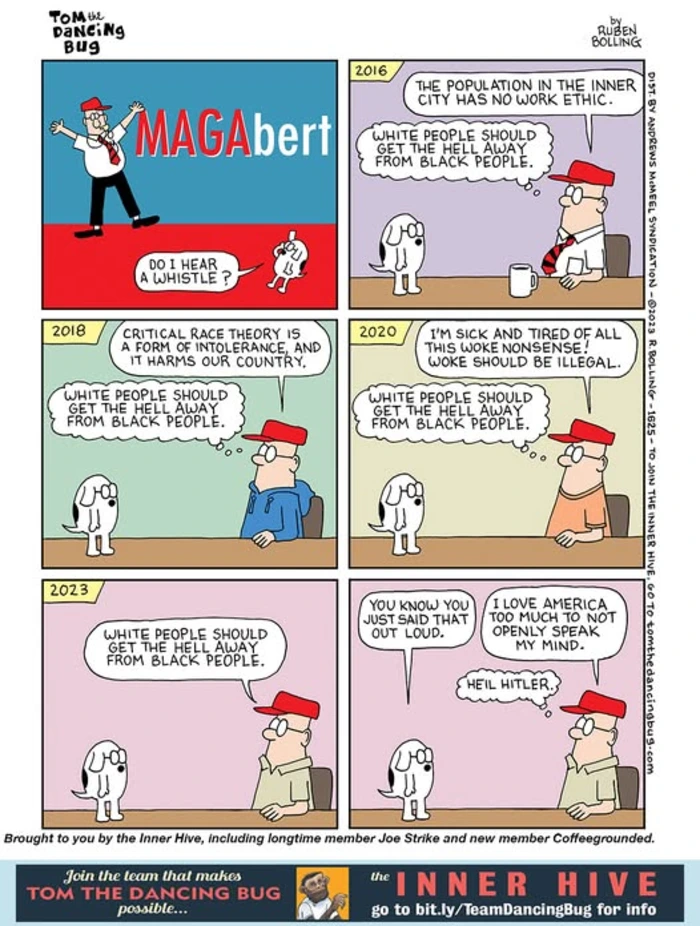
Ruben Bolling re-posted this 2023 commentary on the fall of Scott Adams, and it’s fair commentary to repeat at his death what you once said to his face. I’m less okay with the various obituary cartoons, some praising him, some attacking him.
It’s “inside baseball,” mostly of interest to other cartoonists and hardcore comics fans. The guy was a well-known cartoonist, yes, but he wasn’t Henry Kissinger. Kissinger earned the mixed appraisals that marked his death.
Somebody compared Adams to Al Capp, who was also a great cartoonist with a highly offensive personal life, but I don’t remember any cartoons at Capp’s death.
Bolling, BTW, has done a good job of surviving the demise of the alternative press. There is life after print.

Here’s a case in which Rico produces a cartoon for the business section of the Daily Maverick, and it’s of particular relevance in that setting, as companies race to adopt a technology of dubious actual appeal. Much of the public is looking askance at AI and the slop with which they’re being inundated.
This is a case of targeted commentary with wider relevance: The public will like this cartoon, and businesses should sit up and pay attention.
Juxtaposition of the Day


Two different approaches: Emmerson specifically references the scandal of Grok letting users produce pornographic images of real people, which Musk claims to have squelched but others say he has not.
Katauskas, however, uses the matter as a launching point to confront the public, governments, media and businesses over the general tastelessness of Xitter; She demands that they explain why they continue to have a presence there. And her caricature of Musk emphasizes the dubious values he brings to things.
The net effect is that Emmerson questions using it, while Katauskas answers the question.

Speaking of tastelessness, Trump’s flipping off an autoworker would have been a major scandal a generation ago, but, then, his appearing in the files of a pederast would have put him back on the street, not in the White House. Anderson combines the two, turning that autoworker into a symbol of the public.
Dunno how many editors will pick a cartoon in which someone — much less the president — is flipping the bird, but I think the newsworthiness of the moment may overcome some squeamishness.
Meanwhile, I’m noticing cartoonists starting to drop F-bombs in their work. I assume they’ve given up entirely on appearing in print.
But wotthehell, I remember — as does DD Degg — the kerfuffle when Lola dropped a fart joke.
George Carlin explains his thinking,
but be prepared for rough language.
Comments 11