Wayback Whensday: Public Domain
Skip to comments
We mentioned in passing the intellectual comic properties from 1930 that entered public domain status on January 1, 2026. Here we’ll take a deeper dive into those newspaper strips.
Arguably the most famous of the comics is the Mickey Mouse comic strip that began on January 13, 1930.
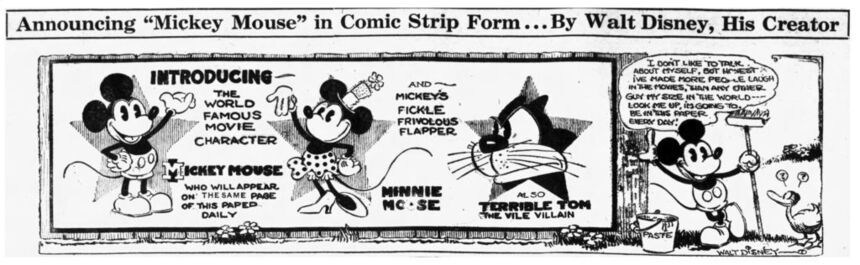
Of the tens of thousands of comic strips and panels signed by Walt Disney the first four months of the Mickey Mouse comic strip actually had Walt actively involved. Those, and the rest of 1930, can be collected by anyone now. Below are the Mickey Mouse strips from January 27-30, 1930 by Walt Disney (script), Ub Iwerks (pencils), and Win Smith (inker).
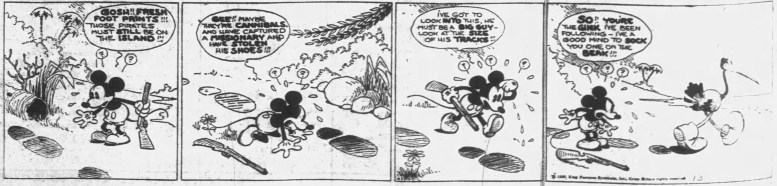
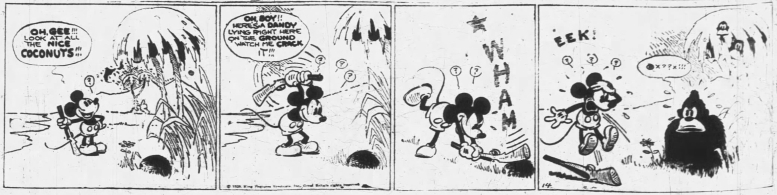
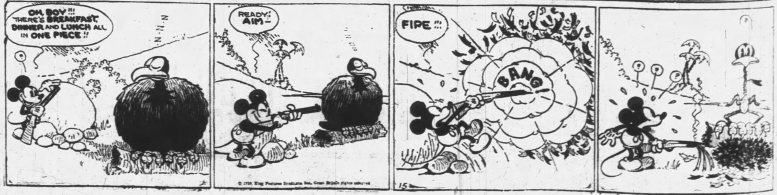
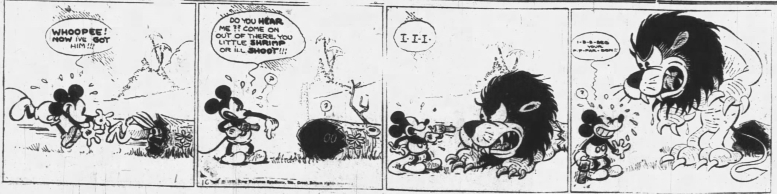
Now just because you can does not mean you should. Any collection of those 1930 comic strips will surely face pushback from the mighty Disney Corp, as Eternity/Malibu found out when they published a couple comic books reprinting early Mickey Mouse strips whose copyrights had not been renewed. Though legally they had the right, the cost of fighting Disney was prohibitive.
The Mickey strips are “arguably” the most famous because how many people these days realize there was such a comic strip. On the other hand most people today know there was and is a Blondie comic strip.
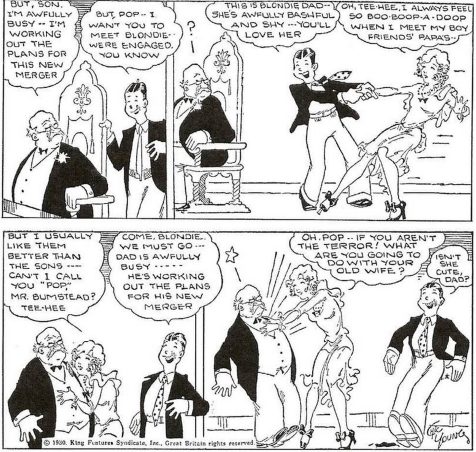
Blondie, begun on September 8, 1930, is the longest lasting of the 1930 comic strips that became public domain this year. It continues to run in newspapers to this day produced by the descendants of creator Chic Young. Below are the December 29-31, 1930 strips.
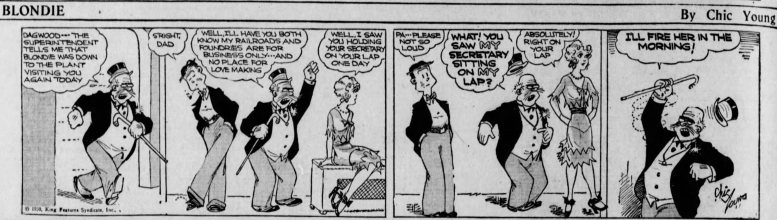
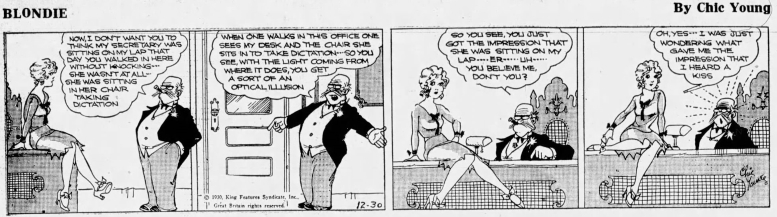
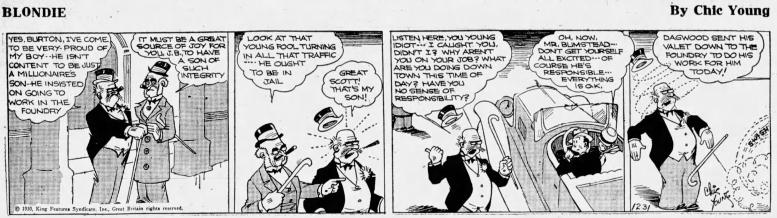
Blondie was no “Dumb Dora,” the strip Chic Young left to start Blondie. Though on the face of it she acted as an airhead it was more often a facade rather than a sign of her actual intelligence.
A four month collection of the 1930 strips would make an impressive book, especially if stacked for maximum exposure. Again would Hearst Inc., renowned for wanting exhorbitant fees to reprint their material, allow such a comic book without dispute?
Of course “Mickey Mouse” and “Blondie” remain registered trademarks owned by the respective companies.
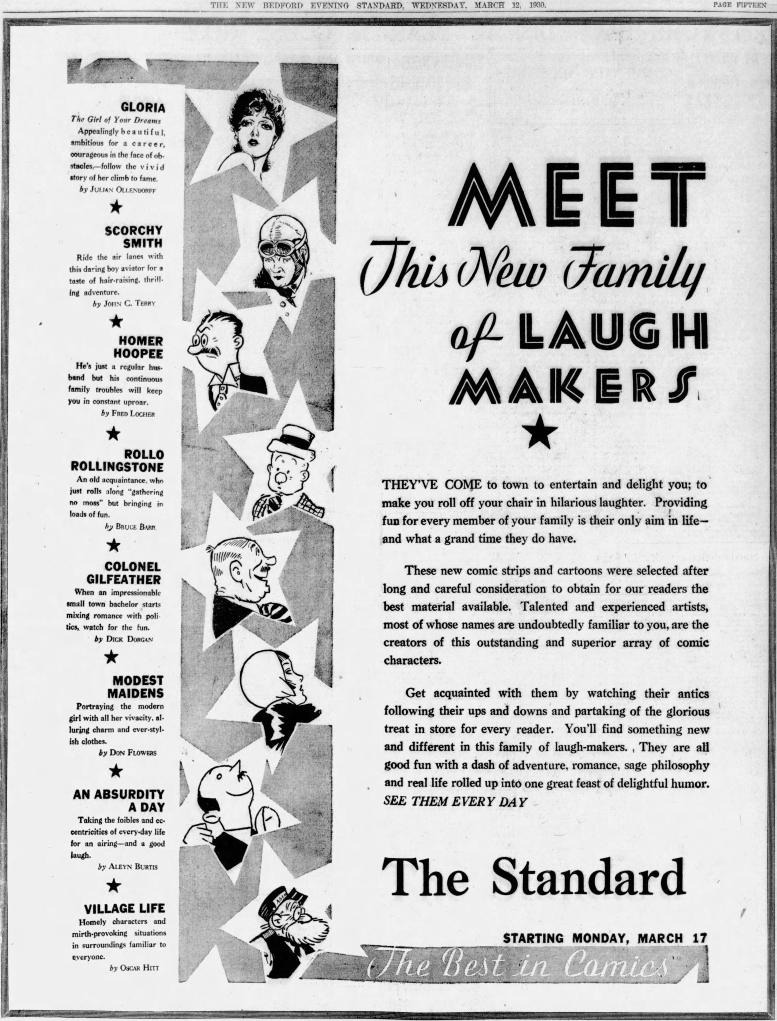
In 1930, on March 17, The Associated Press began syndicating their own page of comic strips and panels. Gloria, Scorchy Smith, Homer Hoopee, Rollo Rollingstone, Colonel Gilfeather, Modest Maidens, An Absurdity A Day, andVillage Life (Neighborly Neighbors) were the syndicate’s first offerings. Scorchy Smith by John Terry became the most famous but the others were by cartoonists that would be or were of some fame including Don Flowers, Oscar Hitt, Dick Dorgan (TAD’s brother), Julian Ollendorff, Fred Locher, and others.
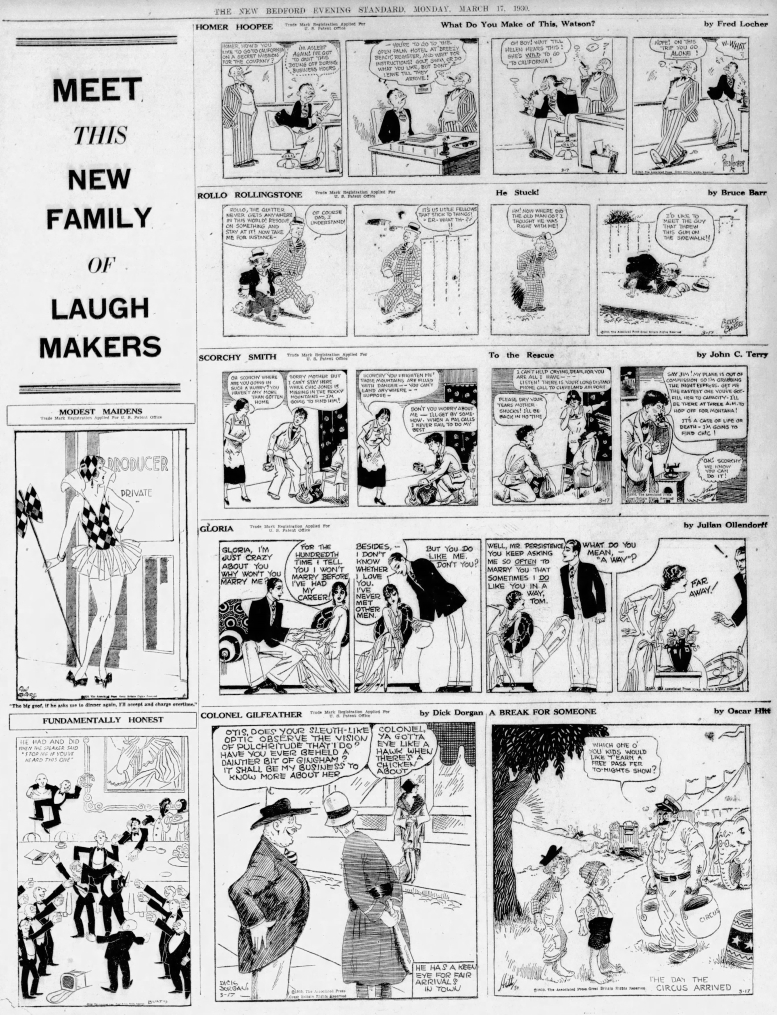
The AP would add a few more titles before 1930 ended. Only Scorchy Smith and Modest Maidens would last until the Associated Press shut down their comics division with the December 30, 1960 issues. I would guess that most of the AP comics copyrights were never re-registered and so entered public domain way now.
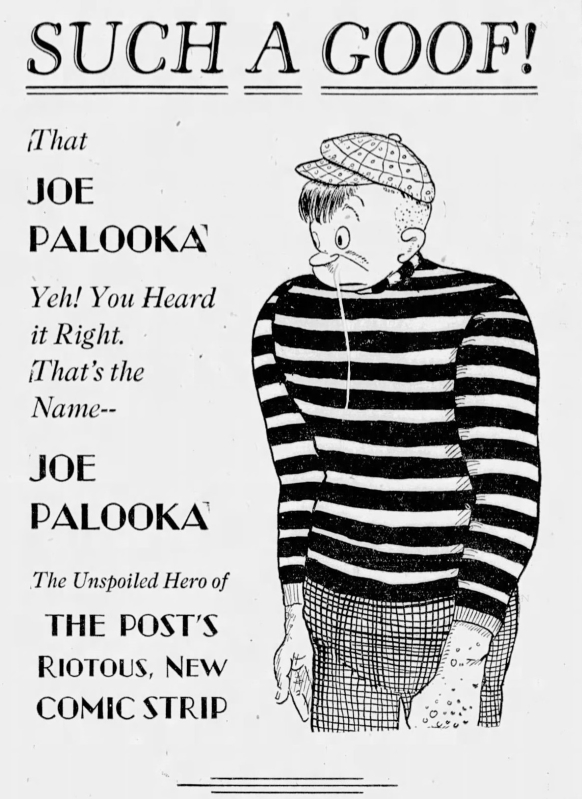
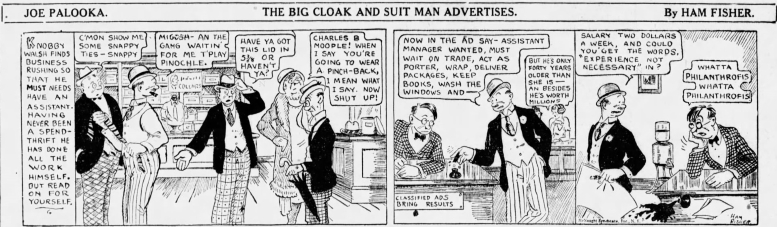
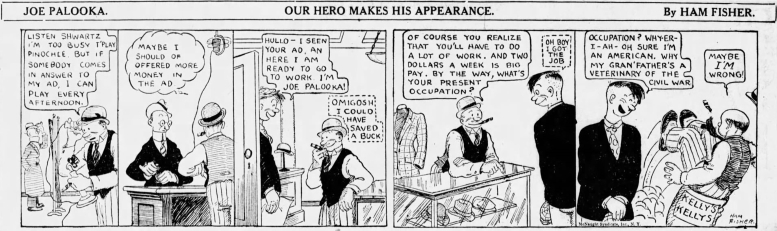
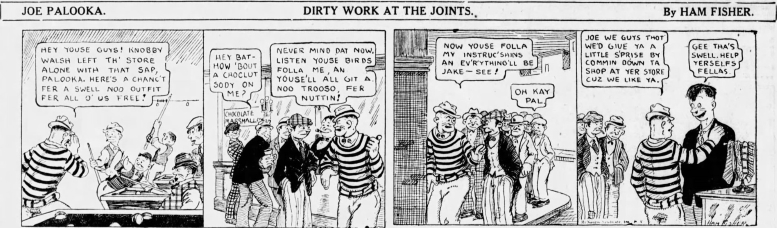
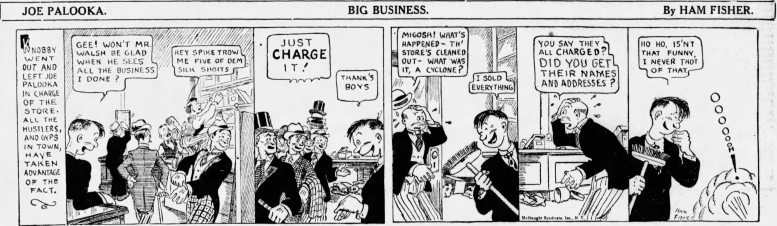
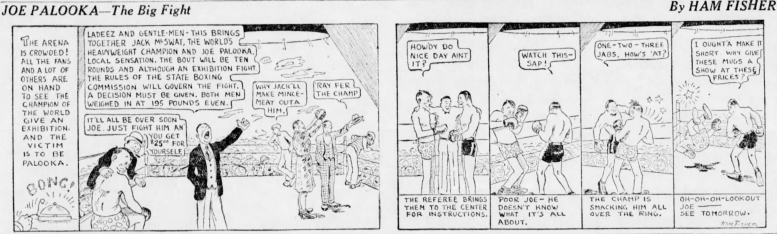
Another famous 1930 comic strip debut was Joe Palooka by Ham Fisher. The story goes that as a salesman for McNaught Fisher sold his own, previously rejected, comic strip to enough editors that the syndicate felt duty bound to distribute the feature rather than disappoint the papers expecting it. Below are the first four Joe Palooka comic strips from April 21-24, 1930.
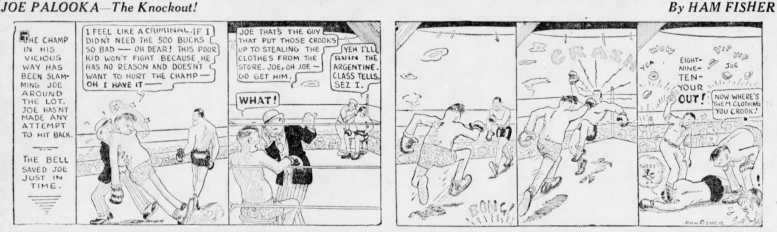
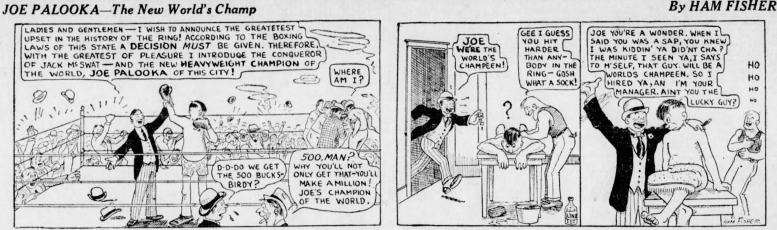
In a few weeks Knobby had Joe entering the ring against the heavyweight champion. May 7-9, 1930:
There were a couple of strips that ran for a few years, not well-known but have been in the news lately.
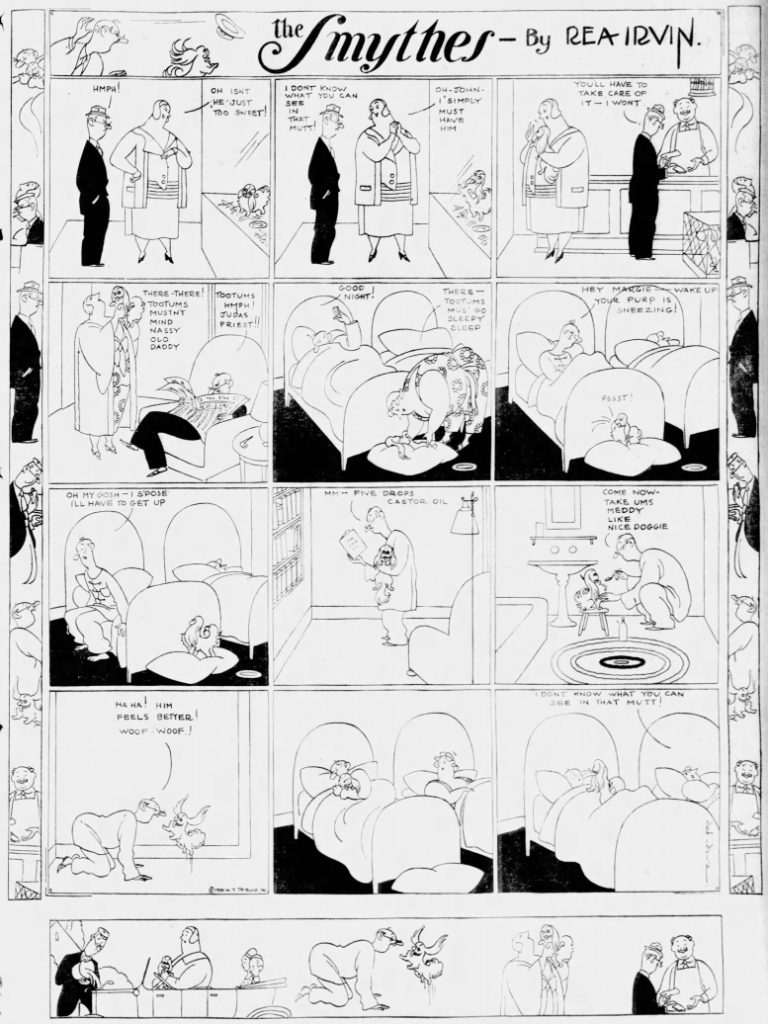
The Smythes by Rea Irvin, New Yorker cartoonist and art director, was Sunday page that began in the middle of the year. A selected collection of the pages were recently collected into a bound volume.
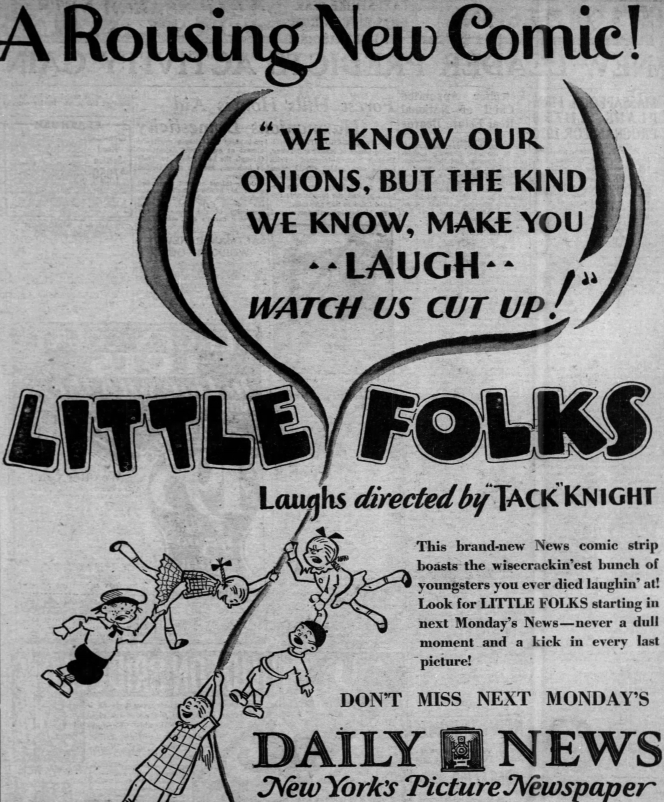
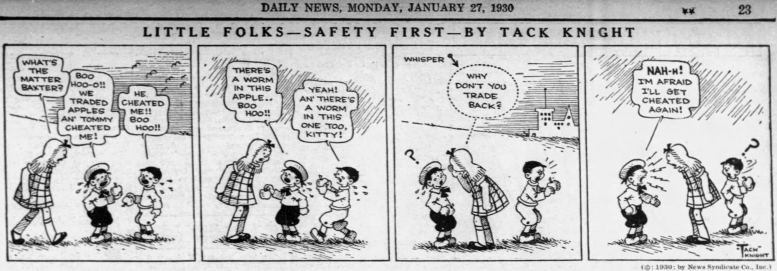
With the 75th anniversary of Peanuts numerous histories of that strip informed us that Schulz wanted to title Charlie Brown’s comic “Li’l Folks” but the syndicate was hesitant to do so because “Little Folks” was still registered as a comic by Tack Knight. Knight’s Little Folks ran for only a couple years as a newspaper comic but continued after that as an advertising strip and reran in the 1940s Chicago Tribune comic book.
There were more lesser newspaper strips and panels that began in 1930, and also other comic features like Otto Soglow’s Little King in The New Yorker and Milt Gross’ graphic novel He Done Her Wrong.
Please note that only the characters’ designs and characteristics as shown in 1930 have entered public domain. Anything introduced after 1930 remain under copyright.

Comments 2