A Comics Scene Weekend Wrap
Skip to comments
Graphic Novelist Stamps, Lucy Shelton Caswell Research Award, Honorary Degree for Bruce MacKinnon, and An Ode to Speech Bubbles.
Graphic Novelists Featured on Stamps from Canada Post
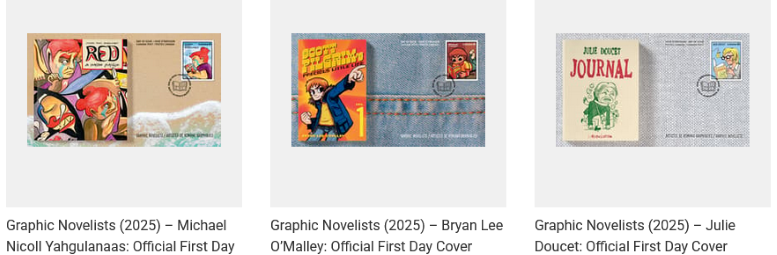
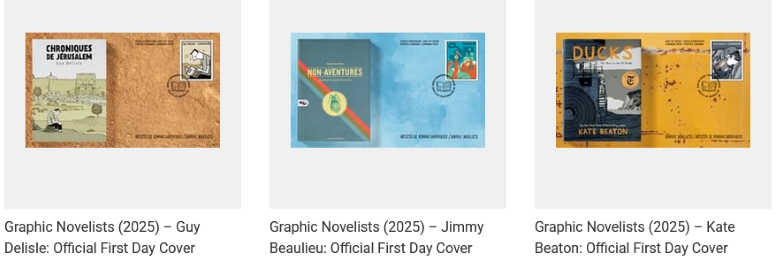
Canada Post has unveiled the second in a two-part series celebrating Canadian graphic novelists.
Canada has produced several prominent graphic novelists, and this stamp issue shines a light on six influential Canadian creators: Kate Beaton, Jimmy Beaulieu, Guy Delisle, Julie Doucet, Bryan Lee O’Malley, and Michael Nicoll Yahgulanaas [emphasis added].
Each graphic novelist worked with Canada Post to create original drawings, exclusively for this stamp issue, featuring the main characters from one of their most celebrated works depicted reading the novels in which they appear.
More information, images, and links at Bado’s Blog.
Call for 2026 Lucy Shelton Caswell Research Award Applications
Applications for the 2026 Lucy Shelton Caswell Research Award are open now through December 7.
This award of up to $2,500 supports a researcher (United States citizens or permanent residents only) who needs to travel to Columbus, Ohio to use the collections of the Billy Ireland Cartoon Library & Museum. The award may be used to defray travel expenses, living expenses in Columbus, or research costs.
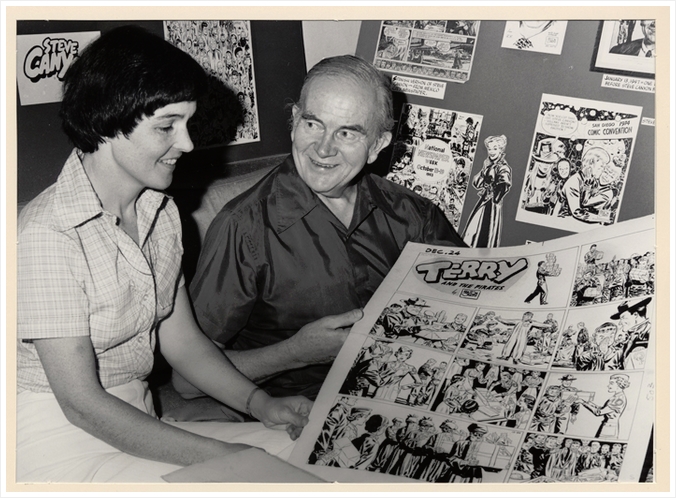
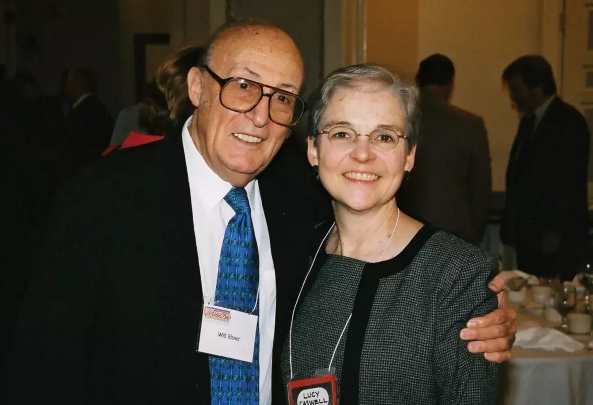
The award is named for the founding curator of the BICLM, Professor Emerita Lucy Shelton Caswell. Prior to her retirement, her scholarly work and teaching focused on the history of newspaper comic strips and the history of American editorial cartoons. She has curated more than seventy-five cartoon-related exhibits and is the author of several articles and books, the most recent being the revised edition of Billy Ireland. Caswell is co-editor of The Ohio State University Press Studies in Cartoons and Comics series.
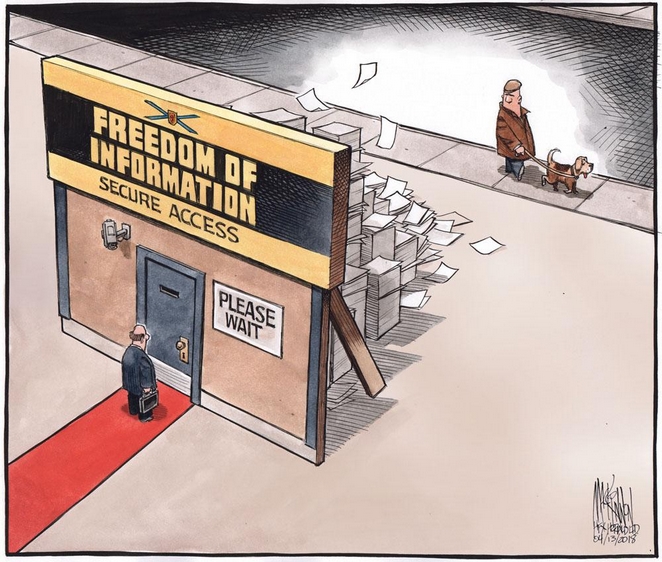
Bruce MacKinnon to receive StFX honorary degree
Caitlin Snow for 103.5 FM reports on editorial cartoonist Bruce Mac Kinnon getting an honorary degree:
[Halifax, NS, Canada] One of the country’s most well-known editorial cartoonists will receive an honorary degree from St. Francis Xavier University (StFX).
In a news release, the university says Bruce MacKinnon will get honored at a graduation ceremony for 300 students on December 6.
MacKinnon is a native of Antigonish and studied at StFX where he contributed to the Xaverian Weekly student newspaper as a cartoonist.
More from St. Francis Xavier University.
Speech Bubbles? Word Balloons? Tribute to a Vital Comics Device
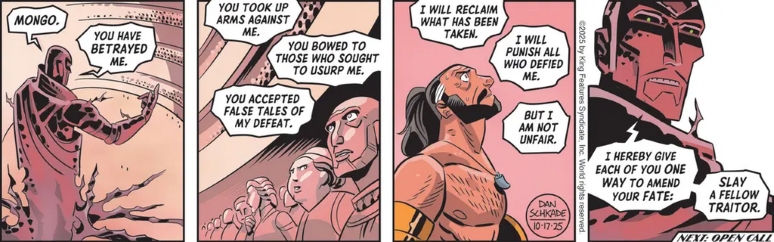
If you read comics, you’ve seen loads of speech bubbles before, but you probably never looked too hard. After all, their purpose is purely functional: to make it clear that someone has something to say and to identify who is doing the talking. But like everything else on the page, speech bubbles can provide much more information than that.
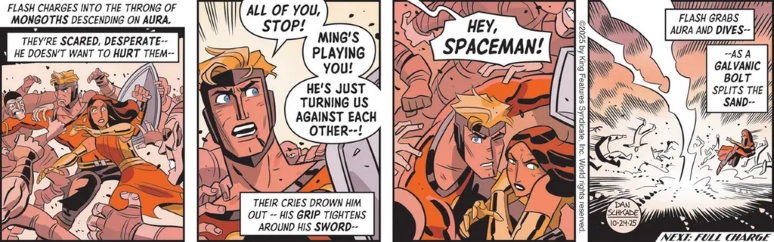
Eileen Gonzalez for Book Riot composes “An Ode to Speech Bubbles in Comics.”
One of the most common ways to provide readers with fast information is by changing the shape of the bubble. A cloud shape denotes internal thoughts rather than dialogue, while spikes show that the words within are especially loud, angry, or surprised.
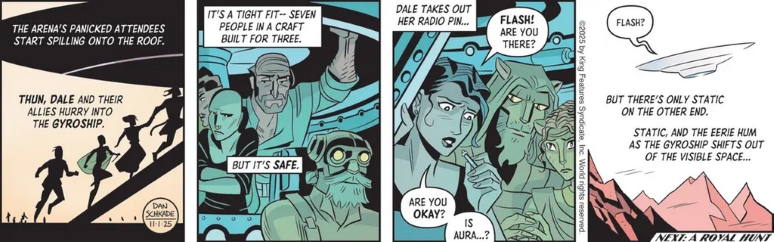
The amazing thing is that speech bubbles manage to convey so much information without readers even realizing it. Most of us are so familiar with them, whether from comic books, comic strips, or illustrations in children’s books, that we don’t have to consciously think, “Oh, this speech bubble means the character is shouting,” or “This one means they’re annoyed.”


Comments 2
Comments are closed.