CSotD: Another Pleasant Valley Humpday
Skip to comments
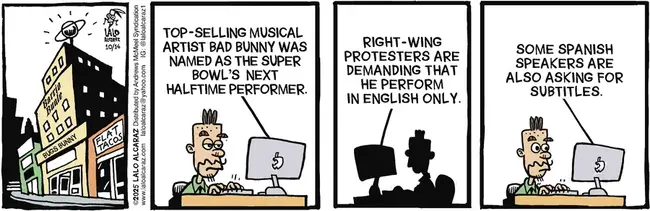
There are two ways to interpret this La Cucaracha. The Viejo Pedo version is that nobody can understand modern singers, so what difference does it make if he’s performing in incomprehensible English or incomprehensible Spanish? The fact that the sound reproduction for Super Bowl halftime shows is crap adds some credence to this one.
The more intriguing interpretation starts with the fact that Bad Bunny is Puerto Rican but will be performing in California. New World Spanish is extraordinarily diverse, and Spanish-speakers from one part of the country argue over particular words and formations with Spanish-speakers from other parts of the country, in part out of linguistics and in part out of a sort of nationalist pride.
Which isn’t the only reason that a Chicano farm-worker unionist from the San Luis Valley might not understand a conservative Cubano from Florida.
Which, in turn, is why I scratch my head when political analysts attempt to parse “the Latino vote,” as if speaking some form of the same language makes people adopt the same political slant.
You rarely hear anyone pontificating about the gabacho vote.
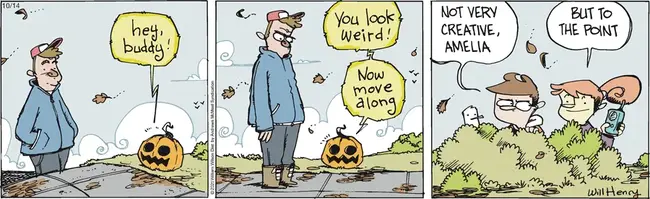
A story arc about Amelia planting a walkie-talkie in a jack-o-lantern brought me back to 1958 and a visit with my little brother and my grandmother to the Land of Make Believe in Hope, NJ, not to be confused with the Land of Makebelieve in Upper Jay, NY.
Little brother was five and a bit shy, but when the scarecrow said “Now, don’t coach him, Grandma,” she was mystified. Even at eight, I realized the speaker was in a building about 100 yards away with binoculars and a microphone.
Busted by a three-foot future journalist.
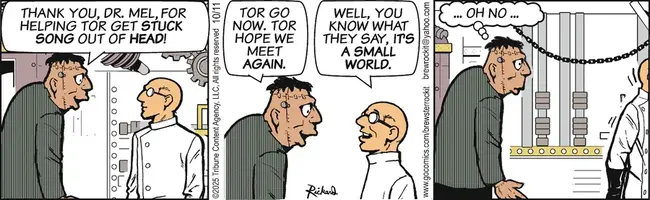
Another vacation memory. Two, in fact! We visited Disneyland in 1959 and, yes, It’s a Small World After All is catchy, though the ride itself was not worth the long line.
But at least it didn’t follow you around the park. In 1964, we went to the World’s Fair in NYC and came away with Go Greyhound, And Leave The Driving To Us stuck in our heads, because the horns on the trams played it to clear their way.
Everywhere. Constantly.
Could have been worse. They could have played “Raymond Shaw is the kindest, bravest, warmest, most wonderful human being I’ve ever known in my life.”
Juxtaposition of the Day
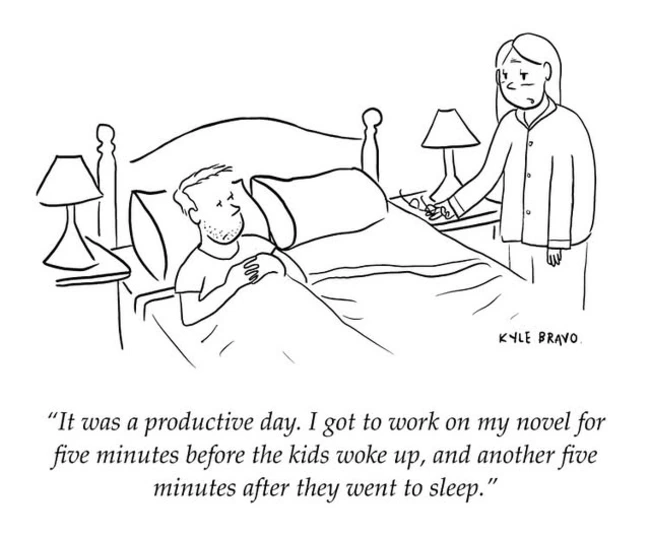
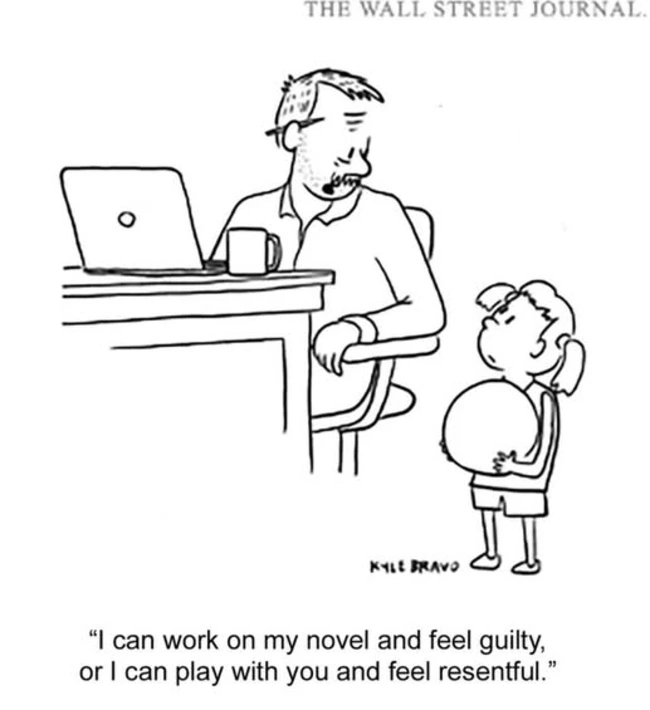
Bravo has been red-hot lately, but this matching pair struck me because, in my aspiring novelist days, I was the at-home parent for two little boys. But while I got in some writing while they were out in the yard amusing themselves, I spent more time taking them to the park or downtown, because that was my day job and priority.
My real writing happened after I put them to bed at night, which was less a job than a perk, my official duties ending when I put dinner on the table.
Then I’d go to my basement office and work obsessively until 12:30 AM, since anything written after that would be garbage. In the morning, then-wife got up early, dressed the kids, fed them breakfast and woke me up as she headed to the office.
By the time the marriage broke up, the kids were in school, so, even when they stayed with me, I could keep normal hours and write from eight ’til three.
Perhaps this is why truly dedicated artists often have cats instead of kids and dogs. Cats just need a little supper; they don’t even care how often you scoop their litter boxes.
Kids, spouses and dogs are much more of a distraction.
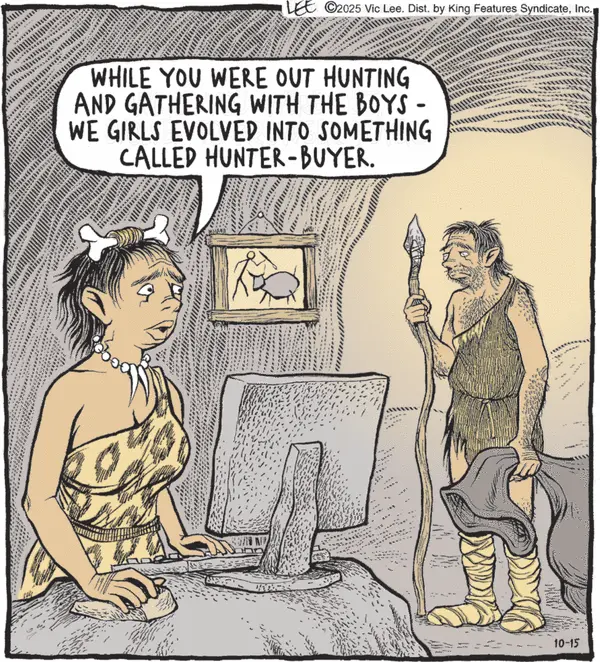
I like PMP, but it is often sexist, and today’s panel is an anthropological mess. Hunter/Gatherer embraces two different categories, and hunting happens out in the woods while gathering happens at home, the gender-based division making sense given the demands of child-raising.
Women did join the hunt, and men did perform tasks at home, but our overall hard-wiring was firmly in place before the dawn of time.
Which is why pre-industrial women knew so much about medicine and hybridization of plants, as well as skills like how to preserve leather and how to remove the toxins from manioc and turn it into a dietary staple.
Which is why when a hunter needs a pair of pants, he goes to the store and grabs a pair, while, when a gatherer needs something, she’ll take her time and see what is available.
Shopping isn’t hunting. It’s gathering. Watching football, and screaming at the TV, is hunting.
There are exceptions to all this, of course. And in civilized societies, that’s perfectly okay.
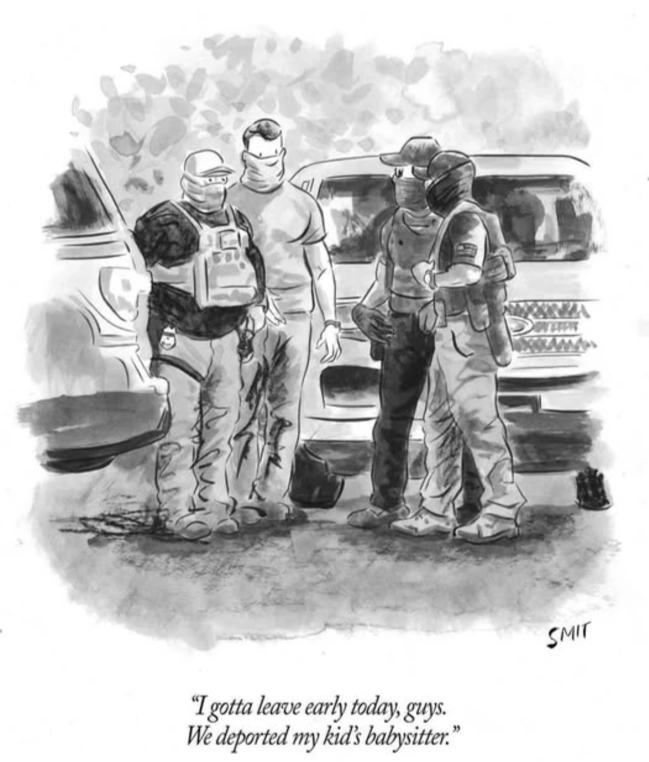
Though in uncivilized societies, taking up the opposite role can introduce issues.
Juxtaposition of the Day #2
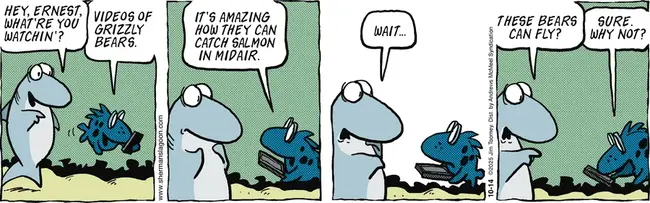
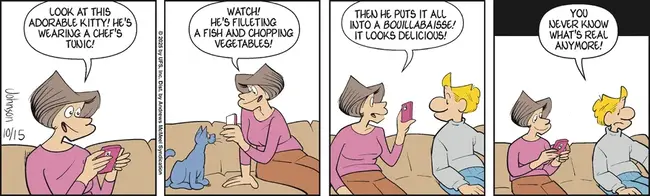
Thanks to Sora 2, the Intertubes are suddenly crammed with ridiculous AI slop, and technical improvements are making it hard to tell the fakes from the real stuff, including a lot of amazing, heartwarming videos of animals, 99% of which are completely bogus.
Sora 2 comes with a watermark that identifies it as AI, so the fraudsters and click farms are removing the watermark so you’ll believe, and forward, the amazing, heartwarming slop they’ve created.
I tracked one of these slop farms back and their home page is full of fake pictures of fake babies in critical-care beds. I assume they’re raising real money from sympathetic viewers.
But the “pack of wolves leads a lost three-year-old to safety” video and the “compassionate gorilla comforts a wounded lion” video are just as phony, if less direct in monetization, as are all the astonishing dog tricks.
Juxtaposition of the Day #2 extended
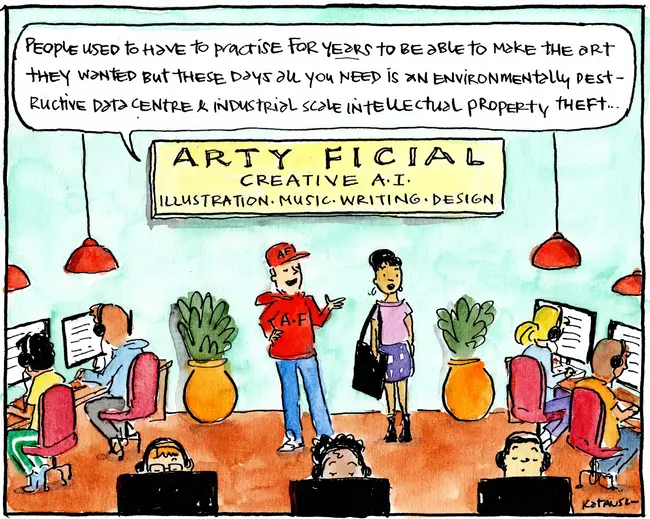
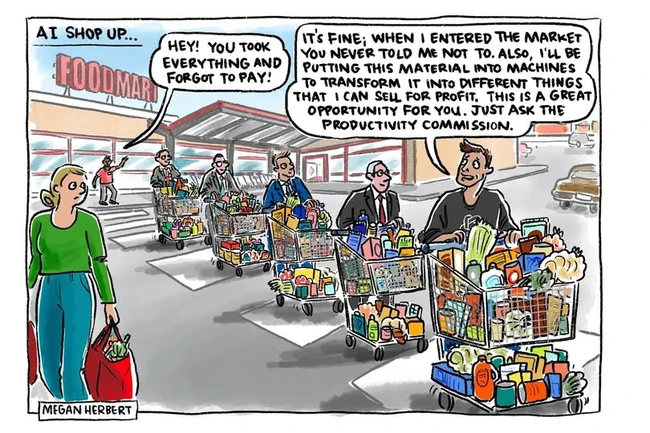
Why is the conversation about AI happening among specialists, nerds and attorneys in America, while this pair of Australian cartoonists are bringing it before their entire public?
I doubt Aussies are inherently more intelligent than Yanks, but if they are better informed it might be because their political cartoonists have the chutzpah to challenge them to think about a wider range of issues.
It should make them harder to hornswoggle. Can you imagine what Aussies would do if the purveyors of AI began monkeying with their beer?

Comments 20
Comments are closed.