CSotD: The Whole World Is Not Watching
Skip to comments
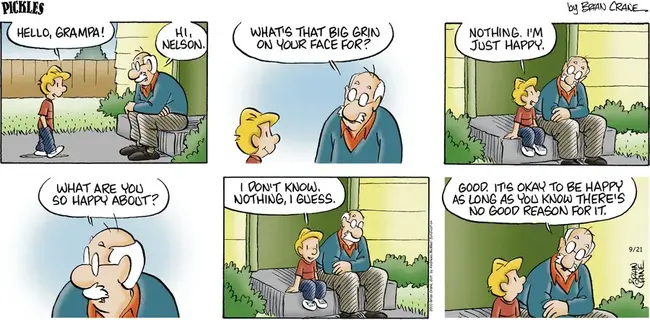
Pickles provides us with an excellent starting point, because, as noted here yesterday, we should keep some sense of humor amid the wreckage of a fine country. Not only does it give us the spirit to keep going, but it gives us the strength to keep resisting.
Most Americans aren’t in any great danger of being assaulted, imprisoned and jailed by ICE, and not many of us are in a position to have our talk shows canceled.
But if human decency isn’t enough to make us care about others, there’s the likelihood of an expanding dictatorship, which raises Neimoller’s familiar quote about “First they came for …”
First they came for the transexuals, then they came for the immigrants, now they’ve come for the comedians and journalists …
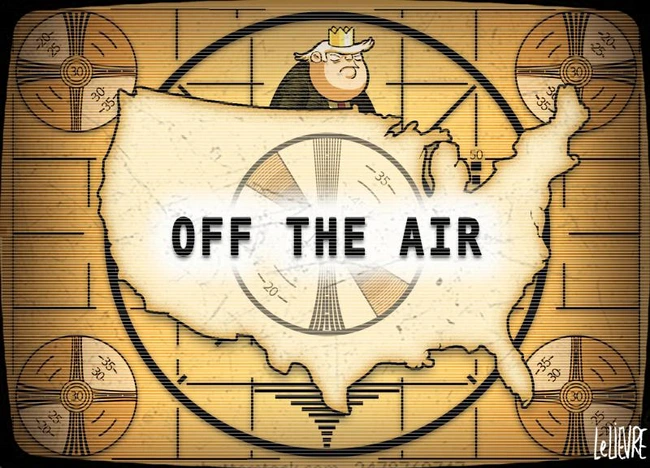
The imposition of censorship, whether by martial law or by governmental pressure on commercial media, leads to the same end, and the result is much the same however it is brought about.
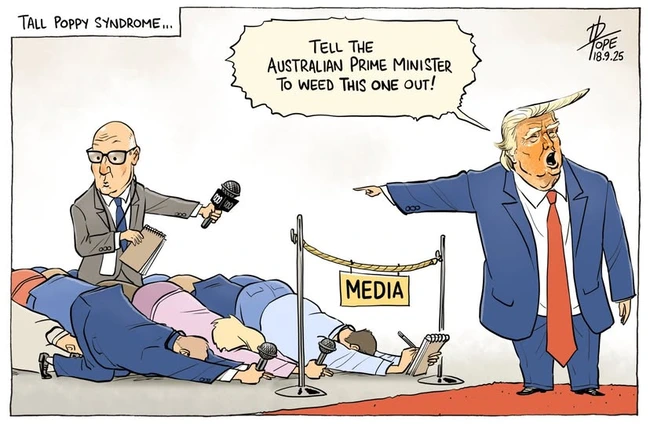
Le Lievre, Pope and other Aussies had the example of John Lyons of the Australian Broadcasting Corporation, who had the nerve at a White House presser to ask Trump how much he had benefited financially since returning to office. Trump scolded him and then tattled on him to Australia’s Prime Minister.
The ABC was subsequently barred from coverage of Trump’s visit to the UK, though the Crown denied any connection.
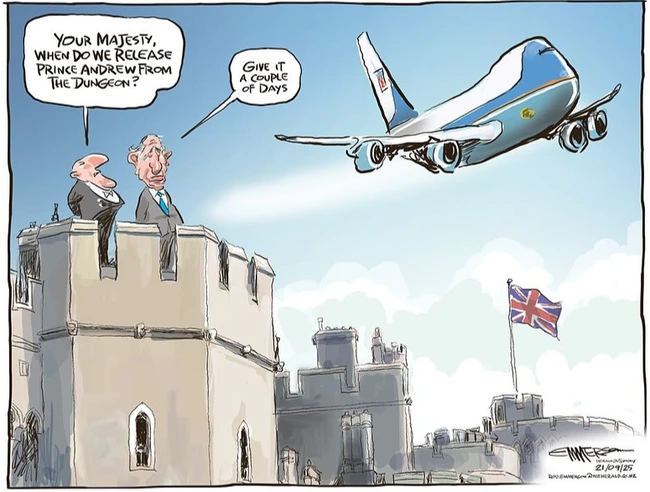
Watching the visit from New Zealand wasn’t the same as being there, but that didn’t keep Emmerson from getting in a dig that everyone around the Commonwealth Formerly Known As British would understand.
Dear Leader may have distracted Americans from the Epstein scandal, but only for a moment and his shenanigans not only aren’t sparing him from the rest of the world’s demand for justice, but Emmerson was not the only international observer who found humor in having Trump and Randy Andy in the same general area, if not in the same room. This time.
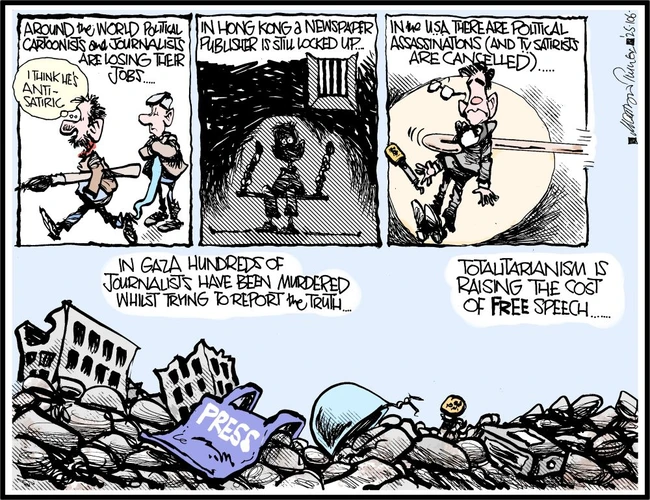
Not everyone was laughing, and the Epstein/Trump/Andrew link wasn’t the sole connection being made. From Ireland, Turner made the observation that the press and commentators are under a great deal of pressure in recent days, and that there’s little humor in the situation.
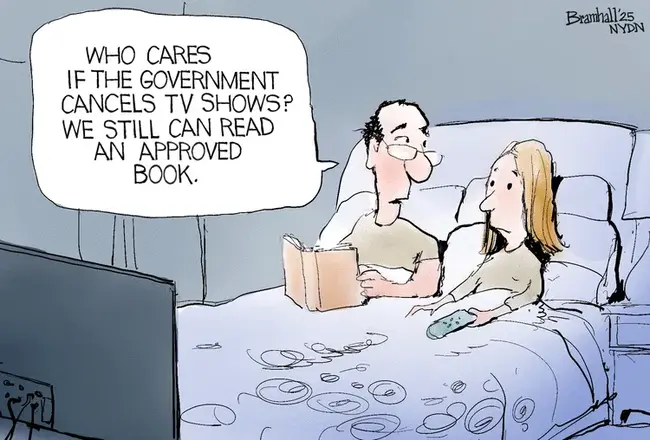
Back in the USA, Bramhall presents a scenario nearly as frightening as Turner’s. Obviously, deliberately killing reporters is both a horror and is classed as a war crime, and it’s hard to underplay the significance of Israel purposely bombing a Yemeni newspaper and killing 31 reporters and other employees.
But if Eliot is right and the world will end not with a bang but a whimper, Bramhall cites the very real threat that people will adjust and rationalize living comfortably in a Fahrenheit 451 world where a loving Big Brother keeps them safe from disturbing information and thoughts.
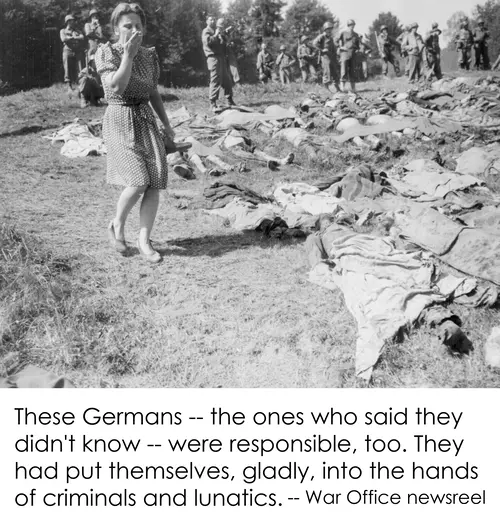
It’s not just that “I was not a comedian …” or “I was not a journalist …” and “… so I did not speak out.”
Guilt, however inexplicable once the truth has become undeniable, can be remedied, and there is some comfort in how Germany repudiated its Nazi crimes against humanity for half a century.
But less comfortable comfort is the comfort they lived in for the dozen years during which they believed lies, ignored disappearances and brutality, and kept themselves separate from and deliberately unaware of the horrors going on around them.
To pretend it can’t happen again is to ignore the fact that we have far more information and open media than they did. It takes a great deal more intense effort today to know nothing, to see nothing and to say nothing.

It takes a talent for clinging to authority figures, even when they lead you into massive, obvious examples of hypocrisy, Katauskas says, and her accusation might seem like her own loyalty to a political point of view if the examples she sites were exaggerated or embroidered with mythology.
Instead, she picks out snatches of conversation we’ve all heard, but have perhaps avoided connecting, out of team loyalty if not out of sheer hostility to what we have been told is “those undesirable others.”
A common factor in 1984, in Animal Farm, in Brave New World, in Fahrenheit 451, is the epiphany, the chance moment in which the protagonist sees behind the curtain and spies the ugliness beneath what has seemed a well-run, relatively pleasant, even progressive world.
What differentiates those dystopian novels is how each ends. What differentiates us in the real world is how long we can avoid seeing, and our reaction once, like those German post-war civilians, we are forced to confront what we didn’t want to know.
Juxtaposition of the Day

It’s important to remember that Eisenhower ordered those civilians to tour the camps so that nobody could deny what had happened there, but people still did, and still do.
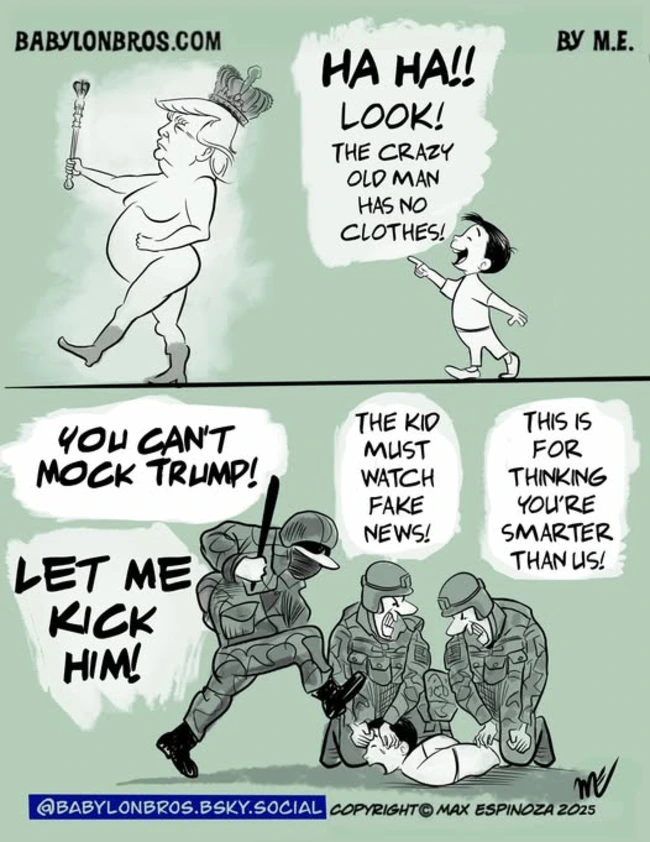
Here are two similar riffs on the tale of the Emperor’s New Clothes, the chief difference being that Kal has the Emperor himself direct the punishment, while Espinoza suggests that loyal followers will act without orders.
I’m not sure the distinction matters to the kid.

I guess the loyalists who would beat that kid didn’t bother to look at the outpouring of revulsion to murder voiced by progressive cartoonists and commentators, and so feel justified in claiming nobody ever spoke up.
Social media is flooded with loyalists explaining that, although the FCC chairman ordered a comedian silenced and literally said “We can do this the easy way or the hard way,” that the decision to cancel the show was purely a business choice based on ratings and profits, not an act of political censorship.
Perhaps, too, those kids on Kristallnacht were tossing bricks back and forth in a pleasant game but slipped and hit a window, purely by accident.
I believe it. I believe it!

I was going to recall a time when a president put himself above the national interest and pursued a program of vengeance.
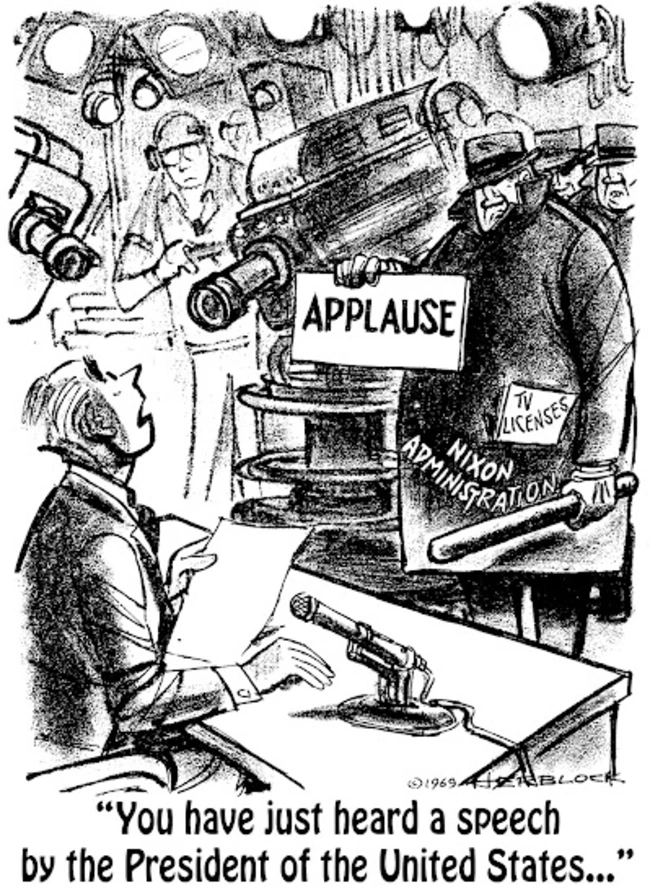
But Paul Berge beat me to the punch with a well-researched collection of cartoons attuned to the moment. The good thing is, back then, we took off our blinders, unplugged our ears and acted before it was too late.
We’d better react the same way, and soon.


Comments 17
Comments are closed.