Miss Cellany is All Over the Map
Skip to comments
Items from here and there and everywhere about this and that and the other: Artificial Intelligence; 2024’s best selling graphic novel; editorial cartoon contest for high schoolers; Al Roker animated; street fighting cartoonist; media compliance; protecting the children (from sex).
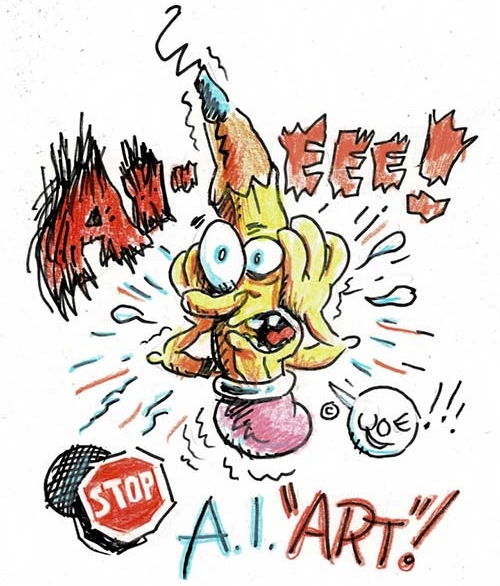
AI-eee!
AI “art” is already encroaching on our comics spaces. There have been allegations of its use on well known mainstream properties; popular digital platforms host AI comics regardless; AI art comics-making apps are prevalent; arts institutions that should know better have offered generative AI comics-making courses; and perhaps most disappointingly established professionals have experimented/published using it. It remains an existential threat to creativity and to our comics community.
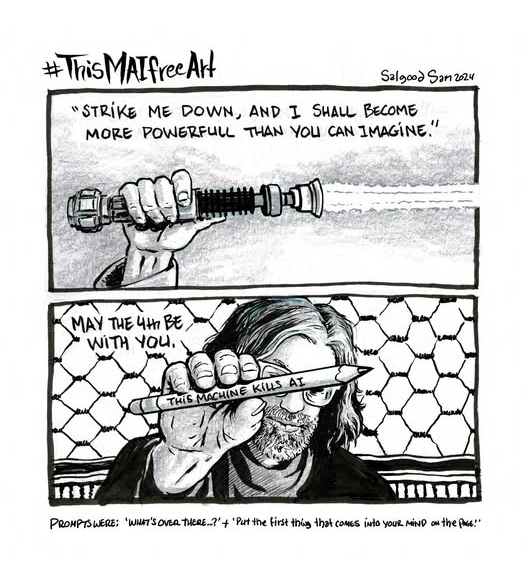
Andy Oliver at Broken Frontier has solicited opinions, in both text and cartoon, from cartoonists about AI.
Recently the 4th installment was published. Further reading: Part Three, Part Two, Part One.
Best Selling Graphic Novel of 2024
Written and illustrated by Pilkey, the Dog Man series continues to captivate young readers and is a major player in the rise of graphic novels for kids. Dog Man: The Scarlet Shedder alone sold over 1.2 million copies in 2024, making it the best-selling children’s book of the year.
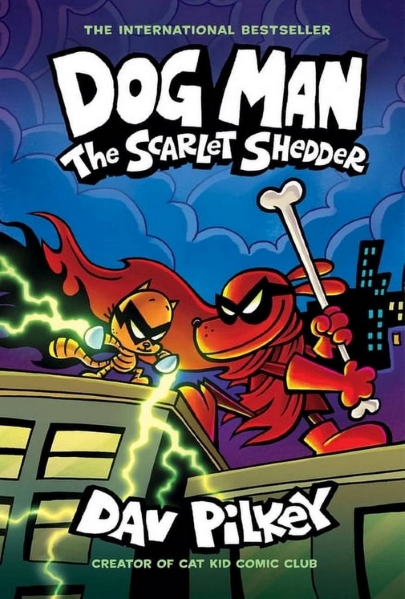
I don’t think I ever passed this Screen Rant report by Dod Seitz about Dog Man ruling the graphic novel list.
With Dog Man and spin-offs like Cat Kid Comic Club dominating the sales charts, it’s clear that children’s graphic novels have grown in popularity. This surge is not just a passing trend; the increasing digital presence of comics has led print media to focus more on the children’s graphic novel market, where print sales remain strong.
This is why a number of comic strip and magazine cartoonists are going for the kids’ book market.
The U.S. graphic novels market is undergoing a massive shift. Manga takes the lead, followed by children’s graphic novels, and then traditional comics. This shift proves that kids’ graphic novels are no longer niche; they are the future of the print comic industry.
Editorial Cartoon Contest for Middle and High School Students
he WNA Foundation is excited to announce the fifth annual Editorial Writing & Cartoon Contest, which aims to increase civic education and engagement while celebrating the rights established by the First Amendment.
The contest is open to all Wisconsin middle and high school students, including home-schooled students. Essays and cartoons should focus on the importance of the First Amendment.

The Wisconsin Newspaper Association Foundation has opened its call for entries for student cartoons.
The entries will be accepted Monday, September 1st until 11:59 a.m. Friday, November 14, and winners will be announced in early January.
First-place winners in each contest will receive $500, second-place winners will receive $250, and third-place winners will receive $100. Winning entries also will be published by newspapers across the state.
Al Roker Gets Animated
Former cartoonist and current TV weatherman Al Roker is now starring in an animated TV show.
This fall, everyone’s favorite weatherman is getting a kick out of launching his own educational cartoon TV show — “Weather Hunters,” which premieres Monday on PBS Kids.
“This project really is like — not to use a negative term — but almost like a perfect storm, a nexus of everything I love: My family, weather and animation,” Roker says.
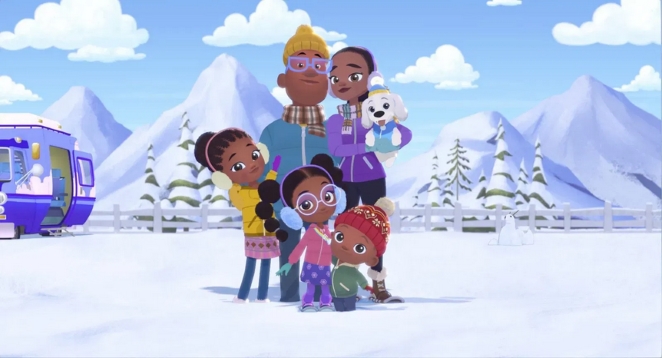
Mark Kennedy for Associated Press reports Al Roker launches educational cartoon show about weather.
What’s the show about?
Roker voices a younger version of himself named Al Hunter, a TV meteorologist who has plenty of dad jokes and wears violet-framed glasses. He’s teamed up with his producer wife, Dot, and their three inquisitive kids.
The Time is Right for Fighting in the Street
Parents of young children know the scenario well: When the kids are fighting, both automatically say the other started it.
But what if the kids in this metaphor are actually adults from the upper-middle echelons of San Francisco society: a cartoonist for The New Yorker and an investment director for the Shanghai Automotive Industrial Corporation?
Then the squabble devolves into anonymous social media posts, claims of emotional distress, dueling lawsuits, and very large, and growing, legal bills. Whoever started this fight, there’s no stopping it now.

The paths of the two men in question crossed (literally) April 18 at the intersection of Lake Street and Third Avenue in the Inner Richmond. The cartoonist, Jon Adams, was walking to pick up his kid from school when the investor, Michael Cohen, failed to stop his blue Tesla at a stop sign, Adams claims.
Azra Wallach for The San Francisco Standard reports on an altercation that has ended up in court.
According to a lawsuit Adams filed Tuesday in San Francisco, he was left in “shock, emotional anguish, shame, humiliation, and depression” after the ordeal. Adams also alleges that he witnessed Cohen driving recklessly through the neighborhood on two later occasions.
This inspired Adams to anonymously create a series of Instagram and TikTok posts and to create a website making others aware of Cohen’s alleged actions. These online rebukes led Cohen in July to file a lawsuit against “John Doe,” now revealed to be Adams, for defamation, violating his privacy, and appropriation of name and likeness, among other offenses.
The Media Capitulation Index
A small cartel of billionaires and conglomerates dominates the U.S. media landscape. Through a history of mergers and acquisitions, they’ve concentrated their control over much of what Americans see, read and hear. Free Press rates the independence of each of these giants and analyzes their ability to defend democracy at a time of domestic and international authoritarianism.
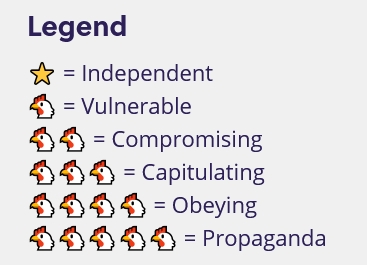
Free Press rates the degree — on a scale of one to five chickens (🐔) — to which each media company has compromised its commitment to independent news and information in exchange for political favors and higher profits, or simply to get the Trump administration off its back. In the rare instance where a company displays courageous independence from the political pressures of Washington, it earns a star (⭐), an ideal of autonomy to which all media must aspire if our democracy is to survive.
In many cases, the question is not “who owns the media?” but “who owns the media owners?” This tracker provides readers with an often disturbing answer.
The Free Press rates the independence of various media: Online Platforms & Streaming, Broadcasting & Entertainment, Cable & Telecom, and Newspapers & Publishing. Here’s the chart for newspaper independence*:
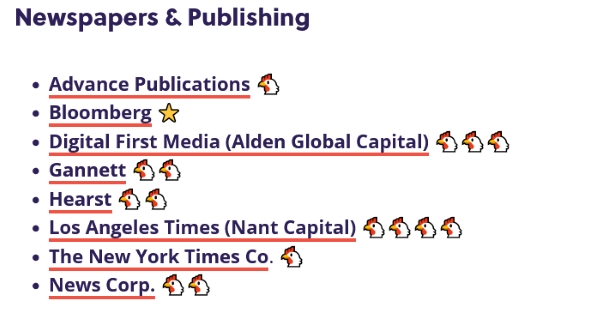
*The Washington Post is owned by Bezos, see the “Online Platform” chart for Amazon.
Protect the Children
On Tuesday’s live stream, Sheila Gunn Reid and Lise Merle reacted to a Toronto Star cartoon mocking Premier Danielle Smith for taking action against pornographic materials in school libraries.
Despite the premier ordering books with sexually explicit content to be removed from school libraries, left-wing activists in the Edmonton area have decided to remove several classic novels.
Cartoonist Theo Moudakis thought it would be comical to portray Alberta’s premier as trying to prevent children from viewing Archie comics.
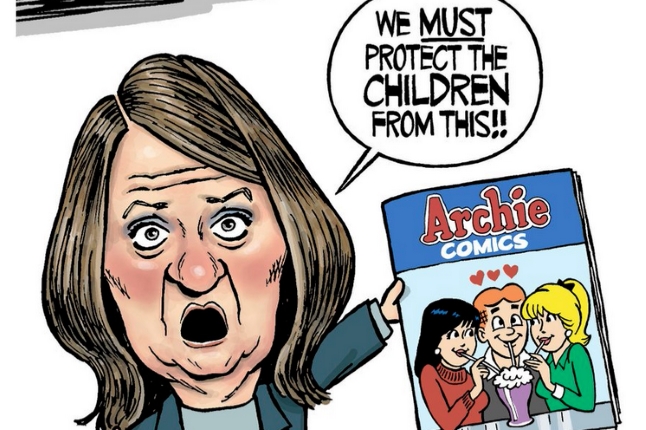
Rebel News (“we tell the other side of the story”) Livestream objects to cartoonist Theo Moudakis’ portrayal of Alberta’s ban on sexually explicit content in children’s books in public school libraries.
“This is exactly what the left likes to do. They like to extrapolate on a really good, sound, common sense policy and say ‘oh but it applies to the Archie comics, it applies to the Handmaid’s Tale,'” [Lise Merle] said.
Schools in Alberta are required to remove books containing “sexually explicit content” from their libraries by October 1, 2025, according to a ministerial order launched on July 4.

Comments 2
Comments are closed.