A Cavalcade of Cartoonists
Skip to comments
featuring Bill Watterson, Frank Frazetta, Rama Duwaji, Bob Fingerman, Alison Bechdel, Peter Kuper, Joe Dator, Charles M. Schulz, Shel Silverstein, and Art Spiegelman.
Updates

The original art by Bill Watterson for the first appearance of Spaceman Spiff in Calvin and Hobbes sold in a Heritage Auctions sell-off for nearly half a million dollars. A record for a daily comic strip?


While the original art for a Frank Frazetta Famous Funnies comic book cover featuring Buck Rogers went for a bit over one million dollars.

The Action Comics #1 cover-only wrap had a winning bid of just over four hundred thousand dollars.
OMG OMG OMG A Muslim Socialist Might be Mayor of NYC
OMG OMG OMG His Wife is A Cartoonist
Earlier this week, New York City’s mayoral primaries reverberated nationwide. From New York to Los Angeles, I overheard anxious conversations amongst Democrats and progressives about what NYC’s primary race would mean for our country’s future. Would the young left-wing newcomer, Zohran Mamdani, prevail over former New York governor and alleged sex pest, Andrew Cuomo? Stunning political analysts, it was Mamdani who won the primary race, leading to rumors that Cuomo was dropping out entirely. Following her husband’s win on Election Day, Rama Duwaji posted on Instagram that she “couldn’t possibly be prouder,” which led to the discovery that she’s an animator, illustrator, and ceramicist.

Ollie Kaplan for The Beat provides a brief profile of Rama Duwaji, possible future first lady of New York City.
Duwaji, 27, who is ethnically Syrian but was born in Houston, Texas, was not a major public presence during most of Mamdani’s campaign. However, it is obvious through her artwork that she is also an activist. In her career as an artist and illustrator, she has worked with The New Yorker, Apple, Spotify, The Washington Post, BBC, VICE, and London’s Tate Modern museum, among others, per her personal website.
Book ‘Em Deggo
Bob Fingerman
Sometime before COVID*, I [Mike Rhode] was going to Baltimore Comic Con and a friend in Europe asked me to pick up some original art by Bob Fingerman** for him. I ended up buying more for myself than my buddy, as this was when Minimum Wage had just been collected, and I always enjoyed those scruffy urban not-quite-DINKS (you can see the six of mine scattered throughout this interview). Bob recently reached out to offer That’s Some Business You’re In and Printopia his two current books for review,*** and I asked him for an interview with my standard questions.


Mike Rhode at ComicsDC interviews cartoonist Bob Fingerman.
What work are you best-known for?
The comic book series Minimum Wage. That certainly the one I did the most of, the page-count probably totaling about 600? Compared to some people’s output that’s a blip, but for me to do 22 issues of a comic, plus a standalone introductory GN? The original run ran in the mid to late ’90s from Fantagraphics, then it kind of went away and gestated for 15 years before being reborn courtesy of Image Comics. I’m hoping in the next year or two to collect all of it in one definitive edition.
What work are you most proud of?
I’m very proud of Minimum Wage, but I’m also proud of the two novels I got published (Bottomfeeder and Pariah), being in Heavy Metal magazine and MAD; the fact that I’ve managed to do work that had personal significance for as long as I have. And I’m very very proud of my latest graphic novel, Printopia! Might be my favorite book I’ve ever done.
Alison Bechdel
In the early aughts, Alison Bechdel was a struggling cartoonist. She’d been writing and drawing her comic strip, Dykes to Watch Out For—about a group of mostly lesbian friends and lovers—since 1983, building a cult following in the process. But in the 2000s, the business model that had sustained her for decades started to unravel, as the advent of the Internet reshaped the entire media landscape. Bechdel had long syndicated the series in alternative newspapers (queer ones and the humor publication Funny Times), but they began to shut down; then the lesbian feminist publisher of her collections of the strip went bankrupt in 2002…
In 2006, while worrying about the sustainability of her future as a cartoonist, Bechdel published Fun Home…

Jillian Steinhauer for The Nation briefly profiles Alison Bechdel while in-depth reviewing Bechdel’s Spent.
Spent coheres partly through its structure: Each chapter is named after one in Karl Marx’s Das Kapital, which Alison starts reading when she realizes that if her book is going to “put the final nail in the coffin of late-stage capitalism,” then she needs to know what exactly late-stage capitalism is. Bechdel’s previous books are filled with discussions of writers as wide-ranging as James Joyce, the psychologist Donald Winnicott, and the transcendentalist Margaret Fuller. Engaging with Marx, then, is purposeful: Bechdel tends to build her narratives via a certain critical and interpretive mode—of both the literary and psychological varieties.
et in Spent, the Marx references are also a joke, since the cleverly chosen phrases loosely reflect what unfolds in each chapter. For instance…
Peter Kuper
I wanted to create a graphic novel that surpassed the knowledge I had at that point that would take a huge amount of research. I wanted to come up with storytelling that I hadn’t figured out yet: where I’d do something, with panels are crisscrossing through time, the history was going to merge, and … I was super vague on what that meant! My brain was screaming, “Be brilliant. Do something you haven’t figured out, that you don’t know you can do yet,” which also felt absurd and impossible.
By chance ran into a Harvard professor, Maya Jasanoff, who had written the foreword to Heart of Darkness for me. She came by my studio and we were talking about this project idea, and she said, “Oh, you should apply for a Cullman [Fellowship at the New York Public Library] …
They called me and told me that I had received the Cullman in February of 2020. It would start the next September. Then, the collapse of the pandemic occurred. Aside from the growing pandemic anxiety, I was rather freaked out getting the fellowship, because I really did feel like it was a bit above my pay grade…
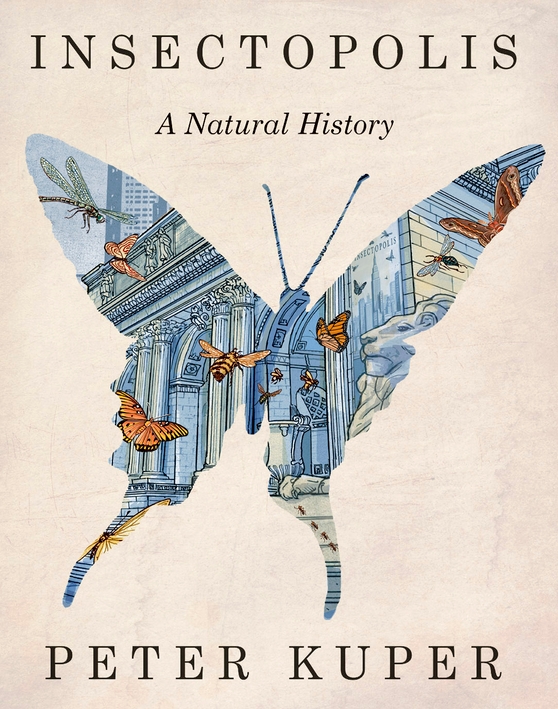

Irene Valentzas for The Comics Journal sat down with Peter Kuper to discuss his latest staggering feat of art, his revolutionary artistic perspective, and his robust five-decade career.
Can you tell us about your process behind creating these large-scale acts of erasure and destruction visible in your work?
It’s something I’m perpetually concerned about. When I was eight years old, I saw a film called Fail Safe, a Cold War era movie, where the United States accidentally bombs Moscow, and to prevent World War Three, the U.S. agrees to let Moscow bomb one American city – and the Russians choose New York. That movie also triggered a bomb in my brain as I realized that there was this horrible weapon that could destroy the world. The movie instigated my general concern about just how easy it is to vanquish everything. I also came to understand how many dangerous idiots are in charge of our government and capable of launching weapons of destruction, which is more and more the case these days.
Peter Kuper is a cartoonist who is living the dream of making it big in the big city. His work has regularly appeared in three iconic NYC publications: The New Yorker, The Nation and Mad, the latter being where he wrote and illustrated “Spy vs. Spy” for nearly 30 years. Perhaps most notably, considering Kuper’s passion for progressive politics, is the fact that he’s the co-founder of the activist comics magazine, World War III Illustrated, which has been around for over 40 years. This brings us to Kuper’s new book, another very New York-centric project as well as one that speaks to Kuper’s concern for the planet.
Elsewhere at The Comics Journal Henry Chamberlain reviews Insectopolis.
Kuper’s book is set in a post-human future where insects are able to speak to each other as they ponder a grand exhibition devoted to them at The New York Public Library. He maintains a sense of wonder tempered with a sense of order. Like any great, immersive work of comics, there’s a sturdy framework holding it all together. Here, you have a steady flow of creature features (ants, cicadas, moths, beetles and more) along with an impressive set of historical detours and informational asides that are smoothly interwoven.
Joe Dator For Sale
Joe Dator has a selection of his magazine cartoons for sale – The New Yorker, American Bystander, others.


How ‘Peanuts’ Came to Define the Modern Comic Strip
In his syndicated debut, Charlie Brown appeared to the nation in his classic form: an ineffectual child with an oval head and a plain shirt; the distinctive zigzag was added two months later. He was a lovable, relatable loser, inspired by Schulz’s own insecurities—melancholic and underwhelmed, but willing to make the best of it. “Most of us are much more acquainted with losing than we are with winning,” Schulz wrote in his 1975 book, Peanuts Jubilee: My Life and Art With Charlie Brown and Others. “Winning is great, but it isn’t funny.”

With poignant wisdom and gentle wit, Charles M. Schulz reinvented the form.
Chris Carra for The Smithsonian Magazine details the rise of Peanuts.
As Bill Watterson, the creator of “Calvin and Hobbes,” once observed, “Peanuts pretty much defines the modern comic strip. … In countless ways, Schulz blazed the wide trail that most every cartoonist since has tried to follow.”
Calvin and Hobbes Banned!
Since you brought up comic strip creator Bill Watterson…
A mind-boggling list of hundreds of books purged from some Tennessee school libraries includes works by Magic Tree House author Mary Pope Osborne, children’s poet Shel Silverstein, and Calvin and Hobbes cartoonist Bill Watterson.
Banned titles include American classics like Harper Lee’s To Kill a Mockingbird and John Steinbeck’s The Grapes of Wrath.


While we’ve grown accustomed to Art Spiegelman’s Maus being banned by the small-minded, they have reached new heights of ridiculousness with banning the first Calvin and Hobbes collection by Bill Watterson.
PEN America reports on actions by Monroe County, Tennessee authorities.
The removals are the result of a growing political movement to control information through book banning. In 2024, the state legislature amended the “Age-Appropriate Materials Act of 2022” to specify that any materials that “in whole or in part” contain any “nudity, or descriptions or depictions of sexual excitement, sexual conduct, excess violence, or sadomasochistic abuse” are inappropriate for all students and do not belong in a school library. This change means books are not evaluated as a whole, and excerpts can be considered without context, if they have any content that is deemed to cross these lines. This leaves no room for educators and librarians to curate collections that reflect the real world and serve the educational needs of today’s students.
The results of this overcompliance are alarming. They include Monroe’s 574 titles, more than 100 titles taken off the shelves in Knox County, over 150 titles removed in Rutherford County, over 300 banned in Oak Ridge Schools and over 400 in Wilson County. And that’s not even every county in the state impacted.
Independent thought? Active imagination? Anarchy? I haven’t been able to suss out why the Calvin and Hobbes book has been banned by Tennessee school districts.


Comments 11
Comments are closed.