Miss Cellany’s Sun Day Afternoon
Skip to comments
With Barbara Shermund, Edward Gorey, Stan Mack, Dan Tyree, and courtroom sketch artists Art Lien, Cedric Hohnstadt, and Christine Cornell.
The Trailblazing Cartoon Art of Barbara Shermund
We began today watching Jane Pauley and CBS Sunday Morning and a segment about a cartoonist:
Artist Barbara Shermund (1899- 1978) was one of the first women cartoonists for The New Yorker and other major magazines, from the 1920s into the ’60s. But she died with barely a trace – and her reputation lay dormant, until a distant relative and a cartoon historian teamed up to connect the dots of Shermund’s life and work.
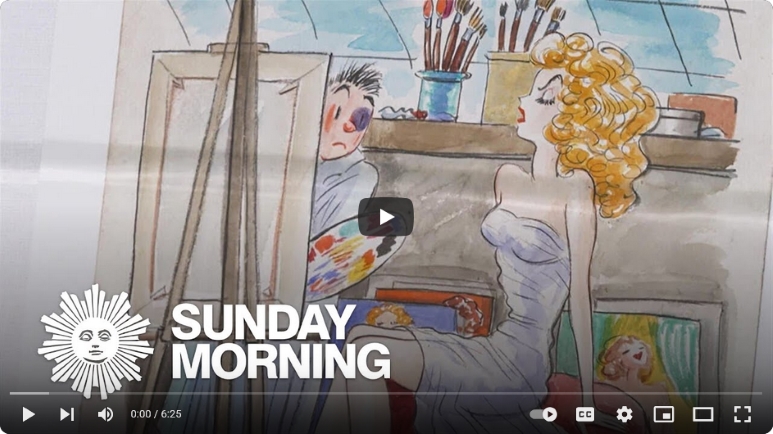
CBS News presents The Trailblazing Cartoon Art of Barbara Shermund. or here on YouTube.
Correspondent Faith Salie talks with investigator Amanda Gormley and curator Caitlin McGurk (author of “Tell Me a Story Where the Bad Girl Wins: The Life and Art of Barbara Shermund”) about resurrecting a trailblazing humorist and her scintillating takes on sex, marriage and society.
We’re going to have to check the background for Sunday Morning’s Jane Pauley, she seems to have an affinity for cartooning and cartoonists.
Stories from The Library of Congress
Edward Gorey, that bearded patron saint of the sad and whimsical, the strange and witty, was born in 1925 Chicago, deep in the heart of the American continent.
But you’d swear, looking at his comic-but-disturbing illustrated books during the centennial celebrations this year, that the man was born into a dreary British family living in three-room flat in a shabby little village called Puddlington or something.
Happily, the instantly identifiable Gorey universe — built on “The Gashlycrumb Tinies,” “The Unstrung Harp,” his Tony Award-winning costume design for “Dracula,” his animated intro for the long-running PBS show “Mystery!” — has become part of the nation’s background cultural fabric. The films of Tim Burton (“The Corpse Bride”), the one-panel comics of Gary Larson (“The Far Side”) or the Y.A. novels of Daniel Handler (“A Series of Unfortunate Events,” under the pen name of Lemony Snicket ) all bear his influence.
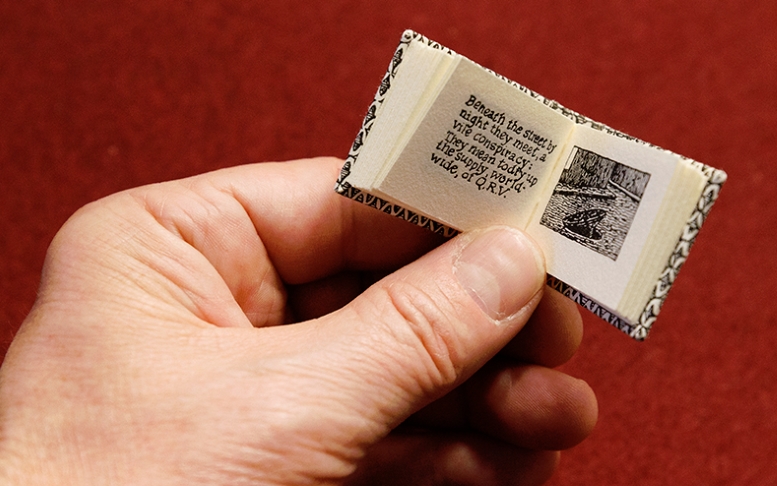
“Enchanted at first sight,” writes Glen Emil, the collector who in 2015 donated more than 800 Gorey items to form the core of the Library’s holdings, describing his first reaction to seeing Gorey’s work.
With the contribution of another 900 or so items in 2020 from another major Gorey collector, the late Edward Bradford, the Library’s collection grew to more than 1,700 items, many of them as delightfully eccentric as the man himself.
Library of Congress’ Neely Tucker writes of the Edward Gorey art in their Rare Book and Special Collections.
The 30th Anniversary New York City Book Awards (2024-2025)
New York Society Library was “honored to celebrate the 2024-2025 winners of the New York City Book Awards in a special ceremony on May 12, 2025.”
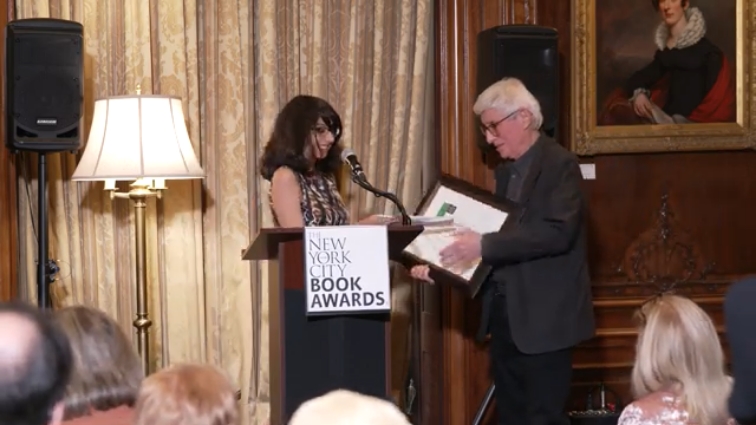
One of the winners was cartoonist Stan Mack for his collection of comic strips Stan Mack’s Real Life Funnies: The Collected Conceits, Delusions, and Hijinks of New Yorkers from 1974 to 1995 (Fantagraphics).
The Stan Mack portion of the presentation begins at the 39:45 mark.
Ever Dream of Becoming a Cartoonist?
I’m glad most people have abandoned chirping, “See ya in the funny papers.”
Because that quaint farewell would reopen old wounds, since folks will definitely NOT be seeing me in the funny papers.
You see, 2025 marks the 50th anniversary of my ill-fated attempt to become a professional cartoonist.
Most kids “grow out of” drawing soon after the mandatory “trace around your hand to create a turkey” illustrations, but I had stuck with it. Granted, some of my drawings looked like I had traced around a live, flailing turkey; but my dream of landing in the comics section persisted into my teen years.
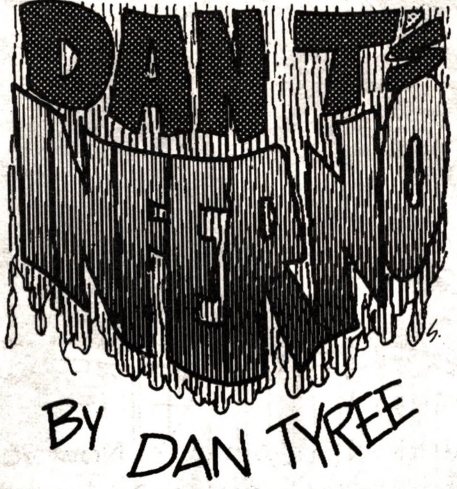
Danny Tyree, columnist for Daryl Cagle’s syndicate, reminisces about his early ambition to be a cartoonist.
The name Dan Tyree has me reminiscing about the days when I subscribed to The Comics Buyer’s Guide.
Courtroom sketches of the Sean ‘Diddy’ Combs trial are drawing quite a reaction
Not everyone is loving the sketches coming out of the latest high-profile legal drama.
With cameras prohibited from the federal courtroom for the Sean “Diddy” Combs trial, media outlets, including CNN, have employed courtroom sketch artists to illustrate the proceedings for the public.
The sketches have sparked occasional criticism on social media for being cartoonish. The Law & Crime Network has even used AI to help dramatize the trial.
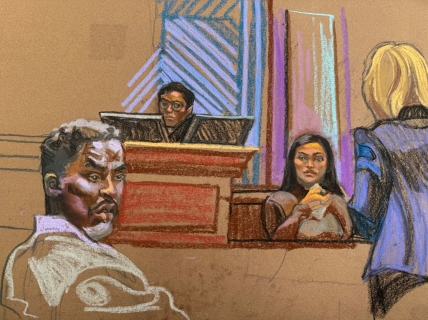
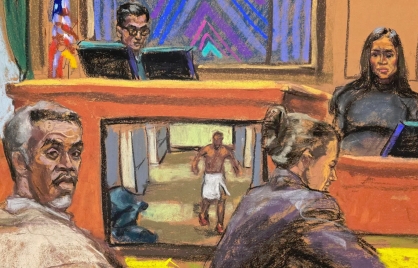
Another high profile federal criminal case brings the courtroom sketch artists back to public awareness.
Lisa Respers France at CNN talks to court sketch artists Art Lien, Cedric Hohnstadt, and Christine Cornell.
The Courtroom Art Instagram page features many more artists and sketches.
Digression…
It seems more and more likely that the new owners of SCOTUSblog will not be hiring a new court artist following the death of Bill Hennesy, rather the editors there will be relying on repeating some favorite illustrations and photos from their archives.


Comments 5
Comments are closed.