CSotD: My Cowboys Have Always Been Heroes
Skip to comments
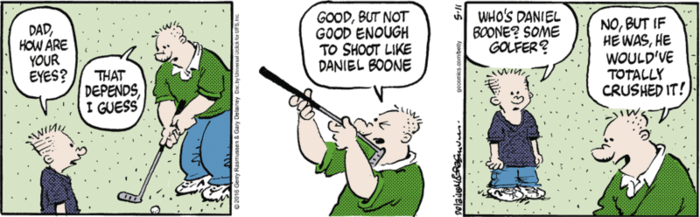
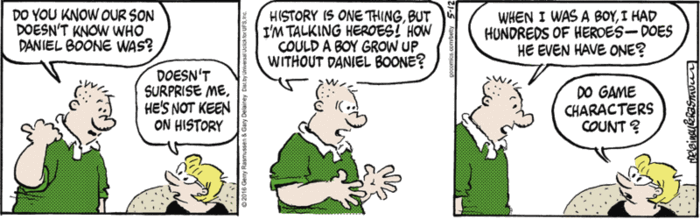
Betty served up an interesting topic yesterday and today's strip suggests we're going to play with it a bit.
Yesterday's strip reminded me of a similar moment when I suppose there was spinach around and I said something about Popeye, only to have a granddaughter ask, "Who's Popeye?"
There followed a series of DVDs from Grandpa and, while Popeye never became a huge factor in their lives, the Warner Brothers classics are now a staple. I'm glad to bring some culture wherever I can.
This interdisciplinary disconnect is pretty easy to sort out: When I was a kid, TV stations used those old cartoons as a sort of filler, and they also used their cameras for more than the local news. Every station had a kids show with a host who showed cartoons.
Moreover, one of the fun parts about going to the movies was that there would be the coming attractions and then a cartoon, and perhaps the grownups could anticipate what it might be, but I remember the surprise when it started and it would turn out to be Mickey or Donald or Bugs.
I also remember the first time the surprise was no cartoon at all.
So that's over.
As for Dan'l, I'm going to have that earworm all day, so you might as well, too.
Daniel Boone came along when I was 14, old enough that I knew it was a Davy Crocket knock-off with the same guy in the same hat avoiding a trademark problem, but Fess was my main man and I enjoyed the show for the first season or two.
But I'd been front-and-center for Davy, and I knew that he was a real person while Hopalong Cassidy was fictional, because Walt Disney did intros before the stories of Davy Crocket or Elfego Baca or the Swamp Fox, and he'd talk about them being real people.
(This is the whole episode; You can bail after Walt's intro. Or not.)
We played Swamp Fox in the woods and I was lucky enough to still have a raccoon tail from my Davy Crocket hat and a tricorn hat from visiting Williamsburg.
However much ol' Uncle Walt may have been a staunch anticommunist flagwaver, the idea of giving us historical figures was less a conspiracy than a tradition, and, if Davy Crocket's legend sprang from a Congressional campaign, the others were a brand of pulp fiction that wouldn't have continued if audiences hadn't eaten it up.
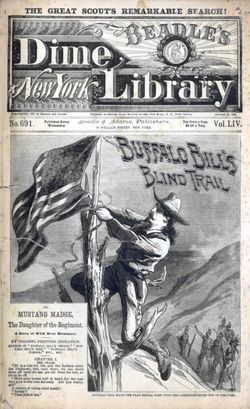 The image of the cowboy that came out of that was hardly historically accurate, mostly because the audience for the stories was young Anglo boys, at a time when boys' heroes were uniformly, impossibly virtuous and heroic.
As were Disney's heroes, and only Zorro and Elfego were non-white.
Our iconic cowboy ignores the fact that how cattle were worked on the open range was devised by vaqueros and based on the techniques of southern Spain and North Africa, as if "we" showed up with lariats and chaps and only called them by those names on a whim.
Though, in all fairness, the reality of vaquero life isn't all that elevating.
Real cowboys were a mix of freed slaves, local Latinos, landless Confederates and random drifters doing a grueling job that didn't pay very well and in which heroic acts of derring-do weren't much of a factor.
The question is, was it such a bad thing to teach kids that a good person is hard-working and virtuous?
And are the legends of the Old West any worse as history than the equally scrubbed and blemish-free figures kids are presented as a modern, inclusive rebuttal?
Meanwhile, back in the Old Country:
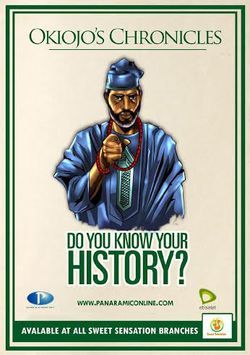 As it happens, just as Betty was laying this subject on the table, I was writing in my day job about a move in Nigeria to provide a sense of history and identity to young people through comic books.
Nigeria is a massive nation that encompasses a huge number of disparate ethnic groups, and not only has this prevented the country from evolving a specific national cultural identity, but it has resulted in some violent intertribal conflicts and all around bad feelings.
Add to that the fact that the government has stopped requiring history as a subject in school, and that young people are gravitating, understandably, towards more career-oriented classes, and you end up with a void that "Okiojo's Chronicles" hopes to fill.
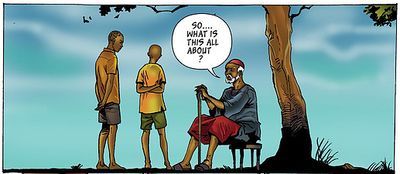
Okiojo is a wise, kindly old man who resolves conflicts among kids with lessons about the past, a format that seems stiffer and more overtly "educational" than Disney's approach, but, if it works, will be a good thing in a place that could use it.
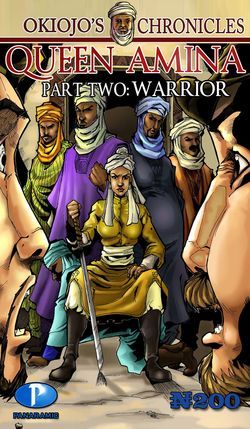 There seems to be some diversity in approach in the various titles: The story of the founding of the Joruba people involves a semi-mythological figure that requires presenting a creation story in an unquestioning context, while telling about a Hausa warrior-queen of the 16th century can be more of an adventure story with the legendary parts likely to be in the Daniel Boone realm of heroic exaggeration rather than outright fiction.
And a third series about the imposition of British colonialism in the 19th century will likely be pretty straightforward history, since the documentation is more complete and the hero/villain lines less controversial.
It should be noted, however, that the creators of the Okiojo Chronicles say they had to go to sources outside Nigeria because there simply isn't a large historical record there, even in scholarly places.
The comics are apparently not being used in classrooms so much as made available as cheap downloads online or in print format at "Sweet Sensations," a popular fast-food outlet, the project relying on corporate sponsorship and support rather than any image-building intent on the part of the government.
If you're nervous about using the Nigerian publisher's download site where the comic can be had for 99 cents, you can double your confidence and the price for at least one volume at Amazon.
And what's wrong with heroes?
Comments
Comments are closed.