A Tuesday Smorgasbord Special
Skip to comments
A Duke’s Mixture of animators as book illustrators and magazine cover artists, the suppression of the prurient by the puritanical as not-safe-for-work internet cartoonists are being demonetized, and when newspapers flourished.
When Animators Illustrate
Many cartoonists famously illustrated books, as did some animation giants.
Three famous animation talents who worked in book illustrations were Walter Lantz, Ben “Bugs” Hardaway, and Grim Natwick [emphases added].

Kamden Spies for Cartoon Research writes of “The Illustration Work of Animation Giants.”
Grim Natwick was no foreign name to the world of art when he entered the animation industry…
In 1921, Walter Lantz lent his talents to illustrate Rummyniscences by Frederick P. Kafka…
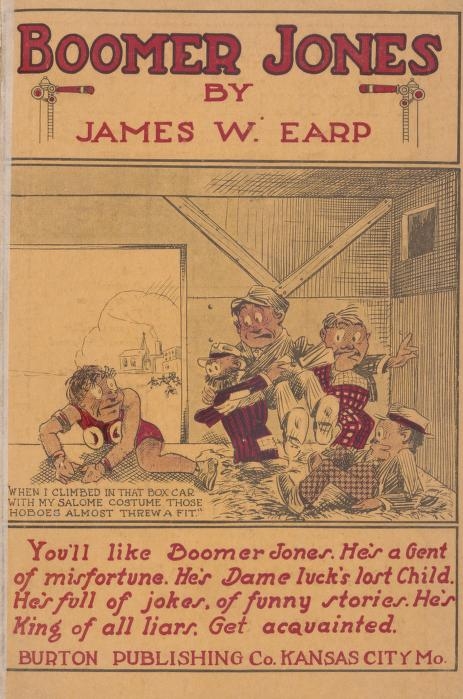
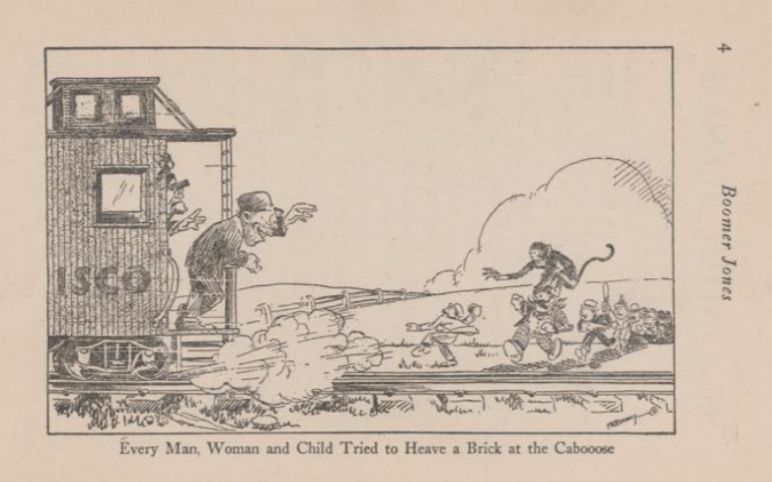
Around 1921, [Ben] “Bugs” Hardaway illustrated Boomer Jones…
The Library of Congress reproduces Boomer Jones with Bugs’ illustrations.
The Cat On a Hot Thin Groove
On a related note from the wayback machine:
[Gene Deitch] has led a life of such distinction, achievement and all-around coolness that I’m tripping all over myself trying to boil it down to a few highlights. Art director of legendary jazz mag The Record Changer, animator-director-scenarist for UPA, Terrytoons, MGM… Academy Award winner for his direction of his animated adaptation of Jules Feiffer‘s Munro … creator of Sidney the Elephant, John Doormat, Clint Clobber, Gaston Le Crayon… and co-creator of Simon, Seth and Kim Deitch.

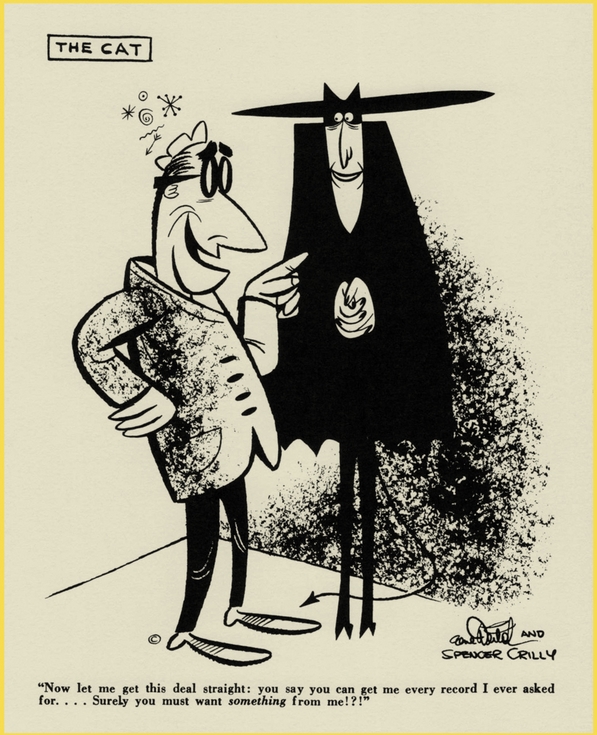
gasp65 at Who’s Out There previews 2013’s Gene Deitch‘s The Cat On a Hot Thin Groove illustrations.
NSFW
It was announced yesterday that Itch.io “deindexed” all adult NSFW content from its browse and search pages. [SOURCE]
Itch.io is a website for users to host, sell, and download indie video games, indie role-playing games, game assets, comics, zines, and music. Launched in March 2013 by Leaf Corcoran, the service hosts over 1,000,000 products as of November 2024. From the announcement:
Recently, we came under scrutiny from our payment processors regarding the nature of some content hosted on itch.io.
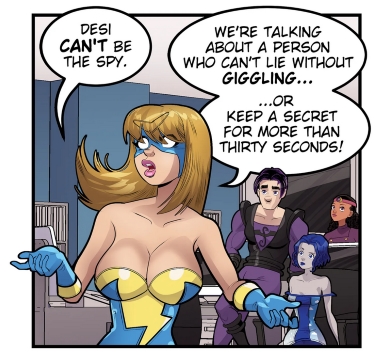


Cartoonist Brad Guigar notes the suppression of adult cartoon and comic entertainment on the internet.
… the organization Collective Shout launched a campaign against Steam and itch.io, directing concerns to our payment processors about the nature of certain content found on both platforms.
Our ability to process payments is critical for every creator on our platform. To ensure that we can continue to operate and provide a marketplace for all developers, we must prioritize our relationship with our payment partners and take immediate steps towards compliance.
This has, understandably, caused a lot of panic in the NSFW comics community, so let’s talk about what we can do…
An itch.io update and FAQs about the situation.
We have “deindexed” all adult NSFW content from our browse and search pages. We understand this action is sudden and disruptive, and we are truly sorry for the frustration and confusion caused by this change.
Recently, we came under scrutiny from our payment processors regarding the nature of some content hosted on itch.io…
Back When Newspapers Were A Thing
Early in the Civil War, Oliver Wendell Holmes Sr. announced in The Atlantic that the necessities of life had been reduced to two things: bread and the newspaper. Trying to keep up with what Holmes called the “excitements of the time,” civilians lived their days newspaper to newspaper, hanging on the latest reports. Reading anything else felt beside the point.
The newspaper was an inescapable force…
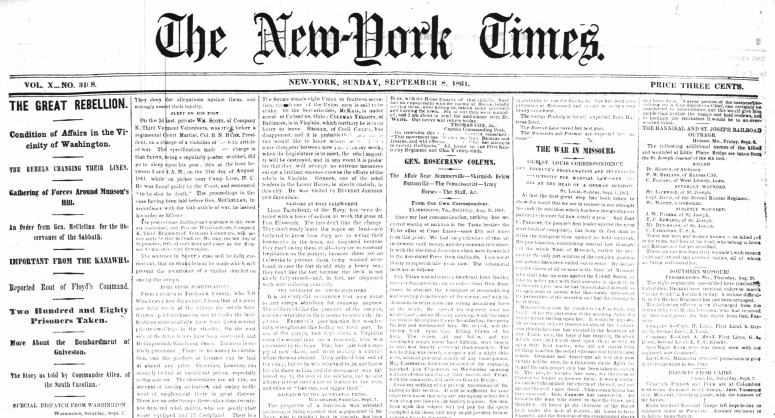
Yes, there was a time when newspapers were cheap, plentiful, and with weight!
Jake Lundberg for The Atlantic refreshes our memory with “The Birth of the Attention Economy.” (Or here.)
“Read not the Times,” [Henry David Thoreau] urged. “Read the Eternities.”
But the problem was only getting worse. The Eternities were steadily losing ground to the Times—and to the Posts, the Standards, the Gazettes, the Worlds, and the Examiners. In the last third of the 19th century, the volume of printed publications grew exponentially. Even as more “serious” newspapers such as the New-York Tribune entered the marketplace, the cheap daily continued to sell thousands of copies each day. Newspapers, aided by faster methods of typesetting and by cheaper printing, became twice-daily behemoths, with Sunday editions that could be biblical in length. A British observer marveled at the turn of the century that Americans, “the busiest people in the world,” had so much time to read each day.
These days print newspapers are expensive, scarce, and flimsy (even the Sunday edition).
But publisher engage in their own civil war over ownership.
Alden Global Capital still wants The Dallas Morning News
Alden Global Capital sure is confused a lot lately. The vulturous hedge fund has kindly offered to pillage The Dallas Morning News, just as it’s pillaged the other newspapers it’s bought over the past decade-plus.
But the paper’s owners and executives don’t seem keen on the idea! Weird, right?
And now Alden is “perplexed” that its potential victims don’t want to “engage.” (“C’mon, friend, let’s just talk about your entrails and how tasty they look.”)
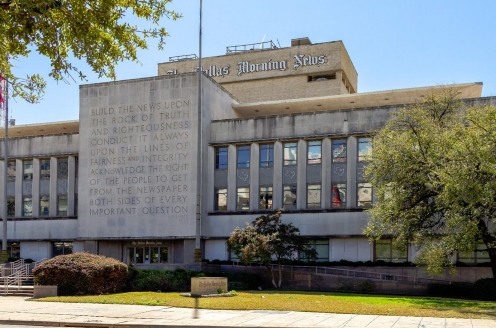
Joshua Benton at NiemanLab updates MediaNews’ neverending battle to benefit the employees and readership of The Dallas Morning News and save them from the clutches of William Randolph Hearst’s progeny.
Well, Alden keeps trying. This morning, its management sent another letter to DallasNews, upping the offer to $17.50 and again wondering why no one seems to want to hang out with them:
We are perplexed by your refusal to have a single discussion with us in the weeks since our Original Proposal was submitted.


Comments 5
Comments are closed.