CSotD: Media Literacy and Political Cartoons
Skip to comments
Call it media illiteracy. It’s the pervasive lack of knowledge about what a political cartoon is supposed to be, and what it’s supposed to do — provoke thought and, yes, even disagreement. Instead of understanding that, many people leap to the faulty conclusion that since the editorial commentary comes in the form of a cartoon, it must be making a joke at someone’s expense. — Margaret Sullivan
Sullivan, a prominent commentator on media, was Adam Zyglis’s first editor at the Buffalo News and has taken a lively interest in his current encounter with the illiterati, which DD Degg covered here.
I strongly encourage you to read her Substack on the matter, which includes a question of whether we need to do a better job of teaching media literacy as it applies to political cartooning.
Since I used to present a lesson to students on just that topic, I thought I’d provide an example of how that could work.
Put on another pot of coffee. Between what she’s got to say and what I’m about to unleash, you’ll be here awhile.
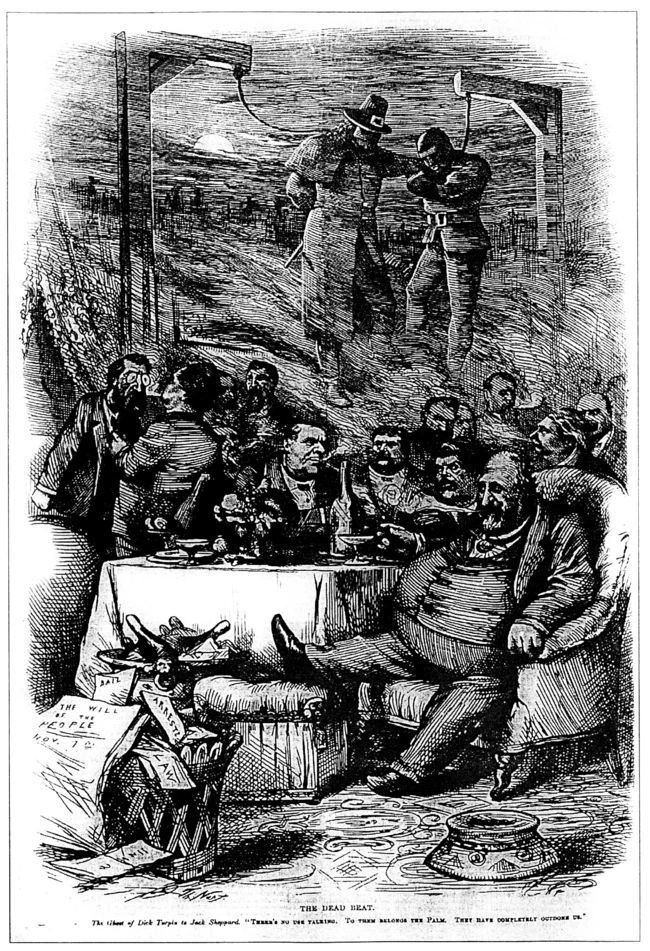
Students came into the auditorium to find this Thomas Nast piece on the screen. The complexity gave them something to look at while I laid out the basics of what was to come.
I addressed juniors and seniors in some 40 schools between 1993 and 2006, often more than once, and ranging from four at little Newcomb to about 875 in a theatre-in-the-round setting at Saratoga Springs.
Starting with Nast allowed us to jump right into more complexity than Franklin’s divided snake or the gerrymander would have. After all, I only had, on average, about 40 minutes before the next bell.
The caption has two executed highwaymen saying “There’s no use talking. To them belongs the Palm. They’ve completely outdone us,” which set up a general description of the Tweed ring leading to the story of how Spanish authorities caught the fleeing felon thanks to a Nast cartoon showing them who to look for.
I also described how the image was engraved and included a brief mention — encouraging for somebody, I’m sure — that Nast was dyslexic.
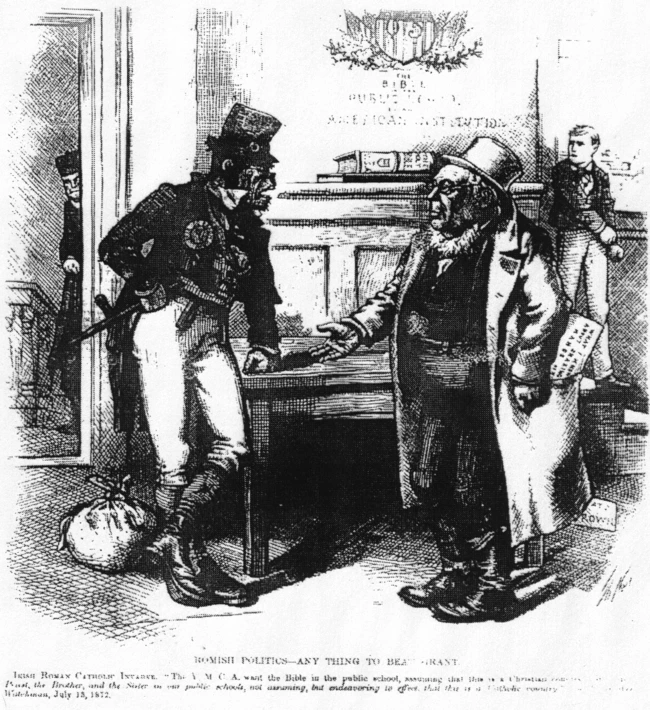
He was also a bigot, and I didn’t let that slide, showing one of his hateful anti-Irish cartoons but praising his artistry nonetheless.
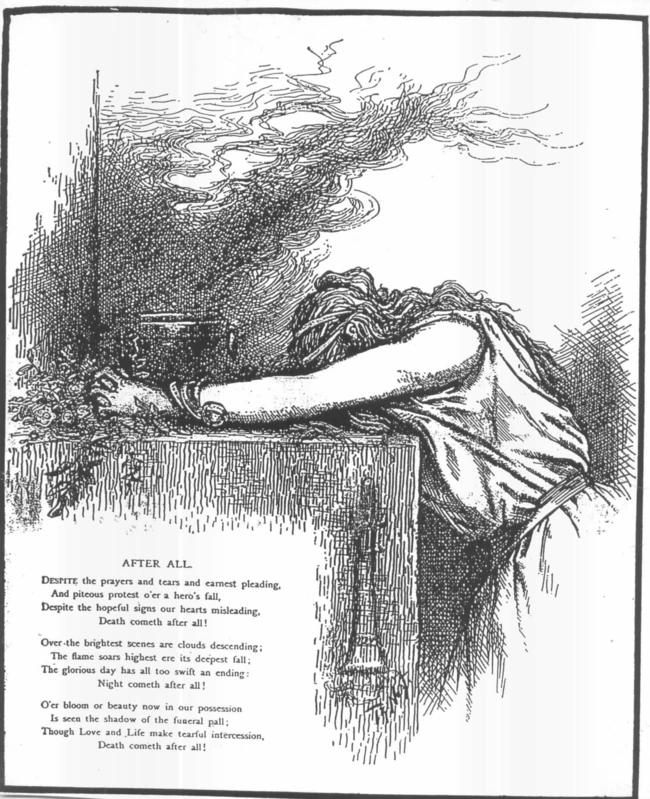
And I included his obituary tribute to President Garfield. The Statue of Liberty was not yet established as a national symbol, and it mattered that Columbia, who personified America and was normally depicted as an armored, sword-bearing protector, be seen here as a helpless, grieving woman.
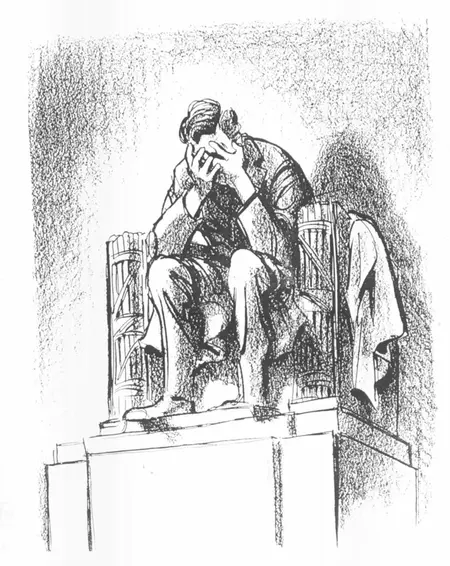
It was an approach echoed by the next great artist in the presentation, and I told how Bill Mauldin had raced from a luncheon back to the Chicago Sun-Times newsroom and produced this now-classic cartoon in time for the afternoon’s Extra edition, how the editors ran it full-page on the back of the tabloid and how the newsies flipped the bundles and quickly sold out the print run.
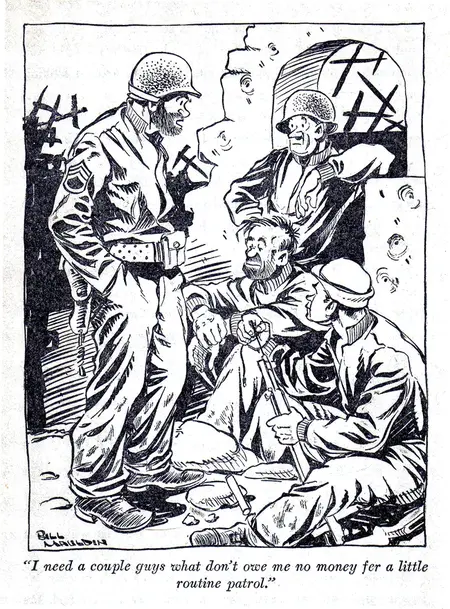
Then we got one of our first laughs, as we went to the start of Mauldin’s career. The cartoon, of course, didn’t get giggles, because it’s not that kind of funny. But they understood the sergeant’s dark logic, and they liked how Mauldin drew the dogfaces wrinkled, unkempt and exhausted, despite Patton’s preference for sharply ironed uniforms.
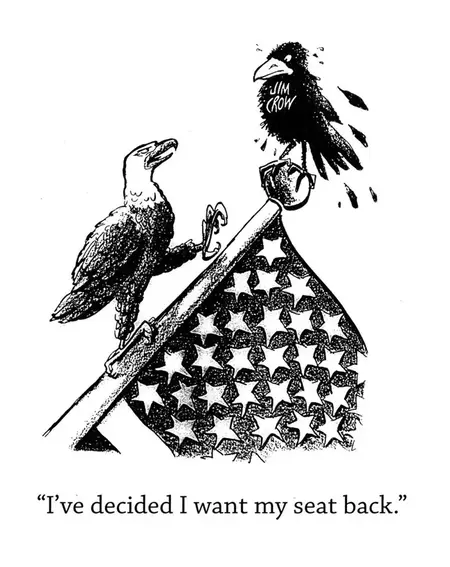
We also explored Mauldin’s grim approach with this tribute to the Civil Rights Act, because the top of the flagpole represents mastery, but that bedraggled crow clearly could not stand up to the eagle.
However, the eagle said, “I’ve decided …” because he could have taken control any time he wanted to, and yet he had let Jim Crow perch there for a very long time.
Hardly a full-throated celebration.
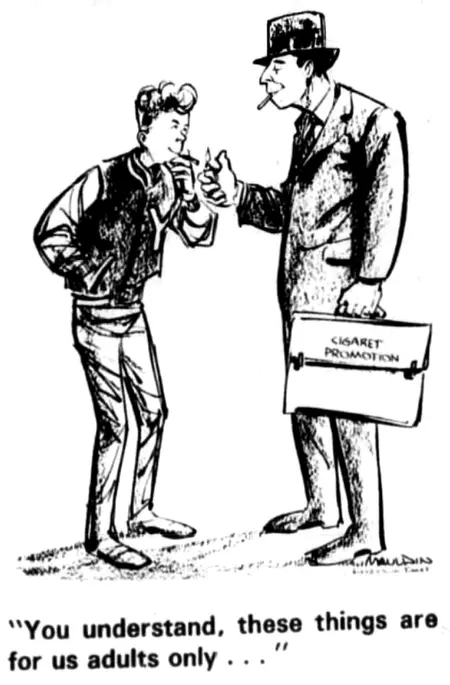
We also talked about technique: Mauldin emphasizes the teenager’s youth by putting him in a letterman’s jacket, but makes him shorter than the tobacco salesman in order to make him appear vulnerable, while the salesman’s smarmy smile indicates that he is happily taking advantage of the boy.
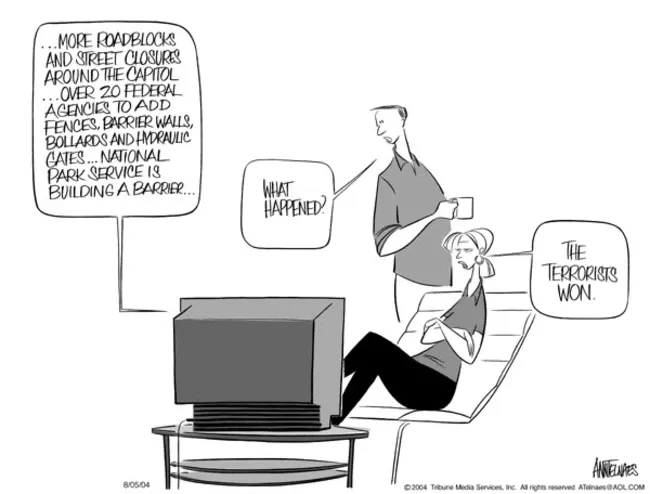
Similarly, Ann Telnaes’ background in animation is clear in this post-9/11 piece, in the woman’s resigned slump and in the half-paused posture of her husband, who is clearly passing through the room and has not been watching the news along with her.
There are a million couples-watching-TV cartoons, but this one feels as if it’s in motion and really happening, and that adds credibility and depth to the woman’s mournful summation.
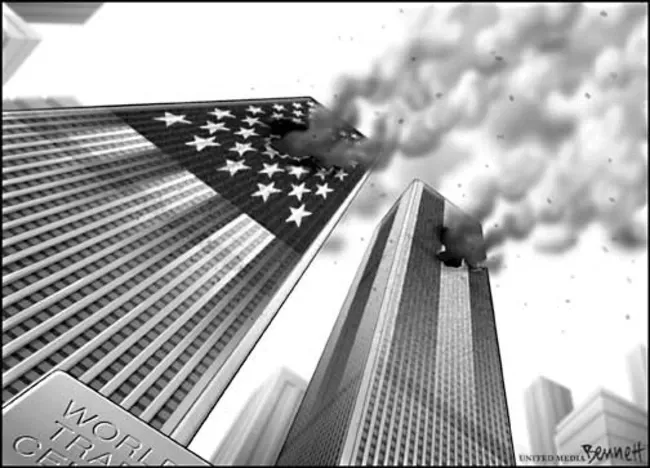
9/11 provided many political cartoons, some better than others and, as I told the kids, more than 50 that depicted the Statue of Liberty weeping. Since 9/11 was current events for them, they didn’t need a cartoonist to tell them that they were sad, and they responded well, instead, to Clay Bennett‘s depiction of shock and horror.
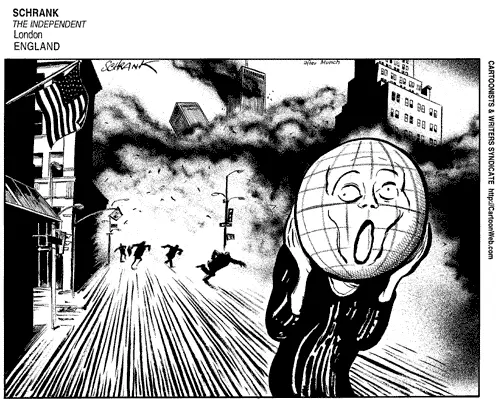
They were also able to appreciate Peter Schrank‘s cartoon, though riffing on the Scream is a cliché. But in this case, Schrank not only employed the street in place of the bridge, but used the entire, horrified world to indicate that, at least for that moment, the US had the sympathy of the entire planet.
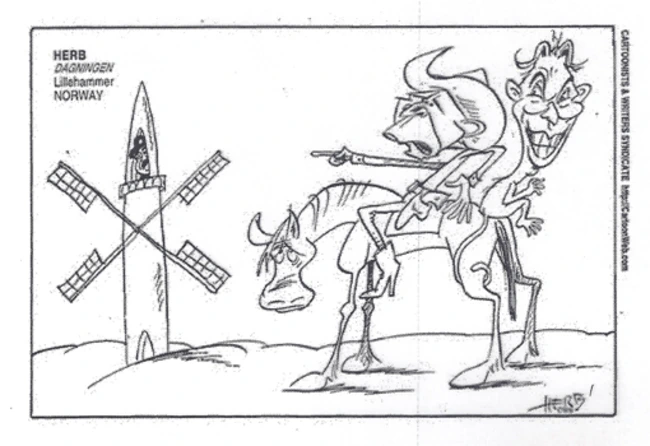
They did get a genuine laugh out of Herbjørn Skogstad‘s later take, one of the few actually funny cartoons in the presentation. But humorous as it is, Herb makes the serious point that Bush was tilting at a windmill, and that Tony Blair was tagging along as his comical sidekick.
It wasn’t necessary to agree with Skogstad to recognize how a strong opinion could include a sharply pointed dose of sarcasm.
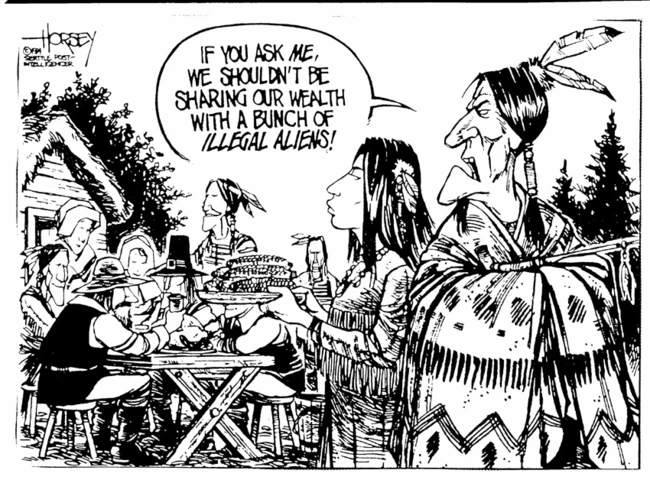
David Horsey‘s Thanksgiving cartoon got a hearty laugh — and often a round of applause — from the kids, but, again, it was dark laughter on a serious topic, made even darker by the fact that the story of the First Thanksgiving is largely mythological, a pleasant story we tell about ourselves that perhaps we’re not really prepared to live up to.
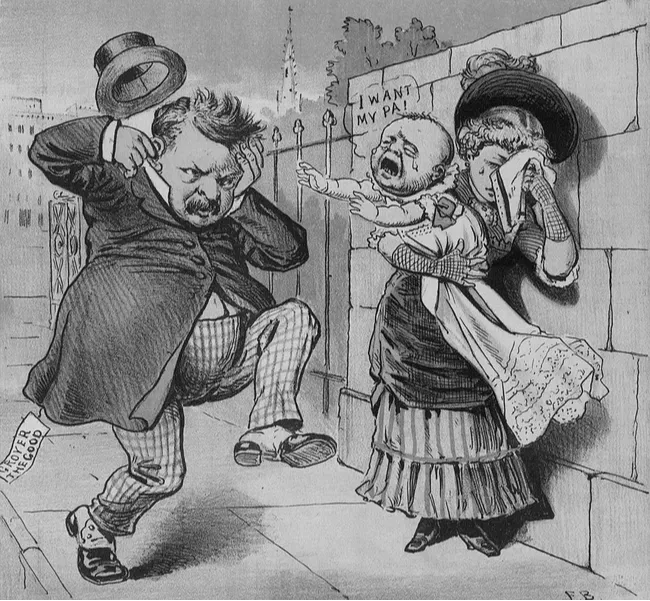
I suppose I’d get in trouble today for discussing an unplanned pregnancy with 16- to 18-year-olds, but my posse wasn’t shaken by the story of Grover Cleveland being accused of fathering a child with a woman not his wife, and while the details of the story are unpleasant, they understood it being exploited as a political attack and how Cleveland blunted the accusation by not hiding from it.
You don’t need to go back to the 19th Century to grasp a lesson from the story, though it was hardly the one Frank Beard had intended with his cartoon.
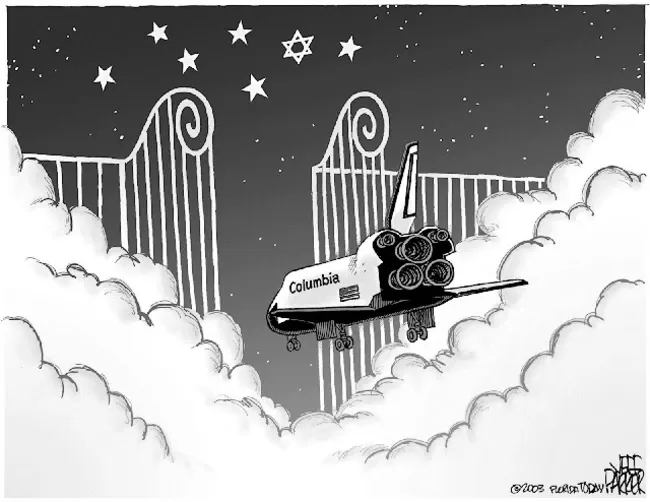
And while the Scream had worked for Schrank, we discussed a Pearly Gates tribute to the crew of the Columbia that fell short, both as a sentimental cliché and also because, while Jeff Parker inserted a Star of David in tribute to Israeli crewmember Ilan Ramon (and Pearly Gates aren’t part of Jewish theology), there was also a Hindu aboard, Kalpana Chawla, whose religion and ethnicity went unmentioned.
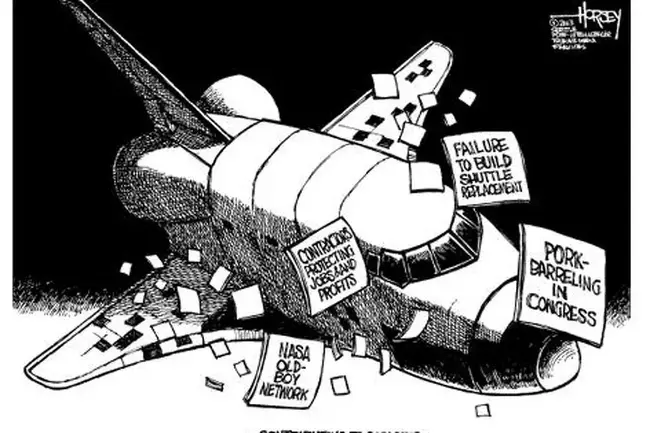
A better response, I suggested, came from David Horsey, whose local Seattle audience contained enough aerospace workers that “What happened?” was a more pressing issue than how sad the disaster was.
The kids grasped the value and need for an emotional response to the disaster, which they certainly remembered and had felt, but they also understood the more serious issues that Horsey’s cartoon raised.
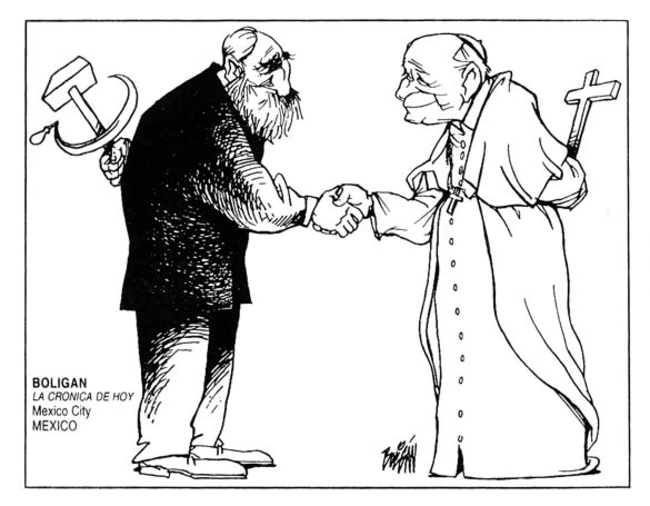
However, I couldn’t always count on them understanding everything I showed them, and this Boligan cartoon of Pope John Paul II’s 1998 visit to Cuba fell flat because, while they recognized both men immediately and certainly recognized the crucifix the Pope was polite enough not to flourish, they didn’t know what that thing was that Castro was hiding.
Ah well. One of the keys to teaching is to remember whose world you’re visiting and adjust your expectations accordingly.
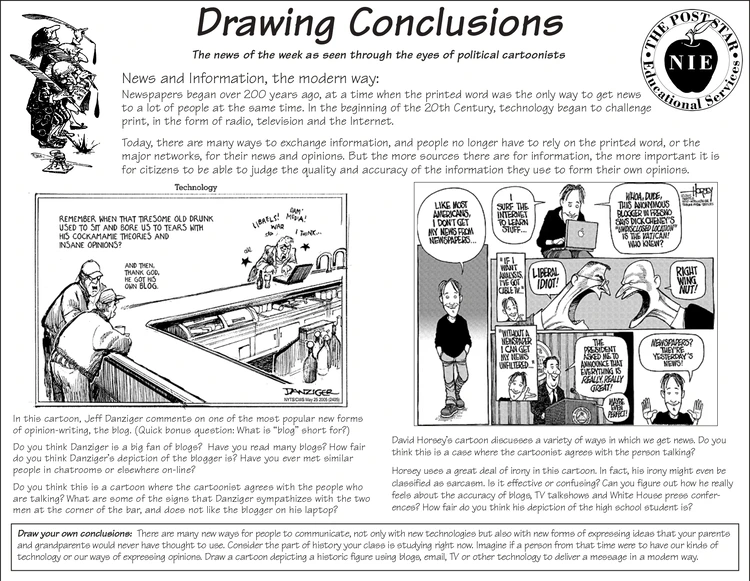
But I kept plugging away, and every week my newspaper featured what CSotD readers would recognize as a “Juxtaposition of the Day,” complete with explanations and a prompt to encourage kids to try a little cartooning of their own.
Now go read what Margaret Sullivan had to say, and I’ll see you back here tomorrow.
Mike Peterson has posted his "Comic Strip of the Day" column every day since 2010. His opinions are his own, but we welcome comments either agreeing or in opposition.


Comments 14
Comments are closed.