“Textbooks Are Not a Place For Cartoons”
Skip to comments
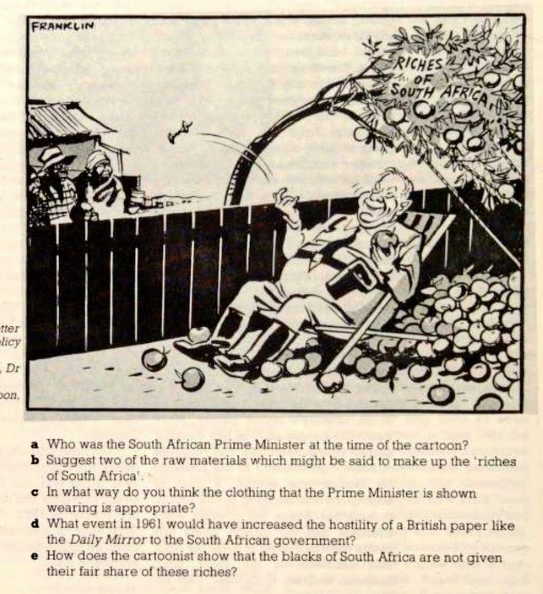
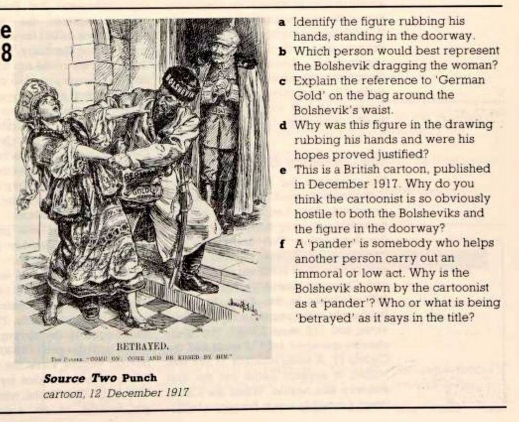
Cartoons in school textbooks can stimulate critical thinking about historical and current events.
In India the question of cartoons in textbooks being proper has reached that country’s Supreme Court.
From Krishnadas Rajagopal at The Hindu:
The Supreme Court on Friday (May 22, 2026) asked a former apex court judge-led committee to review cartoons published in National Council for Educational Research and Training (NCERT) textbooks after Solicitor General Tushar Mehta pointed out that “textbook is not a space where you use cartoons”.
Appearing before a three-judge Bench headed by Chief Justice of India Surya Kant, Mr. Mehta, representing the Union Government, raised an objection about cartoons he happened to come across in “some” NCERT textbooks.
Mr. Mehta’s objection raised the point whether children should be exposed to satire or lampoon through their study books.
Aman Namra for Counter Currents:
The textbook authors — including political scientists Suhas Palshikar and Yogendra Yadav — also describe the recurring child characters “Unni” and “Munni” as curious, talkative, slightly mischievous students who often ask bold questions, sometimes even more courageously than the textbook authors themselves.
In other words, questioning authority was not an accidental feature of these books. It was their declared educational philosophy.
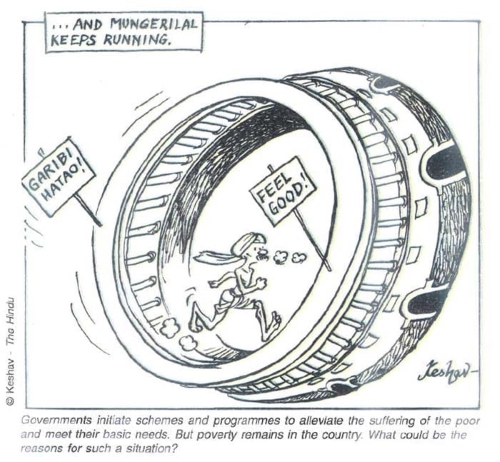
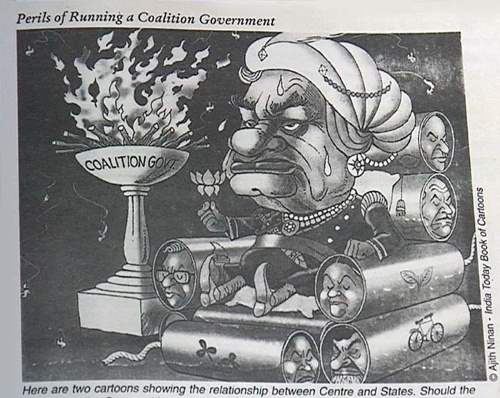
The cartoons themselves are used as tools for discussion. In the chapter Election and Representation, one famous cartoon depicts elections not as a celebration of democracy but as chaotic and conflict-ridden. The textbook directly asks students: “Is this good for democracy?”
The objective is not to insult democracy, but to make students critically examine how democratic processes function in reality.
This isn’t a new issue in India but it is making news that the controversy has reached the high courts.
Below a couple samples from a 2021 NDTV report.
Comments 2
Comments are closed.