CSotD: Finding fault, getting lost and having faith
Skip to comments

Judging from the flood of cartoons about the GOP's whining, it's just me and Matt Wuerker who recognize that the media hasn't exactly been faultless in this.
As I noted in the immediate aftermath of the CNBC-hosted debate, the rude incompetence of the moderators handed the candidates a weapon.
I've got little to add to what I said then: There are ways of posing tough questions such that the person is forced to either answer or refuse outright to answer.
Indulging in sarcasm and insults simply offers them a third option.
This doesn't mean being deferential: I worked with a guy whose tough questioning on the phone would sometimes bring the newsroom to a halt as we listened to him pin down a reluctant source.
He was a pit bull, but what made it work was that he never strayed off point.
He never offered them a chance to spin out of his grasp, and, though we only heard his half of the conversation, we could tell when they tried to deflect and change the topic.
A whiner would still whine about being questioned like that, but he'd be wrong, which is why it's such a shame that a network the size of CNBC couldn't come up with more professional moderators.
A shame compounded by the fact that — as demonstrated far too often since the debate — too many of us would rather circle the wagons than demand higher standards from our own profession.
"In vain I have looked for a single man capable of seeing his own faults
and bringing the charge home against himself." — Confucius
On a lighter note
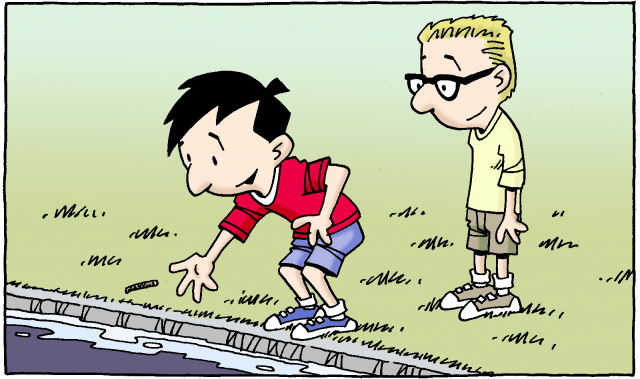
What I like most about Ed Stein's Sleeper Ave is how his reflections on growing up in the 50s and 60s go from Big Important Memories of things like the Civil Rights Movement to small moments like this one: Just the freedom of being let out to play with no larger command than to be home for supper.
I've looked back and tried to remember what constraints I was under at what ages, and it's not easy to remember much beyond being home for supper.
As a very small boy, there were geographic limits. In kindergarten and first grade, we still lived in the city and I had to stay on the block unless I was with my older brother or sister.
And when we moved to the country, I wasn't supposed to cross the highway or go farther either direction than such-and-such a road, but the fourth direction was into the woods, and that gave me 40 miles of unspoiled forest in which to wander before I hit another town.
We did have some basic principles to rely on, like not talking to strangers and not eating unfamiliar berries and always cutting away from yourself because we were allowed to have pocket knives. Well, not at six, but at eight or nine.
Simpler, more innocent times? Sure. I guess.
How about "less frantic parents"? "More connected communities"?
Yeah. That.
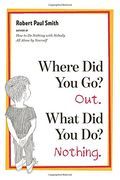 In 1957, Robert Paul Smith had a best seller with "Where did you go? Out. What did you do? Nothing." a memoir of childhood and the various games kids played a generation before ours.
I didn't read it until a few decades later, and it seemed a little remote, since it was city-based. We didn't have stoops off which to carom Spaldeens (whatever they were), and our evening games of Hide and Seek, Kick the Can and Spud took place on grass, not concrete, but at least we still got the neighborhood kids together after dinner, and I haven't seen a lot of that in recent years.
In 1991, I went to a three-day conference on children's issues at the Columbia School of Journalism, and one of the speakers was Richard Louv, who spoke about the lack of connection between parents and kids, and between kids and nature.
The book he had out then, Childhood's Future, remains in print, and he has others, touching on the fears of "stranger danger" and other matters that have created today's world of helicopter parents and parents charged with neglect for letting their kids go play on their own.
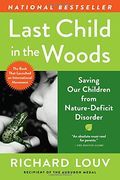 He has written more specifically about the need to get kids to connect with nature, which is interesting because, as he twins that need with the idea that a crumbling economy has forced parents to work more than is good for families, he echoes the concerns of Theodore Roosevelt more than a century ago.
When he visited the slums during his time in New York City, TR used to hand out copies of John Burroughs' nature books to the newsboys and street arabs, in hopes that they would be inspired to venture past the concrete, and he backed up that wish by becoming a fierce advocate of conservation as well as a force behind the Bronx Zoo and the American Museum of National History.
Well, we've managed to undo a lot of what TR accomplished, haven't we?
Be good and kind to others, or at least funny

Today's Sheldon is nice and I agree with the message whole-heartedly.
But I'm also a rude enough person that it reminded of the best candid-camera type stunt I've ever seen, on Surprise sur prise, a French Canadien show that delighted in some truly harsh and hilarious gags.
You don't need to understand French to appreciate this, but, if you are bilingual or nearly so, go ahead and skip to the video.
The gag is that they staged a fake Mass in a church full of co-conspirators, and have set up a popular Quebec actor to believe that he is hearing the voice of God telling him that his life is about to change, and urging him to befriend the odd chap in the pew next to him.
(Levasseur was apparently inspired, because he built a much larger career
doing this sort of thing to other people. A YouTube search will turn up
examples of his adventures on the other end of the schtick.)
Mike Peterson has posted his "Comic Strip of the Day" column every day since 2010. His opinions are his own, but we welcome comments either agreeing or in opposition.
Comments 2
Comments are closed.