CSotD: Half-Baked
Skip to comments
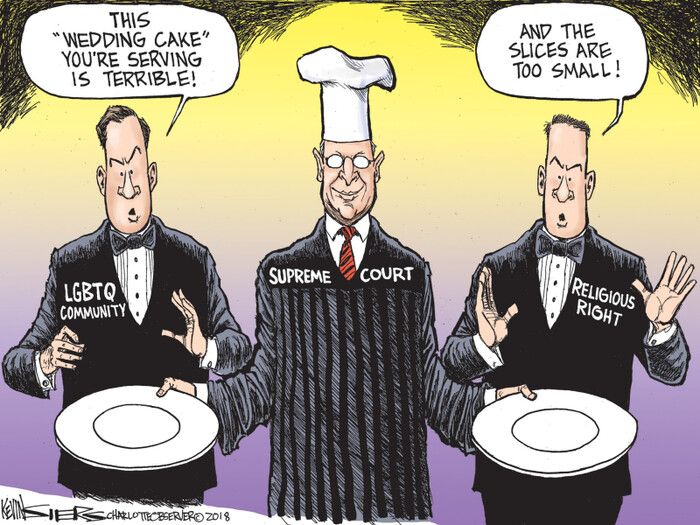
Kevin Siers may have done the unforgiveable and read the decision, written by Justice Kennedy, the concurrence by Justice Kagan, the less striking concurrence by Justice Gorsuch and the passionate dissent by Justices Ginsburg and Sotomayer, as well as Thomas's concurrence, which emphasizes the art-aspect.
Despite a flood of angry, pro-LGBTQ cartoons, this was not a decision in favor of denying same-sex couples their cake. It was a decision in favor of allowing people their day in court, or, in this case, in front of a board.
If you don't want to wade through all the above, here is an analysis from Scotusblog.
And here's my own Readers' Digest version:
As Siers puts it, nobody got anything and everybody should be disappointed.
That's not necessarily the sign of a good decision, but it's surely not the sign of a bad one.
As far as addressing the issue of discrimination for same-sex couples, this was a terrible case, because the decision, instead, addresses the right of people to have their religious views respected, if not upheld.
As Kennedy said, we would respect the right of a rabbi, minister or priest to decline to officiate a same-sex marriage on the grounds of their religious viewpoint.
We also acknowledge the right of same-sex couples to be treated the same as heterosexual couples in most transactions.
The question is where genuine religious scruples prompt unacceptable discrimination, but we never got there.
The case was somewhat muddied by the fact that this is a custom cakemaker and the couple did not simply pick Cake #B-82 out of a catalog. It was less like hiring a standard wedding photographer and more like commissioning a portrait painter.
But that factor barely came into it, because the hearing before the Colorado Civil Rights Commission included statements that made it clear the baker was not having his religious views respected (Ginsburg's dissent includes the actual language).
By contrast, the commission had upheld the right of three bakers to decline to make cakes decorated with anti-gay marriage messages for another customer, which both suggests that moral scruples can enter into things after all, and, perhaps, that custom cakes are a form of artistic expression and not simply baked goods.
In this case, the baker had a clear track record in regards to his religious scruples: Besides not doing cakes for same-sex weddings, he declined to bake cakes for Halloween or cakes that contained alcohol, neither of which were "discriminatory," both of which were part of his conservative Christian beliefs.
So the decision came down to his right to be heard, not his right to discriminate.
If you read the decision, concurrences and even the dissent, you'll see that it never quite got to the cake, and it seems extremely likely that, if someone would bring them a cleaner but similar case, they'd rule in favor of the couple and against the baker.
The other thing that's clear is that everyone is going to take from this whatever they want to hear and that the actual legal point will be lost in the shouting.
This one was a mess that, as Siers suggests, didn't give either side what they wanted.
But maybe a cleaner case would never have gotten to the Supreme Court.
That could be a good thing.
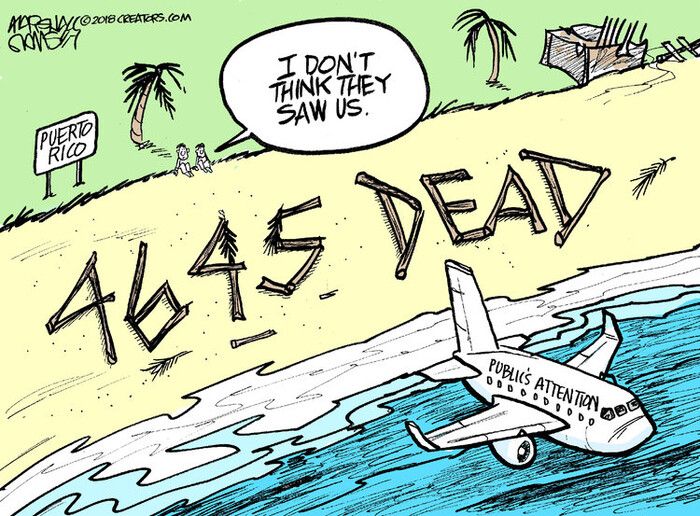
And while we're on the topic of cartoonists doing their homework and finding the point, I like Marshall Ramsey's commentary on the revised fatality figures for Hurricane Maria and Puerto Rico.
In this case, 4,645 is a little squishy, but it's plain that more that 64 people died, and, if a figure closer to 1,000 is accurate, it's still shameful that this tragedy has passed all but unnoticed.
Several cartoonists have depicted Trump with some reference to the paper towels he tossed out on his photo-op visit to the island, but I think Ramsey is more on-target with the accusation that we've moved on, if we cared a whole lot in the first place.
As leader of the nation, it was Trump's job to care, and to be intrigued and made curious by, rather than picking a fight with, the mayor of San Juan who tried to get him to pay attention.
But the moment has passed. Whether the tragedy was buried because our president is a clever puppetmaster or an incurious nitwit really doesn't matter.
Though when Bush failed to rise to the moment during Katrina, it blew up against him because people were watching reports from the scene and had a sense of what was going on in New Orleans.
The press needs to accept a portion of the blame for covering the difficulty of coverage rather than burrowing through those barriers.
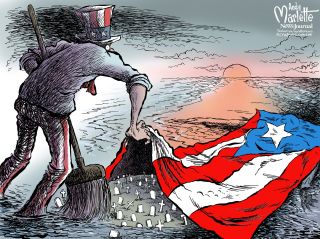 Andy Marlette covers the bottom line: There are any number of people, in the White House, in the press, under the Capitol dome, who should have given this tragedy a more prominent place in the national consciousness.
And he may get to revisit the topic, since a very large number of American citizens displaced by the disaster have landed in his home state of Florida and will certainly still be there in November, if not in 2020.
RFK Remembered
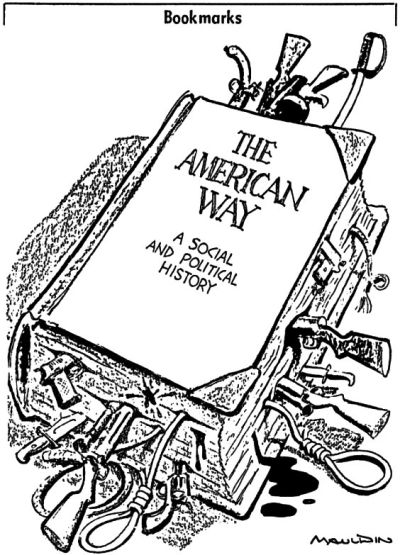
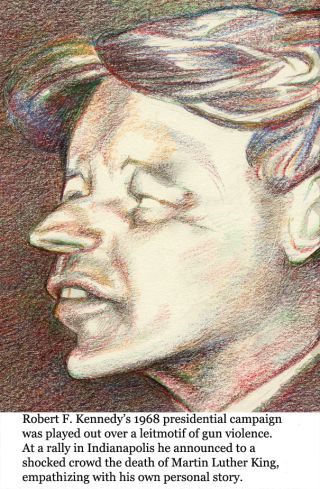 This would have been a good day for me to go into the archives and revisit the death of Bobby Kennedy on the 50th anniversary of his assassination, but Paul Berge got there first and did a good job of rounding up the contemporaneous commentary.
And Steve Brodner has a beautiful piece at LA Magazine remembering the tragic moment and the unfulfilled promise.
I never believed Gene McCarthy would make it, but it sure looked like Bobby was poised to raise us above the morass of 1968. In fact, with his nomination seeming likely, the organizers of the demonstrations at the Democratic Convention began to discuss calling it off.
In the words of Abbie Hoffman, "Then Sirhan Sirhan stepped up and it was a whole new ball game."
It surely was.
Mike Peterson has posted his "Comic Strip of the Day" column every day since 2010. His opinions are his own, but we welcome comments either agreeing or in opposition.
Comments 7
Comments are closed.