Charlie Hebdo Fires Back at Swiss Complaint With Cartoon Evoking 2015 Attack (Updated)
Skip to comments
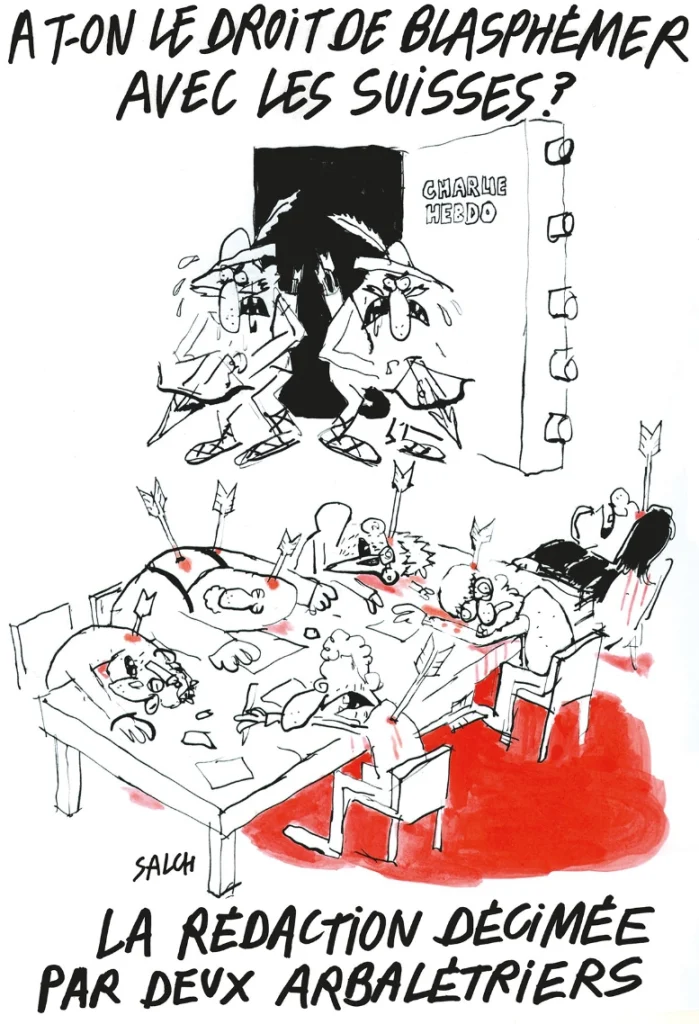
Yesterday, as news broke that a Swiss couple had filed a criminal complaint against the French satirical newspaper Charlie Hebdo over a cartoon that mocked the deaths and burn victims from the New Year’s Eve Crans-Montana ski resort fire, the no-holds-barred paper fired back with another “drawing of the day” by Éric Salch. The cartoon asks the question “Do we have the right to blaspheme with the Swiss?” and ends with the caption, “The editorial staff decimated by two crossbowmen.” The image depicts two Swiss William Tell characters standing in a breached Charlie Hebdo office door overlooking a bloody massacre of staffers. The scene may intentionally evoke the Charlie Hebdo attack carried out by two gunmen in 2015.
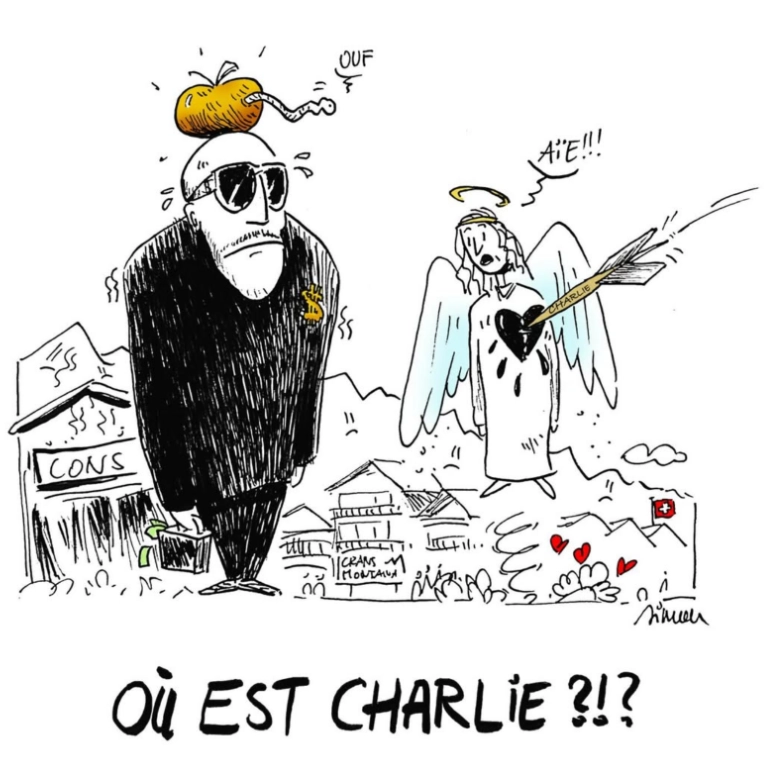
On a related note, the initial controversial Salch cartoon prompted a response by Swiss cartoonist Simon Charrière who criticized Charlie Hebdo for attacking the victims and not the owner who allegedly neglected maintenance of the bar where the Crans-Montana fire took place. The cartoon was posted on Simon’s Instagram account with a description: “When Charlie misses the wrong target 🎯”
The cartoon below is captioned: “WHERE IS CHARLIE?!?”
What is Charlie Hebdo’s legal exposure?
JSS (a French company that assists businesses file legal paperwork) has posted an interview with Christophe Bigot, attorney specializing in information and media law regarding the legal exposure of the cartoon at the heart of the Swiss Criminal Complaint.
Quite frankly, I do not see what serious legal basis in French law could be used effectively. Spontaneously, we think of the attack on dignity, but after a few years of hesitation, the Plenary Assembly of the Court of Cassation clarified very clearly in 2019 then in 2023, by two concurring decisions, that the attack on dignity could not in itself generate legal proceedings.
However, to act, you need a legal basis. The pain of the families is not enough, as respectable as it may be, and the judge cannot create from scratch an incrimination aimed at limiting freedom of expression. It is a basic principle which proceeds both from article 11 of the Declaration of the Rights of Man and of the Citizen, which has constitutional value, and from article 10 of the European Convention on Human Rights.

Comments 1
Comments are closed.