CSotD: Scanning the Cartoon Horizon
Skip to comments
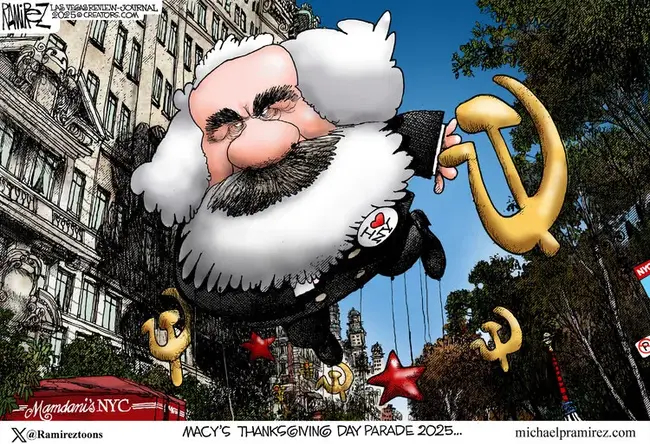
For those keeping track, Mamdani won’t be mayor of NYC for another month, so it’s a little early to be panicking over what he might do if he becomes the first candidate in recorded history to accomplish everything he promised.
Though I say that as someone who lives in a small (14,300) city with free public transportation in a state where liquor stores are very profitably run by the government. If the commies are coming, NYC might collapse into similar misery.
As I’ve said before, when I was in elementary school some Birchers warned us that, if we didn’t fight the Soviets, we’d end up in a society where we were spied on, stopped in the street, and ordered to show our papers.
We didn’t, and here we are.
Anyway, here’s my challenge: If someone starts prattling on about communists, ask them to quote something from Das Kapital. Or ask them to explain Dialectical Materialism, which we covered in 10th grade.
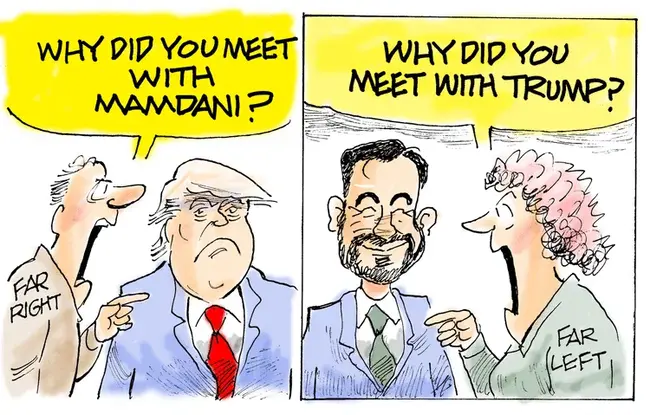
We wouldn’t want one friendly meeting to destroy our efforts to divide the nation. I can’t explain why Dear Leader and Mandami got along so well, but I had shrugged it off because it seemed like two New Yorkers having a sociable moment. I figure it will dissolve once some actual policies emerge.
There was some astonishment, and some criticism. But Summers uses a handy cheat to whip it up well past its actual impact, because if you go far enough to the left or far enough to the right, you’ll find some alarming lunatics.
Giving them ink is giving them credibility.
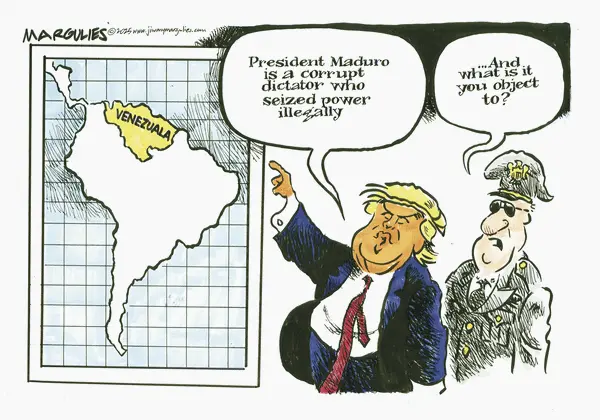
Dear Leader is a genius at steering the conversation where he wants it to go, though, as Margulies suggests, he might want to avoid dwelling on coups and election manipulation claims lest people start making comparisons. His criticism of Bolsonaro’s sentencing for trying to lead a coup in Brazil does bring the focus back on the heroic tourists of January 6.
He does well to hide it behind deep concern for soybeans and American security and suchlike. A large part of Steve Bannon’s “flood the zone” strategy involves bringing outrages to the fore with such speed that, by the time we get our feet under us about one, that moment’s passed and we’re confronted with the next.
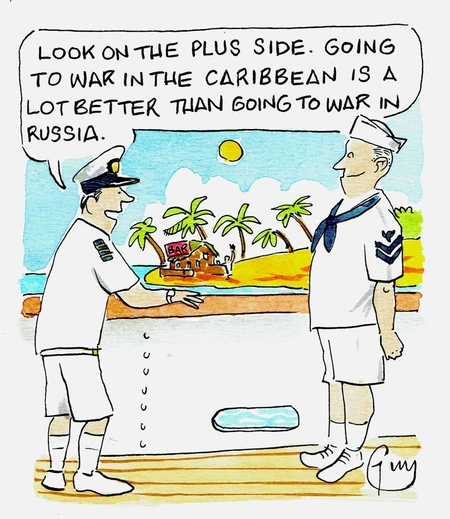
So if we focus on “narcoterrorists” — which I think is a made-up word — who happen to come from the country with the world’s largest petroleum reserves, everybody can ignore our canoodling with Putin and his gang.
It helps that nobody like Madura, but, then again, nobody likes Putin, either, and we’re running out of people who like Trump.
When in doubt, find a martyr. Do you remember Jessica Lynch? She became the center of attention after she was wounded in the Iraq invasion, captured by the evil enemy and had to be rescued by our heroes.
Except it turned out her wounds were tended to and she was well treated and the “rescue team” just had to escort her home, because, as she has since confirmed, the outrage and abuse were largely invented.
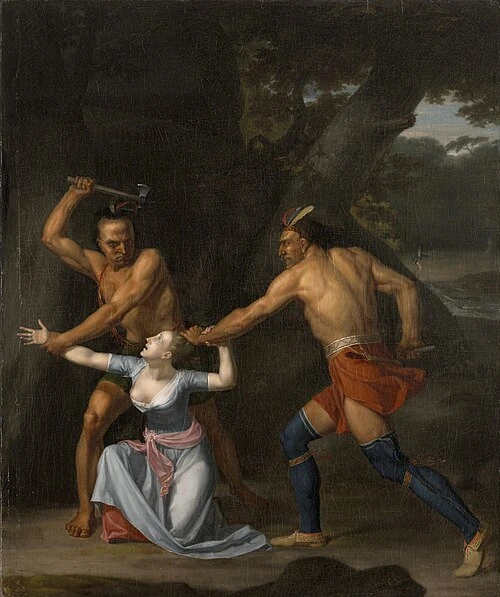
I was pleased, BTW, that Ken Burns’ Revolution cast a cynical eye on the story of Jane McCrea, whose death is an item of faith in Fort Edward, but is looked upon by historians as a dubious event exploited as propaganda by the Patriots, with much emphasis on her long, red hair and how she contrasted with her swarthy assailants.
I want to be clear: I have seen my firefighter son carried from a fire on a stretcher and I kept track of his naval career doing ship-boardings in the Gulf. I also knew his ship was lying off the coast of a hostile nation threatening chemical weaponry and that they faced frequent threats from Iran’s Revolutionary Guard.
I know what it’s like to live in anticipation of that phone call, and, on a personal level, my heart goes out to that Guardsman’s family.

But I wish we’d also focused our pity on little Hind Rajab, trapped in a car after the rest of her family had been killed by shells, calling out for help on her phone until a final shell ended her ordeal.
Pardon me if I get a little cynical when some deaths appear more useful — rather than more tragic — than others.
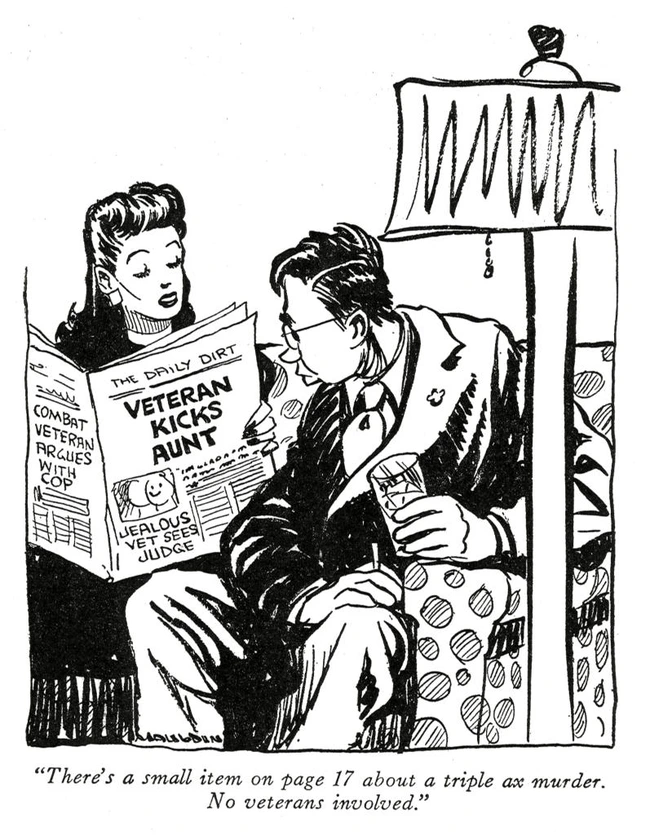
And it couldn’t happen without a knee-jerk media. Mauldin drew this 1947 cartoon to protest the focus on returning veterans, which he could have repeated 25 years later when the latest coverage fad was about the “ticking time bombs” coming home from Vietnam.
It even applied to dogs: Any pitbull bite made Page One and the wire services, while other breeds could rip and tear in blissful anonymity.
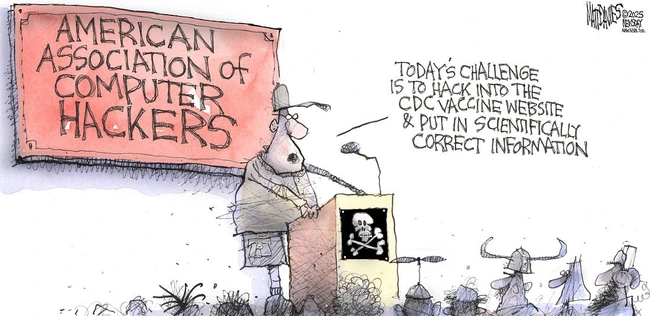
The White House is doing more than planting favorable stories. They’ve launched a web page to attack media outlets that refuse to tell the story they want told, and, as Davies notes, they’ve disabled or rewritten government web pages that failed to click their heels and follow the party line.
Good writers and ethical reporters are launching Substacks and other independent outlets, much as the Soviet underground put out mimeographed samizdat to evade Kremlin spin. But they’re vulnerable to a government that can pull the Internet plug. We need to stand up while we still can.
It’s important to remember that, in our Revolution, printing presses were self-contained and relatively affordable. When the British hit Plattsburgh in the War of 1812, they smashed up the Plattsburgh Republican’s handset plates.
The pages were reset and the paper published on deadline. Go thou and do likewise.
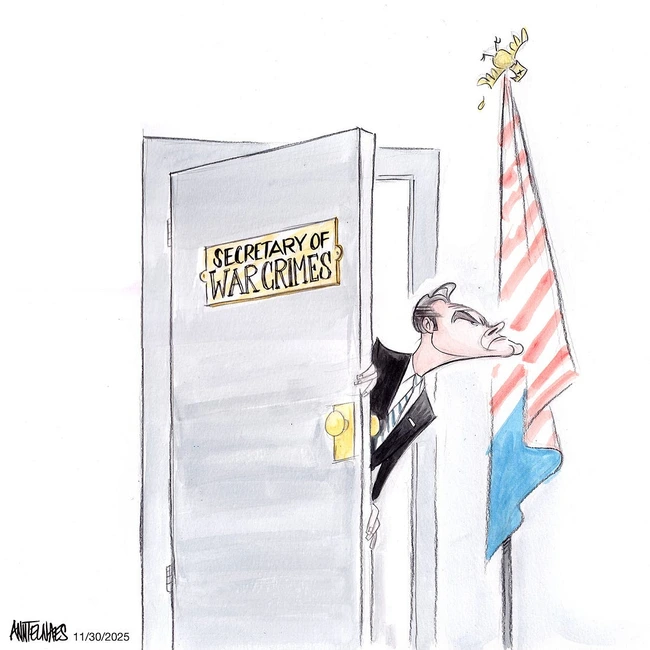
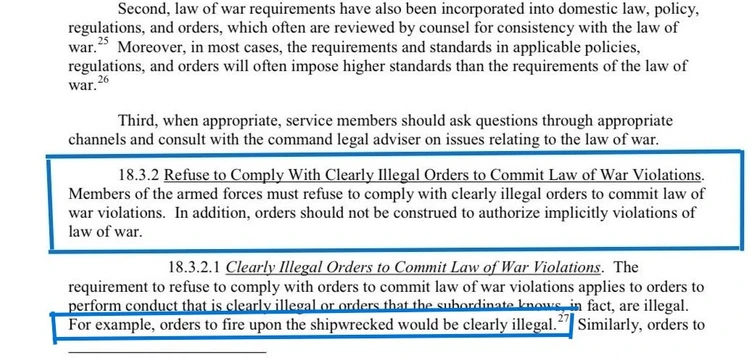
Fortunately, I don’t think even the most compliant loyalist media will be able to ignore, downplay or justify the latest revelations about war crimes on the high seas. The attempt to attack Mark Kelly was already falling short when Hegseth’s propensity for illegal orders began to surface.
It’s hard to misinterpret the plain language of the DOD’s own manual on law of war, emphasized by Joyce Vance in a sharp takedown:
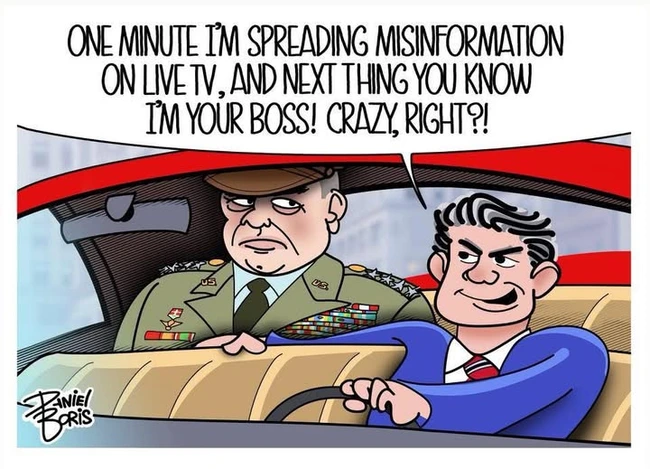
Meanwhile, Boris suggests, love of the new Secretary of Pomade is likely far from universal.
Maybe that arc of the moral universe is commencing to bend a little.

Comments 14
Comments are closed.