CSotD: We’ve Always Been at War with Midasia
Skip to comments
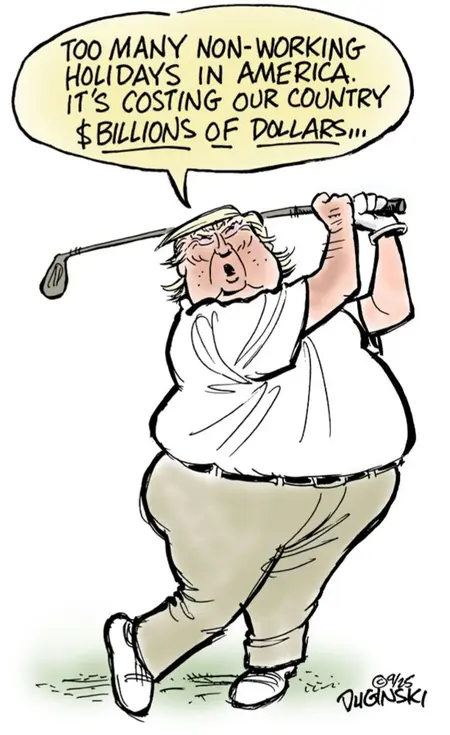
First, a look at a pair of Labor Day cartoons that didn’t make deadline yesterday, and, yes, he really has complained about people taking Juneteenth and other federal holidays off.
Granted, we don’t really know if he played golf yesterday, because the photos they posted to show he isn’t dead were from a game a week earlier.
This Trump golf tracking site indicates that he has played golf 55 out of his first 226 days in office, or nearly a quarter of his current incumbency, but also indicates that they can’t monitor Dear Leader’s goofing off anymore because the White House has quit posting his schedule.
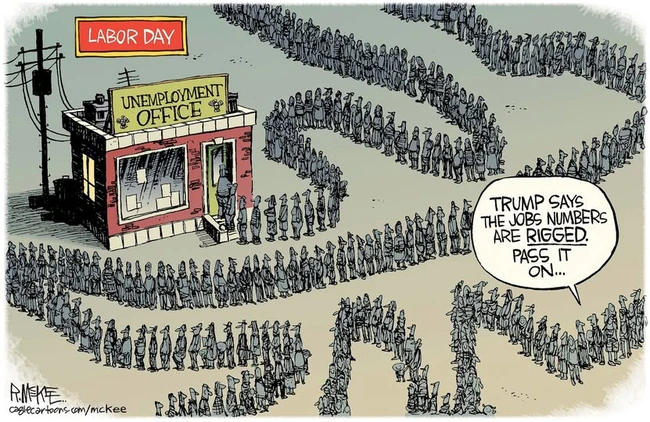
McKee suggests that the truth about working Americans is unknowable, not because it passeth all understanding but because we’re on the verge of only getting the facts the Ministry of Truth wants us to have.
I don’t think unemployment is the size problem suggested in this cartoon, but, on the other hand, I think it’s a problem to live in a country with so few non-working holidays, run by a guy who shows up late, leaves early and takes all the time for golf he promised he never would.
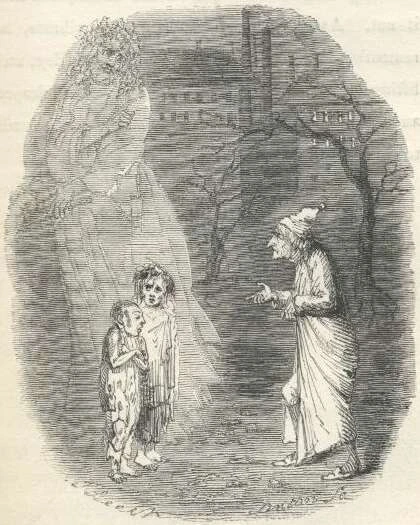
At least Ebenezer Scrooge, who only reluctantly gave his clerk Christmas off and who wished the poor would die and reduce the surplus population, had the decency to work holidays himself.
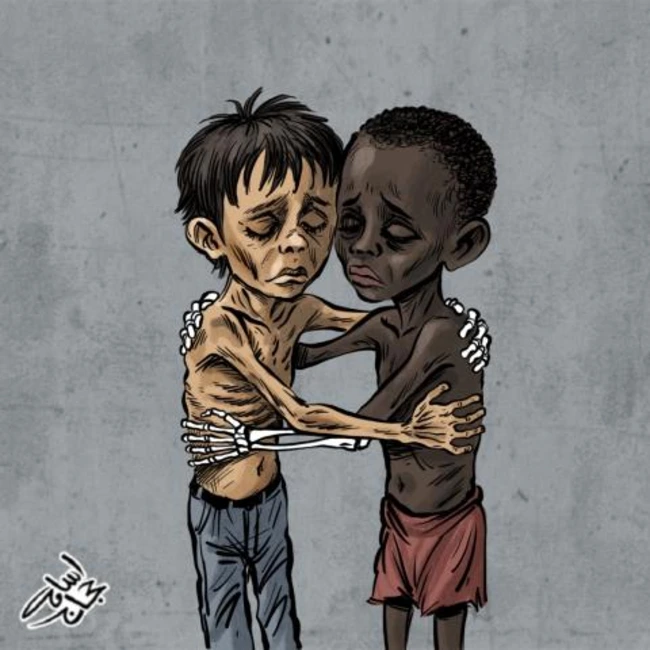
This cartoon of a Gazan child and a Sudanese child is about Want, the Ignorance being that of people who turn their heads and pretend that they just couldn’t see.
And act as if they’ve never read 1 John 4:20:
If a man say, I love God, and hateth his brother, he is a liar: for he that loveth not his brother whom he hath seen, how can he love God whom he hath not seen?
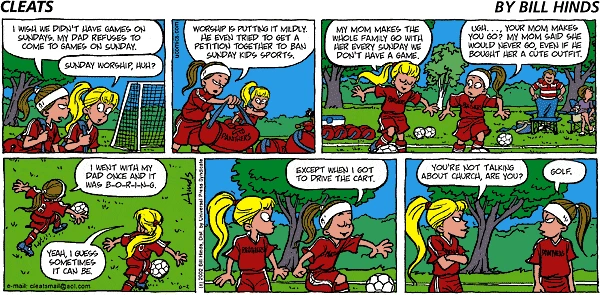
Cleats dealt with this deliberate avoidance back in 2002:
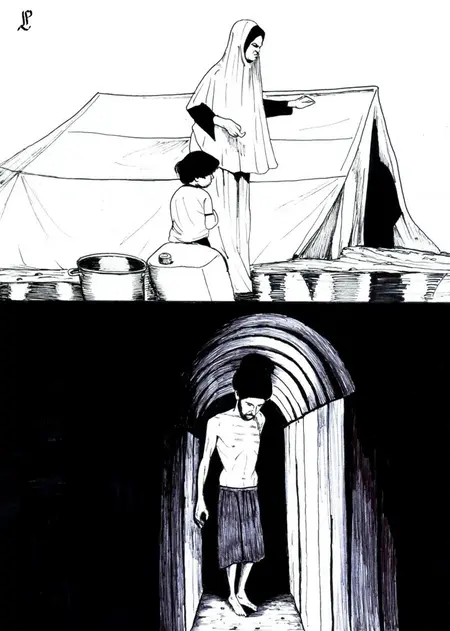
Lombardi notes the suffering on both sides, but we’re well past the balancing point. Neither set of victims have been combatants, but the ancient text, “an eye for an eye,” which is found both in and out of the Book, has long since been exceeded, the law being a demand for proportionality to avoid endless vendettas.
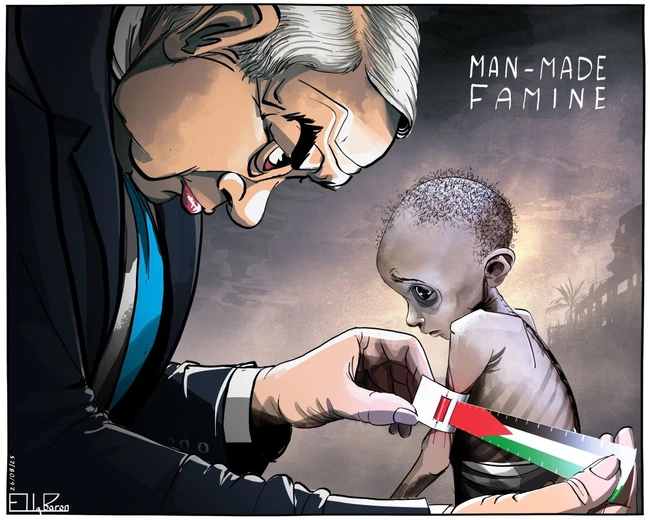
Nowhere is it written “50 eyes for an eye,” and while the whole world is watching, only in a very few countries do people deny the reprisals that have been unfolding, particularly since elements in Netanyahu’s cabinet are openly calling for the ethnic cleansing of Gaza and Trump has openly speculated on the resort he plans to build, once the current occupants have been removed.
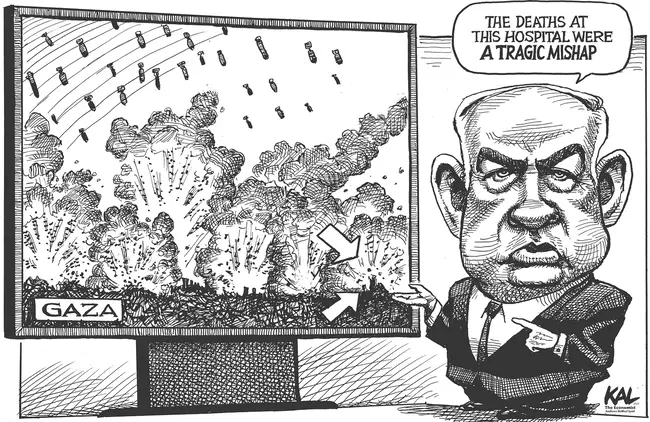
The latest killings were what is called a “double tap,” in which a first explosion — a satchel charge for terrorists, a shelling by armies — is staged in order to attract a crowd of responders, at which point a second explosion — a car bomb for terrorists, a second shelling for armies — is aimed at the people drawn by the first: Health workers, press and desperate volunteers.
Sometimes, there’s even a third tap. Netanyahu called it “a tragic mishap,” though tragic mishaps are usually one-time events. “Three in a row” is a harder mishap to sell convincingly.
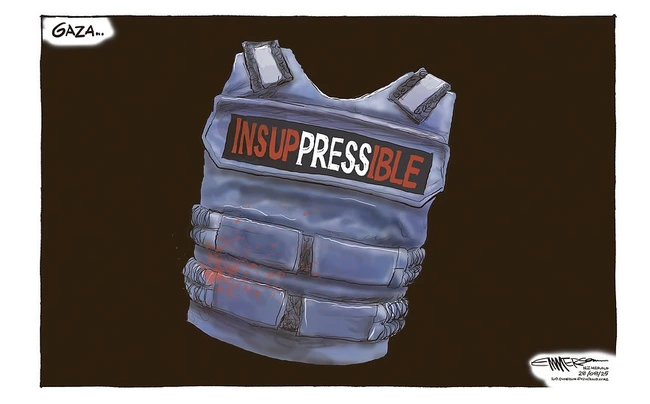
Perhaps the tragic part is that the press seems, in Emmerson’s word, irrepressible despite how often, and sometimes how deliberately, they are targeted for death.
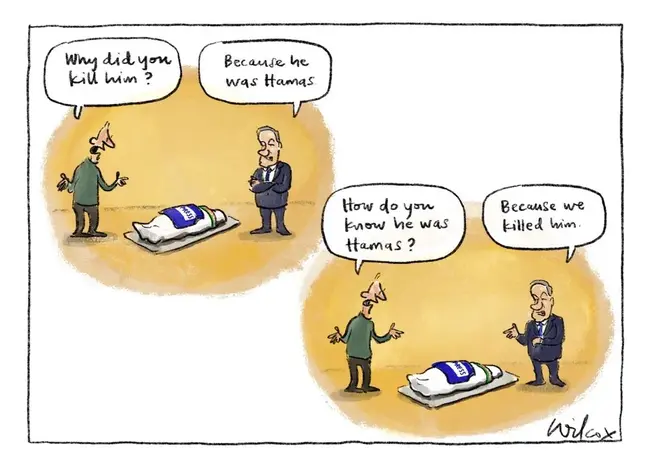
Wilcox addresses the Catch-22 reasoning with which Netanyahu has justified the killing of reporters when the action can’t be simply explained as tragic mishaps.
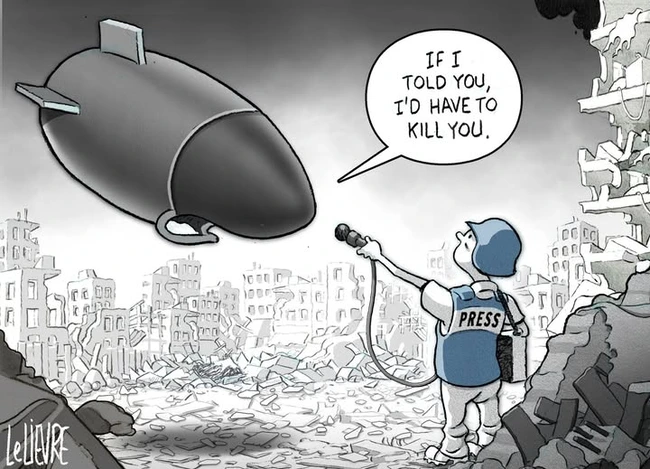
The Committee for Protection of Journalists is calling for an investigation of the hospital attack, but who is to investigate, since foreign reporters are only allowed into Gaza when accompanied by IDF forces and UN workers are condemned as terrorists?
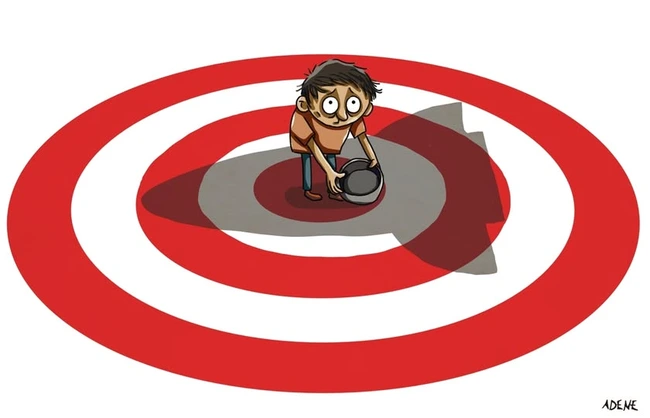
Meanwhile, there have been deaths at aid stations, which apparently stem from the theory that all Palestinians are members of Hamas; if not the children being killed, the parents who encouraged them to want food.
Or perhaps it’s part of the old belief that “nits become lice” that has been used by invaders for centuries to justify the deaths of children.
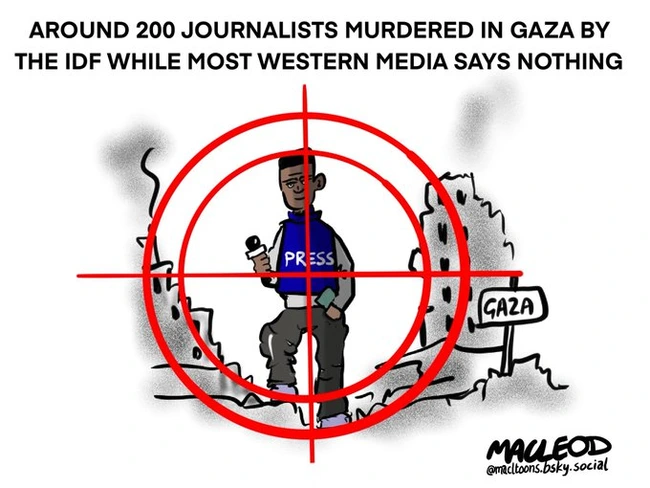
MacLeod uses the judgmental term “murdered” for the deaths in Palestine and Lebanon, which may be somewhat unfair, given that not all 197 deaths documented by CPJ were necessarily intentionally targeted.
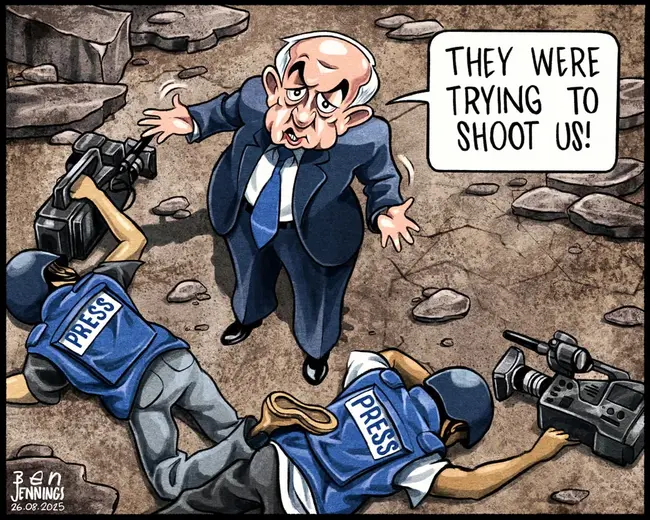
But, again, the government has admitted to targeting certain journalists, and deaths like that of Shireen Abu Akleh — which took place more than a year before the Hamas attack that spurred Israel’s invasion of Gaza — are hard to justify as anything but intentional.
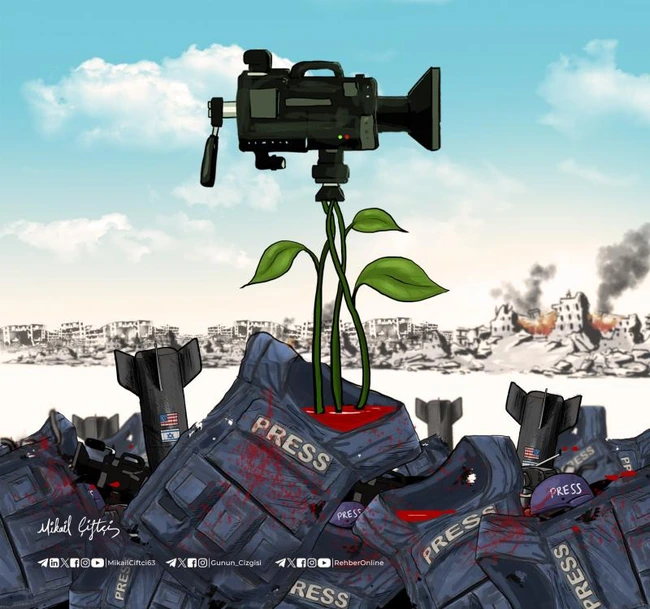
Turkish cartoonist Mikail Çiftçi offers an optimistic but historically probable view of this element in asymmetric warfare.
When President Biden visited Israel in 2023, he reminded the world
The vast majority of Palestinians are not Hamas. Hamas does not represent the Palestinian people.
Hamas came to power through a tight election followed by a purge of opposition Fatah party members. It’s a complex story, and America doesn’t come across as having clean hands, but the relevant factor at this point is that, in an asymmetric war, loyalties are not simple to explain or, certainly, simple to change.
In these confrontations — from Algeria through Vietnam through Ulster to Gaza — there is a significant majority of people who want to be left alone, but who also identify with “our boys.”
That is, even if they have no allegiance to the guerrilla group committing the insurrection, they don’t feel akin to the government forces attempting to put it down. Their loyalty is to neighbors and kinfolk, particularly if they experience the unfairness of community-wide suppression.
And so, in Çiftçi’s cartoon, the shattered camera sends up fresh shoots, determined to bloom again, while the people hope both Hamas and the IDF will go away and leave them alone.
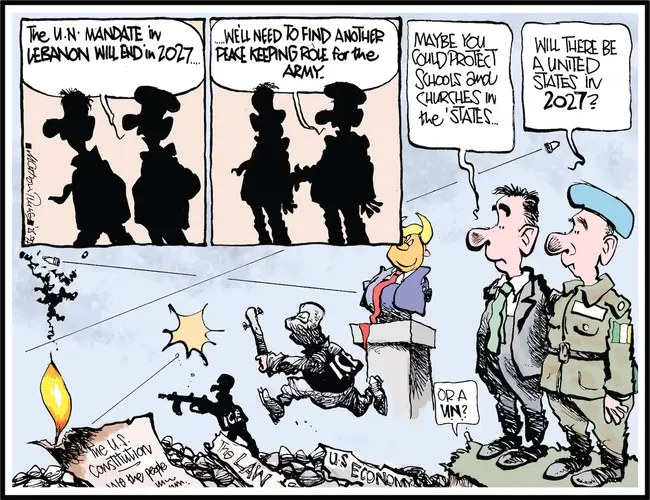
Don’t worry about the blue helmets, however. As Turner says, they’ll always be able to find work somewhere.


Comments 7
Comments are closed.