Cartooning Comic strips Controversies Editorial cartooning Illustration Opinion web comics

On Accepting Memes as Part of The Comics Culture

Internet Memes as Digital Successors to Comic Strips

It seems we have transitioned from the nostalgic charm of newspaper comics to the instantaneous gratification of internet memes. Michelle Ann Abate of The Ohio State University sees memes in a different, perhaps more scholarly light—they might just be the digital age’s answer to comics. In a recent article in INKS: The Journal of the Comics Studies Society spring issue, Abate suggests that memes, much like their comic strip forebears, employ a dance of visual and verbal elements that deliver the punchline.
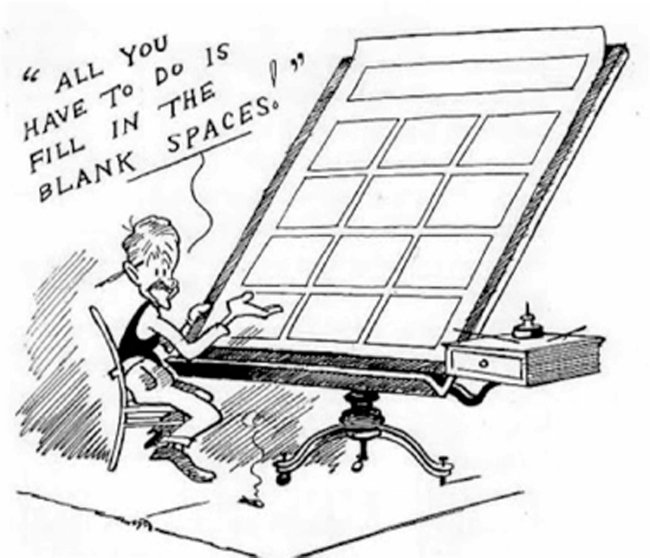
Fontaine Fox February 11, 1928, in The Saturday Evening Post from The Comics by Brian Walker

Amber Reed for hoodline reviews Michelle Ann Abate‘s article accepting memes as part of comics.

“Memes use a lot of the same visual and verbal elements that go into a comic, and those elements function in a very similar way. So yes, memes should absolutely be considered a type of comic,” Abate, a professor of literature for children and young adults, told the Ohio State University News.

Read Michelle Ann Abate’s “One Does Not Simply Overlook New Forms of Sequential Art.”

abstract:

This essay makes a case that memes are not just an important part of our lexicon in the twenty-first century; they are also an important type of digital comic. Memes engage in the complex interplay of visual and verbal elements that mirrors the mechanics of cartoon art. Additionally, in features ranging from the format that they take and the images that they appropriate to the scenarios that they present and the cognitive and creative ways in which they operate, memes look and function like comics. Ultimately, seeing memes as comics not only alters our perception of this pervasive phenomenon within popular culture during the twenty-first century; it also invites us to consider the elements of mimesis that have long been present in sequential art.

Michelle Ann Abate’s bona fides.
feature image created by Michelle Ann Abate

Previous Post
UK Cartoon Exhibits Include Multiple Pub Shows and Museum Debut
Next Post
CSotD: We Could Use Some Funny Stuff

Comments 9

  1. To me, this is so off the wall that trying to rebut it feels like arguing with someone who’s saying that the earth is flat.

    It’s not.

    Using the reasoning in their essay, a photocopy is a painting, a reaction video is a short film, and Tucker Carlson is a journalist.

    That’s my view, anyway.

  2. I say, memes can be comics-like, but I would qualify that to only accept memes that make logical sense. You can’t simply slap words on a photo and make them worth reading. There’s a partucular comics-news site that does that daily, and their memes are neither clever or funny, and are frequently impenetrable. If you need to expand the definition of “comics,” you need to have some standards.

  3. Those are good points, that photocopy machines can be used as art tools and memes can be comic-like.

  4. Just curious: how would you define the Batman Slaps Robin panel that pops up all over the place?

  5. One day 6-9 years ago, on the bus home from high school, probably during finals, an aquaintence in the grade below me wished to discourse on fire: the original meme.
    “What’s a meme?” I asked, not really interested in what he was selling.
    “You know, a meme.”
    “No, I don’t.”
    He, or somebody else then took out his phone and pulled up a meme.
    “This a cartoon,” I said.
    “No,” he said, “it’s a meme. Here’s another.”
    “This is a comic strip. Is a ‘meme’ a home-made comic strip? Gee, if anybody with a computer can make comics, what’ll we cartoonists do?”

    1. Reminds me of this thing they do on the British tabloids where they publish pictures of current events on their social media so the readers can make jokes in hopes their comments make it to the following day’s paper and get a cash prize as well.

  6. My view is that the Batman-slaps-Robin panel is a digital cross between graffiti/doodles like “Kilroy was here” and popular catchphrases and images that get copied with changes, like what eventually became Alfred E. Neuman, the happy face,“Hang in there, baby, “Keep on truckin’,” “My other car is a ….,” “…and all I got was this t-shirt,” etc. It’s human nature to take things, personalize them, and show them off.

  7. I’m of the opinion that Internet memes are like the real life equivalent to the Tamarian language from the Star Trek: The Next Generation episode “Darmok.” If you know the references, then Internet memes can be understood, meaningful, and possibly even funny. If you don’t know the references, then it’s just somebody randomly saying “Kadir beneath Mo Moteh” or “Unzak and Vhila as children?” or “Zima at Anzo” at you and expecting you to have the slightest clue what they’re talking about.

Comments are closed.

Search

Subscribe to our newsletter

Get a daily recap of the news posted each day.