CSotD: A Republic, If We Can Keep It
Skip to comments

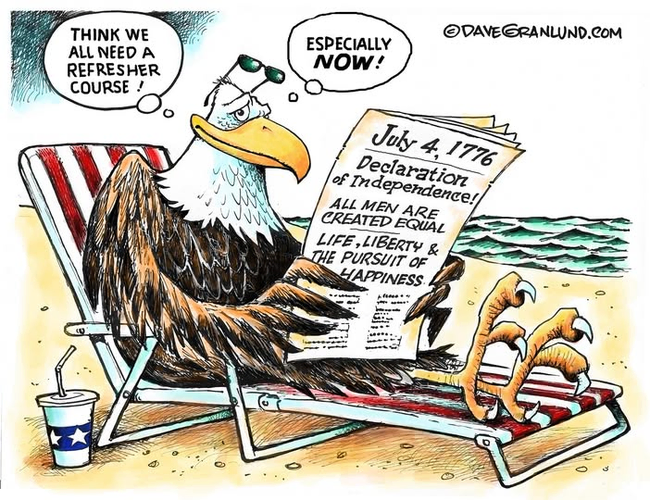
We sure do, and on both sides. Those who think we are in crisis need to settle down and come up with a plan. Running around screaming isn’t a plan, nor is hurling insults. Mass protests and voter registration drives are plans.
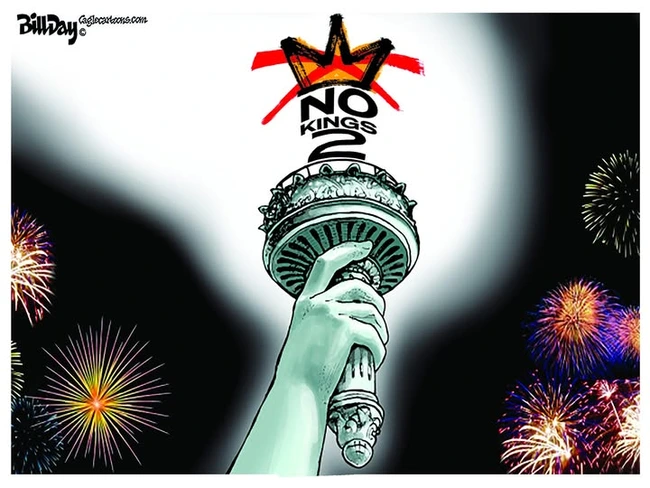
Reclaim the flag. Celebrate the intentions. If someone quotes Stephen Decatur’s “My country, right or wrong,” quote Senator Carl Schurz:
“My country, right or wrong; if right, to be kept right; and if wrong, to be set right.”
Even Frederick Douglass, in his thundering Fourth of July reminder of the evils of slavery, expressed admiration for the Founders and their intentions:
It does not often happen to a nation to raise, at one time, such a number of truly great men. The point from which I am compelled to view them is not, certainly the most favorable; and yet I cannot contemplate their great deeds with less than admiration. They were statesmen, patriots and heroes, and for the good they did, and the principles they contended for, I will unite with you to honor their memory.
But read the rest, because good intentions should always be questioned and pushed as close towards perfection as possible.
Douglass was as tall a giant as those who lived in 1776.

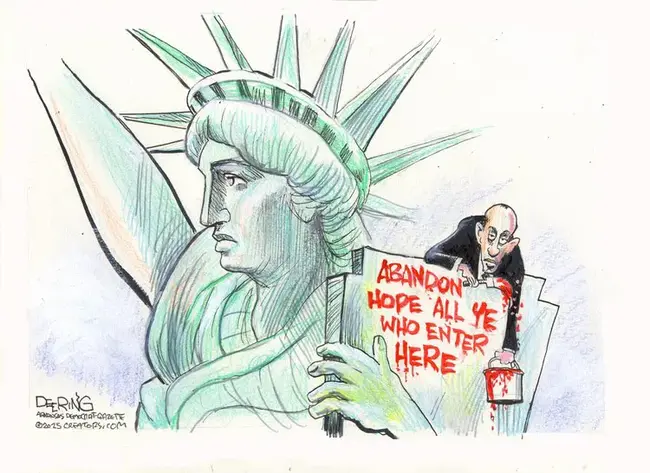
Deering quotes from a popular patriotic song, but he also references Martin Luther King Jr., who continued the work of Frederick Douglass to open eyes that could not see the realities that belied our stated intentions.
Deering specifically cites those behind bars, but now we get to Martin Niemöller’s famous “First they came …” statement, which today begins “First they came for the migrants …”
The list is already expanding, as Trump explores stripping immigrants of their citizenship so they, too, can be sent to prisons in which they will be subject to continual, brutal torture and told “Whoever enters here doesn’t leave.”
Skip down to Page 21 and find out what we are allowing to happen, bearing in mind that many of the deportees have proven to be legal residents of this country and have committed no crimes.
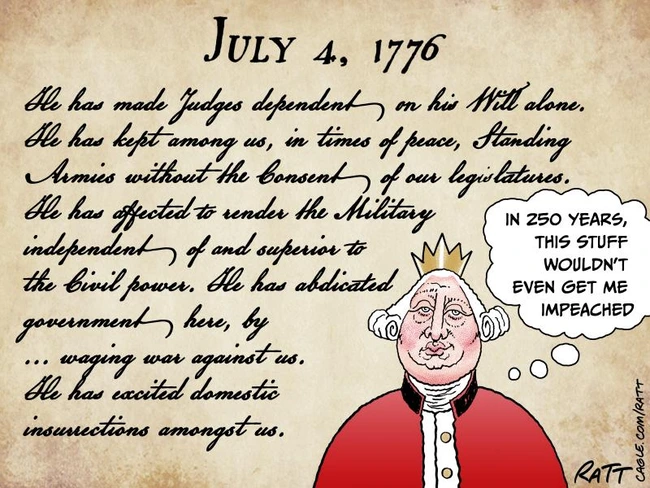
Ratt is not the only person to have pointed to the parallels between what our Founders rebelled against and what is currently happening in our country, and it does make you wonder if anyone will be listening at the various public gatherings today in which the Declaration will be read.
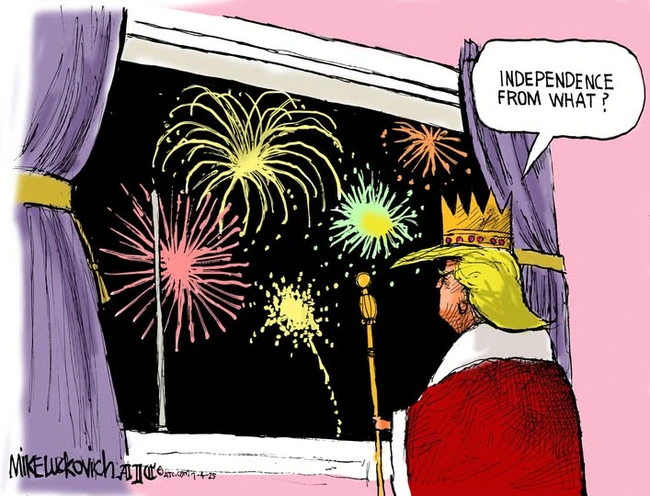
It’s entirely possible that not everyone understands the document, and it’s entirely probable that a fair number of them will hear it the way they hear the Sermon on the Mount: Sacred verbiage from a distant time and place, with no current, real-world relevance.
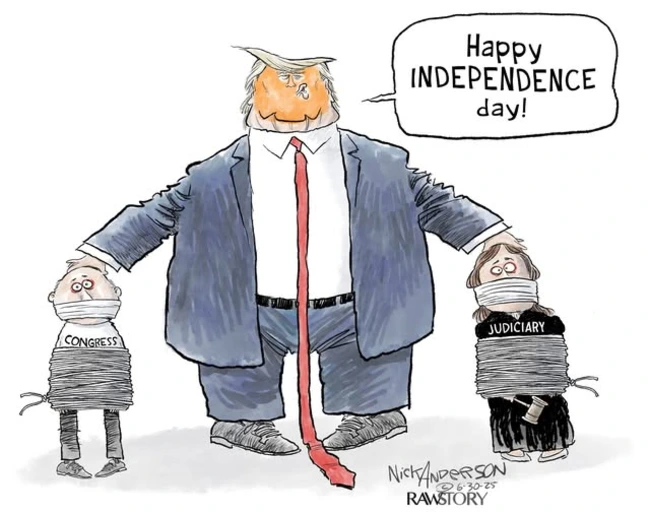
It can be hard to tell what’s done out of ignorance and what’s done out of malice, but it’s even harder to tell what difference that makes anyway.
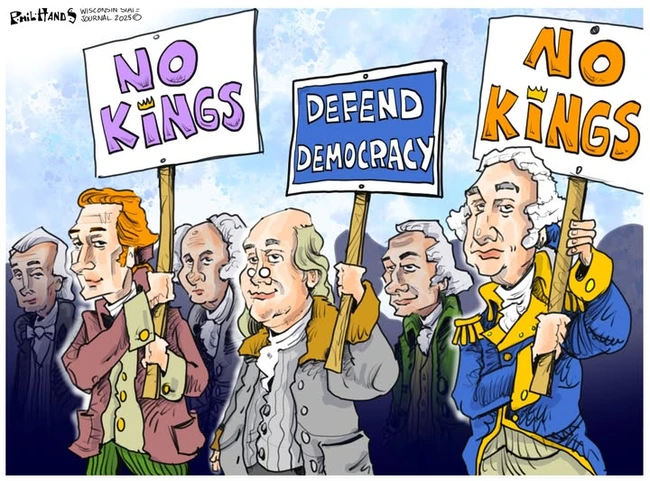
It doesn’t require genius to figure out the basic message in the Declaration, but that’s also true of the Sermon on the Mount.
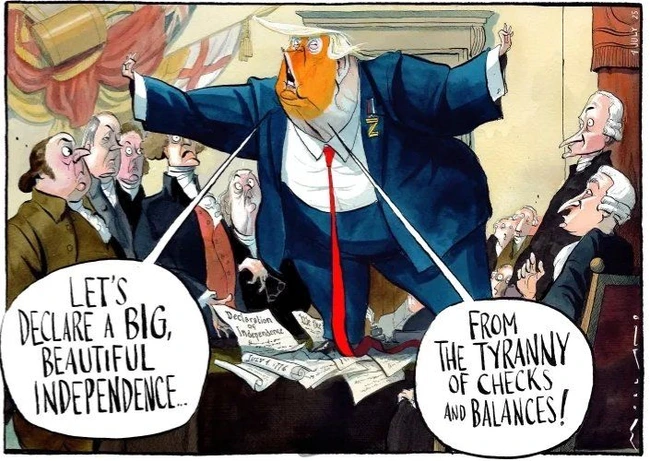
Fact is, some people get it and some people never will. As the Rock Man told Oblio, you see what you want to see and you hear what you want to hear.
Juxtaposition of the Day
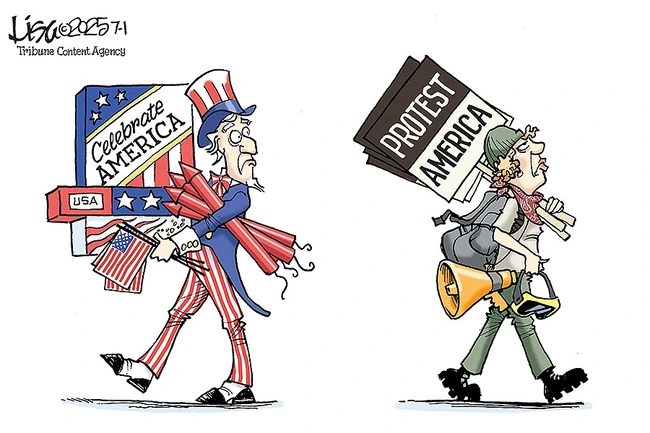
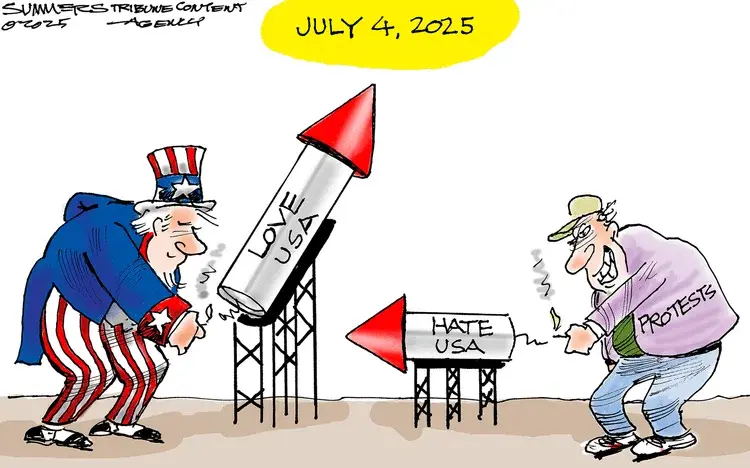
It seems ironic, even sacreligous, to celebrate a day in which criticism of the sovereign led to open revolt by declaring that those who criticize their nation surely hate it.
It only makes sense if you believe that the Founders were declaring not their demand for liberty and rights but, rather, their hatred of England and King George, but actually reading the document should reveal a protest declared more in sorrow than in hostility.
Anger, yes, but not hate.
But that makes no sense to those who live in a two-dimensional world, a binary, Manichean universe in which Good is pitted against Evil, with no shades of gray and no possibility of mixed emotions.
They interpret the Declaration of Independence and the Sermon of the Mount in a way that avoids accepting the plain black-and-white meaning of the texts.
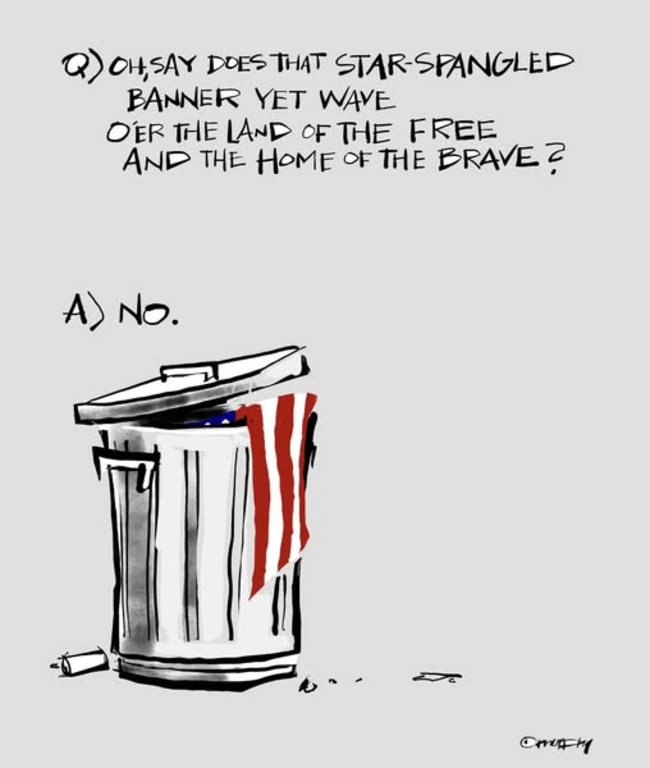
It’s equally Manichean, however, to declare that, because fascisti currently sit in the driver’s seat, that this is no longer a nation where the brave can preserve their freedom.
Franklin reportedly said that the Founders had invented “A republic, if you can keep it,” but the task then fell to Frederick Douglass, and Susan B. Anthony, and Martin Luther King Jr., to insist that the country live up to its own claims.
It’s not over until we all agree that it’s over.
As for the holiday itself …
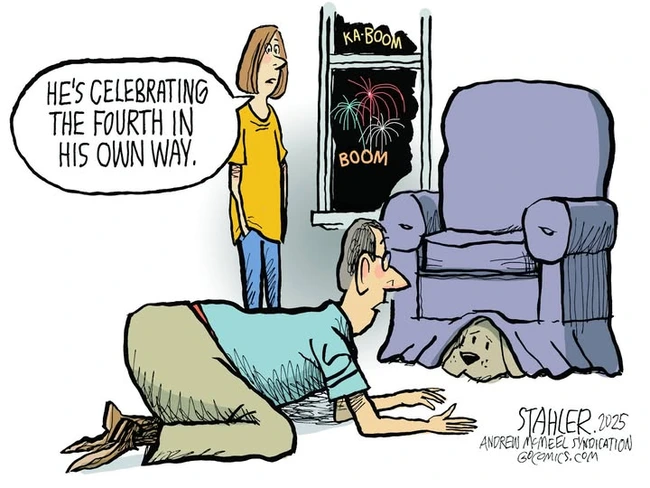
Most of the people I know in three dimensions have dogs. Some dogs are terrified by explosions, some are not. Of the dozen or so dogs I’ve had, one didn’t like them and one was genuinely afraid, while the others shrugged them off, generally with a look to me of “Do we care about this?” and an acceptance of my “No.”
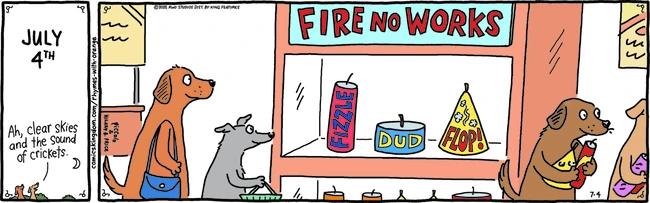
But there’s a distinction to be made between fireworks and firecrackers. The folks I know with sensitive dogs will either sit with them in the basement or take them for a ride out of town for the roughly 20 minutes of a municipal fireworks display. Similarly, people with an aversion to explosions can do that, or wear noise-cancelling headphones during the scheduled performances.
Which I would add are beautiful and a lot of fun for those who have no problem — and may even enjoy — loud noises and bright colors.
The problem, rather, is freelance knuckleheads who can’t read a clock or a calendar and thus shouldn’t be entrusted with firecrackers and amateur pyrotechnics. It’s nearly impossible to plan for random explosions that happen at odd hours on irrelevant days.
Smart communities put a lid on such things.
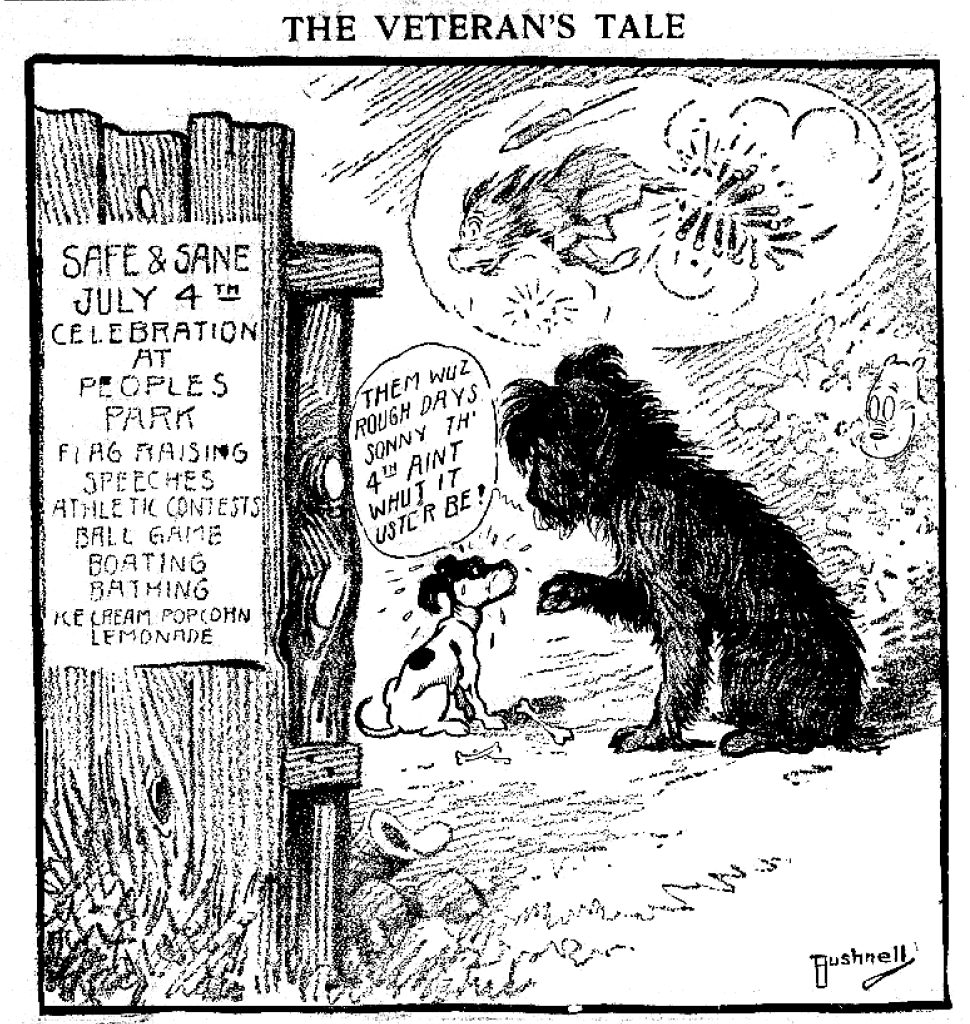
Thus was it ever. Bushnell’s 1914 cartoon was one of a number of entreaties for a “safe and sane” Fourth of July in which nobody got blowed up real good, including the dogs.
Maybe the old dog is right that the Fourth ain’t whut it uster be, but neither is the country.
However, it’s still a republic, if we can keep it.


Comments 15
Comments are closed.