Weekend Updates and a Whatnot
Skip to comments
Memes as Comics debate; Alden Global tries to snipe the Hearst buy of Dallas Morning News; and six large tablets for reading comics (i.e.: comic books) and one small tablet for not.
More about Michelle Ann Abate’s Memes as Comics position

It’s undeniable that the rise of the Internet had a profound impact on cartooning as a profession, giving cartoonists both new tools and a new publishing and/or distribution medium. Online culture also spawned the emergence of viral memes in the late 1990s. Michelle Ann Abate, an education professor at The Ohio State University, argues in a paper published in INKS: The Journal of the Comics Studies Society, that memes—specifically, image macros—represent a new type of digital comic, right down to the cognitive and creative ways in which they operate.
Jennifer Ouellette for Ars Technica takes on the issue of “The case for memes as a new form of comics.”
So Abate decided to approach the question more systematically. Evolutionary biologist Richard Dawkins coined the word “meme” in his 1976 popular science book, The Selfish Gene, well before the advent of the Internet age. For Dawkins, it described a “unit of cultural transmission, or a unit of information”: ideas, catchphrases, catchy tunes, fashions, even arch building.
Alden Global Fails to Disrupt the Hearst – Dallas News Purchase.
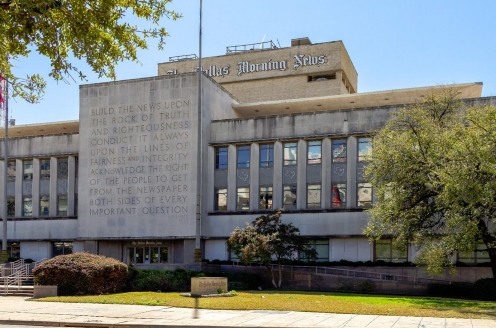
Hearst newspapers entered into an agreement to buy The Dallas Morning News and then Alden Global Capital tried to throw a wrench into the process.
By now, it’s a familiar move to watchers of Alden Global Capital, the ravenous hedge fund with the unusual hobby of sucking the lifeblood out of newspapers.
See, Alden likes to wait until a newspaper merger or acquisition is juuuuust about consummated. Then, right before the final papers get signed, it swoops in with a late bid that promises the seller a bigger payday.
Joshua Benton at NiemanLab reports on Alden’s bid sniping practices.
It’s smart: wait until some other buyer has kicked the tires and run the numbers to come up with a valuation. If Random Newspaper Company thinks it can profitably run a paper at the price of $𝑥 million, surely Alden can run it profitably at $(𝑥 × 1.2) million. All it’ll take is 20% more cuts — and that’s Alden’s specialty.
Reading Comics on Tablets
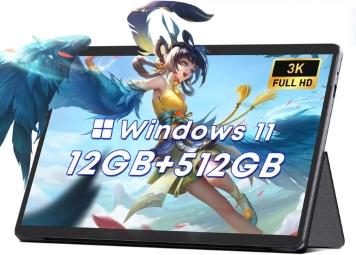
It’s hard for traditionalist comic book readers to accept digital comics. There is just something impersonal and detached, for an old-school comic book reader anyway, about reading a digital comic instead of holding one with your hands. But no one can stop the march of digital progress. There are just too many benefits to ignore when it comes to experiencing comic books digitally.
Even if you want to partially convert to reading some comic books on a computer tablet, many comic book readers are disincentivized by small tablet screens, slow processing speeds, and uncomfortable reading experiences.
Allen Francis at inkl reviews 6 large tablets for digital comics reading. (Or here.)
All of the large tablets on this list range in screen widths from 12 inches to 15.6 inches. The tablets on this list are relatively large tablets with large screens relative to smaller tablets. While many of the devices on this list are affordable, you will also see that the price mark for some of them matches their size.
If you go for a smaller tablet Michelle Ehrhardt at Lifehacker “Can’t Recommend the Kindle Colorsoft.”
Amazon’s Kindle Colorsoft is the company’s first color e-reader, and for me, that means one thing: Comic books. While there’s other color content out there (like children’s books and even textbooks), as an adult and a superhero nerd, comics would be the reason for me to go in on Amazon’s most expensive e-reader. Unfortunately, after spending some time with it, I’m not exactly happy with the Colorsoft’s comics-reading experience. There are definitely improvements over reading comics on a more traditional tablet, but for most people, the tradeoffs just won’t be worth it…

Comments 4
Comments are closed.