CSotD: Ozymandias Goes To War
Skip to comments
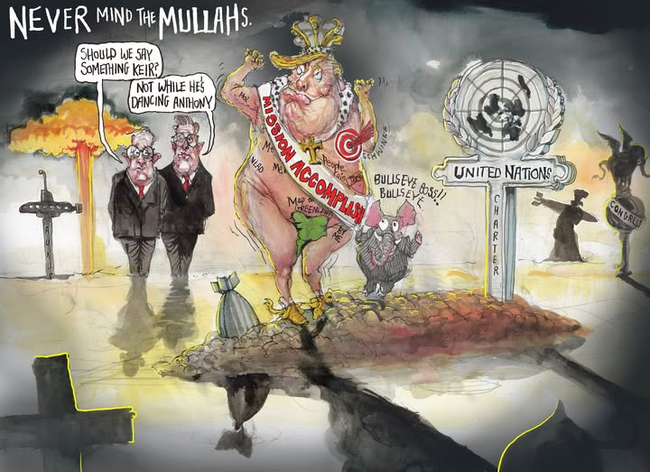
Rowe gets a laugh out of Dear Leader’s attack on Iran despite feeling it represents the death of the UN Charter, because there’s absurdity in the arrogance and chaos in the messaging.
One of the factors in our liberation of Kuwait was that GHWB had obtained cooperation from a wide array of allies, and then stopped at the border.
A few years later, GWB didn’t get nearly the number of countries to sign on for what proved to be a disastrous invasion of Iraq.
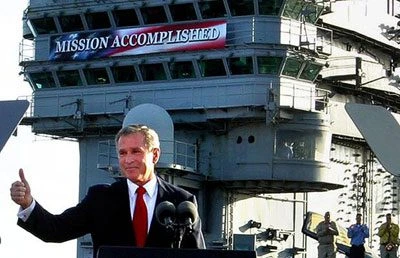
Trump sought no allies for his attack, but even from within his own administration there were differing reports on the outcome: Either the nuclear program was totally obliterated or maybe we need to go back or maybe they had moved their fissile materials before the strike.
We’ve long since reached a point where we really shouldn’t expect consistent coherence from this administration.
Juxtaposition of the Day
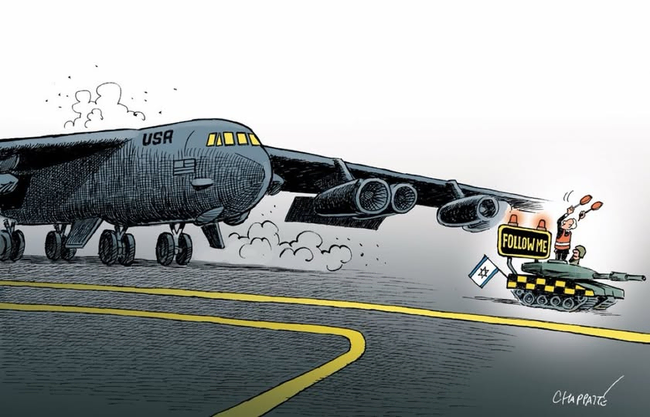
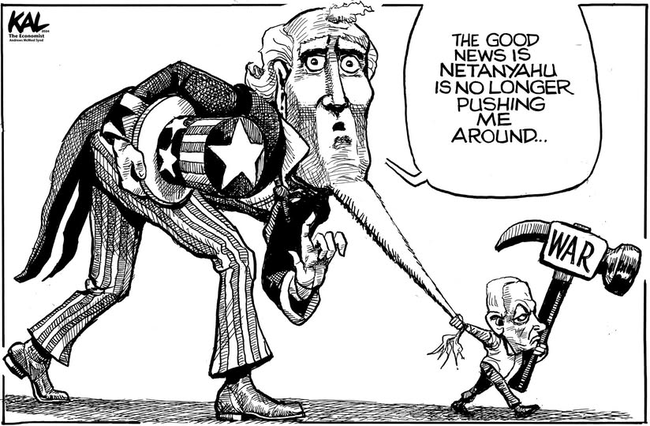
Kallaugher says it out loud, Chappatte suggests it, but they agree Trump was not pushed into this war by Netanyahu. He was dragged into it.
There really is a distinction, because it’s hard to push Trump. He tends to respond to pressure by shutting down.
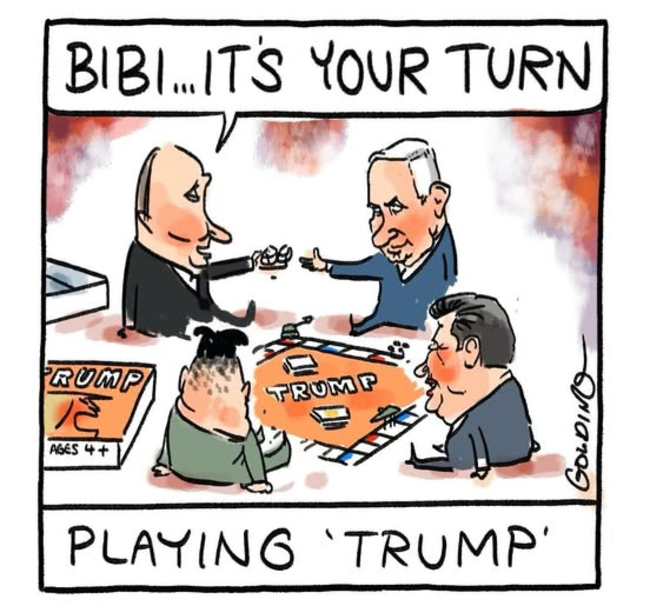
But he can be led. A little flattery, particularly, as Golding suggests, by one of the world’s tough guys, and Trump can readily be persuaded to take action, or to adopt favorable policies.
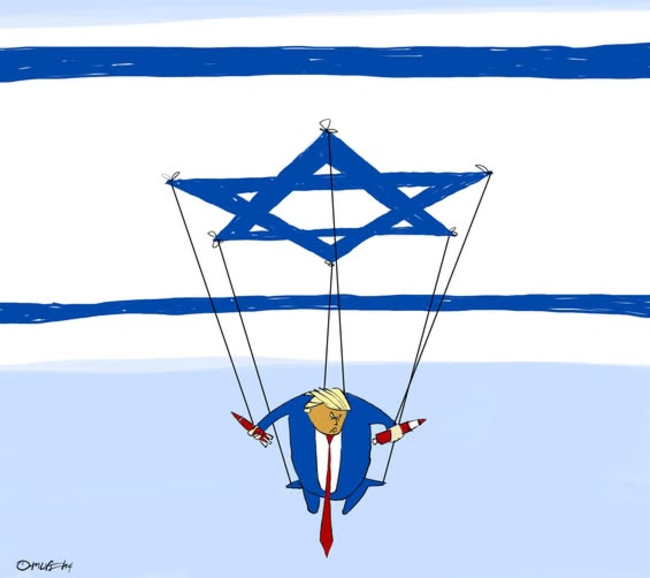
It is, Murphy says, easy to tell who’s pulling the strings this time, and, as seen in all four cartoons thus far, the entire world believes what is said here.
It’s important to note that, while Iran has few fans outside the Middle East, neither does Israel at this stage, and the ongoing military partnership between the US and Israel was already deeply unpopular.
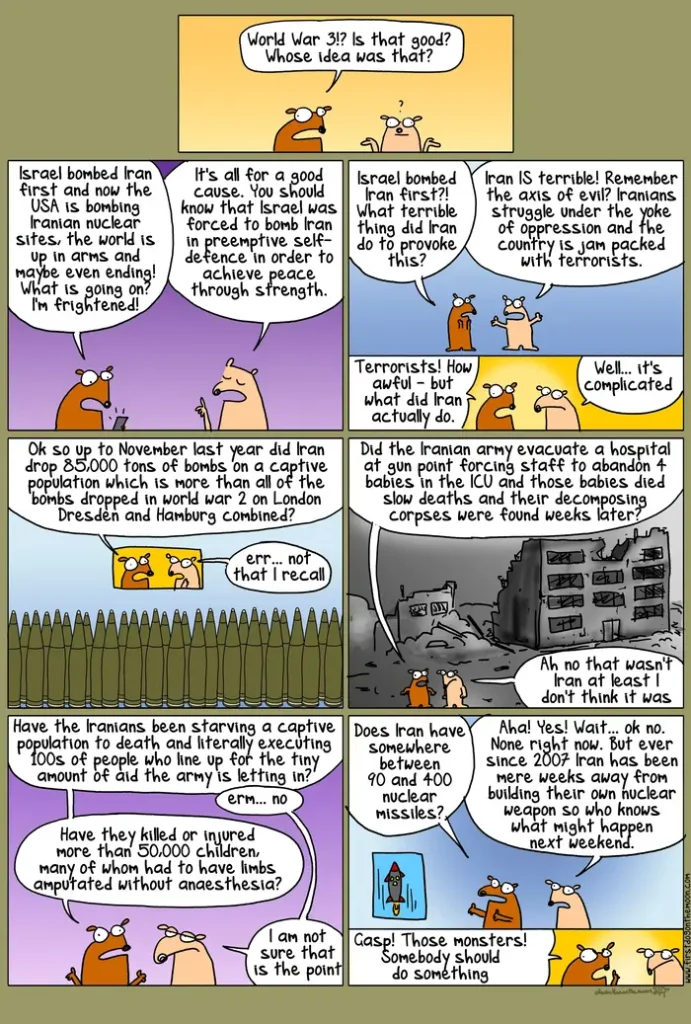
First Dog uses a standard reversal technique to ask who the real enemy is. His listing of dubious practices is far from out of bounds in Australia, but I guess he’d better stay there, because Aussies who criticize Dear Leader don’t get much of a welcome in the land of the free and the home of the brave.
If you follow that link, you’ll find the US officials insisting that the journalist was expelled for an error in his application and because he smoked grass, not for his political writings, which doesn’t explain why they questioned him about his political writings.
But we’ve harassed and turned away enough people at our airports that any credibility on the government’s side was shot long ago.
Juxtaposition of the Day #2
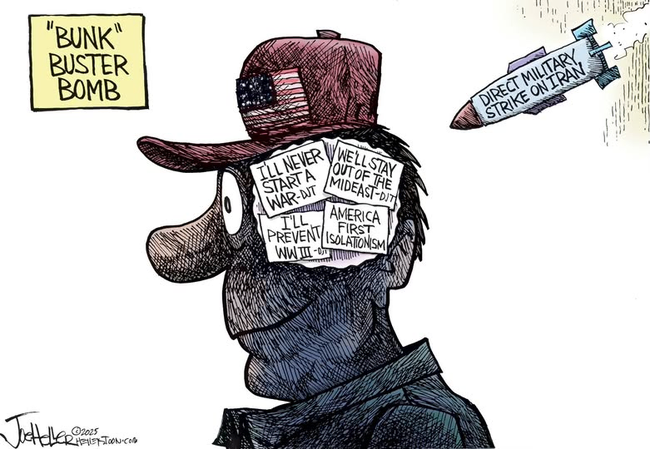
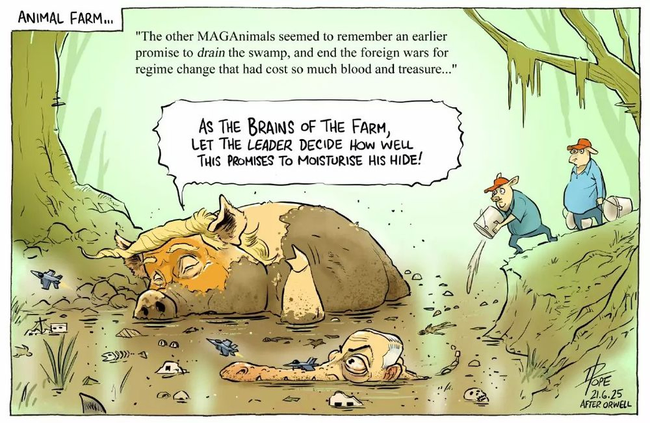
Both cartoonists note that Trump came into office promising peace and an end to meddling in other nations, but the American, Heller, shows it as a broken campaign promise while, from Australia, Pope sees it as a more sinister deception for which a docile fan base is at least partially at fault.
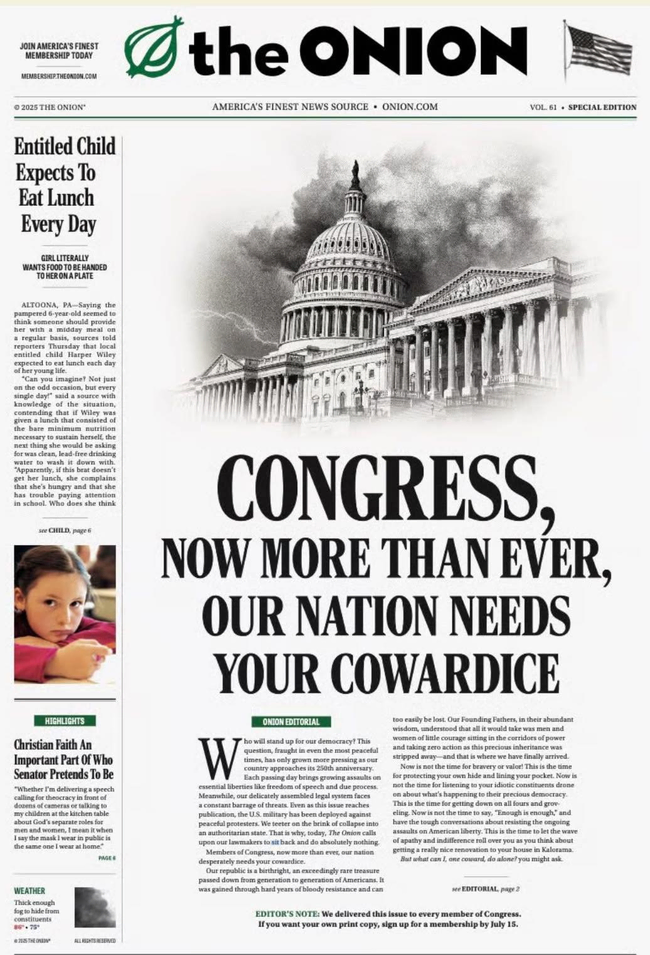
The Onion is more specific in who they feel is to blame. It’s important to point out the fatuousness of claiming only Congress has the power to declare war, given the many conflicts we’ve entered without a formal declaration. But there is such a thing as the War Powers Act which ought to at least slow things down and require some consultation.
However, the Onion is not talking about the bombing of Iran, but, rather, the docile abdication of responsibility throughout the draining of our freedom, as Republicans rubber stamp whatever the executive department does and the Democrats respond with deep concern and little action, the legislative equivalent of hopes and prayers.
To be fair, Congress has been very busy with more pressing matters, such as whether to rename Washington’s airport in honor of Trump, to put his face on a $250 bill and to add his head to Mt. Rushmore.
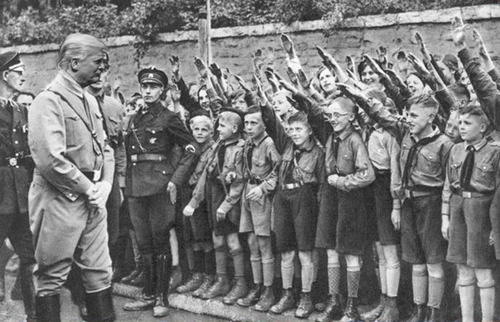
Leni Riefenstahl wouldn’t know where to point the camera next.
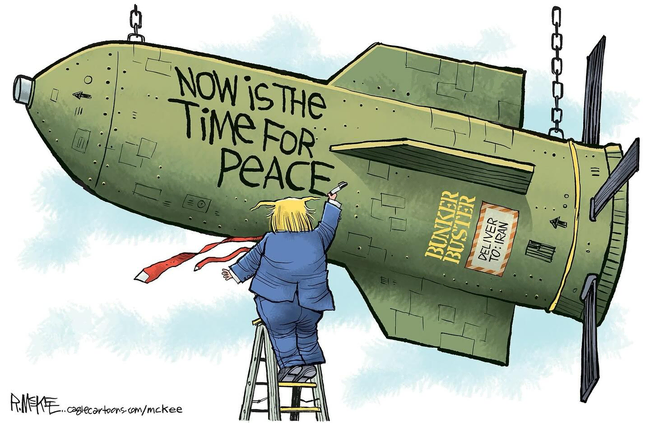
The question now is “What next?” and the administration seems to feel that Iran may have been shocked into sensibility, though McKee appears to question their manner of reasoning with another government.
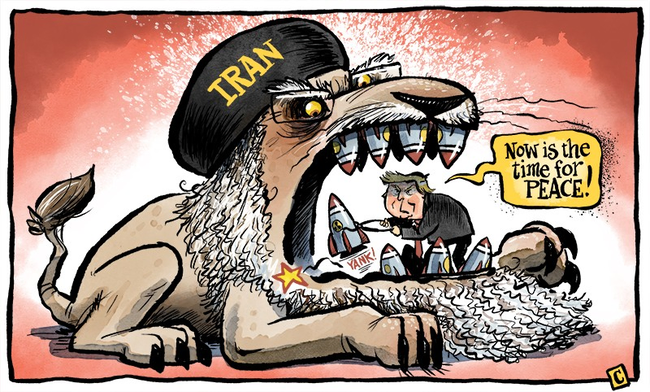
Downes is similarly doubtful that Trump’s approach offers much hope of peace.
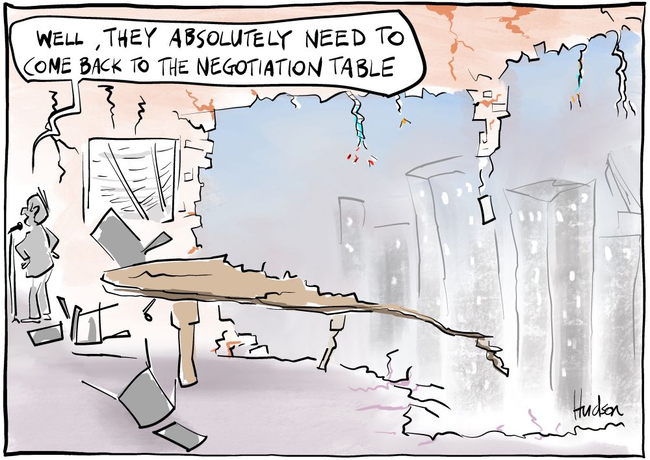
While Pat Hudson believes they won’t come back to the table because the table has been blown to smithereens, along with most of the room in which such negotiations might take place.
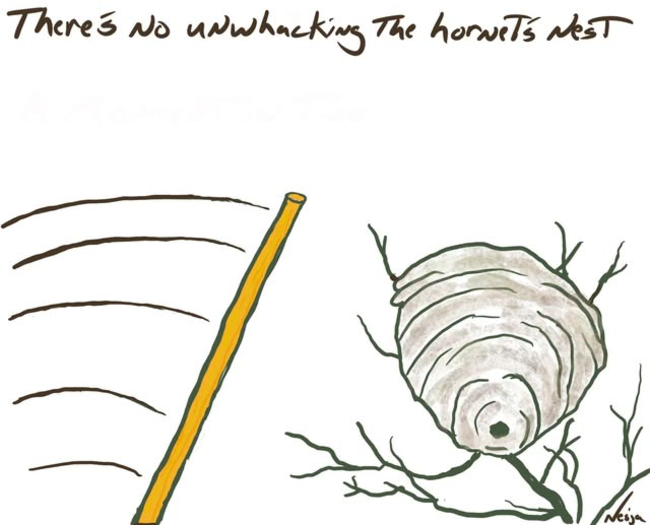
Sometimes less is more, and I like Nesja’s simple depiction of where things stand. He’s hardly the first to propose the metaphor, but it’s generally more cluttered with who did what and what’s going to happen next.
Nesja doesn’t bother with all that. Instead, he mixes in an aphorism about the impossibility of “unringing a bell,” which works well in this parallel, both with the shape of a hornets’ nest and the action of striking it with a stick.
In this case, not only does everyone understand what it means to disturb a hornets’ nest, but, given the history of the Middle East over the past half century, they should understand that this is not a region where armies in uniforms line up opposite each other on a battlefield.
It’s a fact that goes back a lot more than half a century: Algeria is credited with inventing asymmetric warfare in the middle ’50s and large countries have faced popular resistance ever since, either from small bands under independent command or from even smaller groups acting as cells within a decentralized force.
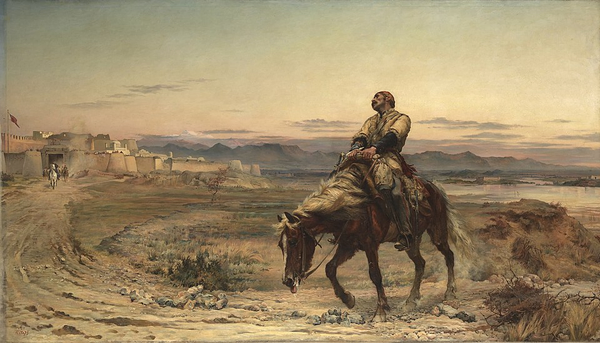
History is full of such examples, this painting being of the last remains of a British force of 16,500 soldiers stationed in Kabul in 1842, hacked to ribbons by a variety of warlords as they attempted to evacuate to Jalalabad.
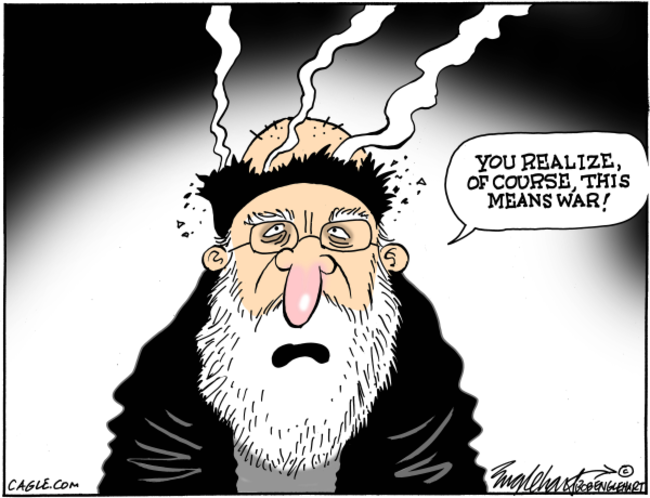
Englehart echoes a phrase from a Looney Tunes cartoon, but if his hapless-looking mullah has been defeated, it’s an exception to the historical record.
Victory in modern warfare goes not to the one who can inflict the most damage but to the ones who can absorb the most pain.
Or, as someone said, “A little feller can always beat a big feller, so long as he knows he’s in the right and keeps on a-comin’.”
Especially if the big feller refuses to learn.
Mike Peterson has posted his "Comic Strip of the Day" column every day since 2010. His opinions are his own, but we welcome comments either agreeing or in opposition.

Comments 14
Comments are closed.