CSotD: Communication Breakdown
Skip to comments
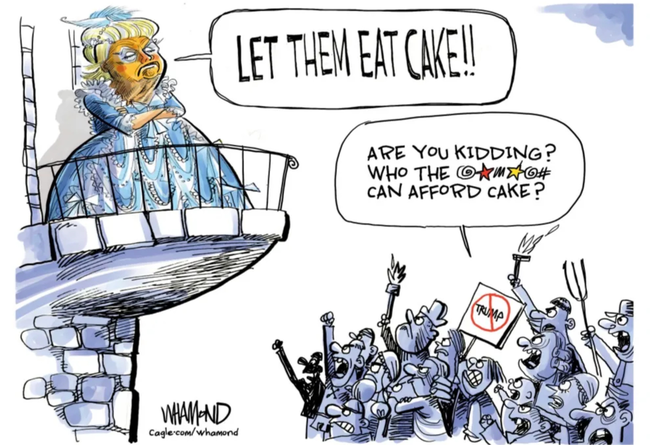
We’ve discussed this expression before, but it’s a good starting point for today’s conversation and, besides, it’s so universally misunderstood that it doesn’t hurt to point it out again: First of all, for the record,it’s apocryphal and Marie Antoinette never said it.
But the way it is phrased in English sounds like she was offering to give people frosted layer cake, when the original en francais was more like “Well, then, they should eat brioche,” meaning that she assumed if people had no bread, they had simply run out of it and that, of course, they also had some brioche in their cupboards. She was so wealthy and insensitive to the lives of the poor that she didn’t understand that they had no food.
The angry peasant in Whamond’s cartoon has it right: The royals don’t get it, and their lack of empathy and understanding is infuriating. She may not have actually said it, but she paid for the overall attitude with her head.
Bill Clinton had responded to the AIDS crisis by saying “I feel your pain,” which may not have been helpful on a practical level but was at least a sign that he gave a damn. Sometimes that’s sufficient, though it requires having built trust so that it sounds like you’re trying.
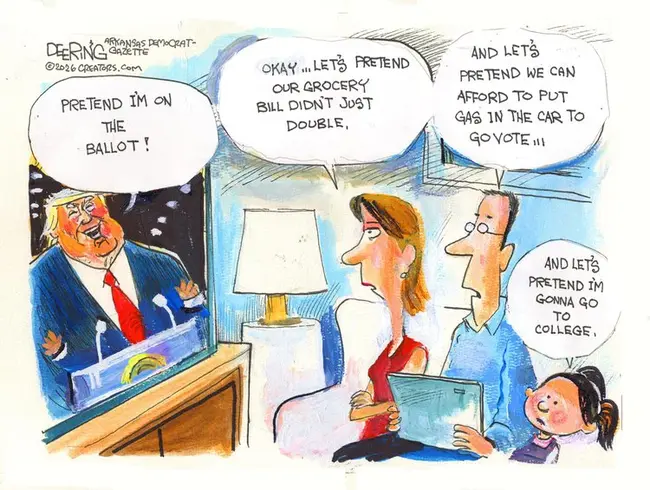
Deering suggests that voters are taking a skeptical view of Trump’s request that they show their appreciation for him by backing Republicans in the midterms, and his sinking poll figures tend to support that viewpoint. As with the issue of bread versus cake, his assumption that people support him, and his dismissal of “affordability” as an issue in the upcoming elections, is an example of how little he understands their situation.
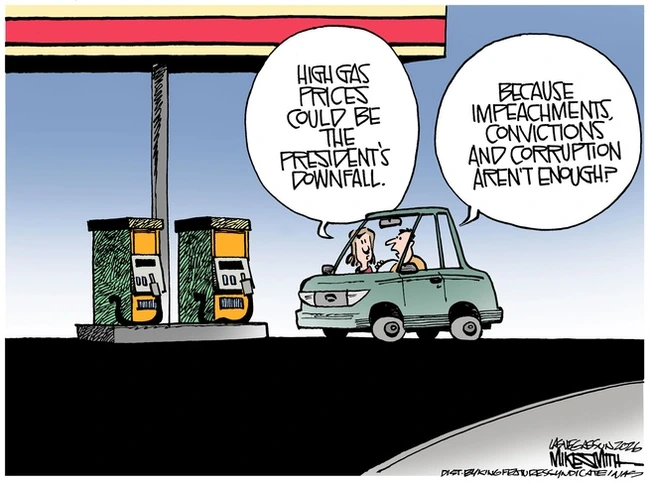
Smith boils it down further by noting that day-to-day concerns matter more to voters than more complex issues that call for more sophisticated analysis.
The price of gasoline should not be as critical a matter as the questions of honesty raised in the impeachments, his convictions for fraud and for sexual assault, or the rampant profiteering in his administration. But people can argue over those issues and charge them off as partisan political accusations, and they may have been watching the Masked Singer instead of reading up on those things.
But they can’t ignore the fact that gas prices have doubled, and they are reminded of that every time they gas up. For people with a significant commute, that’s a slap in the face two or three times a week. And let’s not forget that Trump’s victory in 2024 included a strong consumer resentment of egg prices and other day-to-day cost-of-living issues. Eggs are one item in the basket, but gasoline is not only purchased separately but in a manner that lets people watch those dials spin and the cost rise.
Other matters may be of greater significance in the Grand Scheme of Things and the overall health of our democracy, but the rising price of gasoline, and, at this time of year, of home heating oil, is more immediate and more of a slap in the face.
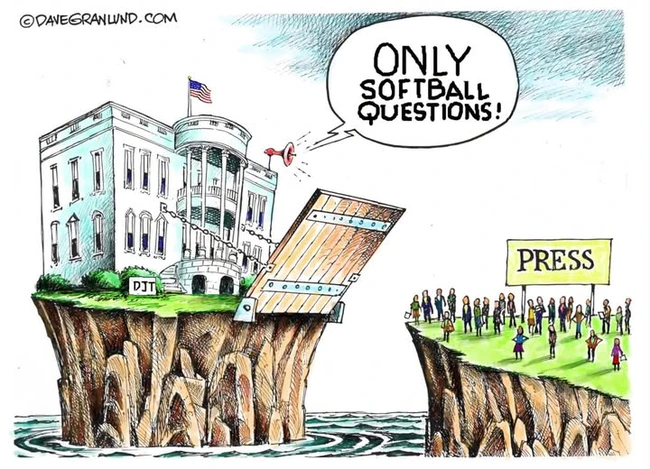
Those other things do matter, however, and Granlund suggests that Trump’s latest blatant war on the press has the potential to make him look not just afraid to face tough questions but disrespectful not just of the press but of the people for whom the news provides a window into government actions.
His decision to bar major mainstream media outlets from the White House will, no doubt, delight hardcore fans who have agreed with him that the phrase “My country, right or wrong,” is a less confusing, less demanding motto than “My country, right or wrong; if right, to be kept right; and if wrong, to be set right.”
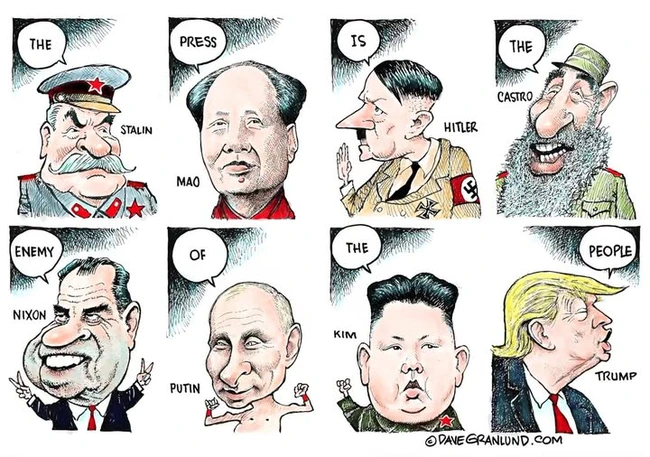
But Granlund emphasizes his dislike of a president who refuses to face the press by pointing out some of the famous world leaders who have shared that attitude. His array is more effective than a discussion of the First Amendment and a history lesson in those who have repressed information, because it’s hardly a collection of obscure figures, and no literate reader should have trouble getting his point, even if they have been marinated in a stew of “fake news” accusations.
With the possible exception of Nixon, those figures have been long identified as enemies of the United States. Even if you have become used to seeing Putin as Trump does, and not such a bad guy after all, people are judged by the company they keep, and this grouping places all these examples in the same category.
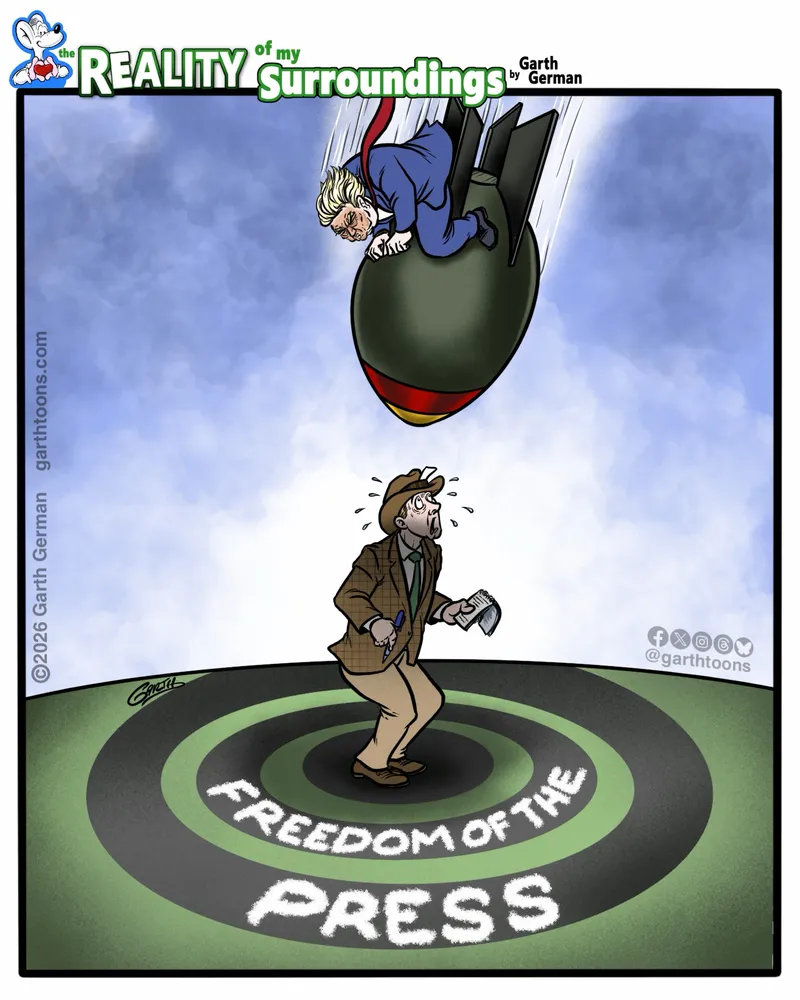
Another factor in this latest controversy is the potential for several major media outlets to hang together and make the point clear that Dear Leader is making war not on one or two of them but on information generally.
Trump targets liberal outlets, but this goes well beyond his childish insults of women reporters and represents a more determined attack on the press.
Nixon had built an attack on the “nattering nabobs of negativism,” and as Rather rose to ask a question, you can hear a few boos in the audience. You can also see how Rather’s quick-minded response not only got applause, but turned Nixon’s smile into a look of fury.
At that point, Nixon was in a defensive position and his population had faded substantially. Five months later, he resigned, but this was an indicator of how the winds were shifting.
The current cliché is that this is “speaking truth to power.”
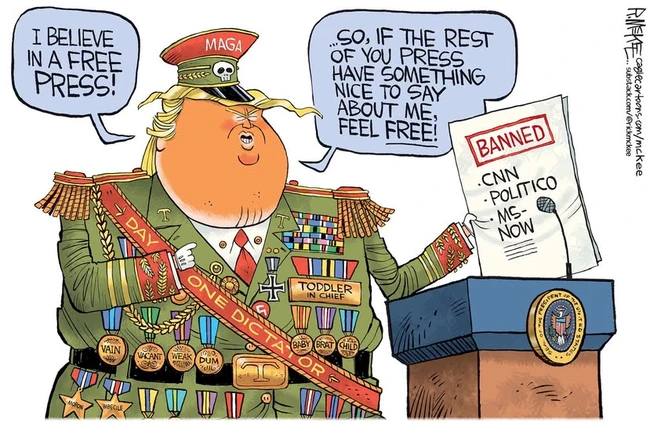
But it is easier to see the impact of Rather’s wisecrack and Henry’s speech in retrospect, after the fact. McKee points out how threats of dictatorship and blatant examples of stolen valor have gone down well with MAGA loyalists, who admire power without questioning the directions in which it leads.
Juxtaposition of the Day
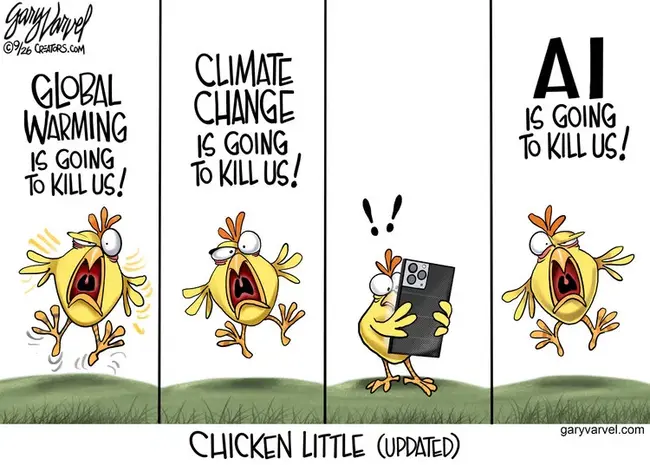
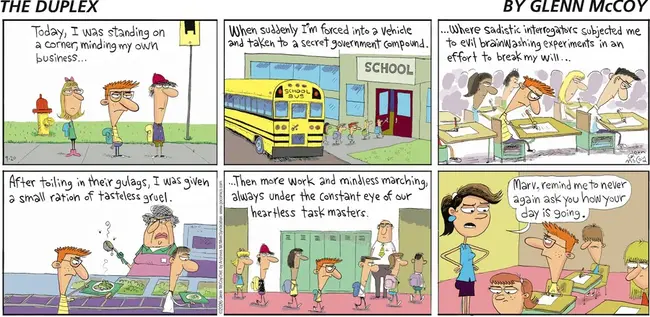
There are still many, even outside the loyalist bastions of talk radio and Trump-friendly news outlets, who will promote the notion that climate change isn’t really happening, that there is no threat in AI and that ICE concentration camps are well-run humane places.
And that cuts to SNAP benefits are harmless, because everybody has brioche in their cupboards.
This ain’t over.
Mike Peterson has posted his "Comic Strip of the Day" column every day since 2010. His opinions are his own, but we welcome comments either agreeing or in opposition.
Comments 1