CSotD: 6079 Smith W.! Yes, YOU!
Skip to comments
A sudden hot sweat had broken out all over Winston’s body. His face remained completely inscrutable. Never show dismay! Never show resentment! A single flicker of the eyes could give you away.
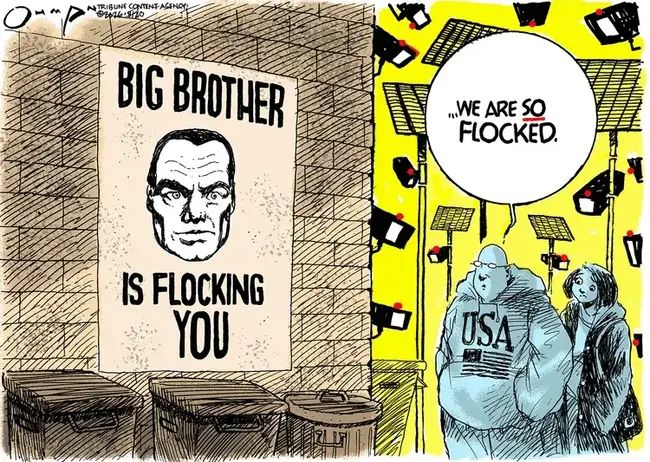
It used to be fiction, but here we are. America is dotted with cameras, many of them just recording license plates as cars stream past on turnpikes so they can look up the license, look up the owner’s address and send out a bill for the fare.
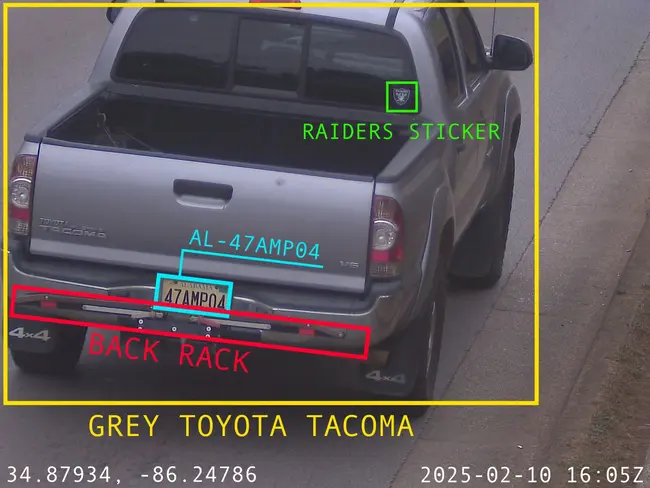
But the camera can also reveal that you are a Raiders fan, and that means it can also read other bumperstickers you may have on your car.
And not every camera is set up on a turnpike simply to collect fares. There might even be one in your neighborhood, though this map is a work in progress and only records the cameras people report to it.
Still, perhaps you should have a look.

There are all sorts of cameras, keeping an eye on things and making sure we’re all safe. Even the traffic surveillance cameras can do other things, like alert police to someone who was checking his phone while driving.
Or help ICE track down people who are following them as they patrol the streets, scanning their plates or using facial recognition to identify protesters in the streets.

You shouldn’t object, if you’re not breaking the law, interfering with officers, protesting in the streets or dating an officer’s ex-wife.
“Recent incidents involving police officers accused of using Flock to track friends, relatives and romantic partners have added to concerns about how the data can be accessed and shared. The technology also has been criticized after inaccurate license plate information contributed to wrongful police stops, arrests and detentions.”
As a consumer reporter, I got a few calls from readers who’d received bills for parking tickets in cities they’d never visited, but that depended on a meter maid writing down a violator’s plate number wrong, not from automatic cameras misreading innocent passing vehicles.
And unethical officers have always been able to identify a plate, but that required an accomplice with access; they couldn’t just track a rival lover’s route from camera to camera around town.
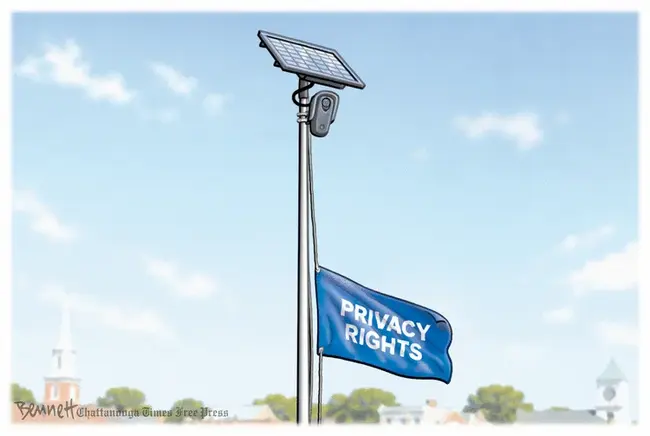
As Bennett says, it’s a loss of privacy on a major scale.
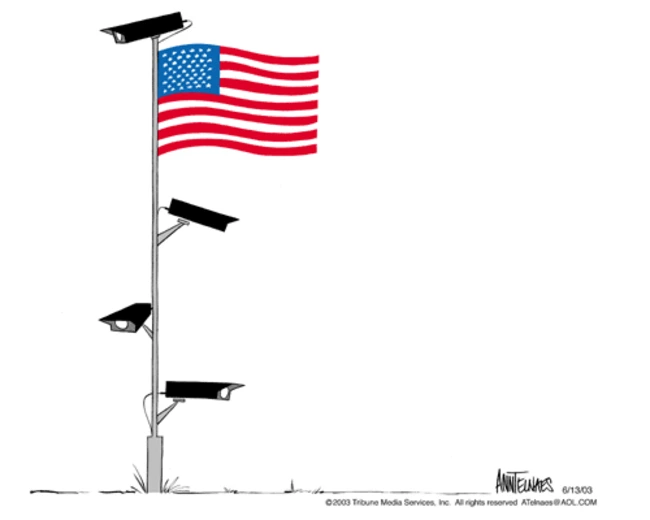
Bennett’s cartoon brought to mind a warning Telnaes sounded in 2003, though the technology then was nowhere near as sophisticated and powerful as it is today.
Still, I can’t remember quite when the DMV began requiring people to take off their glasses when they got a new driver’s license, so the camera could capture the biometrics of their irises and facial recognition could track them.
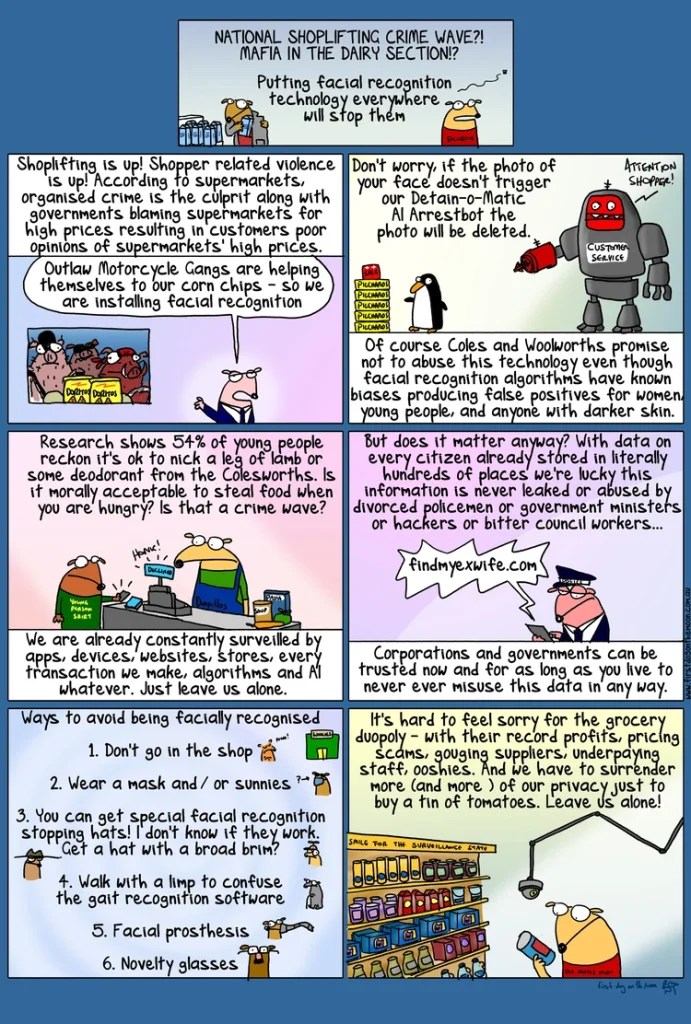
First Dog reports that Australia’s two major grocery chains are now using facial recognition cameras to identify shoplifters, which goes along with the notion that if you aren’t a crook, it shouldn’t bother you to be followed around, but it is also a reminder that you are being followed around, not only by the government but by anyone who can afford cameras.
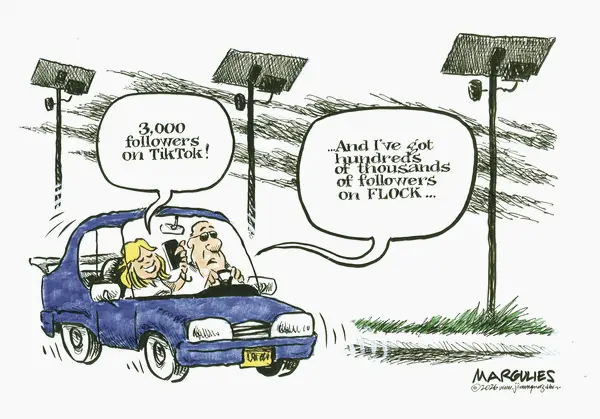
Andy Warhol predicted that, in the future, everyone would be famous for 15 minutes. And these days, people want fame and followers, though they’d rather control what they are known for, and they aren’t counting on official, permanent fame.
There are companies that, for a fee, will scrub your presence from the Intertubes to keep you safe from scammers, but I haven’t seen any ads that promise to keep you safe from Big Brother.
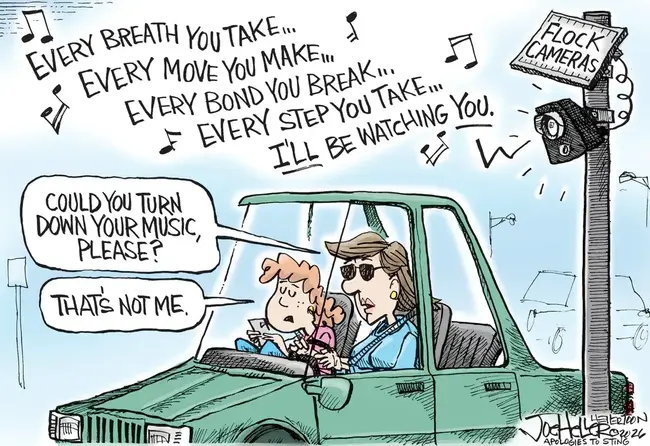
So Heller suggests a new national anthem for our 250-year-old democracy.
Speaking of which …
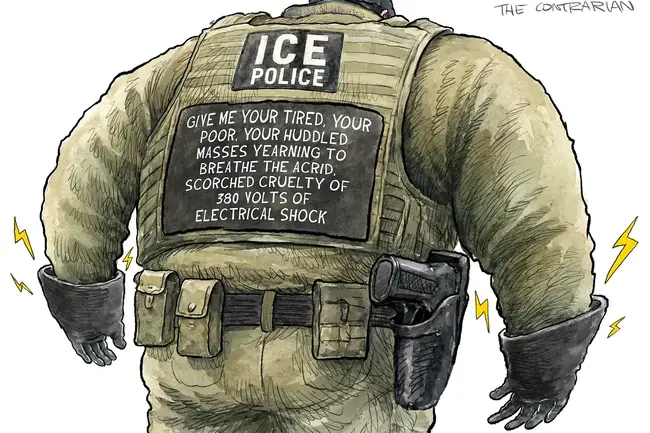
Anderson takes a broad look at the significance of arming ICE officers with the equivalent of cattle prods at the ends of their arms. This, too, fits the mold of “If you aren’t doing anything wrong, you shouldn’t mind.”
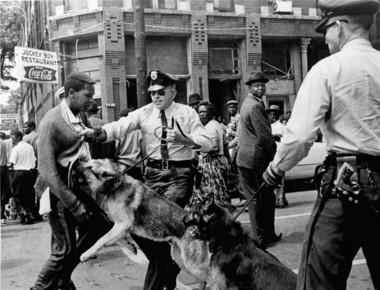
That was true in 1963 and it’s true today, and whether it’s dogs, truncheons, rubber bullets or electric gloves, the issue remains who gets to decide what constitutes “doing something wrong.”
The wider scope is also about whether you see it as something happening somewhere else to someone else, or through the lens of the preacher/poet John Donne, who recognized that no man is an island and that “Each man’s death diminishes me, For I am involved in mankind.”
Or that other fellow who said “Inasmuch as ye have done it unto one of the least of these my brethren, ye have done it unto me.”
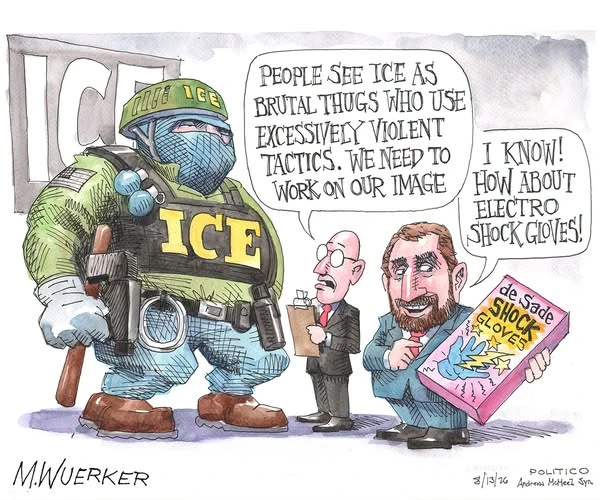
Wuerker points out that ICE has already earned a reputation for unreasonable, unnecessary brutality, not only for the killings of protesters in Minnesota and Maine, in which witness reports and ICE reports conflict greatly, but also the incident in Virginia in which ICE agents drew guns on a woman, which she captured on both dash cam and cell phone vidios.
The critical question is how strictly ICE agents are assessed when they are recruited and how well they are trained for their jobs.
My son was part of a VBSS team in the Persian Gulf, boarding and searching ships to make sure they complied with international sanctions. This is serious, dangerous business and he was the only member of his team that didn’t go on to become a Seal, which indicates the level of toughness the job requires.
However, they were taught non-lethal means of controlling people that would halt violent resistance without harm, a series of techniques for management of violent behavior that he has since taught to hospital staffs. It is both possible and practical to resist most cases of violence without harming the assailant.
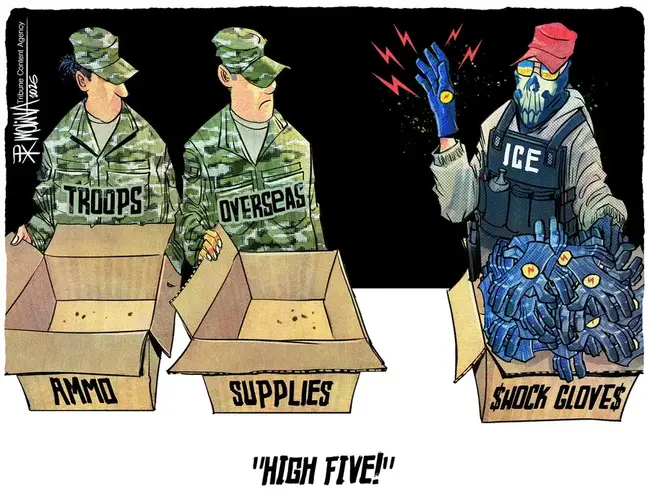
It seems ironic that we have a military suffering from lack of resources and lack of resupplying, while domestic police are being outfitted with millions of dollars worth of equipment that could readily be replaced by more selective recruiting and better training.
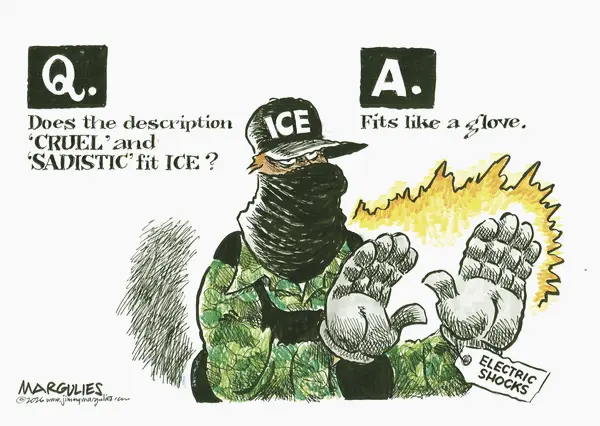
The idea of asserting authority by adding more weaponry instead of better training seems not only counter to best practices in law enforcement but, Margulies suggests, runs counter to the sort of behavior expected in a functioning society.
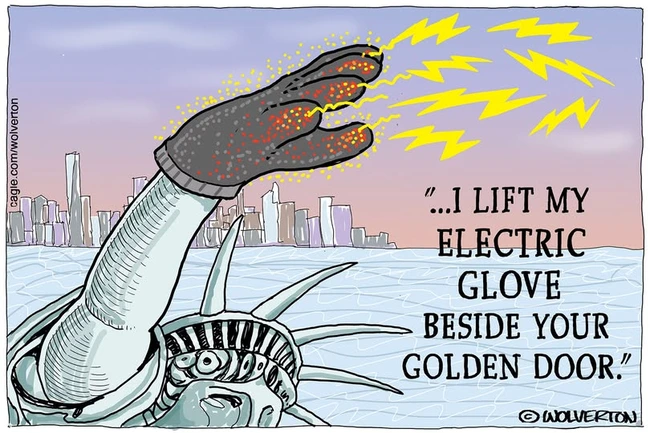
Perhaps we shouldn’t assume that it is happening in a functioning society.
Mike Peterson has posted his "Comic Strip of the Day" column every day since 2010. His opinions are his own, but we welcome comments either agreeing or in opposition.


Comments 12
Comments are closed.