CSotD: Government Without Newspapers?
Skip to comments
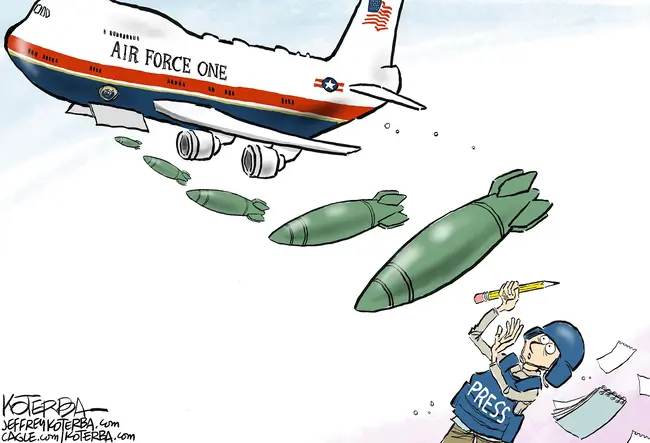
The war on the press is no joke, and for more on that, check out On The Media’s latest installment. It’s also nothing new; Trump has devoted plenty of energy towards making people doubt what they hear on the news, labeling anything he disagrees with as “fake news” and launching middle-school insults at women reporters to undermine the public trust.
Even Jefferson, famous for that quote about preferring newspapers without government to government without newspapers, grew to hate the partisan press after it went after him tabloid-style. Fortunately for the free press, however, the Sedition Act that John Adams had passed during his presidency, and which made it illegal to publish “false, scandalous and malicious writing or writings against the government of the United States, or either house of the Congress of the United States, or the President of the United States” was set to expire when he left office.
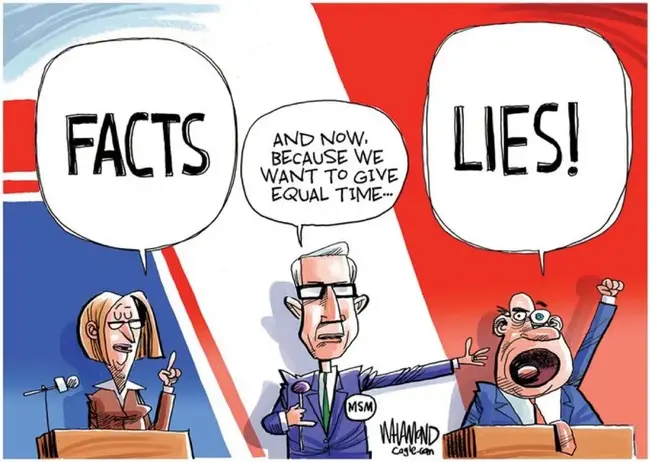
A slew of lawsuits and threats against the media have, Whamond suggests, created an atmosphere of paranoia that leads some companies to require reporters to produce coverage that is more politically safe than it is fair or demonstrably accurate.
I say “some” because there are cowardly corporations that bend the knee when threatened — the current hijinks at CBS being a test case — and there are others who approach the news as a way to carry out their own crusades, as seen in the pre-fab editorials the Sinclair network circulates for their local anchors to recite.
And, in all fairness, it’s not entirely a conspiracy. Sometimes it’s the result of sloppy work and of looking for a story you hope to find rather than reporting on what is happening.
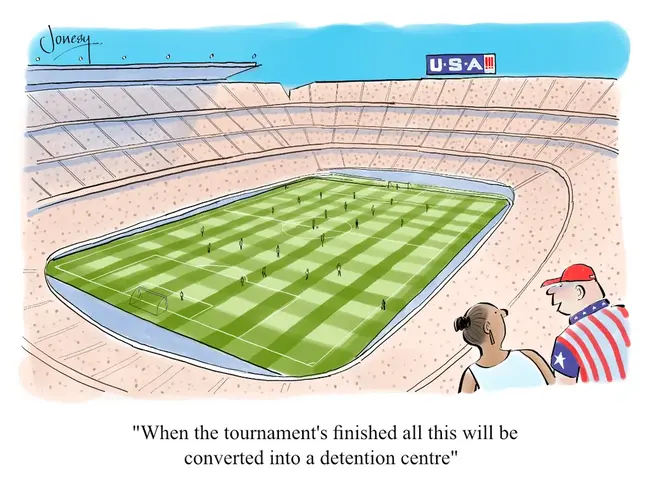
Jonesy takes a shot at the US war on non-citizens, but, unlike in some other World Cups, we didn’t build new stadia for the games and they’ll go back to hosting NFL football in a few weeks.
However, it reminds me of an assignment I was given when I was covering the 1990 Census. An editor noticed that a small town in our region had gained a significant minority population since the 1980 Census and wanted me to do a feel-good story about how hip and diverse and wonderful we were becoming.
She was disappointed and angry when I explained that the change was because the housing facilities for the 1984 Winter Olympics had been converted to prisons. I can’t remember if I wrote anything at all about it, but I didn’t write the story she so wanted to see. That’s only one example of why I eventually left that newsroom.
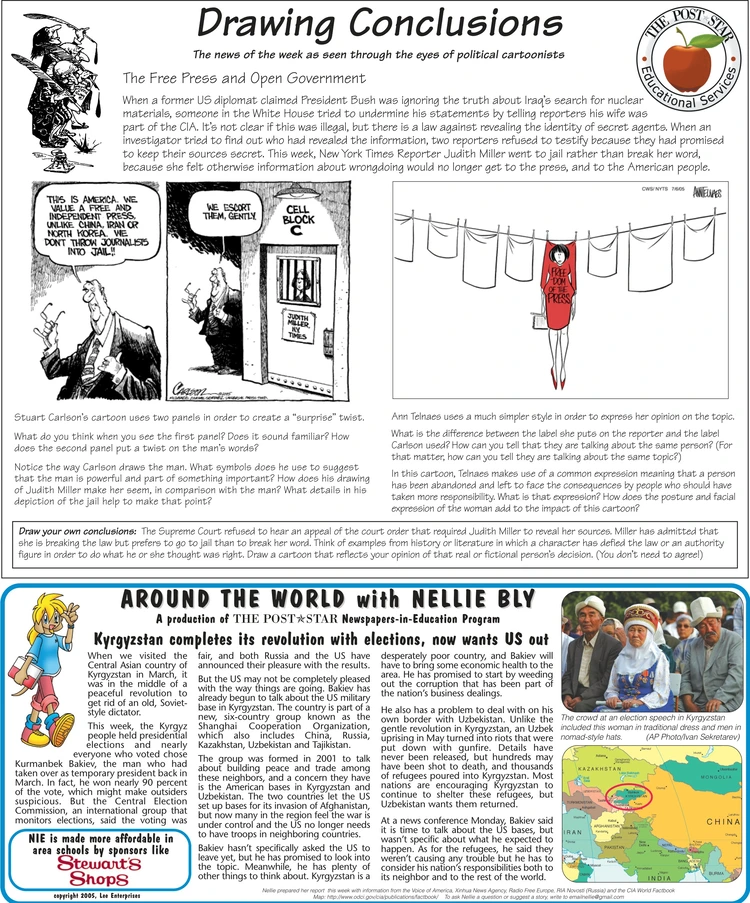
Later, I landed at another newspaper, where I worked with schools to promote media literacy and created weekly teaching materials that ran in the paper. In 2005, our piece on editorial cartoons covered an assault on the press that seems to happening again at the New York Times.
In the current case, the Trump administration wants to know how the Times reporters learned that the president’s new airplane doesn’t have the same security protections as older Air Force One planes, a fact the president denies.
In 2005, the question was how Times reporter Judith Miller had learned the identity of a CIA agent, and when she refused to reveal her confidential source, the Supreme Court agreed that she could be jailed for contempt.
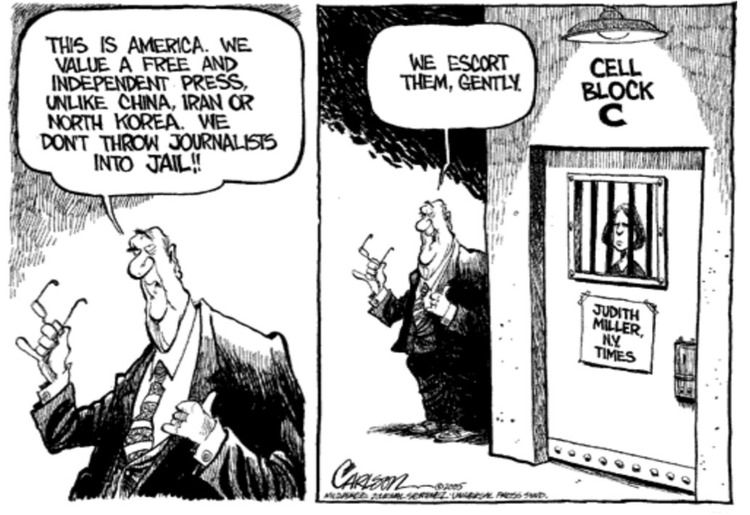
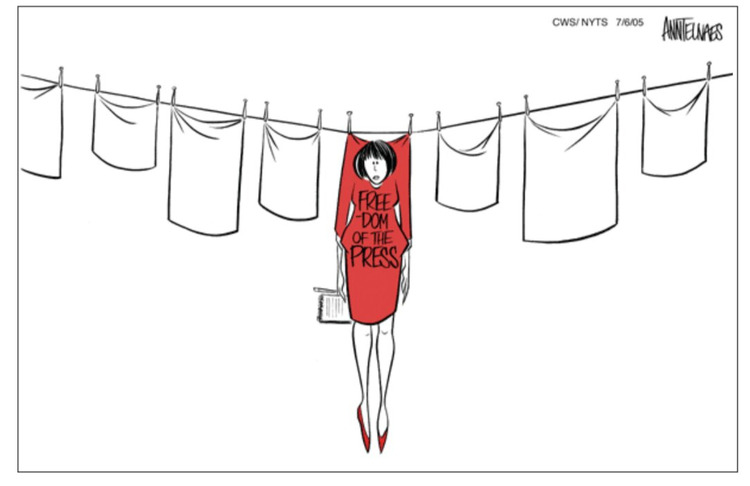
Carlson and Telnaes were among the cartoonists who stood up for Miller’s rights as a reporter to not tell how she had gathered that fact, the overall theory being that the public deserves to know the truth and that reporters can’t function if people with important information see them as investigative partners with the government.
Miller served nearly three months in prison before her source agreed to let her provide his name. In the current case, the NYTimes is promising to stand behind its reporters and resist government efforts to force them to reveal who told them of the security issues with the new Air Force One airplane.
That’s good, because …
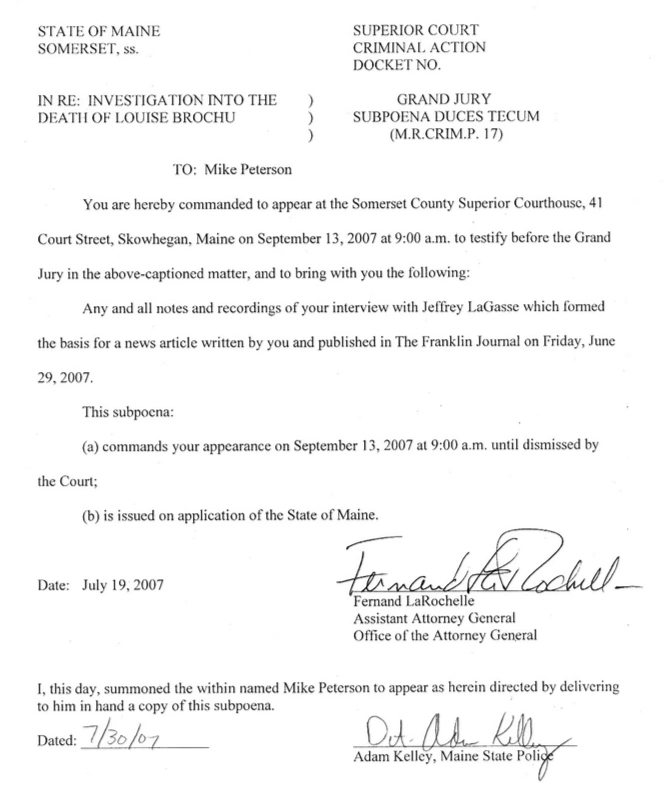
… two years later, when I was back in the newsroom and declining to provide notes of my interview with a suspected murderer, the paper I worked for was sold, and while the former owner and my then-publisher were prepared to back me up, I had serious doubts that the new management would go out on a limb for me.
I stuck to my guns, but things worked out and later Lt. Kelley said, “We know you were just doing your job.” The difference being that he only wanted the information, not my head on a platter.
We’ll see how the current issue with the Times reporters and the free press works out, but I doubt the real issue is who told them the new plane has shortcomings. Given how the Pentagon has cracked down on media access and the president’s ongoing attacks on “fake news,” this seems less about the airplane than about controlling information.
Be glad you live in a country where the quarreling is carried out in public.
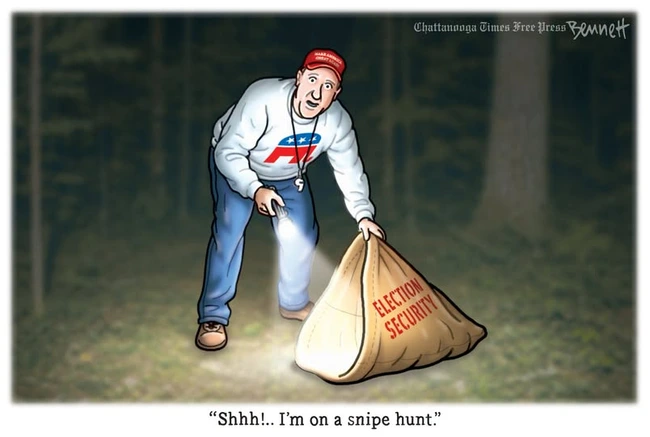
Bennett makes use of an old practical joke in which the sucker is sent out on a ridiculous hunt for a mythical creature while everyone else sits around the fire laughing and waiting for him to wise up. But this is a serious matter, because there are people whose sense of trust makes them vulnerable to those who would exploit their loyalty.
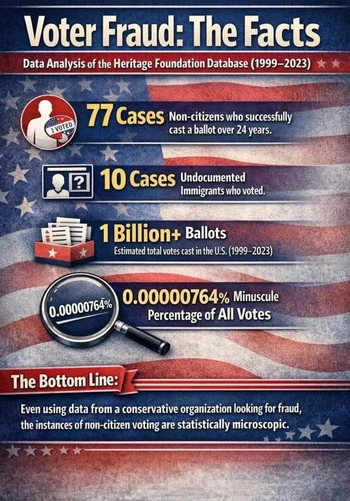
Millions of dollars have been wasted on searches for electoral fraud and both the Heritage Foundation and the Brookings Institute, among others, have concluded that it is absolutely no factor in our elections.
That doesn’t seem to make a difference to people who want to trust their government and are willing to go out into a field in the dead of night with a flashlight and a gunny sack while the powerful people who sent them profit from their gullibility.
It emphasizes what Jefferson said after that remark about preferring newspapers without government: “But I should mean that every man should receive those papers & be capable of reading them.”
A free and ethical press has no power if people don’t see it, choose to ignore it, or can be persuaded to distrust it.
(Today’s tune may need some background info)
Mike Peterson has posted his "Comic Strip of the Day" column every day since 2010. His opinions are his own, but we welcome comments either agreeing or in opposition.
Comments 12
Comments are closed.